💡 Introduction: Why UX/UI and SEO are two sides of the same coin?
# Think about it… A few years ago, the web world was very different. People were just looking for content, no matter how they found it or how ugly and complicated the website was. But now? Oh no, the situation has completely reversed. Today, merely being found by Google is not enough; it’s important that when a user visits your site, they feel good, stay, browse, and ultimately do what you want them to do. This is where the role of UX/UI, meaning user experience and user interface, alongside SEO, reveals itself. Some might think that search engine optimization is purely technical and UX/UI is a design matter, but the reality is that these two are intertwined like the warp and weft of a hand-knotted carpet. Without good UX/UI, your efforts to rank on Google might be like pouring water into a mortar. Search engines, especially Google, are becoming smarter every day. They no longer just look at keywords and links; user behavior on your site is very important to them. How long does a user stay on your site? How much do they browse different pages on your site? And most importantly, how quickly do they leave your site? These are the metrics that UX/UI directly influences, and Google pays close attention to them for ranking your site. To be frank, if your site is like a maze and the user can’t easily find their way, or if it’s so ugly that their eyes get tired, no matter how much pure and excellent content you have, the user will quickly hit the back button and go to your competitor. This is where we at Rasawb Afarin always emphasize that website design is not just an artistic endeavor, but a smart strategy for online success. We believe that a website should be both pleasant for the user and understandable for search engines. The combination of unparalleled user experience and an attractive user interface makes users stay on your site longer and significantly reduces your site’s bounce rate. This itself acts as a strong signal for Google, indicating that, hey, this site has good content and keeps the user satisfied. So, to win this breathtaking digital competition, you must pay attention to both wings: SEO and UX/UI. This small introduction is just the tip of the iceberg; let’s move forward to discuss more about this magical connection.
🎨 The Concept of UX/UI: Beyond Visual Aesthetics

Alright, let’s get to what UX and UI actually mean. Many people confuse these two or think they are just about the beauty and aesthetics of a website. But no, the matter is more complex and deeper than that. UX stands for User Experience. This part encompasses all the feelings and experiences a user has when interacting with your website or application. Imagine entering a store; UX is that feeling of comfort, quickly finding the desired product, good service from the salesperson, and overall, your satisfaction with that store. In the web world, UX means the ease of use of the website, page loading speed, logical menu arrangement, easy retrieval of information, and even the responsiveness of forms. The main goal of UX is for the user to achieve their objective in the easiest and most pleasant way possible, whether it’s making a purchase, reading an article, or anything else. Good UX makes the user feel that your site was built specifically for them.
On the other hand, UI stands for User Interface. This one relates more to the appearance and visual elements; such as buttons, icons, colors, fonts, images, and anything the user sees and interacts with. UI is like a shop window. How beautiful is it? How attractive? How good does it make you feel? A strong and beautiful UI, alongside a functional UX, can differentiate your site from others. UI should be aesthetically pleasing, but more importantly, it should guide the user towards performing the desired actions, not confuse them. For example, the color of a Call to Action button should be eye-catching, or text fonts should be readable and comfortable. In fact, UI defines how elements look and are arranged, while UX determines how they function and how the user feels.
When Rasawb Afarin steps in for website design or user experience optimization, we don’t see these two concepts as separate. A UX designer might create a roadmap through research, user personas, and usability tests, while a UI designer, with visual creativity and technical knowledge, brings that roadmap to life. The combination of these two ensures that your site is not only beautiful and attractive, but also fully functional and, most importantly, optimized for search engines. Because Google also cares about these exact things: Is the user satisfied with your site? Can they easily navigate it? This is where you realize that UX/UI is not just a design discussion, but a digital marketing strategy.
How can you directly connect with your potential customers and increase sales? Rasawb Afarin, with its targeted direct marketing services, delivers your brand’s message directly to your audience, ensuring high returns.
✅ Sending personalized and effective messages
✅ Building direct and strong relationships with customers
✅ Precise tracking of results and campaign improvement
For a direct marketing campaign, please contact 09124438174.
⏳ The Direct Impact of UX on Dwell Time and Reduced Bounce Rate
Let’s get to the main point; how does good UX directly affect user dwell time and bounce rate? These two metrics are like a performance report of your site for Google. Dwell time is the duration a user stays on your site after clicking your link in the search results, before returning to the Google search page. If this time is high, it means the user found what they were looking for and is satisfied with your content. This is a very strong signal for search engines, indicating that your site is valuable and should receive a better ranking. Now, how does UX increase this time?
The first step is relevant and high-quality content. Excellent UX allows users to easily find the content they need. If your content is clearly displayed, has short paragraphs, uses subheadings, and includes relevant images and videos, the user will be more inclined to read and stay. If the user immediately sees that the page content matches what they were looking for, their likelihood of staying increases. Good UX makes the user feel comfortable and stay on your site for hours without getting tired.
Bounce Rate works exactly the opposite of dwell time. It refers to the percentage of users who leave your site after viewing only one page, without any interaction. A high bounce rate indicates to Google that your site could not meet the user’s needs or provided a poor experience. This can severely impact your ranking in search results. Now, how does UX reduce this rate? Quite simply, by designing a clear and engaging path for the user. If a user gets confused upon entering the site, can’t find what they want, or is bombarded with intrusive ads, it’s clear they will quickly hit the back button. A well-organized user interface and a fluid user experience encourage users to visit other pages, interact with your content, perhaps fill out a form, or purchase a product. At Rasawb Afarin, by precisely analyzing user behavior and implementing modern UX/UI principles, we help manage these vital metrics for your site optimization in the best possible way. Take a look at this table to better understand the key differences:

Click here to preview your posts with PRO themes ››
| Good UX Feature | Impact on Dwell Time | Impact on Bounce Rate |
|---|---|---|
| Relevant content and easy access | Significant increase | Noticeable decrease |
| Attractive and user-friendly visual design | Encourages more browsing | Fewer returns to search results |
| Simple and logical navigation | Guides users to other pages | Avoids confusion and quick exit |
| High loading speed | Prevents frustration and waiting | Reduces site abandonment due to delays |
| Responsiveness (mobile-friendly) | Seamless experience across all devices | Prevents disappointment for mobile users |
👁️ The Role of UI in Readability and Content Appeal: User’s Eyes and Heart

So far, we’ve talked about how much UX affects the user’s feelings. Now let’s turn to UI, which is the user interface responsible for making your site beautiful and functional. Imagine you have a very content-rich book, but its font is tiny, its paragraphs are long, and it has no pictures. Nobody would want to read it, right? A website is exactly the same. Good UI makes your content readable and attractive, and this itself is one of the pillars of search engine optimization. If a user likes the site’s appearance and can easily read the content, they’ll obviously stay longer, and Google will take this as a good sign.
The first thing that catches the eye is the site’s overall visual design. Colors, fonts, whitespace, and the arrangement of elements are all determined by the user interface. If colors clash or fonts are illegible, the user quickly gets tired. At Rasawb Afarin, we always emphasize that UI must be purposeful. That is, every element, every color, and every font must have a reason behind it and help the user connect more easily with the content. For example, using appropriate colors for Call to Action buttons can significantly increase conversion rates, which is another positive signal for search engines.
Text readability is a very important part of UI that directly affects user experience. Font size, font type, line spacing, paragraph spacing, and text color contrast with the background all need to be such that the user’s eyes don’t get tired. Using subheadings (H2, H3) and bolding important keywords not only helps increase website traffic but also allows users to quickly scan the content and find the information they need. This means that good UI even considers how the user consumes content. High-quality and relevant images and videos also have their place; they not only make the content more engaging but also help users better understand concepts and break the monotony of text. Just remember that these multimedia files must be optimized so that they don’t slow down the site, which itself is an important factor in site optimization and UX/UI.
In short, a strong UI is like a caring host who, with beautiful and pleasant arrangements, invites the guest to stay and enjoy the hospitality. When Rasawb Afarin undertakes user interface design, we pay attention to the smallest details to ensure that your site is not only beautiful but also that every pixel and every element works towards increasing user interaction and improving site ranking in search engines. Because in the end, we all want to keep the user on our site and have them satisfied with their experience.
🚀 Website Loading Speed: The Backbone of User Experience and SEO
Folks, if we want to talk about something truly crucial in today’s internet world, it’s definitely website loading speed. Nobody, and I emphasize nobody, wants to wait too long for a webpage to open. In this fast-paced world, people’s patience is really limited. I remember a time with dial-up, we’d wait ten minutes for an image to load, but now? Two seconds is too much! This issue is vital for user experience (UX) and also for ranking on Google. In fact, Google announced website speed as one of its important ranking factors years ago. Why? Because if your site loads slowly, the user will close the page and leave before even seeing the content. This means a high bounce rate and low dwell time, which is exactly the opposite of what Google wants and severely impacts your site optimization.
When your site loads quickly, the user gets a good feeling right away, and their chances of staying on the site increase. This itself is a big advantage for UX. Additionally, search engines also prefer faster-loading sites and give them a higher chance of ranking. Imagine a user searching for a specific product on Google. There are two sites in the results, one loads in 1 second and the other in 5 seconds. Which one do you think the user will prefer? The first one, of course! Even if the content of the second site is better, the user might not even give it a chance.
So, what should be done to improve website loading speed? At Rasawb Afarin, we use various solutions: image optimization (compression without losing quality), minifying CSS and JavaScript codes, using caching, choosing a high-speed and reliable hosting provider, and using a CDN (Content Delivery Network). These tasks are not just technical; they directly impact user experience and ultimately your site’s ranking. Good speed demonstrates your attention to the user, and Google understands this. Nothing is worse than making your user wait to see your excellent content. Site speed is the first step to building a fantastic user experience and an excellent ranking in search engines. So, never overlook this important factor.
Do you need more website traffic to boost your business? Rasawb Afarin, with its advanced website traffic generation strategies, directs targeted and high-quality traffic to you, ensuring your business growth.
✅ Attracting interested visitors
✅ Increasing conversion chances from visitor to customer
✅ Improving site ranking in search engines
For effective traffic generation, contact Rasawb Afarin! 09124438174
📱 Responsiveness and Mobile-Friendliness: Mobile Users, The Future of SEO

There’s an undeniable truth in today’s world: Everyone lives with their mobile! The number of users accessing the internet via phones or tablets is increasing day by day and has already surpassed desktop users. This means that if your site isn’t optimized for mobile, you’re practically losing a huge portion of your audience. This is where the two concepts of responsiveness and mobile-friendliness come into play, which are not only essential for UX (User Experience) but are also a matter of life and death for site optimization.
Responsiveness means your site can automatically adapt its appearance and layout to any screen size, from small phones to tablets and large monitors. This means the same content, with the same features, but with a different and optimized layout for each device. This way, no matter what device the user accesses your site with, they always have a seamless and comfortable user experience. If your site isn’t responsive, mobile users will have to constantly zoom in and scroll horizontally to see the content, which is a catastrophe for user experience and will quickly lead to their departure.

Click here to preview your posts with PRO themes ››
Now, why is this so important for ranking on Google? Well, Google introduced Mobile-First Indexing years ago. What does this mean? It means Google first looks at your site’s mobile version to evaluate its quality, and then based on that, determines your ranking even for desktop searches. If your site isn’t optimized for mobile, you practically receive a big negative score from Google and severely drop in search results, especially mobile searches. Even if your site’s content is a masterpiece.
Rasawb Afarin always prioritizes this principle. In website and application design, we place special emphasis on full responsiveness and mobile-friendliness. This is not just a trend; it is the future of the web. Your site must be displayed optimally on every device to: firstly, avoid losing mobile users; secondly, get a positive score from Google and improve your ranking; and thirdly, increase user dwell time and reduce your bounce rate. All of these are connected. A site that doesn’t work well on mobile is like a restaurant with great food but no chairs to sit on!
🗺️ Information Architecture and Intuitive Navigation: Not Getting Lost in the Site’s Maze

A good website is like a large, organized library; everything is in its place, and you can easily find whatever you’re looking for. Now imagine entering a cluttered and disorganized library with no order; you’ll quickly get frustrated and leave. This is where the concepts of Information Architecture (IA) and Intuitive Navigation come into play. These two are the main pillars of an excellent user experience (UX) that directly impact your site ranking.
Information Architecture is the arrangement and organization of site content and functionalities in a way that users can easily find and understand them. This includes categories, tags, menus, internal links, and even the way content is structured within each page. Good IA ensures that users don’t get lost and always know where they are on the site and how to navigate to other sections. This is also very important for Google; because for Google to crawl and index your site and understand what your content is about, it needs a logical and organized structure. If Google cannot easily crawl your site, how can you expect it to give you a good ranking?
Intuitive Navigation means that users can move around your site without much thought or effort. This implies that site menus should be clear and understandable, buttons should be correctly labeled, and the path to different information should be short and logical. If your site’s navigation is complex and ambiguous, users will quickly get discouraged and leave your site, which means an increase in bounce rate and a decrease in dwell time. At Rasawb Afarin, we place great importance on information architecture and site navigation from the very initial design phase. This includes: keyword analysis for content categorization, designing a logical sitemap, using breadcrumbs to show the user’s path, and smart internal linking. All of these help both the user to have a better experience and Google’s robots to better understand your site and give it a higher score.
Remember, a site where users cannot find their way is like a cluttered and disorganized store; no matter how good its products are, no one will buy from it. Therefore, for site optimization and online success, investing in information architecture and intuitive navigation is a necessity, not an option. This table shows some key elements of information architecture and navigation:
| Navigation/IA Element | Impact on UX | Impact on SEO |
|---|---|---|
| Clear main menu | Easy access to main sections | Helps with better crawling and indexing |
| Smart internal linking | Guides users to relevant content | Distributes PageRank and increases thematic relevance |
| Use of breadcrumbs | Shows user’s position on the site | Improves user experience and aids site structure crawling |
| Organized footer | Access to supplementary information | Placement of important links and keywords |
| Efficient internal search | Quick content finding | Indicates user needs and important content |
👂 User Feedback and Continuous Improvement: From Listening to Action

There’s an old saying: “The customer is always right.” In the digital world, this phrase might have slightly changed, but its core remains: the user has the final say. If you want your site to always be at its peak and have the best ranking in search engine rankings, you must constantly listen to what the user says, what they want, and what problems they have. This is where user feedback and continuous UX/UI improvement come into play. This process not only enhances the user experience but also directly impacts optimization metrics such as dwell time and bounce rate.
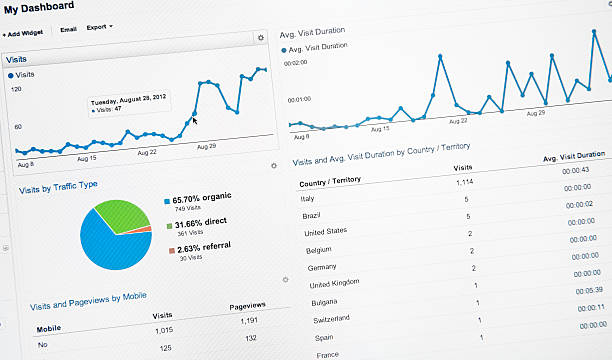
How do we collect feedback? There are many ways. You can use analytical tools like Google Analytics to see how users move through your site, which pages they view most, how long they stay on each page, and where they exit. Heatmaps and session recordings are also excellent tools that show you exactly where on the page users click, how far they scroll, and what problems they encounter. Even a simple survey or feedback box on your site can provide very valuable information.
After you’ve collected the information, the real work begins: analysis and implementation of changes. For example, if you notice that most users leave a specific page with a high bounce rate, you should investigate what the problem with that page is. Is its loading speed low? Is its content outdated? Is its navigation confusing? By identifying and resolving these issues, you not only improve the user experience but also send a positive signal to Google that your site is becoming better and more user-friendly. Google loves dynamic sites that are constantly improving.
Remember, the web world is not static, and user preferences are constantly changing. What is attractive to a user today might be outdated tomorrow. That’s why Rasawb Afarin always emphasizes an iterative approach and continuous improvement. By constantly monitoring user behavior and employing the latest UX/UI methodologies, we keep your site growing like a living entity. This means continuous optimization for both users and search engines. Ultimately, if you care about your users and listen to them, both they will return to your site, and Google will reward you.
🤝 Rasawb Afarin: A Reliable Partner for Successful SEO and UX/UI
So far, we’ve discussed the undeniable importance of UX/UI and its inseparable connection with site optimization. Now the question is: How can all these principles be correctly implemented on a website to achieve results? This is where Rasawb Afarin steps in as a specialized and reliable partner. We are not just a company that provides services; we are your strategic partner on the path to digital success.
At Rasawb Afarin, we emphasize the convergence of search engine optimization and UX/UI from the very beginning. For us, designing a beautiful website without considering optimization principles and user experience is like building a luxury car without an engine; it only has appearance and no functionality. We provide you with a comprehensive solution with a team of experienced specialists in internet marketing, SEO marketing, website development, and UX/UI design. We know that to succeed in the competitive Iranian market, both factors must be covered in the best possible way.

Click here to preview your posts with PRO themes ››
Our services at Rasawb Afarin cover all the necessary aspects for having a powerful website. From Google keyword research and optimization consulting to website and application design with a Mobile-First approach and attractive visual content production. We do all of this in a way that ensures your site is not only in the best possible condition in terms of Google ranking but also provides an unparalleled user experience for your audience. With our comprehensive approach, you can be sure that your site has high credibility in the eyes of search engines and is popular and trustworthy among users. We also operate in the fields of artificial intelligence and automation to offer innovative solutions for your business, which itself is a sign of looking to the future and progressing in technology.
If you are looking to increase website traffic, reduce bounce rate, increase user dwell time, and ultimately grow your online business, Rasawb Afarin is here to help you. By relying on the many years of expertise and experience of our team, you can surpass competitors and find your true place in the digital world. Let us combine our knowledge of optimization and UX/UI to build a site for you that both Google loves and users adore. This means a true win-win!
Do you know what keywords your competitors are using? Discover the best keywords for your business with Rasawb Afarin’s Google Keyword Research!
✅ Identifying high-traffic and targeted keywords
✅ Understanding precise audience needs
✅ Optimizing content and SEO strategy
For search success, be with us!
🔮 Conclusion: A Bright Future with UX/UI and SEO Convergence

Well, we’ve reached the end of our discussion. I think by now you’ve realized that UX/UI and site optimization are no longer two separate islands. They are like two rivers that meet and form a powerful ocean. In today’s digital world, a website’s success truly depends on how well it can be both user-friendly and optimized for search engines. You can no longer focus on one and ignore the other.
Search engines, with every update they release, become smarter and place more importance on the actual user experience. They want to show their users the best and most relevant results, and the best results are those that, in addition to excellent content, also provide a fantastic user experience. A site that has high speed, works well on mobile, has easy navigation, and an attractive appearance, naturally increases user dwell time and reduces its bounce rate. These metrics are the golden signals that Google needs to rank your site. So, if you want to be at the top of search results, you must give real importance to your users.
Remember this, investing in a strong UX/UI design is not just an expense; it’s a long-term investment for the growth of your business. This investment not only makes your users enjoy your site and convert into loyal customers, but it also makes Google recognize your site as a valuable resource and give it a higher ranking. This means more traffic, more leads, and ultimately, more sales.
At Rasawb Afarin, we proudly walk this path with you. With a team of experts who are proficient in both the intricacies of site ranking and the knowledge of UX/UI, we are ready to transform your site into an unparalleled user experience and a powerful machine for attracting audience. The future of the web is a future where user experience is king, and search engines are the servants of this king. So, join us to build this bright future together and make your business in this competitive space brighter than ever.
| Question | Answer |
|---|---|
| What are UX/UI and how do they differ from SEO? | UX (User Experience) is the overall feeling a user has while using a site, and UI (User Interface) is the site’s appearance and visual elements. SEO (Search Engine Optimization) is the process of improving a site’s ranking in search results. While different, they complement each other; good UX/UI helps SEO. |
| Why is Dwell Time important for SEO? | High dwell time indicates that the user has found relevant and valuable content on your site and is satisfied. This is a positive signal for Google that confirms your site’s quality and helps improve SEO ranking. |
| What is Bounce Rate and how can it be reduced? | Bounce rate is the percentage of users who leave a site after viewing only one page, without any interaction. By improving UX/UI, increasing site speed, providing relevant content, and easy navigation, this rate can be reduced, and user experience improved. |
| What is the role of mobile-friendly design in SEO? | Due to Google’s Mobile-First Indexing, mobile-optimized sites receive better rankings. Responsive and mobile-friendly design improves user experience across different devices and prevents mobile users from leaving, which greatly aids SEO. |
| How does site information architecture affect SEO? | Information Architecture (IA) helps logically organize site content and navigation. Good IA allows Google’s robots to better crawl and index your site and identify relevant content, which leads to improved SEO ranking. |
| How important is site loading speed for SEO and UX/UI? | Site loading speed is a critical factor. Slow sites have high bounce rates and low dwell times, and Google gives them lower rankings. Improving speed enhances user experience and strengthens SEO. |
| What services does Rasawb Afarin offer in UX/UI and SEO? | Rasawb Afarin offers comprehensive services including UX/UI design, SEO optimization, website development, content marketing, keyword analysis, and digital marketing consulting to ensure your site is optimized for both users and search engines. |
| Can one achieve good SEO without investing in UX/UI? | No, in today’s world, it’s almost impossible. Search engines pay close attention to user behavior on the site (which is a result of UX/UI). A site with strong technical SEO but poor UX/UI cannot maintain its ranking. |
| How can user feedback be collected to improve UX/UI? | Analytical tools (like Google Analytics), heatmaps, session recordings, surveys, and feedback forms can be used to gather information and identify a site’s strengths and weaknesses. |
| What is the most important goal of UX/UI and SEO convergence? | The ultimate goal is to create an unparalleled user experience that keeps users satisfied while sending positive signals to search engines so that the site achieves a higher ranking and attracts more organic traffic, leading to business growth. |
And other advertising agency services by Rasawb Afarin in advertising:
• Managing advertising campaigns on Twitter
• Optimizing online shopping carts
• Developing survey and quiz platforms
• International digital marketing consulting
• Producing SEO-driven content for product pages
And over hundreds of other services in the field of internet advertising, advertising consulting, and organizational solutions
Internet Advertising | Advertising Strategy | Advertorials
Want to be a leader in your industry?
By accessing specialized industry reports, we put you one step ahead of the competition.
✅ Deep industrial and specialized knowledge.
✉️ info@idiads.com
📱 09124438174
📞 02126406207
📍 Tehran, Mirdamad Street, next to Bank Markazi, Southern Kazeroun Alley, Ramin Alley, No. 6