💡 Why is Website Globalization a Necessity Today?
# Do you remember the old days? When “having a website” was an achievement in itself? Well, those days are long gone. Now, it’s all about globalization, about how borders have become meaningless in the digital world, and your customer can be from anywhere in the world. This means if your business still speaks only one language, well, it’s missing out on a lot of great opportunities. Think about it, for example, you have an excellent product, but you’ve only introduced it in Persian. That’s good, but the world is bigger than that! New markets, fresh cultures, and a lot of people eager to find your services or products are waiting.
The main reason we should consider multilingual website design is very simple: accessibility. People usually prefer to read information in their native language. This isn’t just a preference; it’s a psychological factor that builds greater trust. When your website speaks their language, they feel like you truly care about their needs. This sense of closeness significantly boosts conversion rates, remember that. In fact, you are building a strong communication bridge between your brand and large segments of the world’s population.
RasaWeb Afarin, in this regard, always says that this task is not just about translating words; it’s a big step towards “content marketing” on a global scale. This means you’re not just changing the text; you’re changing the culture, changing the perspective, and ultimately, changing the growth path of your business.
Today, given the high speed of e-commerce growth and internet access in all parts of the world, not having a multilingual website is almost like sitting in a small stall with a sign in only one specific language in a large market, while the surrounding stalls are full of different languages. You don’t want to lose your potential customers simply because of a language barrier, do you?
So, get ready to move forward step by step and see how to open these global gates to your business. This is not just an article; it’s a roadmap for greater success.
🌐 Beyond Mere Translation in Multilingual Website Design

Remember, building a multilingual website is much more than just translating Persian texts into English, Arabic, or any other language. This is actually a common misconception some people have, and well, the results are usually disappointing. When it comes to global markets, you must “localize,” not merely “translate.” Do you believe these two are worlds apart?
What does localization mean? It means you need to adjust your content so that it is completely aligned with the culture, customs, and even common idioms of the specific region’s people. For example, a joke that is very funny in Iran might make no sense in Japan or even be misinterpreted! Or colors that symbolize joy in one culture might symbolize sadness in another. This is where small details make big impacts.
When RasaWeb Afarin talks about “content marketing,” we mean exactly this. You need a team of experts who are not only fluent in various languages but also have a deep understanding of different cultures. These individuals can produce content that truly connects with foreign audiences, builds trust, and encourages them to act. This includes the selection of images, videos, even fonts, and page layouts.
And when it comes to SEO, there’s no question! Google and other search engines love localized and relevant content. A merely translated content might not rank, but localized content optimized for local keywords (here, RasaWeb Afarin is professional in “Google Keyword Research”) can bring you to the top of search results in that specific market. This means more traffic, more customers, and ultimately, more sales. So, let’s broaden our perspective on multilingual website design beyond simple translation and think about a more comprehensive approach.
Are you looking for a way to introduce your products more deeply? RasaWeb Afarin, with engaging advertorial content and content marketing strategies, introduces your brand authentically and effectively to your target audience.
✅ Production of advertorial content with the highest journalistic standards
✅ Increasing brand credibility and building trust among audiences
✅ Attracting high-quality and sustainable traffic through valuable content
⚡ Contact us to publish professional content!
🏗️ Choosing the Right Architecture for Your Multilingual Site

So far, we’ve understood why multilingual website design is necessary and why localization is more important than translation. Now we get to the technical part, which might seem a bit complicated, but don’t worry, we’ll go step by step together. One of the first and most important decisions you need to make is choosing the right architecture for your multilingual website. There are three main options, each with its own advantages and disadvantages:
1. **Subdomains**: For example, `en.yourwebsite.com` for the English version. This method is technically a bit more independent and can have separate hosting for each language. From an SEO perspective, search engines usually consider subdomains as separate websites, which can be both good and might make backlink management a bit more complex. But for large brands that want to treat each language as a separate entity, it’s a good choice.
2. **Subdirectories**: Like `yourwebsite.com/en/`. This method is very common and more popular because all languages are under one main domain and benefit from the SEO power of the main domain. Its management is usually simpler, and for most businesses, it is considered a better option. Search engines recognize these as parts of a single website.
3. **Generic Top-Level Domains (gTLDs)**: This means each language has a completely separate domain, for example, `yourwebsite.de` for German and `yourwebsite.fr` for French. This method is more expensive and time-consuming because you have to register and manage a separate domain for each language. However, from an SEO perspective, it’s the best option for targeting specific countries, as Google immediately understands which country this website is for. But, you have to pay a lot for it.
The choice between these three options depends on your overall business strategy, budget, and technical resources. RasaWeb Afarin’s “optimization consulting” team can help you choose the best architecture for your multilingual website design. This initial decision will have a significant impact on all subsequent aspects, including SEO and user experience.
| Architecture Type | Advantages | Disadvantages | Suitable Use Case |
|---|---|---|---|
| Subdomain | Technical independence, separate management | More complex SEO management, requires separate hosting | Large brands, independent projects |
| Subdirectory | Main domain SEO power, simpler management | Lack of complete independence, complexity in some tools | Most businesses, centralized approach |
| gTLD (Country-code TLD) | Best local SEO, perfectly targeted | Expensive, multi-domain management, high budget needed | Targeting specific countries, large budget |

Click here to preview your posts with PRO themes ››
⚙️ Choosing the Right Content Management System (CMS)
Now that we’ve chosen the site architecture, we need to think about how we’re going to manage all this content, in different languages no less. This is where a powerful and flexible Content Management System (CMS) comes into play. Choosing the right CMS can make your job much easier or, conversely, turn it into a complete nightmare. For a multilingual website, you need something more than an ordinary CMS.
What features should we look for in a multilingual CMS?
* **Built-in translation or plugin support:** The best CMSs either have built-in multilingual capabilities or offer powerful plugins for this purpose. For example, WordPress performs very strongly with plugins like WPML or Polylang. If you need WordPress website design, be sure to consider these features.
* **Easy content management:** You should be able to easily switch between different language versions of a page and edit content. The user interface should be friendly and intuitive so your team can effortlessly keep content updated.
* **Hreflang support:** This is a crucial HTML tag for multilingual SEO that tells search engines which different language versions a page has. Your CMS should be able to generate these tags correctly and automatically.
* **Support for multilingual URL structure:** Whether it’s subdirectories or subdomains, your CMS must be able to manage that URL structure effectively.
* **Compatibility with SEO tools:** For your “site SEO and optimization,” the CMS must allow the use of SEO tools so you can optimize meta tags, descriptions, and titles for each language.
There are many options, including WordPress, Drupal, Joomla, or even custom CMSs designed by “website development” specialists like RasaWeb Afarin for your specific needs. Choosing the right CMS will be the backbone of your multilingual content strategy. So, take your time and consult with an expert to find the best option for your business.
🔍 Technical SEO for Multilingual Websites: A Global Necessity
Do you think that with localization and translation done, your website is ready for globalization? Wait! There’s one more crucial step: “Technical SEO” for multilingual websites. This section might be a bit specialized, but without it, all your efforts to create great content might get lost in the vast ocean of the internet. RasaWeb Afarin takes this section very seriously in the field of “SEO and site optimization.”
The most important aspects of technical SEO for multilingual sites include:
1. **Hreflang Tag:** This is one of the most important tags. Hreflang tells search engines like Google that a specific page has alternative versions in other languages and for which countries or languages these versions are targeted. For example: `` tells Google that this page is for English-speaking users in Great Britain. Mistakes in implementing these tags can lead to serious SEO problems, such as duplicate content.
2. **Canonical Tags:** Canonical tags tell search engines which version of a page is the primary and authoritative one. In multilingual sites, these tags must be implemented correctly to prevent search engine confusion, alongside Hreflang, of course.
3. **XML Sitemaps:** Create a separate sitemap for each language and register it in Google Search Console. This helps Google find and index all your pages.
4. **Page Speed & Performance:** For global users, your website’s loading speed is incredibly important. A slow website has no chance in today’s competitive markets. Use a CDN (Content Delivery Network) to deliver your content from the nearest server to the user. RasaWeb Afarin pays close attention to this in “optimizing” websites.
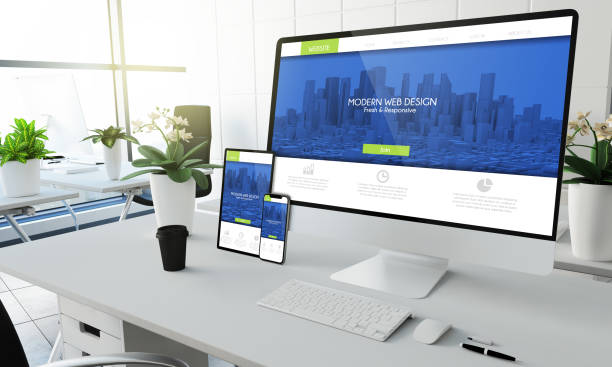
5. **Mobile-Friendliness:** A large portion of global users access the internet via mobile devices. Your website must be fully responsive and mobile-friendly. These technical aspects might be behind the scenes, but they play a vital role in your global success. So, be sure to seek help from “website development” and SEO specialists.
Is your VOD advertising campaign not reaching its goal? RasaWeb Afarin optimizes VOD advertising campaigns, showcasing your brand to real and targeted audiences on the most visited video platforms!
✅ Precise targeting based on user interests
✅ Increasing ad view rates and engagement
✅ Analyzing results and continuous campaign improvement
Shine in online videos with us!
🎨 Localized User Experience (UX) and User Interface (UI)
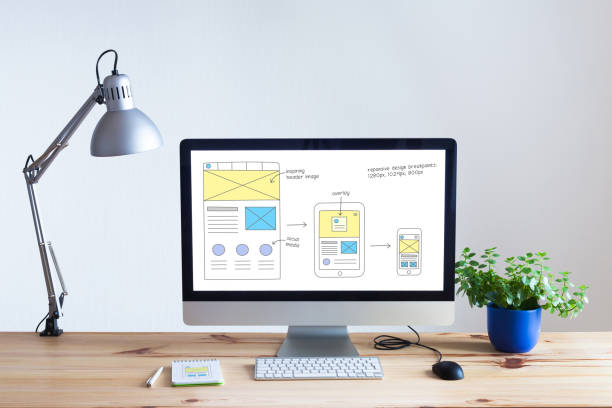
Okay, now that we’ve more or less sorted out the technicalities, we move on to something that truly resonates with the user: “UX / UI” design. Don’t ever think that a good design for one language will be good for all other languages. Absolutely not! It’s like trying to put an oversized suit on a small child. The result is a disaster, isn’t it?
UX/UI design for a multilingual website must be done from scratch with a localization perspective. What does this mean?
1. **Text Direction:** This is one of the most obvious things. Languages like Persian and Arabic are written from right to left, while English and most European languages are written from left to right. Your user interface must be completely flexible and change the alignment of elements based on the language. Buttons, navigation bars, and even forms must respect this change in direction.
2. **Font Selection:** Every language and every culture has its own specific fonts that are both more legible and visually more pleasing to that audience. A beautiful font for English might not be suitable at all for Persian or Chinese, reducing readability.
3. **Images & Graphics:** This is where culture comes into play. Images that are appealing in one market might be meaningless or even offensive in another. You must carefully select images and, if necessary, use specific images for each region. For example, for the Iranian market, using local images appropriate for Iranian culture can be more effective.
4. **Symbols & Icons:** Even icons can have different meanings in different cultures. Make sure your icons are universal and understandable, or localize them if necessary.

Click here to preview your posts with PRO themes ››
5. **Colors:** As I mentioned before, colors have different meanings in different cultures. Before choosing a color palette for a language version, always check the meaning of those colors in that culture.
“UX / UI design” is not just about aesthetics; it’s about how easily and enjoyably a user can interact with your website. A bad user experience can ruin all your efforts to reach global markets. RasaWeb Afarin, in this section, places great emphasis on deep cultural research and user testing in each region to ensure that your website design is truly global yet local.
📢 Localized Marketing and Promotion Strategy

Okay, now that your multilingual website is thoroughly localized and technically sound, it’s time to let the world know about it. Building an amazing website without a strong “internet marketing” strategy is like having a luxury store in a dark dead-end alley. No one will find it!
The marketing strategy for multilingual websites also needs to be localized. You cannot succeed in all markets with the same strategy. RasaWeb Afarin, in “marketing” and “advertising campaigns,” knows that each market has its own nuances.
Let’s review some of the most important methods:
1. **Multilingual Content Marketing:** The content you produce must be completely native to each language and culture. This includes blog articles, videos (this is where RasaWeb Afarin’s “visual content production” comes in handy), infographics, and anything else. Keywords must also be carefully researched for each language (remember “Google Keyword Research”?).
2. **Local SEO:** In addition to technical SEO, you must also consider local SEO for each region. This means registering in local directories, optimizing Google My Business pages for local physical locations, and collecting local customer reviews. Even if your business is purely online, presence in local listings can increase credibility.
3. **Targeted Advertising Campaigns:** Your “Google advertising campaign” and “Instagram advertising campaign” must be designed in the appropriate language and with suitable messages for each market. Advertising budgets and platforms used may also vary between countries. For example, Telegram is very popular in some countries, so a “Telegram advertising campaign” can be effective.
4. **Localized Social Media Management:** Your social media pages must align with the culture of each region. You may need separate pages for each market or at least adjust the content based on their language and culture. RasaWeb Afarin is well aware of these differences in “social media management.”
5. **Advertorials:** Writing “advertorials” in reputable local websites and media can significantly boost your credibility in that specific market and drive targeted traffic to your multilingual website. Remember, each market is a new world with its own rules of the game. With a smart marketing strategy, you can win this game.
📊 Continuous Monitoring and Optimization for Global Markets

Okay, we’ve done the website design, localized it, and even started marketing. Is the job done? Absolutely not! In the digital world, the work is never finished. Sustainable success in global markets requires “continuous monitoring and optimization.” It’s like a garden that you always have to take care of, water, and weed to get good fruit.
What should we monitor and how should we optimize?
1. **Data Analytics:** You should regularly check your website statistics for each language. Use tools like Google Analytics to see where users are coming from, which pages they view most, what the conversion rate is for each language, and where users leave the site. This data will show you where you need to make changes.
2. **A/B Testing:** For each language, the best Call-to-Action button or the best title might be different. With A/B testing, you can try different versions of pages or elements and see which version performs best for each market. This can significantly increase conversion rates.
3. **Keyword & SEO Review:** Search engine algorithms are always changing, and so are user preferences. You should regularly repeat “Google Keyword Research” for each language and ensure your content is still optimized for relevant keywords and has a good ranking.
4. **User Feedback:** Listening to customer voices is the best way to improve your site and services. Use survey forms, online chat, and even social media to collect user feedback for each language. Identify their problems and needs and take action to address them.
5. **Competitor Analysis:** Always keep an eye on your local and global competitors. What are they doing? What innovations do they have? What has worked well in their market? By monitoring competitors, you can learn from their experiences and avoid their mistakes. RasaWeb Afarin, in its “optimization consulting” services, always emphasizes this aspect.
| Item to Monitor | Suggested Tools | Why it Matters? |
|---|---|---|
| Traffic and User Behavior | Google Analytics, Hotjar | Understanding content performance in each market |
| Conversion Rate | Google Analytics Goals, CRM Data | Evaluating Return on Investment (ROI) |
| Keyword Rankings | Ahrefs, SEMrush, Google Search Console | Ensuring visibility in search engines |
| Site Speed | Google PageSpeed Insights | Direct impact on user experience and SEO |
| Customer Feedback | Surveys, Social Media, Live Chat | Identifying weaknesses and direct improvement |
Optimization is an endless process. The more you monitor and implement changes, the more successful your multilingual website will be in global markets.
⚖️ Compliance with International Laws and Regulations: A Hidden Necessity
You might think that with “website design” and global marketing, your work is done and now you’re raking in money. But oh, those hidden “buts”! One of the most important aspects that many people overlook and later deeply regret is compliance with international laws and regulations. This is no joke; your brand’s reputation and even heavy fines are at stake.
Suppose you want to sell a product to Europe or collect user data from citizens there. This is where regulations like GDPR (General Data Protection Regulation) come into play. This EU law is extremely strict regarding the privacy of user data. If you don’t comply, you might face millions of Euros in fines, can you believe it?
So, what should you comply with?
1. **Data Privacy:** Like the GDPR I mentioned. If your users are from California, you must also comply with the CCPA (California Consumer Privacy Act). You must provide transparent and understandable privacy policies in different languages and obtain user consent for collecting their information.

Click here to preview your posts with PRO themes ››
2. **E-commerce Regulations:** Each country may have its own specific laws for online sales; from how prices and taxes are displayed to return policies and warranties. You must ensure that your website correctly reflects these laws for each market.
3. **Taxes & Duties:** Value Added Tax (VAT) or other customs duties will vary depending on the country you are selling to. Your sales system must be able to correctly calculate and display these items.
4. **Legal Content & Terms of Service:** Website terms and conditions, disclaimers, and cookie policies must all be provided for each region in the local language and in accordance with local laws. These are the subtleties that RasaWeb Afarin’s “infrastructure consulting” helps you plan for.
Ignoring these aspects can not only damage your brand’s reputation but also incur significant costs. So, before entering any new market, always consult with legal experts and “optimization consultants” who are familiar with international laws. Prevention is always better than cure, especially in these cases.
9.
Are you unsure about the effectiveness of your advertising campaigns and looking for tangible results? RasaWeb Afarin designs and executes creative and data-driven advertising campaigns, delivering your message to real audiences and achieving your goals.
✅ Significant increase in brand awareness and product recognition
✅ Achievement of specific and measurable marketing goals
✅ Guaranteed return on investment and increased profitability
Plan your next successful campaign today!
🚀 Next Steps and the Importance of Collaboration with Experts
Well, so far we’ve completed a full journey in the world of multilingual website design. We started with the “why,” talked about the importance of localization, moved on to choosing the right architecture and CMS, examined technical SEO, delved into UX/UI, crafted a marketing strategy, and even highlighted the importance of monitoring and regulations. What now? Well, it’s just the beginning!
The world is constantly changing. New technologies, search engine algorithms, customer preferences, and even laws, all are subject to change. A successful multilingual website is not something you build once and abandon. It requires continuous maintenance, updates, and, of course, innovation.
What next steps should you consider?
1. **Content Updates:** Old content, no matter how good, eventually has an expiration date. You must regularly produce new content and keep existing content updated to remain relevant and fresh. “Content production” is paramount here.
2. **New Technologies:** Artificial intelligence, automation, and new “programming” tools are revolutionizing the user experience every day. Can your website leverage these technologies to provide better services to your global users? For example, “building AI agents” for customer support in different languages.
3. **Expansion into New Markets:** You might currently be active in two or three languages, but there are always new markets to discover. Analyze, research, and plan for entry into new regions.
4. **Consultation and Collaboration with Experts:** To be honest, managing all these aspects alone is not for everyone. This is where collaborating with a specialized and experienced team, like RasaWeb Afarin, comes in incredibly handy. With services such as “website development,” “SEO marketing,” “internet marketing,” “optimization consulting,” “360 campaign,” “artificial intelligence,” and “automation,” we can help you not only build a multilingual website but also turn it into a powerful tool for your business’s global growth.
Globalization is an exciting journey, full of challenges and opportunities. With proper planning and the use of available expertise, you can successfully complete this journey and establish your brand in global markets.
| Question | Answer |
|---|---|
| Why should I have a multilingual website? | To access global markets, increase international customer trust, and improve conversion rates through content localization. |
| What is the difference between translation and localization? | Translation is merely converting words, but localization means adapting content to the culture, customs, and preferences of the audience in each region to establish a deeper connection. |
| What is the best architecture for a multilingual site? | It depends on your goals and budget. Subdirectories (example.com/en/) are generally recommended for most businesses, while subdomains (en.example.com) and top-level domains (example.de) are suitable for more specific strategies. |
| What is the Hreflang tag and why is it important? | Hreflang is an HTML tag that helps search engines identify different versions of a page for different languages or geographical regions and prevent duplicate content issues. |
| How can I optimize the user experience (UX) for multilingual users? | By considering text direction (right-to-left/left-to-right), selecting appropriate fonts for each language, using culturally relevant images and symbols, and choosing a suitable color palette for each culture. |
| Which CMSs are suitable for multilingual websites? | WordPress (with plugins like WPML or Polylang), Drupal, and Joomla are among the popular CMSs that have strong multilingual capabilities. |
| Do I need to do anything special for multilingual site SEO? | Yes, in addition to Hreflang, you must ensure proper implementation of Canonical tags, separate XML sitemaps for each language, site speed optimization, and mobile compatibility. |
| Why is compliance with international laws like GDPR important? | Failure to comply with privacy and e-commerce laws in different countries can lead to heavy financial penalties, loss of brand credibility, and legal issues. |
| How can I measure the success of my multilingual website? | By using data analytics tools like Google Analytics, conducting A/B tests, monitoring keywords, collecting user feedback, and analyzing competitors. |
| Can I design and manage a multilingual site myself? | While you might be able to handle some parts yourself, to ensure correct implementation of technical SEO, cultural localization, and compliance with laws, collaboration with “website development” and “digital marketing” experts like RasaWeb Afarin is recommended. |
And other services of RasaWeb Advertising Agency in the field of advertising
• Data Privacy Compliance Consulting
• Ethical AI Auditing
• Fairness and Bias Assessment for AI Models
• Explainable AI (XAI) Solutions
• Responsible AI Strategy Development
And over hundreds of other services in internet advertising, advertising consulting, and organizational solutions
Internet Advertising | Advertising Strategy | Advertorials
Are you surprised by sudden market changes? We have provided continuous market monitoring services for you. ✅ Real-time market monitoring
✉️ info@idiads.com
📱 09124438174
📞 02126406207
📍 Tehran, Mirdamad Street, next to Bank Markazi, Kazerun Jonubi Alley, Ramin Alley, No. 6