💡 Introduction to the Importance of Your Site Structure in SEO: The Backbone of Online Success

Well, to be honest, when it comes to success in the online world, many people first think of content or perhaps link building, but there’s something that’s usually overlooked and, well, happens to be very important: your site structure. You know, this structure is like the backbone of the human body; if it’s missing or has a problem, the whole system collapses. Your website is exactly the same. Without a clear and logical structure, even the best content can’t be seen as it should. Google and other search engines, when they come to crawl your site, are looking for a clear roadmap. If the path is complicated and full of bumps, well, it’s clear they’ll get tired quickly and might even completely ignore some important parts of your site. This is where the importance of SEO consulting and optimization for improving site structure truly shows itself.
I remember we had a client whose site had excellent content, high-quality photos, and even had backlinks, but it wasn’t ranking. When we sat down and reviewed it, we saw that the main problem was this very structure. The links were scattered, important pages were too deep, and it lacked any sort of order. It was like a library where books were just strewn across the floor. Well, who can find their favorite book in such a situation? Search engines are the same. They want everything tidy and accessible so they can crawl the site more easily, and users can find what they want faster. So, understanding that site structure is not just a technical issue, but directly impacts user experience and, consequently, your ranking on Google, is truly vital. A strong structure not only helps Google’s crawlers understand and index your site better, but also helps users navigate your site more easily and potentially spend more time there, which, in itself, is a positive signal for Google. So, before anything else, let’s see what site structure actually is and why it’s so important.
🔍 Detecting Hidden Structural Problems in Your Site: A Deeper Insight
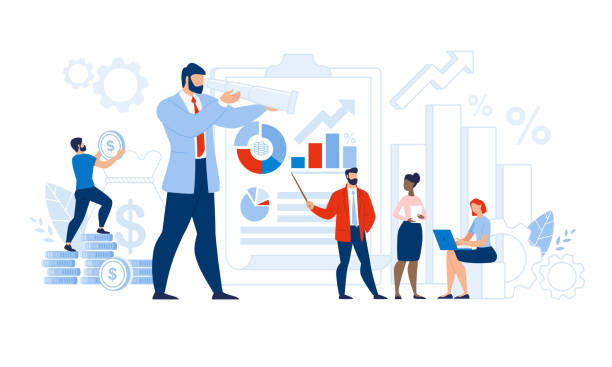
Sometimes we think our site is flawless, everything is in its place, and well, why should there be a problem? But experience has shown that many SEO problems are precisely hidden beneath the surface of the site. These hidden structural problems are like a silent disease that is slowly bringing the site down. One of the most common of these problems is excessive page depth. What does that mean? It means that to reach an important page, the user or Google’s crawler has to make four or five clicks. Well, this means that page is very deep and appears less important to Google. Important pages, especially those that offer your business’s core content, should be at most three clicks away from the homepage.
The next problem could be broken links or redirect chains. Imagine Google wants to reach a page, but instead of the destination, it encounters a 404 error message or has to go through several redirects to get there. This both ruins the user experience and wastes Google’s crawlers’ energy. It’s somewhat like trying to go to an address, but each time you go down a cul-de-sac or have to turn ten times to get there.
Now, let’s get a little more precise. Does your site have a clear and understandable URL structure? URLs should be short, descriptive, and include keywords. For example, instead of «site.com/p?id=123», it’s better to use «site.com/services/seo-consulting». This is clear for users and for search engines. Another issue is duplicate or near-duplicate content, which can be confusing and cause Google not to know which version to rank. For example, having the same product with several different URLs. These are just a few examples of common problems that can harm your site’s structure, and well, finding them without a specialist’s eye is really difficult.
Are you looking for a massive transformation in your business performance with AI and automation? Rasawab Afarin brings efficiency and innovation to you by building AI agents and automating processes.
✅ Needs analysis and implementation of smart solutions
✅ Automation of repetitive tasks and cost reduction
✅ Creation of sustainable competitive advantage and market leadership
Contact us for expert consultation and build the future!
🤝 The Role of SEO Consulting in Analyzing and Redesigning Site Structure: A Specialized Guide

Well, now that we understand how serious structural problems can be, the question is how to solve them? This is exactly where SEO consulting and optimization comes into play and shows its vital role. An experienced SEO consultant, with a specialized perspective and advanced tools, can thoroughly examine your site. This is not just a superficial check; it’s like a specialist doctor using advanced equipment to scan the body and precisely locate the problem. An SEO consultant does the same for your site.
The first step is a comprehensive technical analysis. This means checking everything, from the robots.txt file and sitemap.xml to URL structure, redirects, HTTP response codes, and page indexing status. The consultant checks whether Google’s crawlers can access all important pages of your site without problems. After this thorough review, a complete report of the site’s structural strengths and weaknesses is prepared.
Now it’s time for redesign and optimization. This part is more artistic and strategic. The consultant, considering your business goals, target keywords, and user experience, proposes a new or improved structure. This could include changing page hierarchy, optimizing internal linking, removing duplicate content, or correcting redirect paths. The ultimate goal is to create a logical, understandable structure for search engines and user-friendly.
Remember, this process is not a one-time job. The world of SEO is constantly changing, and site structure must also keep pace with these changes. Continuous optimization consulting ensures that your site is always in its best condition. For example, imagine the «Rasawab Afarin» brand in this field, with the high experience and technical knowledge of its team, can be your step-by-step guide. This way, you don’t have to worry if your site structure is suitable for new Google algorithms or not.
Table Comparing Site Status Before and After SEO Consultation
| Feature | Status Before Consultation | Status After Consultation |
|---|---|---|
| Key Page Depth | 4-5 clicks | 2-3 clicks |
| Broken Links | Numerous | Zero or very few |
| URL Structure | Disorganized and unclear | Short, descriptive, keyword-rich |
| Index Speed | Low | High and organized |
| User Experience (UX) | Weak | Strong and user-friendly |

Click here to preview your posts with PRO themes ››
🏗️ Key Principles of Site Structure Optimization for Google and Users: Solid Foundations
Well, so far we’ve talked about how important site structure is and how SEO consulting and optimization can help. Now let’s move on to the key principles that every site should follow to be loved by both Google and users. These principles are like laying a strong foundation for a house; if they’re not followed correctly, no matter how beautifully you build the upper floors, it might collapse.
The first principle is a logical hierarchical structure. What does that mean? It means your site should resemble a pyramid. The homepage at the top, then main categories, under those subcategories, and finally product or content pages. This structure helps Google understand which pages are more important (those closer to the homepage) and helps the user navigate your site more easily. It’s like a well-organized tree, with main and sub-branches, each leading to a specific destination.
The second principle is using clean and meaningful URLs. I touched on this a bit earlier. URLs should be short, contain relevant keywords, and avoid extra or incomprehensible characters. In a way, the URL itself should explain what the page is about. For example, if a page is about «website design services», its URL should convey this concept, not just a series of irrelevant numbers and letters. This is not only great for SEO but also easier for users to remember and share.
The third principle is simple and transparent navigation (Easy Navigation). Main menus, footer menus, breadcrumbs, and internal site search should all be designed so that even if a user is visiting your site for the first time, they can find what they want without any confusion. Sometimes sites become so complex that the user feels trapped in a labyrinth. The goal is for the user to feel comfortable and find their way without much thought. The simpler the navigation, the lower the Bounce Rate, and the better the user experience, which are all positive signals for Google. These principles are the foundations of any successful site optimization.
🔗 Internal Linking and Information Architecture: The Strong Nodes of Your Site Network

Well, we’ve reached one of the most subtle yet powerful aspects of site structure: internal linking and information architecture. You might think internal linking is just about linking from one page to another, but the truth is, it’s much deeper than that. This work is like the veins that distribute blood throughout your site’s body. If these veins don’t work properly, well, oxygen won’t reach all parts of the site, and sections of it will perish.
Information architecture, in fact, is the planning for how content is organized and labeled. Before you even start creating content or even designing the site, you need to have a mental or written map of what information you have, how you want to categorize it, and how users should access it. This means a strategic look at the entire site. For example, if you offer internet marketing services, you need to specify how «content marketing», «SEO marketing», and «advertising campaigns» fall under this main service and what content each has.
Now let’s go back to internal linking. The main goal is to distribute Page Authority and Link Juice throughout the site and guide Google’s crawlers to more important pages. If you publish a new page, be sure to link to it from older, related pages. This helps the new page get indexed faster and gain authority. On the other hand, link from high-authority pages to lower-authority pages to pass authority to them. You should do this naturally and with relevant anchor texts, not just a bunch of irrelevant links.
Remember, Anchor Text, or the text you place the link on, is very important. It should be relevant to the destination page and help Google understand the topic of that page. Using keywords in anchor text, in moderation, can be very effective. In fact, SEO consulting and optimization comes into play here to tie these internal site nodes in such a way that a smooth and logical path is created for both Google and the user. This art of linking content together is a task that requires strategic vision and experience and can greatly help your site’s SEO.
Is your website unable to attract customers? Rasawab Afarin, with professional website design, provides the platform for your business growth.
✅ Responsive and user-friendly design
✅ High security and excellent loading speed
✅ Professional display of your brand identity
Discover new opportunities by calling 09124438174.
🎨 The Importance of User Experience (UX) in SEO-Friendly Structure: Beyond Appearance
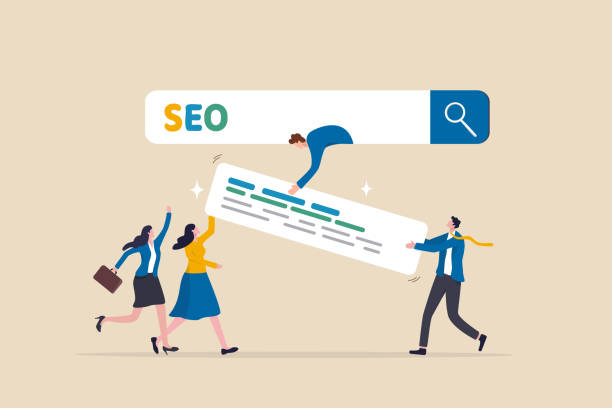
You know, many people think UX, or user experience, is just about the site’s prettiness and color scheme. But to be honest, UX is much deeper than that and, in fact, has a close and vital connection to SEO, especially with site structure. A site with excellent UX means a site where the user feels comfortable and satisfied, quickly finds what they want, and easily interacts with different sections. Well, when the user is satisfied, what happens? They spend more time on the site, visit more pages, and probably reach their goal (e.g., purchase or contact). All of these are positive and strong signals for Google.
Google’s algorithms, especially newer ones like Page Experience, place great importance on UX factors. For example, site loading speed, responsiveness (mobile compatibility), visual stability, and interactivity are all part of Core Web Vitals, which directly impact rankings. These factors themselves largely come back to the technical structure and code of the site. If your site structure is not optimized, well, its speed will be slow, the mobile user experience will be disastrous, and the user will quickly bounce off the site.
An SEO-friendly structure should be designed to also consider these UX principles. For example, navigation menus should be clear and predictable, buttons and links should be easily clickable, and information layout should be logical and readable. This is where SEO consulting and optimization can create a bridge between UX designers and SEO specialists. A team like «Rasawab Afarin» that specializes in both UX / UI design and SEO can provide a comprehensive solution. They can ensure that your site is not only optimized for search engines but also provides an enjoyable and efficient experience for humans. In other words, improving site structure is not just a technical project, but an investment in user satisfaction and ultimately, the growth of your business.

Click here to preview your posts with PRO themes ››
📝 The Role of Keywords and Content in Site Structuring: Informational Foundations
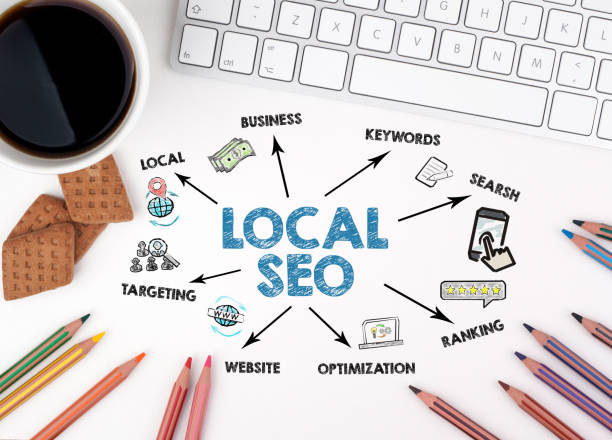
You know, many people think that first they create a structure and then dump whatever content they have into it. But to be honest, this is the wrong approach. Keywords and content must play a central role in the site structuring process from the very beginning. In a way, keywords are like guiding stars that show us what users are looking for and what content we should produce and how we should organize that content.
The first step is comprehensive keyword research. This isn’t just about finding a few words; we need to understand the user’s intent when searching for those keywords. Are they looking for information? Looking to buy a product? Looking for a solution? Based on these intents, we can categorize site pages and arrange a more logical structure for them. For example, if a keyword has informational intent, we should guide it to a blog page or guide. If it has commercial intent, to a product or service page.
After that, we need to think about Content Siloing. This means grouping pages related to a main topic under a specific category. For example, if your main topic is «digital marketing», you can create silos like «SEO», «social media marketing», «content marketing», and «online advertising». Each silo itself includes more sub-pages and detailed articles. This helps Google easily understand the connection between pages and recognize your site as an authoritative source in that area.
Internal linking, which we talked about earlier, also shows itself here. When you silo your content, internal links between pages within the same silo gain more value and distribute authority among themselves. SEO consultants like the «Rasawab Afarin» team, who specialize in Google keyword research and content creation, do exactly this. By thoroughly analyzing keywords and user intent, they help ensure your content is placed correctly within the site structure and performs optimally. Remember, great content in the wrong place is like a diamond in the ocean depths; no one will find it.
Table: Sample Content Siloing Based on Keywords
| Main Topic (Core Keyword) | Content Silos (Sub-Keywords) | Sample Pages/Content |
|---|---|---|
| SEO Consulting | Technical SEO, On-Page SEO, Off-Page SEO | Complete Technical SEO Guide, On-Page SEO Checklist, Link Building Strategy |
| Internet Marketing | Content Marketing, Social Media Marketing, Google Ads | Principles of Engaging Content Creation, Instagram Marketing Guide, Google Ads Campaigns |
| Website Design | UI/UX Design, Responsive Design, Website Security | How to Design a User-Friendly UI?, Importance of Responsive Design, Increasing Website Security |
🛠️ Using Advanced Tools and Techniques in Structure Optimization: Your Smart Assistants
Well, so far we’ve talked about the importance of structure, its principles, and the role of keywords. Now we come to the exciting part: the tools and techniques that, like smart assistants, help us do this work more easily and accurately. To be honest, without these tools, SEO consulting and optimization for improving site structure would be like trying to drive blindfolded. It’s very difficult and full of risks.
One of the first and most important tools is Google Search Console (GSC). This free Google tool is a treasure trove of information. From page indexing status to crawl problems, internal and external links, and even Core Web Vitals, it shows you everything. With GSC, you can see if Google sees and understands your pages. Any error reported there is a red flag that needs immediate attention.
Next, we get to tools like Screaming Frog SEO Spider. This is a powerful crawler tool that crawls your site like Google and gives you a wealth of technical information: broken links, redirects, page depth, duplicate titles and descriptions, and a thousand and one other things. With this tool, you can get a complete picture of your site’s structure and find and fix problems before Google gets to them. It acts somewhat like a radiological view of your site.
Other tools like Ahrefs or Semrush are also very important for competitor analysis, identifying new keywords, and examining the backlink profile of your site and competitors. These help you find new content structuring strategies and understand how competitors have built their site structure. For example, if you see a competitor performing very well in a specific area with a particular structure, well, you can draw inspiration from it.
Techniques like using the robots.txt file to control crawler access to certain parts of the site, and creating an XML sitemap (sitemap.xml) to guide Google to find all important pages, are essential. These tools and techniques, together, form a powerful suite that an experienced SEO consultant like «Rasawab Afarin» uses to optimize your site to the fullest. Believe me, without these tools, SEO work becomes much harder and more error-prone.
⛰️ Common Challenges and Solutions in Optimizing the Structure of Large Sites: Giant Ships

Well, so far we’ve talked about the principles and tools of structure optimization. But to be honest, when it comes to large sites, the story changes a bit. Managing the structure of a site with hundreds or thousands of pages is like navigating a giant ship in a stormy sea; a small mistake can be catastrophic. Here, the challenges become more complex, and the solutions, well, more professional.
One of the biggest challenges is managing a vast amount of content. On large sites, especially e-commerce stores or news portals, there might be tens of thousands of pages. If we were to check every single link or manually change the structure, well, Noah’s lifespan wouldn’t be enough. Here, we need to move towards automated and systematic solutions. For example, using product filters in online stores, which generate numerous URLs, is a serious challenge in itself. We need to use canonical and noindex tags to ensure Google only sees the original version and no duplicate content is created.
The next challenge is navigation and crawling. With such a volume of pages, Google’s Crawl Budget becomes a critical issue. If Google can’t crawl all your important pages, well, they won’t get indexed. Here, by using robots.txt, XML sitemap, and intelligent internal linking, we need to guide Google on which pages are more important to us and our business and should receive more attention. In a way, we need to design a very clear «treasure map» for it.
Also, continuous changes on large sites are another challenge. New products are added, categories change, new articles are published. These changes must be constantly reviewed to ensure that the site structure remains optimized. For this, a team of SEO consulting and optimization is needed to continuously monitor the site’s performance and quickly react to any structural problems.
Click here to preview your posts with PRO themes ››
The ultimate solution for large sites is close collaboration between different teams: SEO team, development team, content team, and marketing team. Everyone must be coordinated and aware of the importance of an SEO-friendly structure. Without this collaboration, even the best SEO consultant cannot work miracles.
Table: Managing Challenges on Large Sites
| Challenge | Proposed Solution | Key Techniques |
|---|---|---|
| Managing Large Volumes of Content | Systematizing URL management, eliminating duplicate content | Canonical Tag, Noindex, URL parameters in GSC |
| Optimizing Crawl Budget | Intelligent crawler guidance | Robots.txt, Sitemap.xml, targeted internal linking |
| Continuous Site Changes | Continuous monitoring and quick response | Monitoring GSC and crawling tools, team collaboration |
| Technical Complexity | Interdepartmental cooperation and high technical expertise | Experienced SEO team, coordination with development and UX teams |
Are you looking for a way to capture the attention of audiences on visual platforms? Rasawab Afarin, with its VOD advertising campaign, displays your brand on the most visited video streaming networks and puts you in the spotlight!
✅ Access to a wide and engaged audience
✅ Creation of creative and impactful advertising messages
✅ Rapid increase in brand and product awareness
For visible and effective advertising, contact us today: 09124438174
🚀 Rasawab Afarin and the Future of Your Site’s SEO Structure: A Step Towards the Peak

Well, so far we’ve talked a lot about the importance of site structure, its problems, solutions, and the tools that can help. But honestly, all these words only bear fruit when there’s a specialized and committed team behind the work. It’s like having the best treasure map but no guide who knows how to use it. This is exactly where a specialist partner like Rasawab Afarin steps in.
«Rasawab Afarin» is not just a digital marketing company; it’s a team of specialists who are intimately familiar with the online world and Google’s algorithms. With a deep understanding of internet marketing, content marketing, and well, their main specialty which is SEO consulting and optimization, they can transform your site from an ordinary status to a launchpad.
When it comes to improving site structure, Rasawab Afarin’s approach is fully comprehensive and based on E-E-A-T (Experience, Expertise, Authoritativeness, Trustworthiness). First and foremost, they conduct a precise audit to find the hidden structural problems of your site. Then, relying on years of experience and up-to-date knowledge, they design a customized strategy for your site. This strategy isn’t just about fixing flaws; its goal is to create a forward-thinking structure that can adapt itself to every Google algorithm change.
This team not only accompanies you in the technical SEO optimization of your site but also can help you in other aspects such as precise Google keyword research, high-quality content creation, and even UX / UI design. This means a complete package of services that covers all the necessary aspects for a successful online presence. You no longer need to search for different specialists one by one; «Rasawab Afarin» has gathered all of these under one roof. So, if you want your site to be at its peak and stay ahead of others in this intense online competition, optimization consulting with a specialized and trustworthy team is the best step you can take. This way, you ensure that every step you take for your site is in the right direction and progressive.
| Question | Answer |
|---|---|
| What exactly is SEO consulting and site structure optimization? | SEO site structure consulting is a specialized process for reviewing, analyzing, and improving the technical and content architecture of a website to make it more understandable for search engines and provide a better user experience. |
| Why is site structure so important for SEO? | Optimized structure helps Google find, index, and understand which of your site’s pages are more important more easily. It also improves user experience and increases user retention time, which is a positive signal for ranking. |
| What are the main structural problems that harm SEO? | Excessive page depth, broken links, redirect chains, unclear URLs, duplicate content, and complex navigation are among the most common problems. |
| What role does internal linking play in structure optimization? | Internal linking strengthens site structure by distributing authority (link juice) between pages, guiding Google’s crawlers to more important pages, and helping to understand the thematic connection between content. |
| How is User Experience (UX) related to an SEO-friendly structure? | An SEO-friendly structure must also simultaneously provide excellent UX. Easy navigation, high loading speed, and mobile compatibility (responsiveness), which are part of UX, directly affect SEO rankings. |
| What are the important tools for analyzing site structure? | Google Search Console for monitoring indexing status, Screaming Frog SEO Spider for crawling and identifying technical issues, and tools like Ahrefs/Semrush for competitor and keyword analysis are essential tools. |
| What is Content Siloing and why is it important? | Content siloing means grouping pages related to a main topic under a specific category. This helps Google better understand your site’s expertise in a particular area and increases its thematic authority. |
| Is site structure optimization a one-time process? | No, structure optimization is a continuous process. Given changes in Google’s algorithms, adding new content, and business growth, site structure must be regularly reviewed and improved. |
| How can I tell if my site structure needs consulting? | If your SEO rankings are not improving despite good content, you have a high bounce rate, your important pages are not being indexed, or you see many Crawl errors in Google Search Console reports, you likely need SEO structure consulting. |
| How can Rasawab Afarin help improve site structure? | Rasawab Afarin, with expertise in SEO, content marketing, UX/UI, and the use of advanced tools, identifies your site’s structural problems and optimizes its structure for maximum performance by designing a comprehensive strategy tailored to your business goals. |
And other services of Rasawab Advertising Agency in the field of advertising
• Digital Marketing Campaign Management B2G
• Micro-Copywriting Content Production
• Sustainable Marketing Strategy Consulting
• Customer Satisfaction Management Automation
• Optimization for Web Stories
And over a hundred other services in the field of internet advertising, advertising consulting, and organizational solutions
Internet Advertising | Advertising Strategy | Advertorial
What do your customers really want? By deeply understanding customer needs, increase their satisfaction and loyalty. ✅ Precise understanding of customer behavior
✉️ info@idiads.com
📱 09124438174
📞 02126406207
📍 Tehran, Mirdamad Street, next to Bank Markazi, Kazerun South Alley, Ramin Alley, No. 6