📚 On-Page SEO: The Foundation for Your Online Sales Growth

#Well, if you’re looking to increase online sales, I have to tell you that many people think SEO is just a bunch of mysterious tasks that specialists perform. But the reality is that on-page SEO, meaning the optimizations you perform within your own site, acts like a powerful engine for boosting sales. This is no longer strange; it’s a truth that every online business needs to pay attention to. Imagine you have a physical store that looks great from the outside, with an impeccable display window, but when you enter, the aisles are convoluted, the products are disorganized, and no one guides you. Well, what happens? The customer gets confused, frustrated, and leaves, even if your product is excellent. Your website is the same. On-page SEO is precisely like tidying up the shelves, lighting the aisles, and placing guide signs so that customers can easily find what they want and, ultimately, make a purchase.
Why should on-page SEO be taken seriously? The story begins with search engines like Google constantly trying to show users the best and most relevant results. If your site isn’t readable and understandable for these engines, they simply can’t figure out what your valuable content is about. If your site’s structure is chaotic, not only will Google be confused, but users themselves will quickly get tired and return to the search results page. This is where the bounce rate goes up, and well, this means losing endless opportunities for increasing online sales. At Rasaweb Afarin, we always emphasize that on-page SEO is the backbone of any digital marketing strategy. Without strong on-page SEO, your other efforts in advertising and marketing are like pouring water into a sieve. That is, no matter how much you spend on advertising or how much engaging content you produce, if your site isn’t optimized internally, you won’t see the desired results.
This comprehensive guide will show you, step by step, how by improving these internal aspects of your site, you can not only climb higher in search rankings but also improve the user experience so much that every visitor turns into a loyal customer. We’re not just going to talk about a few dry techniques; we want to show how these techniques interweave to create an unparalleled synergy for increasing online sales. From choosing the right keywords to internal link structure and site speed, each section is like an important puzzle piece that, if placed correctly, reveals a complete picture of success for your online business. So get ready to turn your site into a real magnet for customers with these tips!
🔍 Dissecting On-Page SEO: Components and Importance
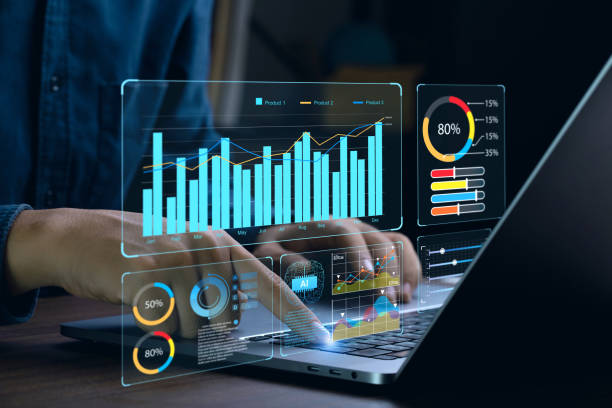
Now that we understand how much on-page SEO contributes to increasing online sales, let’s explore what on-page SEO actually is and what components it consists of. Many people only consider SEO to be about backlinks and off-page SEO, but in reality, on-page SEO refers to all the optimizations performed within your own website; that is, things that are completely under your control. For example, the site structure, the content you produce, page loading speed, and even user experience design are all subcategories of on-page SEO.
Look, the main difference between on-page and off-page SEO is like working on the interior decoration and product quality inside your shop (on-page SEO) while simultaneously asking others to introduce and recommend your shop (off-page SEO). Both are important for the success of a business, but if you have problems inside your shop (website), no matter how much you advertise, you’ll lose customers. The main components of on-page SEO include: keyword optimization in content, title and meta descriptions, URL structure, use of Heading tags, content quality and depth, internal link structure, image optimization, site speed, mobile compatibility, and structured data. Each of these is a small lever for increasing online sales.
The importance of on-page SEO is very high because it directly affects search engines’ understanding of your site and users’ experience. A site with strong on-page SEO tells Google: “Hey, my content is organized, relevant to this keyword, and very useful for users.” And well, Google loves such sites. When Google understands your site well, it’s easier for it to rank it high. On the other hand, when a user enters your site and sees that everything is organized, the speed is good, and they can easily find whatever they want, they get a better feeling about your site and stay longer. This longer stay and easy information retrieval directly lead to purchase decisions and, consequently, increasing online sales. Neglecting on-page SEO is like building a house without a strong foundation; it might stand for a short time, but eventually, it will collapse.
Is your presence on social networks weak and you can’t attract audiences with engaging visual content? Rasaweb Afarin, with social media marketing and professional visual content production, makes your brand shine in the digital space.
✅ Designing attractive content calendars suitable for each platform’s needs
✅ Producing stunning images and videos to capture audience attention
✅ Increasing brand engagement and loyalty within social media
For a powerful and influential presence in social media, collaborate with us!
🎯 Finding Keyword Treasures: Research for On-Page SEO
Okay, so far we’ve understood how important on-page SEO is. Now we come to one of the most vital steps: finding the right keywords. You know, keywords are like a treasure map that, if you find them correctly, will directly lead you towards increasing online sales. But well, just finding them isn’t enough; you need to know how to use them and where to place them.
The first step is to understand user intent. What does that mean? It means when someone searches for something on Google, what are they really looking for? Are they looking for information? Do they want to buy something? Do they want to compare? By understanding the search intent, you can produce content that precisely answers their needs. For example, if someone searches for “Asus laptop price,” their intent is to buy and compare prices. So your content should be a price list or a product page. But if they search for “history of Asus company,” their intent is information, and a historical article would be a better answer. Tools like Google Keyword Planner, Ahrefs, Semrush, or even Google’s own suggestions when typing can greatly help you in this regard.
Once you’ve found the keywords, think about them; don’t just use single-word keywords. Take “Long-tail Keywords” seriously. These are multi-word phrases that have lower search volume but are more targeted and have a higher Conversion Rate. For example, instead of “party dress,” use “long women’s party dress for a wedding in Tehran.” The probability that someone searching for this long phrase actually intends to buy is much higher, and this means a big step towards increasing online sales. These longer keywords also have less competition, making it easier to rank for them.
Using keywords in content also has its own rules. It should be natural, not stuffing the content with keywords (Keyword Stuffing). Google dislikes this practice and will penalize you instead of helping. Your main keyword should be in the page title, meta description, H1, one or two H2s, and in the first paragraph. Then, use it naturally throughout the text, along with synonyms and related words (LSI Keywords). This table provides an overview of keyword types and their intent:

Click here to preview your posts with PRO themes ››
| Keyword Type | User Intent | Example |
|---|---|---|
| Informational | Gaining knowledge | SEO History |
| Commercial/Investigational | Comparing products/services | Best phone 2024 |
| Transactional | Purchasing product/service | Buy Dell laptop |
| Navigational | Finding a specific site | Digikala website |
Remember that keywords are not just for Google; they are your guide to writing content that truly helps the user. And this is where increasing online sales shows its face.
✍️ Content Optimization: The Beating Heart of Your Website
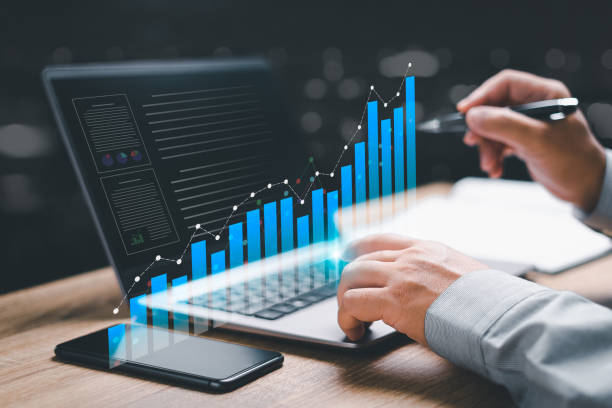
Content is king! You’ve probably heard this phrase many times, but how much do you really act on it? Producing high-quality content and optimizing it for on-page SEO is the beating heart of any website that aims to increase online sales. By high-quality content, we don’t just mean long text, but content that truly helps the user, provides useful information, and is engaging. Now, how do we optimize this content?
The first thing that catches the eye is the Title Tag. This is the text displayed in the browser tab and search results. The title should be engaging, contain the main keyword, and be less than 60 characters. Next, we have the Meta Description, which shows a short summary of the page’s content. This section doesn’t directly affect ranking, but if well-written, it increases the click-through rate (CTR) and encourages users to click on your link, which is a step towards increasing online sales.
After these come the Heading Tags (H1 to H6). H1 is your page’s main title, and you should only have one of them, containing your main keyword. The other headings (H2, H3, etc.) are for dividing content into smaller, more readable sections. This not only helps Google understand your content’s structure but also allows the user to easily scan the article and get to the desired section. Good content should have a logical structure, like a book divided into chapters. This way, the user doesn’t get tired of reading long texts.
But the most important part is the content text itself. Your content should be comprehensive and complete, covering all aspects of the topic and answering potential user questions. If your content is truly excellent, the user will stay on the page longer, share it with others, and may even link to it. These are all positive signals for Google. In addition to text, the use of images, videos, and infographics is also very important. They not only make your content more engaging but, if optimized correctly (e.g., with appropriate alt tags), they can themselves be a new source of traffic from image search. Don’t forget, images should be low in size so as not to slow down the site. Ultimately, all these efforts are for a bigger goal: gaining user trust, keeping them on the site, and finally, guiding them towards a purchase that leads to increasing online sales.
🔗 The Power of Internal Networking: Link-Building Strategy

Now we come to another very important section that many people underestimate: internal link-building. This technique, if implemented correctly, flows like blood through your site’s veins, showing Google and users which of your pages are most important. Imagine you have a city, and each page of your site is a house in that city. Internal links are like the streets and roads that connect these houses. If these streets aren’t well-built or don’t exist at all, no one can find their way.
What’s the main benefit of internal link-building? First and foremost, it helps with user experience. Users can easily navigate between related pages, gain more information, and stay on your site longer. When a user navigates your site more easily, the likelihood of them reaching their goal, such as making a purchase, increases; and this means increasing online sales. Second, it helps search engines better understand your site’s structure and index your pages more effectively. It’s through these links that Google understands which pages are related to each other and which pages have more importance.
Important points to observe in internal link-building: Choose the Anchor Text correctly. Anchor text refers to the words you use for linking. These words should be relevant to the destination page and contain the keyword of that page. For example, if you’re linking to a page about “benefits of technical SEO,” the anchor text shouldn’t be “click here,” but rather “benefits of technical SEO” or “importance of technical SEO.” This way, both the user understands where they’re going, and Google better comprehends the relationship between pages. Avoid excessive and irrelevant internal links. Quality is always more important than quantity.
A logical site structure also greatly aids internal link-building. For example, use a hierarchical structure: the homepage at the top, main categories in the next layer, and product pages or articles in the lower layers. This structure allows you to pass “Link Juice” from higher-ranking pages to more important and newer pages. More important pages, such as your main product or service pages, should receive more internal links from related pages. This helps those pages also rank higher in search results, and well, the higher your product pages rank, the greater the opportunity for increasing online sales. This internal networking acts like a precise navigation system that both guides the user to their destination and shows the way to search engines.
=
Is your website falling behind in the fierce Google competition? Ascend to the top of search results and attract more customers with Rasaweb Afarin’s SEO marketing services.
✅ Top keyword rankings
✅ Increased organic and high-quality traffic
✅ Comprehensive competitor and market analysis
Contact us now to boost your website’s ranking: 09124438174.
🚀 Speed and Structure: Technical Optimization for On-Page SEO

Imagine you’re making an important online purchase, but the product page takes five seconds to load! What do you do? You probably get frustrated and leave the site, right? This is where the importance of technical SEO and site speed comes into play. Technical SEO, a part of on-page SEO, may not be directly related to content, but it forms the foundation for an excellent user experience and, consequently, increasing online sales.
Site speed has become one of Google’s most important ranking factors. No one waits for a slow website. To improve speed, first and foremost, take image optimization seriously. High-volume images are site speed killers. Use newer formats like WebP and always compress images before uploading. Next, enable Browser Caching so your site’s information loads faster for subsequent visits. Reducing unnecessary CSS and JavaScript codes is also very effective. Your site’s hosting must also be strong. A quality host can make a big difference.
The next topic is Mobile-Friendliness. We all know that most users access websites via mobile. If your site doesn’t display well on mobile, you’re practically losing a large portion of your customers. Google has also prioritized Mobile-First sites, meaning it first examines the mobile version of your site. Responsive Design is the best solution. Buttons should be large and clickable, texts readable and visible without needing to zoom.
Now we come to Structured Data or Schema Markup. These are codes you place on your site to help Google better understand what the page’s content is about. For example, if you have a product page, you can use Schema Markup to tell Google that this page is a product, what its price is, what user reviews are like, and whether it’s in stock. This information is displayed as Rich Snippets in search results (e.g., star ratings below the title), which makes your link stand out more in search results and increases your click-through rate. This means more traffic, and well, more targeted traffic means increasing online sales. Additionally, the robots.txt file for managing bot access to the site and the XML Sitemap file for aiding page indexing are also important parts of technical SEO. These may seem complex, but for a professional website aiming for high sales, they are crucial.

Click here to preview your posts with PRO themes ››
💡 User Experience (UX) and On-Page SEO: Hand in Hand for Success
You might think, what does User Experience (UX) have to do with SEO? Honestly, much more than you might imagine! Nowadays, Google and other search engines place great importance on user experience factors such as bounce rate, time spent on site, and the number of pages a user visits. Good UX not only keeps users on your site but also sends positive signals to Google that your site is useful for users, and this means increasing online sales. Remember, a satisfied user is likely to return and make a purchase.
First and foremost, Navigation. This section must be incredibly simple and intuitive. Users should be able to get anywhere they want with two or three clicks. Site menus should be clear and categorized. A user shouldn’t have to search for several minutes to find a specific product or service. If navigation is complex, the user gets frustrated and leaves the site, which is exactly the opposite of what you need for increasing online sales.
Next are clear Call-to-Actions (CTAs). Buttons for buying, adding to cart, contacting us, or downloading a catalog should be prominent and visible. The color, size, and placement of CTAs are very important. They should be such that the user easily sees them and knows what will happen by clicking on them. If CTAs are hidden or confusing, the user misses the opportunity to convert into a customer.
The next topic is content readability. Your content should be easy to read. Use short paragraphs, bulleted lists, and appropriate fonts. Text and background colors should have good contrast so that the user’s eyes don’t get tired. No one likes to read long texts without paragraphs or proper punctuation. The use of images and videos also significantly helps increase content attractiveness and improve user experience.
| UX Element | Impact on SEO and Sales | Example |
|---|---|---|
| Easy Navigation | Reduced bounce rate, increased time on site | Categorized and clear menu |
| Clear CTA | Increased conversion rate, increased sales | Prominent “Buy Now” button |
| Content Readability | Increased engagement, reduced bounce rate | Short paragraphs, use of headings |
| Simple Forms | Increased form completion, improved experience | Registration form with few essential fields |
Ultimately, a positive user experience makes the user feel good about your brand. This good feeling builds trust, and trust is the most important factor in increasing online sales and creating loyal customers. Therefore, when you are working on on-page SEO, always put the user at the center of your attention. Anything that improves the user’s experience indirectly improves your site’s SEO and ultimately leads to increasing online sales.
📊 Monitoring and Analysis: Measuring On-Page SEO Performance and Sales Growth

Well, you’ve done all this work, optimized your site, produced great content, but how do you know it’s actually working and leading to increasing online sales? This is where monitoring and analysis come into play. Without measurement, you’re practically walking in the dark. Tools like Google Analytics and Google Search Console are your best friends, telling you where you are and what changes you need to make.
First of all, install Google Analytics. This tool gives you invaluable information about your site’s traffic. You can see where users come from (e.g., organic search), what they do on your site, how many pages they visit, how long they stay on your site (time on site), and what the bounce rate is. A high bounce rate is not a good sign and can indicate that your content wasn’t relevant or the user experience had issues. On the other hand, a long time on site and many page views send positive signals to Google, meaning users are satisfied with your site, which helps your ranking.
Next, don’t forget Google Search Console. This tool provides direct information from Google itself that no other tool can. You can see for which keywords your site appears in search results, what the click-through rate (CTR) is, which of your pages are displayed most often, and if Google finds any errors on your site, such as indexing problems or mobile issues, it will report them to you. This information is crucial for improving on-page SEO and fixing technical issues.
What metrics should you track?
- Keyword Rankings: Are your important keywords ranking high?
- Organic Traffic: Is the number of visitors coming from Google increasing?
- Conversion Rate: What percentage of your visitors actually perform the action you want them to (e.g., make a purchase or fill out a form)? This directly relates to increasing online sales.
- Bounce Rate and Time on Site: Are users staying on your site and interacting with it?
By regularly reviewing these metrics, you can identify your site’s strengths and weaknesses. For example, if a page has a high bounce rate, it could indicate that its content is not optimized, its loading speed is slow, or its UX has problems. Monitoring and analysis is an ongoing process. The world of SEO and digital marketing is constantly changing, and you must continuously adjust your site with data to always stay ahead of the competition and maximize opportunities for increasing online sales.
🌐 Beyond Today: Future Trends and AI in On-Page SEO

The digital world moves at a frantic pace. What’s trending today might be obsolete tomorrow. SEO is no exception to this rule. To always stay in the game and continue to increase online sales, you need to look to the future. One of the biggest players on the scene is undoubtedly Artificial Intelligence (AI), which is changing everything.
AI is no longer just a fancy word; it’s directly impacting how search engines work and even how content is produced. Google’s algorithms, such as RankBrain and BERT, are becoming more complex and intelligent with the help of AI. They no longer just look at keywords; they try to understand the true intent and meaning behind a user’s search. This means SEO professionals need to focus more on Semantic SEO; that is, instead of stuffing text with repetitive keywords, they should produce comprehensive and relevant content that answers various user questions about a specific topic. AI can also be helpful in content production, but let’s not forget that purely human content, with creativity and depth, always wins. Smart use of AI for ideation, summarization, and optimization can help increase online sales through improved content.
Another trend is Voice Search. With the proliferation of voice assistants like Siri and Google Assistant, more and more people are searching with their voices. Voice search is usually longer and more conversational than text search. For example, instead of “Tehran weather,” they might say, “What’s the weather like in Tehran today?” This means you need to include longer, conversational keywords and questions in your content. FAQ pages can be really helpful here, preparing you to answer these types of searches. Preparing for voice search means capturing a new segment of traffic that can lead to increasing online sales.

Click here to preview your posts with PRO themes ››
Finally, you must always be ready for continuous optimization. SEO is not a one-time job; it’s an ongoing process. Google constantly updates its algorithms, competitors are always trying new things, and user expectations change. So you always need to monitor your site, check analytical tools, and make data-driven decisions. This means an agile and adaptive approach, so you never fall behind the competition and always keep the path open for increasing online sales.
20.
Do you want to introduce your products in an innovative, widespread, and impactful way? With Rasaweb Afarin’s product marketing campaign, you can launch your new product to the market with high effectiveness, attract maximum audience attention, and increase initial sales!
✅ Developing a comprehensive and creative strategy for new product introduction
✅ Utilizing diverse marketing channels tailored to the product
✅ Increasing awareness, interest, and desire to purchase the product in the market
For your product’s undeniable success, collaborate with us today!
📈 A Comprehensive Solution for Increasing Online Sales: Rasaweb Afarin’s Final Steps
Well, so far we’ve reviewed many important points together; from the importance of on-page SEO and finding keywords to content optimization, internal link-building, site speed, and even looking to the future with AI. If you do all this correctly, you can be sure that your site will not only achieve a good position in search results but also provide an excellent user experience for your audience. And well, when the user is satisfied, what could be better for increasing online sales?
But to be honest, implementing all of this, especially professionally and continuously, is not a simple task and requires time, knowledge, and specialized experience. Perhaps as a business owner, you don’t have enough time or expertise to delve into these details. This is where the role of a specialized team like Rasaweb Afarin becomes prominent.
At Rasaweb Afarin, we do exactly what your site needs to take stronger steps towards increasing online sales. Using a comprehensive approach based on E-E-A-T principles (Experience, Expertise, Authoritativeness, Trust) and GEO SEO, we optimize your site from zero to one hundred for Google and users. From precise keyword research and competitor analysis to producing unique and engaging content that is not only SEO-friendly but also creates real value for the reader. We structure your site, optimize its speed, engineer internal links, and adjust all technical aspects so your site works like a well-oiled machine.
We believe in content marketing, UX/UI design, social media management, and even 360-degree advertising campaigns, all of which, alongside on-page SEO, create a powerful ecosystem for increasing online sales. Our goal is not just to raise your site’s rank in search results; our goal is to drive high-quality traffic to you, convert visitors into customers, and grow your business in the online space. This means investing in your business’s future. So if you want to truly revolutionize your online sales, know that Rasaweb Afarin is a reliable partner on this journey.
| Question | Answer |
|---|---|
| What is on-page SEO and why is it important for increasing online sales? | On-page SEO refers to optimizations within your website (such as content, structure, speed). These optimizations help search engines better understand your content and improve your ranking. By improving ranking and user experience, traffic becomes more targeted, increasing the likelihood of online sales. |
| What is the main difference between on-page SEO and off-page SEO? | On-page SEO focuses on factors within your site (such as content, keywords, speed) which you have full control over. Off-page SEO includes activities outside the site (such as link-building) that help increase your site’s authority and trust. Both are essential for a successful SEO strategy. |
| How do we find suitable keywords for on-page SEO? | Using tools like Google Keyword Planner, Ahrefs, or Semrush, you can find keywords relevant to your business and user intent. Pay attention to long-tail keywords and user search intent to provide more precise content. |
| What are the most important elements of content optimization for on-page SEO? | Page title (Title Tag), meta description, heading tags (H1-H6), content quality and comprehensiveness, and optimal use of images and videos are among the most important elements. These contribute to readability, search engine understanding, and content attractiveness. |
| How does internal link-building affect increasing online sales? | Internal link-building makes it easier for users and search engines to navigate your site. This improves user experience, increases time on site, and shows Google which pages are more important, ultimately leading to better ranking and increased online sales. |
| What is the role of site speed in on-page SEO and sales? | Site speed is an important ranking factor. Slow sites frustrate users and increase bounce rates, which harms SEO and sales. Speed optimization (image compression, caching, etc.) improves user experience and is effective in increasing online sales. |
| How does user experience (UX) help on-page SEO and increase sales? | Good UX (easy navigation, clear CTAs, readable content) keeps users on the site longer, encourages them to visit more pages, and helps them develop a better feeling towards your brand. These positive signals are sent to Google and increase the likelihood of converting visitors into customers. |
| Why is monitoring and analyzing on-page SEO performance essential? | Without monitoring and analyzing with tools like Google Analytics and Search Console, you cannot identify the strengths and weaknesses of your SEO strategy. These tools help you measure keyword rankings, organic traffic, and conversion rates to make data-driven decisions for increasing online sales. |
| What is the role of artificial intelligence in the future of on-page SEO and increasing online sales? | With advanced algorithms, AI enhances search engines’ understanding of user intent and site content. This means a greater focus on semantic SEO and responding to conversational searches (like voice search). Intelligent use of AI can help produce better content and increase online sales. |
| How can Rasaweb Afarin help improve on-page SEO and increase online sales? | Rasaweb Afarin offers comprehensive digital marketing services, including keyword research, content production, technical optimization, UX/UI design, and advertising campaigns, to help businesses improve their on-page SEO and convert targeted traffic into customers, ultimately leading to sustainable online sales growth. |
And other services of Rasaweb Advertising Agency in the field of advertising
• Implementing AR/VR solutions in advertising
• Digital pricing strategy consulting
• Development and management of online forums
• Analysis of digital market trends
• B2B digital marketing consulting
and hundreds of other services in the field of internet advertising, advertising consulting, and organizational solutions
Internet Advertising | Advertising Strategy | Advertorials
How can the future path of a business be guaranteed?
With our strategic information, build a bright and sustainable future for your company.
✅ Strategic planning based on information
✉️ info@idiads.com
📱 09124438174
📞 02126406207
📍 Tehran, Mirdamad Street, next to Bank Markazi, Kazerun Jonubi Alley, Ramin Alley, No. 6