
🚀 An Introduction to Today’s Cyber Battlefield for Web and Apps

# Remember the days when building a website or app was just about aesthetics and functionality? Well, those days are over, my friend. Today, every new website and app design that enters the digital world steps onto a cyber battlefield. I’m not exaggerating, nor am I trying to scare you, I’m just stating the reality. Cyber threats are no longer confined to Hollywood movies; they are real, they are close, and they are becoming more complex every day. From large organizations to small startups, no one is safe from these attacks. The importance of security in this space is no longer an option; it is a vital necessity.
Imagine a business that has worked hard for years to build its reputation, and suddenly, a cyber attack destroys it all. Customer information is stolen, the website goes offline, and trust, that rare jewel, shatters like glass. For us at Rasaweb Afarin, who deal with the challenges of website and app development and digital marketing every day, this issue is as important as daily bread. We not only care about appearance and functionality, but we also have a special sensitivity to the fortress we build for your data, which is security. You know, the cost of losing data or reputation can sometimes be irreparable. It can even bring a business to its knees.
Why is it more critical now than ever? Because with the expansion of the internet and businesses’ reliance on online platforms, the level of attacks has also increased. The more data we store online, the more financial transactions we conduct through web and apps, and the more we use artificial intelligence and automation to manage our affairs, the bigger target we become for attackers. They are looking for credit card information, passwords, identity information, and even disruption of competitors’ work. So, before you think “it won’t happen to us,” let’s see together how we can strengthen this fortress. This is an investment, not an extra expense.
🕵️♀️ Ransomware and Its Counterparts: Knowing Your Digital Enemies

Okay, now that we know why security is so important, let’s take a closer look at what these digital enemies look like exactly and how they attack. Knowing your enemy is half the battle, you know that, right? Various types of cyber attacks are like a terrifying catalog, each with its own method and goal. We start with SQL Injection, which is one of the oldest and yet still most common methods. This attack occurs when an attacker, by injecting malicious SQL code into the input fields of a form on a website or application, tries to access or manipulate your database. It’s like finding the password to the entire treasure through the information you’re supposed to give them.
Then we get to XSS (Cross-Site Scripting). Here, the attacker injects malicious JavaScript code into your website, but their target is usually your users. For example, by doing this, they can steal users’ cookies or change the appearance of the site for them. Imagine a user thinking they are on your site, but they are actually under the manipulation of an attacker. Then we have DDoS (Distributed Denial of Service). This one is like a massive artificial traffic surge directed at your server to paralyze it and take it offline. It’s like hundreds of thousands of people trying to enter a small shop at the same time, and practically no one can receive service. This is a nightmare for businesses that rely on online sales.
And Brute Force, which is very simple: the attacker tries to find the correct combination by attempting a very large number of usernames and passwords. It’s like someone trying different keys one after another to open a lock. This attack often works on systems with weak or default passwords. Finally, Malware, which includes viruses, worms, Trojans, and ransomware. Ransomware, which has caused a lot of noise these days, locks your system and demands a ransom in exchange for restoring access. That’s why in website and app design, every security layer must be designed with an understanding of these threats to prevent such catastrophes. Without this understanding, you are a soldier without a map on the battlefield, you understand what I mean?
Are you looking for expert advice to optimize your website? With Rasaweb Afarin’s optimization consulting, find practical solutions to improve your site’s performance!
✅ Provides precise analytical reports
✅ Strategic planning for growth
For professional optimization, contact us!
🛡️ Fortification in the Early Stages: Security from Design to Coding

Now that we are familiar with potential attackers, it’s time to see how we can build our defenses from the very beginning. That is, from the early stages of website and app design and development. Security should not be an afterthought added to the project later; it must be an integral part of every decision from the first moment. This means secure coding. Always assume that user inputs may be malicious and never trust data coming from outside. Using techniques such as strict input validation, parameterizing database queries to prevent SQL Injection, and escaping outputs to counter XSS are fundamental to this work.
Next, we get to choosing a secure architecture. From the outset, you must consider a strong and secure architecture for your platform. This includes separating layers (e.g., web layer, business logic layer, and database layer), using appropriate firewalls, and ensuring that each component has only the necessary access. For example, your web server should not have full direct access to the database. Similarly, choosing modern and up-to-date programming languages and frameworks that inherently possess internal security features is very helpful.
Data encryption is also a topic that cannot be overlooked. Whether data is in transit (e.g., using SSL/TLS for HTTPS) or at rest in the database, it must be encrypted. User passwords should never be stored in plain text; strong hashing algorithms and salting should always be used for them. We at Rasaweb Afarin always remind our programming and design teams of these points, because a small mistake can lead to huge costs for our clients. Well, you know, security is a continuous team effort.

Click here to preview your posts with PRO themes ››
| Security Principle | Explanation | Practical Example |
|---|---|---|
| Input Validation | Thorough checking of all user input data | Preventing SQL injection or malicious code |
| Principle of Least Privilege | Granting only necessary access to each user/system | Preventing unauthorized access to sensitive resources |
| Data Encryption | Protecting data in transit and at rest | Using HTTPS and password hashing |
✨ Security, a Garment of Trust for Your User Experience

You might think security is a purely technical matter and has nothing to do with aesthetics or ease of use. But to be honest, that’s a misconception. Security is deeply intertwined with User Experience (UX) and User Interface (UI). A website or app might be very beautiful and user-friendly, but if users doubt its security, they will never trust it. And you know that in the online world, trust comes first, right? Meaning, without trust, other things don’t matter at all.
When we plan for website and app design for our clients at Rasaweb Afarin, we always think about how we can convey a sense of security to the user. For example, using visual cues like a green padlock in the address bar (HTTPS) for websites, or clear and transparent messages about how user data is used, can strengthen this sense of trust. A user interface that correctly explains the authentication process or allows the user to easily manage their privacy settings directly contributes to security.
On the other hand, weak security can destroy the user experience. Imagine a website that constantly crashes (DDoS), or an application that leaks your personal information. In such a case, even the best UI cannot prevent users from leaving. In fact, security becomes an invisible but vital feature that forms the foundation of the entire user experience. It’s like the foundation of a building; you don’t see it, but if it’s not there, the whole building collapses. That’s why our UX/UI teams, alongside our technical teams, strive to ensure this crucial aspect.
Remember, secure design not only protects your business from attacks but also, by earning user trust, leads to increased engagement, loyalty, and ultimately, the growth of your business. In essence, it’s an investment in the future. Users want to know their information is in safe hands. So, when you’re working on a digital platform, don’t forget that security is not just a defensive layer; it’s an integral part of your brand identity and your commitment to users. Don’t underestimate this issue, because it can significantly impact the fate of a brand.
🔄 Shield Always Up: The Critical Role of Updates and Security Patches

The cyber battlefield is like an endless game; attackers are always finding new ways to penetrate, and defenders must constantly reinforce their strongholds. In this context, updates and security patches play a vital role. It might seem tedious, but it truly keeps a shield always up; if it comes down, vulnerabilities emerge. Why? Because almost no software is completely error-free. Developers are constantly discovering and fixing vulnerabilities and releasing these fixes in the form of patches and updates.
Suppose you have an excellent website and app design built with the best technologies. If your server’s operating system, programming libraries, or even small WordPress plugins are not updated, a small security flaw can ruin all your efforts. Attackers actively look for these known gaps in older software. For them, an old system is like an open door they can easily walk through. Regular updates mean you close these doors immediately.
But it’s not just operating systems and frameworks that need updates. Your website’s Content Management System (CMS) (e.g., WordPress, Joomla), its plugins and themes, and even server-side applications (like databases and web servers) must all be kept up to date. This is an ongoing task and requires attention. Many successful cyber attacks occur not due to the complexity of the attack, but due to neglecting a simple security patch.
At Rasaweb Afarin, we emphasize to our clients that continuous maintenance and keeping systems up-to-date are an integral part of website optimization and SEO. A secure website is a website that Google also likes more and recommends to its users. So, apart from the direct security aspect, updates also help your SEO and site credibility. This is truly a win-win situation: you are both more secure and will have a better ranking. So, never neglect this, even if it seems a bit tiresome.
Are you taking advantage of the unparalleled opportunities of direct marketing? Rasaweb Afarin, with targeted direct marketing campaigns, delivers your message directly to potential customers and increases conversion rates.
✅ Direct and personalized communication
✅ Significant increase in sales and conversions
✅ Accurate measurement of campaign ROI
Contact us at 09124438174 for direct and effective marketing.
⏳ Back in the Game: The Importance of Backup and Disaster Recovery Plans

Well, despite all the security measures we’ve discussed, we still have to admit that no security system is 100% impenetrable. This means cyber attacks can happen. In such situations, preparing for the worst-case scenario makes the difference between complete destruction and a quick return to the game. This is where the importance of backup and Disaster Recovery Plans reveals itself.
Regular backup of all critical website and application data is like an insurance policy. If, God forbid, your website is hit by ransomware, your data is erased, or the server completely crashes, having a healthy backup can save you. But the important point is that backups should not just be taken; they must be regularly tested. Nothing is worse than discovering, in a crisis, that your backups are corrupted or incomplete. So, testing backups is like testing a fire extinguisher before you actually need it, right?
But backup alone is not enough. You need a disaster recovery plan. This plan is a comprehensive document that precisely specifies what steps must be taken in the event of a cyber attack or any other disaster. It includes who needs to be informed, which servers need to be restored, how long it will take for the system to return to normal (Recovery Time Objective – RTO), and how much data you can afford to lose (Recovery Point Objective – RPO). This plan must be prepared and rehearsed in advance for any complex and critical website and app design.

Click here to preview your posts with PRO themes ››
For businesses that rely on online sales and internet marketing, every minute that a website is down can mean lost revenue and reputation. Therefore, having a coherent plan for quick recovery is a priority. At Rasaweb Afarin, we help our clients prepare and implement these plans, because we know that foresight and preparedness are the best ways to manage a crisis. Really, this is an investment in peace of mind, you understand what I mean?
👥 First Line of Defense: The Role of Employee Training and Security Awareness
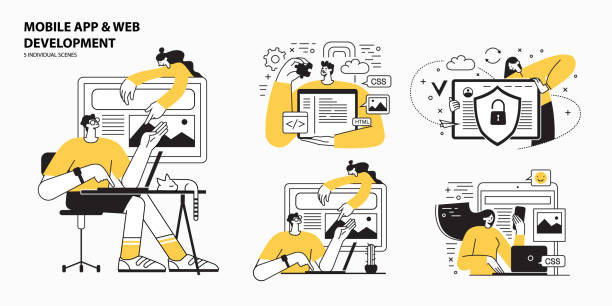
So far, we’ve talked about secure coding, robust architecture, and updates. These are all technical aspects. But let’s not forget that behind every computer sits a human being. And frankly, the human factor is often the weakest link in the cybersecurity chain. It doesn’t matter how much you’ve invested in your website and app design; if an employee clicks on a phishing link or has a weak password, all those efforts might be in vain. This is where employee training and security awareness come into play.
Training should go beyond a few dry recommendations. It needs to be continuous, engaging, and practical. Employees must understand why security is important, not just for the company, but for themselves and their personal information. They need to recognize common threats: phishing, social engineering attacks, malware. They should know how to create and protect strong passwords, how to identify suspicious emails, and how to report unusual activities if observed.
Security awareness means that security becomes a value within the organization. It means everyone, from the CEO to the newest employee, understands their responsibility for security. This includes clear policies for using personal devices at work (BYOD), using secure Wi-Fi networks, and even restricting access to information based on job roles. This is not really hard; it just requires a little attention and follow-up.
At Rasaweb Afarin, which operates in various fields of digital marketing and content production, we ourselves fully understand the importance of this issue. Every team member must receive the necessary training to be the first line of defense. After all, an organization with a strong security culture is like a fortress where all its soldiers are armed and ready to defend. And this, well, is the best protection against cyber attacks. This is a long-term investment with truly impressive results.
🛠️ Invisible Guardians: Advanced Security Tools and Firewalls

After we’ve strengthened our internal defenses and trained our soldiers, it’s time to use advanced tools and technologies that act as invisible guardians, monitoring your system’s inputs and outputs 24/7. These tools can neutralize many attacks before they even reach your system. One of the most important is WAF (Web Application Firewall). A WAF inspects incoming and outgoing traffic to a website or application and, based on a set of rules, identifies and blocks malicious traffic. It’s like a security officer standing at the entrance of a building, stopping anyone who looks suspicious. This is very important, especially for high-traffic platforms.
After WAF, we get to IDS/IPS (Intrusion Detection System / Intrusion Prevention System). An IDS only looks for signs of intrusion and alerts, while an IPS not only detects but also prevents the intrusion. These systems can detect suspicious patterns in network traffic that might indicate an attack attempt. For example, if someone tries to enter incorrect passwords thousands of times, the IPS can block that person’s IP. These, along with security monitoring systems that constantly review logs and system activities, create a very strong defensive layer.
For website and app design, using these tools is crucial, especially for businesses that deal with sensitive customer information (such as online sales or social media management). At Rasaweb Afarin, we advise our clients to take these defensive layers seriously. For instance, a monitoring system can detect any unusual changes to your website files, or report abnormal traffic that might be a sign of a DDoS attack. You know, these tools are like a third eye that you always need, especially when you can’t see everything yourself. Security is a strong team of people and tools.
| Security Tool | Primary Function | Key Benefits |
|---|---|---|
| WAF | Web Application Firewall | Protection against SQLi, XSS, Layer 7 DDoS |
| IDS/IPS | Intrusion Detection/Prevention System | Detecting and blocking suspicious network activities |
| SIEM | Security Information and Event Management | Centralized analysis of logs and alerts |
🚨 When Crisis Strikes: Rapid Response to Attacks

Well, despite all these considerations and fortifications we’ve made, as I said, no system is 100% impenetrable. So, one day you might face the harsh reality that a cyber attack has occurred. At this moment, every second counts. Rapid response to attacks and root cause analysis is the key to limiting damage and recovering the system as quickly as possible. This is no time for thinking; you must have a clear, pre-defined plan for Incident Response Protocols.
The first step is identifying and isolating the attack. You need to quickly determine what happened, which parts were affected, and what information the attacker accessed. After identification, you must isolate the affected systems from the network to prevent the spread of the attack. This might mean cutting off internet access, or even temporarily shutting down some servers. Yes, it’s painful, but it’s essential to prevent a larger disaster.
After isolation, it’s time for root cause analysis and threat elimination. You need to find the main cause of the intrusion (was it a vulnerability in the code, a weak password, or a successful phishing attack?) and fix it. All installed malware must be removed, and any unauthorized access must be blocked. At this stage, Post-Mortem Analysis is crucial. This analysis helps you learn from past mistakes and strengthen your systems in the future.
Click here to preview your posts with PRO themes ››
Reconstruction and recovery is the final stage. In this stage, using healthy backups, you restore the systems to normal operation and ensure that no trace of the attackers remains. For us at Rasaweb Afarin, consulting and optimization not only mean SEO and digital marketing but also include security infrastructure consulting. Having or accessing an expert team in critical moments can save your business. Indeed, this is where the true value of preparedness becomes clear; it’s truly a practical test.
Are your advertising campaigns not achieving the expected return? Rasaweb Afarin, with expert Google Ads management, optimizes your campaigns and guides real customers to your business with precise targeting!
✅ Increase traffic and click-through rate
✅ Reduce advertising costs
✅ Achieve maximum Return on Investment (ROI)
Entrust your Google campaigns to us right now!
🔮 Looking to the Horizon: Cybersecurity in the Age of AI and Beyond
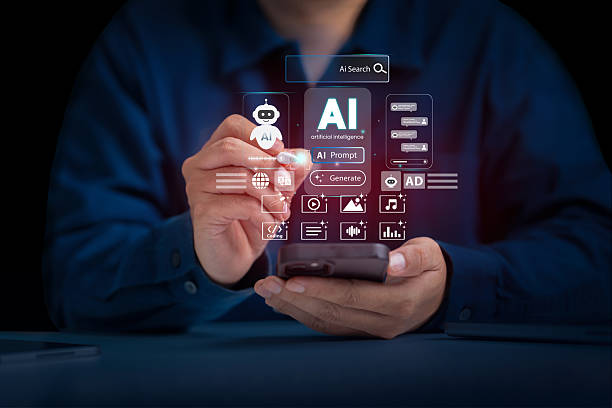
Well, so far we’ve talked a lot about current threats and existing solutions. But the world of technology never stands still. Now that we’re talking about Artificial Intelligence (AI) and its immense potential, we need to think about how this technology affects cybersecurity and, of course, website and app design. Honestly, it can be a double-edged sword; it can equip attackers with more powerful tools, and it can also help defenders act smarter and faster.
In the future, AI will play a much more prominent role in threat detection. AI-powered systems can identify complex and unusual patterns in vast amounts of data that remain hidden from human eyes or even traditional tools. For example, they can predict a DDoS attack with greater accuracy or identify new malware before it has a chance to cause harm. This means a dynamic and intelligent defense that is constantly learning and adapting. At Rasaweb Afarin, we are pursuing AI agent development and automation, and we understand the paramount importance of security in this field.
But on the other hand, attackers won’t sit idle. They too will use AI to develop smarter malware, more personalized phishing attacks, and automatically find vulnerabilities. This is a digital arms race where both sides are trying to outpace each other. So, as developers and digital professionals, we must always be one step ahead.
Preparedness for unknown threats is perhaps the biggest challenge of the future. This means not only must we keep our current systems secure, but we must also constantly research and innovate. International cooperation, sharing threat intelligence, and investing in training cybersecurity professionals are all essential for building a more secure digital future. For every new website and app design, we must look to the horizon and prepare ourselves for the future, because technology waits for no one.
| Question | Answer |
|---|---|
| Why has cybersecurity become increasingly important in website and app design? | With increasing business reliance on online platforms and large volumes of sensitive data, every website and app design has become a target for attackers. Security is no longer an option, but a vital necessity for maintaining business credibility and functionality. |
| What are the most common types of cyber attacks a website/application might face? | Attacks such as SQL Injection, XSS, DDoS, Brute Force, and various types of malware (including ransomware) are among the most common threats, each seeking to penetrate or disrupt the system in a specific way. |
| How can security be ensured from the design and development stage of a website/application? | By securing the code through strict input validation and query parameterization, choosing a secure architecture, and using data encryption for data in transit and at rest. |
| What is the role of updates and security patches in protecting website and app design? | Regular updates for operating systems, frameworks, CMS, and plugins fix known vulnerabilities and prevent attackers from exploiting them; this is a permanent shield. |
| Why are regular backups and disaster recovery plans crucial? | No system is completely impenetrable. Regular backups and a structured plan for rapid system recovery after an attack (Disaster Recovery Plan) enable a return to normal and limit damages. |
| Does the human factor play a role in the cybersecurity of a website/application? | Yes, the human factor is often the weakest link. Employee training on phishing, strong passwords, and reporting suspicious activities forms a strong first line of defense. |
| How do advanced security tools like WAF and IDS/IPS help with protection? | WAF analyzes web traffic to identify and block common attacks, while IDS/IPS detects and prevents intrusion patterns in the network, significantly helping to protect website and app design. |
| In the event of a cyber attack, what are the critical first steps? | Rapid identification and isolation of affected systems to prevent the attack from spreading, then root cause analysis and threat elimination, and finally system reconstruction and recovery using backups. |
| How can Artificial Intelligence (AI) impact the future of cybersecurity? | AI can be very effective in detecting complex threats and predicting attacks. However, attackers will also use AI to develop smarter attacks, necessitating intelligent defensive development. |
| Why is investing in cybersecurity a necessary investment for businesses? | Cybersecurity not only protects business data and infrastructure but also builds customer trust and contributes to brand reputation and SEO. It is an ongoing commitment to survival and growth in the digital world. |
And other advertising services from Rasaweb Advertising Agency:
• Influence Marketing
• Optimization for IoT devices
• Visual identity strategy design for social networks
• Demo and product guide content production
• Local marketing strategy consultation
And over hundreds of other services in the field of internet advertising, advertising consultation, and organizational solutions
Internet Advertising | Advertising Strategy | Advertorials
Are your business decisions based on guesswork? We provide key information for intelligent decision-making. ✅ Reliable data for effective planning.
✉️ info@idiads.com
📱 09124438174
📞 02126406207
Tehran, Mirdamad Street, next to Central Bank, Kazeroun Jonoubi Alley, Ramin Alley, No. 6


