💌 An Introduction to Direct Marketing From Yesterday to Today
# Remember those old postcards or letters that came directly to our doorsteps, addressed to us? Or perhaps the unexpected phone calls introducing a product? Well, those were all examples of direct marketing. It’s something that has existed since ancient times, always aiming to speak directly with the customer, rather than being general and for everyone.
Direct marketing, as its name suggests, is a two-way, personal communication between a business and a specific customer or group of customers. Its goal is to deliver a particular message to a particular audience and elicit an immediate response, such as a purchase, registration, or even a simple call. This approach, unlike broad TV advertising or city billboards, is like whispering in the ear of the audience, not shouting in a crowded stadium.
In older times, this was mostly done through postal mail, printed catalogs, telemarketing, or even door-to-door sales. For example, insurance companies whose agents would visit homes and speak with you, or those thick product catalogs the postman would deliver. These methods, though time-consuming and sometimes costly, had one big advantage: focus! The message could be precisely delivered to those most likely to become customers.
But with the advent of the digital marketing era, everything changed. Traditional methods gradually gave way to new and more exciting tools. For instance, email, SMS, social media, and even personalized ads on websites. Now, we can not only speak directly to the customer, but we can also understand exactly what that customer likes, what they need, and when they want to receive this message. This meant direct marketing took a fresh breath, gaining a new life that was truly amazing.
This transformation was not just a change of tools; it was a shift in mindset. It was no longer just sending a letter, but building a deeper and more targeted relationship with each individual customer. Direct marketing is now an inseparable part of any successful internet marketing strategy, and indeed it is, because it enables businesses, in the clamor of digital marketing, to make their voices heard by real customers. It’s as if we no longer need to search for a needle in a haystack; the haystack itself is telling us where the needle is!
💡 Why Direct Marketing is Still a Winning Card
# Honestly, in today’s world, full of information and noise, many people think direct marketing is outdated. But, this is a kind of misunderstanding, because if we look at it correctly, we see that direct marketing has not only not died, but has returned stronger than ever and become one of the most important pillars of digital marketing.
Why? Because in this busy world, people no longer have the patience to see general and generic messages. They want to feel important, that the business is talking to them personally, not to an anonymous crowd. This is where direct marketing comes in like an old friend and makes things easier. That personalized message, that sense of direct connection, can truly work wonders.
First and foremost, direct marketing helps us establish direct and targeted communication with customers. When you know who your customer is, what they like, and what they need, you can send them a message that is precisely relevant to them. This means a higher conversion rate. Imagine someone has previously bought shoes from you; now, if you send them an email introducing new shoe models, or offer them a special discount for their next shoe purchase, their likelihood of buying is much higher than if they saw a general ad for any product, right?
Second, this method is measurable. This is a huge advantage in the world of internet marketing. You can see exactly how many people opened your email, how many clicked on the link, and how many ultimately made a purchase. This information helps you design future campaigns better and smarter. No more guesswork; everything is based on real data.
Third, direct marketing has excellent potential for building customer loyalty. When you communicate regularly and with relevant messages to your customers, a sense of trust and loyalty develops in them. They know that you care about them and understand their needs. This helps both retain the customer and encourage them to recommend you to others. Remember, acquiring new customers is much more expensive than retaining old ones.
Fourth, the possibility of testing and optimization (A/B Testing). You can send two versions of a message to two different groups and see which performs better. This means continuous learning and constant improvement in your digital marketing strategies. Well, all these reasons show that direct marketing, especially with the flavor of digital tools, is still an incredibly powerful tool for any business that wants to stand out in today’s crowded market and achieve real results.
Do you want to know what customers are saying about your brand on social media? Rasavab Afarin provides valuable insights through social media analysis to help you make better decisions.
✅ Real-time monitoring and tracking of conversations about your brand, products, and competitors
✅ Identifying trends and new marketing opportunities in the digital space
✅ Evaluating campaign effectiveness and continuous improvement of your strategies
With social media analysis from Rasavab Afarin, take the pulse of the market!
🔄 Integrating Direct Marketing with Digital Marketing: A Modern Approach

# Alright, now we get to the exciting part: how can we combine this old but valuable direct marketing with the powerful tools of digital marketing to create a truly extraordinary force? This is where the concept of a “modern approach” comes into play. It’s no longer just sending a simple email, but a complete symphony of intelligent and personalized communications.
Integrating these two means using the power of data, automation, and digital platforms to deliver direct marketing messages to the right audience, at the right time, with the right content. This is no longer just an advertisement; it’s a complete user experience that captures the customer’s attention from the first moment and accompanies them through the final stages of purchase.
Imagine this: a customer browses a specific product on your website but doesn’t buy it. Your smart system detects this and, after a few minutes, sends them a personalized email with a discount on that same product or a suggestion for similar products. If they still don’t buy, perhaps an SMS reminder or even a targeted ad on Instagram is shown to them. This is direct marketing combined with the intelligence of internet marketing.
This approach has several key advantages:
- Increased Targeting Accuracy By using user data and analyzing their behavior, we can target audiences with unparalleled precision.
- Deeper Personalization We consider not only the customer’s name, but also their interests, purchase history, and even geographical location to make the message completely exclusive.
- Marketing Automation We no longer need to do everything manually. Systems can automatically send pre-defined messages based on user behavior.
- More Accurate Performance Measurement Every campaign can be analyzed in detail to understand what worked and what didn’t.
In fact, digital marketing has transformed direct marketing from a “guesswork” method into a “data-driven” science. Now we’re dealing with a wealth of information that can make every move we make precise and calculated. This combination helps businesses, big and small, achieve brilliant results even with limited budgets, because every dollar or tomans spent is precisely targeted and highly effective.
| Feature | Traditional Direct Marketing | Digital Direct Marketing |
|---|---|---|
| Channels | Mail, phone, in-person | Email, SMS, social media, push notifications |
| Personalization | Limited (name, address) | Deep (behavior, interests, history) |
| Measurement | Difficult and time-consuming | Easy and accurate with analytical tools |
| Cost | High per recipient | Usually lower, high ROI |
| Speed | Slow | Instant and real-time |
| Interaction | One-way/limited two-way | Two-way and real-time with feedback capability |
This new approach not only increases efficiency but also improves the user experience. Customers welcome relevant and useful messages, which means a win-win for both sides. Well, this is one of those areas where you can really understand why modern marketing is so powerful.

Click here to preview your posts with PRO themes ››
📱 Key Digital Direct Marketing Channels

# Now that we understand how effective digital direct marketing can be, let’s look at which channels we can use for it. The world of digital marketing is full of different tools, each of which can play an important role in our direct marketing campaigns.
1. Email Marketing: Well, email is still the king of direct marketing. Although many people think email isn’t what it used to be, statistics say otherwise. A personalized email with engaging content can still have an excellent return on investment (ROI). You can use email to send weekly newsletters, exclusive discounts, abandoned cart reminders, or even birthday greetings. The key to success is that the content must truly be valuable to the recipient and not feel like spam.
2. SMS Marketing: This one is unparalleled for short and urgent messages. Flash discounts, appointment reminders, order shipping notifications, or even two-factor authentication codes are all best done via SMS. SMS open rates are incredibly high, as people usually check their texts immediately after receiving them. You just need to be careful not to overdo it and make the messages annoying.
3. Push Notifications: These are those small messages that appear on your phone or computer browser. Push notifications are great for urgent alerts like limited-time discounts, important updates, or even reminders for specific activities within an app. Because they deliver the message directly to the user without needing to open the app or email.
4. Social Media Direct Messages: Telegram, Instagram, WhatsApp… these have become an inseparable part of people’s daily lives. Sending direct and personalized messages on these platforms is an excellent way to communicate with customers. You can use direct messages to answer questions, provide support, or even send special offers. The advantage is that customers are often active on these platforms and respond to messages more quickly. Of course, social media marketing itself is a world of its own.
5. Personalized Ads (Retargeting Ads): This might be a bit more indirect, but it’s actually a type of direct marketing in the online space. Imagine someone has visited your website and seen a product but hasn’t bought it. Now, these personalized ads show them that same product or related products as they browse other sites or social media. This way, you constantly remind them of your presence and push them towards a purchase. This is an excellent example of smart advertising campaigns.
The intelligent and combined use of these channels allows us to deliver our messages to customers with maximum impact. Each of these channels has its own strengths, and depending on the type of message and campaign goal, the best option or combination of options should be chosen. The important thing is to always remember that the ultimate goal is for the customer to feel that this message was sent specifically for them, and not for millions of others.
🧠 The Power of Data and AI in Personalized Direct Marketing
# If you consider direct marketing a car, data and artificial intelligence are like its jet engine! This is where direct marketing truly soars and transforms into an exceptional and incredible experience for the customer. Without data, you just guess, but with data, you know.
In the era of digital marketing, we have access to a wealth of information: from customer purchase history, their behavior on the website and app, their interests and searches, to demographic information and even geographical location. Collecting and analyzing this data allows us to have a very accurate picture of each customer.
Now, artificial intelligence comes into play. AI can process this vast data with unparalleled speed and accuracy, identify patterns, and make predictions about future customer behavior. For example, it can determine which customer is likely to make a purchase soon, or which customer is at risk of churn and needs special attention.
These AI capabilities take direct marketing to a whole new level:
- Pervasive Personalization: We no longer just write the customer’s name in an email. With AI, we can personalize the email content, product suggestions, message delivery time, and even the tone of the message based on each customer’s preferences and past behavior. This means every customer has a unique experience.
- Predicting Customer Needs: AI can predict future customer needs by analyzing data. For example, if a customer regularly buys baby-related products, AI might offer them suggestions for age-appropriate toys or discounted diapers.
- Smart Automation: Marketing automation becomes much more powerful with AI. Systems can automatically run complex campaigns that activate in response to specific customer behavior. For example, when a customer abandons their shopping cart, the system automatically sends a reminder email or SMS.
- Real-time Campaign Optimization: AI can monitor campaign performance in real-time and make necessary changes to increase efficiency. For example, if an email subject line isn’t performing well, AI can try other subject lines and select the best one.
Using artificial intelligence in direct marketing not only helps businesses be more efficient and achieve higher ROI but also improves the customer experience. Customers are happy to receive relevant and useful messages, which makes them feel that your business truly knows them and cares about their needs. In fact, this is where marketing transforms from an art into a precise science, with a strong touch of humanity and mutual understanding.
Do you want to be seen in search engines and attract free traffic? With Rasavab Afarin’s SEO services, improve your site’s ranking and easily be found on the first page of Google!
✅ Targeted keyword research
✅ On-page and off-page optimization
✅ Monthly reports and competitor analysis
⚡ With Rasavab Afarin, claim the number one spot on Google!
🎯 Building Effective Direct Marketing Campaigns Step by Step

# Building an effective product marketing direct marketing campaign is kind of like cooking a delicious meal; it requires good ingredients, a precise recipe, and of course, a skilled chef! Here’s a step-by-step guide to help us get the best results.
1. Define Clear Goal: Before doing anything else, we need to know exactly what we want. Do we want to increase sales? Attract new leads? Boost website traffic? Or perhaps just increase brand awareness? The goal must be Specific, Measurable, Achievable, Relevant, and Time-bound (SMART). For example: “Increase sales of product X by 15% in the next three months through email marketing.”
2. Identify Target Audience: This is the most important step! We need to know who we’re talking to. Define the audience’s demographic characteristics (age, gender, occupation, income), psychographic (interests, values, lifestyle), and behavioral (purchase history, website interaction). The more precisely we know our audience, the more accurate and effective our message will be. This is where Google keyword research can also greatly help us understand what people are looking for.
3. Choose Appropriate Channel: Based on our goal and audience, we need to select the best channels. Email for longer content, SMS for urgent announcements, social media for interaction and community building. Sometimes a combination of channels (Multichannel) yields the best results.
4. Design Engaging Message: Content is king! Your message must be personal, relevant, and persuasive. Start with an engaging headline, highlight a problem the audience has, and then offer a solution (i.e., your product or service). Finally, have a clear and unambiguous “Call to Action” (e.g., “Buy now” or “Click for more information”). Don’t forget that the tone and writing style should be consistent with your audience.
5. Visually Appealing Design: If your campaign is visual (like email or banner ads), design is crucial. Use high-quality images, colors appropriate to your brand, and a clean, user-friendly layout. These principles are also very important in UX / UI design.

Click here to preview your posts with PRO themes ››
6. Execution and Automation: Now it’s time to launch the campaign. To increase efficiency, use automation tools as much as possible. These tools can automatically send emails or SMS messages based on time or user behavior. Social media management, if done through automation, can also yield much better results.
7. Test and Optimize (A/B Testing): Before final delivery to a large audience, always test the campaign on a small group. Try different headlines, different images, or even different sending times, and see which works best. This continuous optimization is the difference between a good campaign and a great campaign.
8. Monitor and Analyze Results: After the campaign is launched, the work isn’t over! You need to constantly monitor the results. Check open rates, click-through rates, conversion rates, and ROI. This data helps you design smarter and more effective future campaigns. This is kind of like continuous optimization consulting that you do yourself.
📊 Measuring Success and Optimizing Campaigns

# Okay, we’ve run a direct marketing advertising campaign. Now, how do we know if it was successful? Or, more importantly, how do we ensure we’re getting the best performance from it? This is where the story of measurement and optimization gets really hot. Without measurement, we’re moving in the dark, and well, that’s not a good thing at all in the world of digital marketing.
The first step is to define Key Performance Indicators (KPIs). These are the things that show us how close the campaign has come to its goals. In direct marketing, there are a few KPIs that are really important:
- Open Rate: What percentage of recipients opened your message? This is crucial for email and push notifications and indicates the attractiveness of your subject line or title.
- Click-Through Rate (CTR): What percentage of those who opened the message clicked on the links inside the message? This indicates the attractiveness of your content and call to action.
- Conversion Rate: What percentage of those who clicked on the link completed the action you wanted (e.g., made a purchase, filled out a form)? This is the most important KPI for measuring the ultimate success of the campaign.
- Return on Investment (ROI): How much revenue did you generate from the campaign relative to the money you spent? This is the primary metric for measuring campaign profitability.
- Customer Acquisition Cost (CAC): How much did you spend to acquire each new customer through this campaign?
After measuring these metrics, it’s time for analysis and optimization. Various internet marketing tools like Google Analytics, or dedicated dashboards for email marketing and advertising platforms, provide us with this information. But merely collecting data isn’t enough; we need to be able to draw conclusions from it.
Optimization is a continuous process. Here are some strategies that can help:
| Optimization Strategy | Explanation | Example |
|---|---|---|
| A/B Testing | Comparing two different versions of an element (headline, image, CTA) to determine the best performance. | Sending two different email subject lines to two small groups of recipients and checking the open rate. |
| Segmentation | Dividing audiences into smaller groups based on their characteristics or behavior to send more targeted messages. | Sending offers for women’s products to women and men’s products to men. |
| Optimal Timing | Sending messages at times when the audience is most likely to interact. | Sending promotional emails in the late evening hours when people have more time to check their emails. |
| Content Improvement | Rewriting messages, changing the CTA, or using more engaging images based on feedback. | Changing “Click here” to “Get your discount now!” to increase CTR. |
| More Personalization | Using more data for deeper personalization of content and offers. | Suggesting products based on the customer’s previous purchase and search history. |
Remember, the goal of all this measurement and optimization is to make our campaigns better and better every day. SEO and website optimization are similar; you constantly need to review and make changes. This way, we ensure that every toman or dollar spent on internet advertising yields the highest possible return.
⚠️ Challenges and Ethical Considerations in Direct Marketing
# Well, direct marketing has many advantages, but let’s be realistic, no method is flawless. Here are a few challenges and ethical considerations we need to be aware of to have an effective yet responsible content marketing strategy.
The first, and perhaps biggest, challenge is the issue of privacy and spam. No one likes their inbox to be flooded with unwanted messages, or to receive promotional calls from unknown numbers at any moment. If our messages are unsolicited or excessive, not only will we get no results, but we’ll also make the customer despise our brand. This is where the importance of obtaining customer permission (Opt-in) shows itself. Always make sure the customer has consented to receive messages from you.
The second challenge is data management and information security. When we collect and use customers’ personal information, we bear a heavy responsibility. We must ensure that this information is secure and will not be disclosed or misused in any way. A privacy breach can not only severely damage brand reputation but also have legal consequences. This is crucial in any type of internet marketing that deals with data.
Third, the problem of message saturation. Imagine someone receiving an email from you, an SMS from another place, and a push notification from yet another. If every business sends so many messages, customers will experience “message fatigue.” We need to strike a balance and not overdo it. A good strategy is to manage the sending frequency and only send truly important and valuable messages.
Fourth, the importance of transparency and honesty. Our messages must be clear and truthful. We should not provide false or exaggerated information. If we announce a special discount in our message, that discount must genuinely exist, and its terms must be transparent. This helps customers trust our brand, and trust, in the world of digital marketing, is more valuable than gold.
Fifth, the opt-out option. Every customer should have the right to stop receiving messages from us whenever they wish. This option should be easily accessible, for example, with a clear unsubscribe link at the bottom of the email. This demonstrates respect for customer privacy and choice and can even help maintain long-term relationships, as the customer knows you’ve given them a choice.
Finally, we must always remember that direct marketing is a powerful tool that acts like a double-edged sword. If used correctly and with ethical considerations, it can yield fantastic results. But if used carelessly and with the sole aim of selling, it can harm the brand and alienate customers. So, let’s act intelligently and responsibly to have the best digital marketing.
🇮🇷 Direct Marketing for Iranian Businesses: Opportunities and Localization
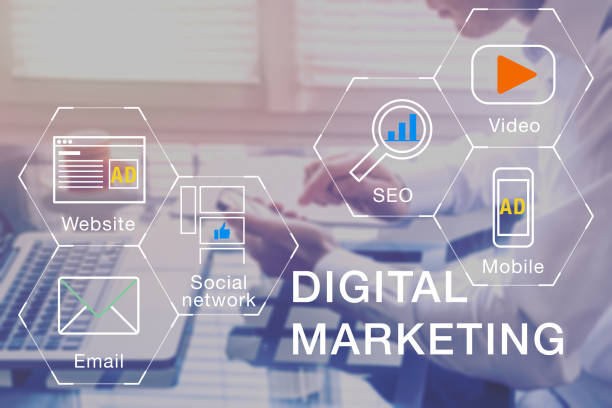
# In our own Iran, direct marketing has a slightly different story, but it’s full of pure and exciting opportunities! Given the characteristics of our market and culture, we need to adopt a localized approach to get the best results from digital marketing.
First and foremost, due to restrictions on accessing some global platforms and, of course, people’s preferences, communication channels here are slightly different. For example, Telegram and WhatsApp still perform incredibly well for direct communication with customers. Telegram advertising and Instagram marketing, especially direct messages, are very popular in Iran and are powerful tools for direct marketing. Personalized Instagram content production for direct messages also works very well.
The next issue is social media marketing. Our people are very active on Instagram and Telegram. So, building an active community and communicating with them through direct messages, holding private contests, or even offering special discounts for followers, can really build loyalty. This is exactly the direct marketing that directly connects with the customer.
On the other hand, SMS marketing is still very effective. Although some may get tired of promotional SMS messages, if the messages are genuinely valuable (e.g., a real discount, a unique offer, or an important notification), the open and response rates are very high. This is a low-cost and very high-yield tool for Iranian businesses, especially for local businesses that want to target customers in their vicinity.

Click here to preview your posts with PRO themes ››
We should not overlook sponsored articles (reportage). Although reportage articles are not direct, they can indirectly guide quality leads towards direct marketing channels. For example, an article about the benefits of a new product can encourage people to subscribe to our email newsletter.
Another important point is localizing content and communication tone. We need to speak in the language and culture of the Iranian audience. Using common idioms, local humor, or even paying attention to specific Iranian occasions can make our message much more appealing. This means producing visual and text content that perfectly aligns with our cultural context.
Finally, considering the infrastructure and internet access in different parts of Iran, we must always consider alternative or complementary options. For example, if internet speed is low, SMS or simple text messages on social media work better than image-heavy emails. Infrastructure consulting is very helpful in this regard.
Iranian businesses with a smart and localized approach can use digital direct marketing as a powerful lever for online sales and their growth, provided they pay attention to all these intricate details!
Is your website or app’s user experience not engaging enough? Rasavab Afarin, with expertise in UX / UI design, creates beautiful user interfaces and unparalleled user experiences for your customers to guarantee their return.
✅ Attractive and modern design for a superb visual experience
✅ Improved navigation and easy usability for every audience
✅ Increased customer satisfaction and engagement with your product
With us, your users will fall in love with your product!
🚀 The Future of Direct Marketing: Upcoming Trends and Innovations

# Well, so far we’ve seen how direct marketing has evolved from a postal letter to email and SMS. But does the story end here? Certainly not! The future of direct marketing is even more exciting than what we see now, full of innovations that will make this approach more personalized and intelligent than ever.
One of the biggest future trends is the increasing role of artificial intelligence in hyper-personalization. It’s no longer just about analyzing past behavior; AI is going to be able to detect customer emotions from their interactions and tailor messages based on that individual’s mood. For example, if a customer was dissatisfied in a previous interaction, subsequent messages will be presented with a more empathetic tone and compensatory offers. This means building AI agents that truly act intelligently.
Marketing automation will also become smarter. Currently, automations operate based on predefined rules, but in the future, AI will be able to dynamically decide the best communication path, best content, and best sending time for each customer. This will help us execute a 360 campaign with maximum efficiency.
Interactive and multimedia direct marketing is also coming. Imagine instead of a simple email, you receive an email containing a short, personalized video, or you can directly speak with an intelligent chatbot within the email and get answers to your questions. This makes the customer experience much more engaging and profound.
Augmented Reality (AR) and Virtual Reality (VR) also have great potential. Imagine receiving a direct marketing message that allows you to virtually try on a product in your own home, or walk through a personalized virtual store. These not only increase sales but also create a memorable experience for the customer.
Voice and conversational direct marketing is also growing with the expansion of voice assistants like Siri or Google Assistant. Imagine your voice assistant giving you a personalized offer because it knows what you’re interested in. This means internet marketing is moving towards completely natural and human-like communications.
And of course, greater attention to privacy. While AI is going to become very powerful, privacy laws will also become stricter (like GDPR). The future of direct marketing must find a way to optimally use data while fully respecting user rights and maintaining transparency. This means growth engine consulting with a focus on ethics and the user.
Ultimately, direct marketing in the future will be more of a “service” than just a sales tool. A service whose goal is not just sales, but also creating real and long-term value for the customer. Businesses are going to walk hand-in-hand with their customers more than ever, addressing their needs before they even know them themselves. Well, this means a brilliant future for digital marketing and direct marketing, which is truly going to amaze us.
| Question | Answer |
|---|---|
| What is Direct Marketing? | Direct marketing is an approach where businesses communicate directly and without intermediaries with customers or specific groups of them to send personalized messages and stimulate an immediate reaction such as a purchase or registration. |
| What is the difference between traditional and digital direct marketing? | Traditional direct marketing was mostly done through postal mail, catalogs, and telemarketing, while digital direct marketing uses channels such as email, SMS, social media, and push notifications for personalized communication. |
| Why is direct marketing still important in the digital age? | Direct marketing, with its ability to personalize messages, precise targeting, high measurability, and customer loyalty building, helps businesses establish more effective communication with their audience in the noisy digital world. |
| What channels are suitable for digital direct marketing? | Email marketing, SMS marketing, push notifications, social media direct messages (like Instagram and Telegram), and personalized ads (retargeting) are among the key channels in this field. |
| What is the role of AI in direct marketing? | Artificial intelligence, by analyzing vast data, enables incredibly deep personalization, prediction of customer needs, smart automation, and real-time campaign optimization, significantly increasing the efficiency of direct marketing. |
| How can an effective direct marketing campaign be built? | An effective campaign can be built by defining a clear goal, accurately identifying the audience, choosing the right channel, designing an engaging message, executing the campaign, and finally, continuous testing and optimization of results. |
| What is the importance of measurement in direct marketing? | Measurement, with the help of Key Performance Indicators (KPIs) such as open rate, click-through rate, conversion rate, and ROI, enables businesses to gauge the success of their campaigns and use accurate data to improve future campaigns. |
| What are the ethical challenges of direct marketing? | Challenges such as privacy protection, spam prevention, secure data management, message saturation, the importance of transparency and honesty, and providing an opt-out option are among the most important ethical considerations in this area. |
| What are the characteristics of direct marketing for Iranian businesses? | Iranian businesses can have more effective direct marketing by using popular local channels like Telegram and WhatsApp, localizing content and communication tone, and paying attention to cultural occasions. |
| How can Rasavab Afarin help with direct marketing? | Rasavab Afarin helps businesses achieve a successful direct marketing strategy by providing strategic consulting, implementing email and SMS campaigns, utilizing artificial intelligence, continuous analysis and optimization, and integration with other digital marketing services. |
And other services of Rasavab Advertising Agency in the field of advertising
• User experience optimization in internal site search pages
• Consulting and implementation of marketing strategy for specific industries
• Production of content for customer objection handling
• Management and optimization of advertising campaigns on tourism platforms
• Design and development of automated marketing reporting systems
And over hundreds of other services in internet advertising, advertising consulting, and organizational solutions
Internet advertising | Advertising strategy | Sponsored articles
Want to increase your responsiveness to market changes?
Rasavab Afarin provides you with agility through up-to-date reports.
✅ Fast and timely decision-making.
✉️ info@idiads.com
📱 09124438174
📞 02126406207
📍 Tehran, Mirdamad Street, next to Bank Markazi, Kazerun Jonubi Alley, Ramin Alley, No. 6