💡 Content Marketing Roadmap: A Big Step for the Growth of Small and Medium Businesses

Well, look, today’s business world has become somewhat like a dense jungle, full of tall and short trees, each striving to get more sunlight. For us, who own small or medium businesses, this competition can be daunting, right? You might feel that market giants, with their massive budgets, don’t even let you breathe. But honestly, there’s a hidden path here that’s often overlooked, a brightly lit road called Content Marketing. This method, unlike expensive advertising, helps you build a solid position for yourself with what you already have – your knowledge and experience.
Content is your story, your solutions, and in a way, the beating heart of your brand. When you start producing valuable content, you’re building a bridge between yourself and the customer. A bridge that isn’t just one-time use, but becomes stronger and more trustworthy every time someone crosses it. Small and medium-sized businesses, or SMEs, often think that content marketing is only for large companies, requiring a big budget or specialized personnel. But this is a big misunderstanding, because in reality, these small businesses benefit the most from this approach. Why? Because they can connect with their audience with greater authenticity and intimacy, something that large companies, with their formal structures, might not be able to do easily.
Let me give you an example. Imagine you own a small local pastry shop. Instead of just decorating your windows and waiting for customers, you could start a small blog and write about ‘The Secret to Baking Crispy French Baguettes,’ or ‘The Story of the Local Ingredients You Use.’ Or even post a short video of the baking process for a special pastry. This is all content. Content that both educates, entertains, and builds trust. This makes people see you not just as a pastry shop, but as a reliable source and an expert in baking. This trust, in itself, is the greatest asset.
Our main goal with content marketing for SMEs is to show you how you can make the biggest impact with the lowest cost. How you can make your business’s voice heard by those who truly need it. This is a smart strategy where instead of chasing customers, you attract them to yourself. Let’s remember, today’s era is the era of information, and whoever provides correct and valuable information is the winner. So, are you ready to start this roadmap with us?
🎯 Solid Foundations: Understanding Your Audience and Setting Smart Goals
Honestly, if you want to succeed in content marketing, the first step is to know who you’re talking to. It’s like giving a speech to a crowd; if you don’t know who your audience is, what their needs are, what their interests are, your words won’t resonate with them. This is where the concept of ‘target audience’ or ‘customer persona’ reveals itself. So, what does a customer persona tell us?
In simple terms, a customer persona is an imaginary representative of your ideal customer. What does that mean? It means you need to sit down and think in full detail about what your target customer looks like. What’s their name? How old are they? What’s their job? What’s their income? Where do they live (this is where Geo-SEO also comes into play; for example, if you have a local business, knowing their area is very important)? What challenges do they face? What dreams do they have? What keeps them awake at night and what do they think about? What makes them happy? These are important questions you need to find answers to.
For example, if you have a sports equipment store in Tehran, your persona might be ‘Reza,’ a 32-year-old employee who lives in Sa’adat Abad, goes to the gym in the evenings, is concerned about fitness, and is looking for quality and reasonably priced sportswear and shoes. See? With this information, you know what kind of content Reza is likely to search for online or follow on social media. If you can create an accurate persona, content production becomes effortless, because you know exactly who you’re writing for and about what.
After you’ve identified your audience, it’s time to set smart goals. So, why are you producing all this content anyway? It’s not for nothing. Every activity must have a purpose behind it. These goals must be SMART. What does that mean?
- Specific: Exactly what do you want to achieve? For example, not ‘increase website traffic,’ but ‘increase blog traffic by 20% in the next three months.’
- Measurable: How will you know if you’ve reached your goal? With numbers and figures.
- Achievable: Your goal should be realistic; you can’t achieve a hundred years’ worth of progress overnight.
- Relevant: Your goal should align with your overall business objectives.
- Time-bound: Have a specific timeframe for achieving the goal.
For example, your goal could be: ‘Increase the number of qualified leads through content to 50 per month, over the next six months.’ This is a complete SMART goal. By having these solid foundations, namely a full understanding of your audience and clear objectives, you can be sure that every step you take in content production will be on the right path towards success. This means you minimize wasted time and resources and go straight to the core matter.
Has your brand become memorable in customers’ minds and distinct from competitors? Rasawab Afarin, with professional and comprehensive branding services, creates a powerful, unique, and unforgettable personality for your business that earns customer trust.
✅ Creation of unique visual identity and brand storytelling
✅ Increase customer loyalty and strengthen emotional connection with the brand
✅ Differentiation from competitors and establishing a special position in the competitive market
For lasting and powerful branding, call 09124438174!
🔍 Cornerstone of Success: Keyword Discovery and Content Ideation

Now that you know who you’re writing for and with what goal, it’s time to decide what to write. This part, keyword discovery, is like finding the common language between ourselves and our audience. What does your audience type into Google when they’re looking for something? That’s the keyword you need to find and build your content around. This part of content marketing is truly vital.
First of all, make a list of all the words and phrases you think your audience might search for to find your services or products. Suppose you are an academic consultant. Well, words like “best Konkur counseling,” “effective study methods,” “university major selection,” or even “admission to medicine” might come to mind. After this initial list, you need to go to keyword research tools. Tools like Google Keyword Planner, KWFinder, Ahrefs, or even the suggestions Google shows you when you type something (the “related searches” section) can be very helpful. These tools show you how much each keyword is searched for and how much competition there is for it.
Be careful not to only look for single-word keywords. “Long-tail keywords” should be taken seriously. These are longer phrases that have fewer searches, but the user’s intent behind them is clearer, and they also have less competition. For example, instead of “Konkur counseling,” the phrase “best Konkur consultant for humanities in Shiraz” is a long-tail keyword. If you write content about it, the probability of reaching exactly the person in need is much higher. This is where the topic of GEO SEO shows itself again; that is, by adding geographical locations to keywords, you can attract local customers.
After you’ve found the keywords, it’s time for content ideation. This stage is actually about transforming those dry, empty words into engaging and practical ideas. Ask yourself: With these keywords, what kind of content can I produce that answers my audience’s questions or solves their problems?
| Keyword | Content Idea (Article/Video) | Content Type |
|---|---|---|
| Best Konkur Counseling | 10 Characteristics of the Best Konkur Consultant for Success | Guide, Listicle |
| Effective Study Methods | Video ‘Secrets of Successful Konkur Study in 30 Days’ | Educational, Video |
| University Major Selection | Step-by-Step Guide to Choosing the Right Major (Considering the City) | Guide, Local Content |
| Admission to Medicine | Interview with Top Medical Scorers: Success Story | Interview, Inspirational |
| Small Investment | 5 Small Investment Ideas for Home-Based Businesses | Guide, Listicle |
| Cheap Website Design | How to Launch a Professional Website with Minimum Cost? | Educational, Guide |

Click here to preview your posts with PRO themes ››
See? The table above shows how we can extract a lot of content ideas from a single keyword. Be creative! Sometimes, a simple question asked in Telegram or Instagram groups can inspire great content. Content isn’t just articles; it can be videos, podcasts, infographics, even an Instagram story answering a common question. Always remember, the ultimate goal is to create value and solve the audience’s problems, not just stuff keywords into the text. It’s not that hard, is it?
✍️ Producing Valuable Content: From Blog to Video and Podcast
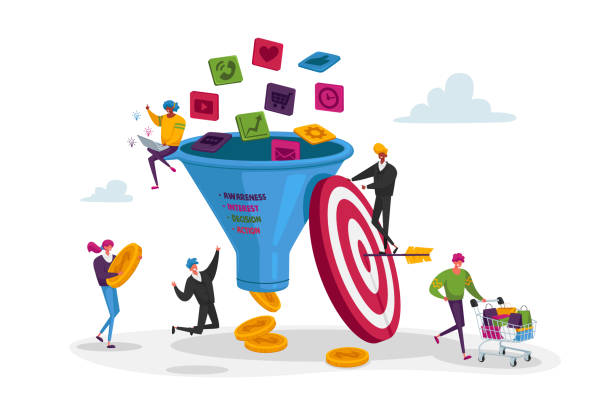
Alright, so far we’ve understood who we’re writing content for and what keywords we’re targeting. Now we get to the exciting part: content production itself! This is where your creativity and expertise come into play. Remember, the main goal is to produce “valuable” content. What does that mean? It means content that solves the audience’s problem, answers their questions, educates them, or entertains them. Content that makes the audience say: “Aha, this is exactly what I was looking for!”
The first and perhaps most common format for content marketing is blog articles. A good blog article is like a knowledgeable friend talking to you. It should be fluid, have an appropriate tone (for example, if your brand is friendly, the article’s tone should also be friendly), and provide complete and accurate information. Use attractive headings, write short paragraphs, and use bullet points and images to break up the text so it’s not tiresome to read. No one wants to read a wall of text!
But content isn’t just articles. In today’s world, video is king. With a mobile phone and a bit of creativity, you can produce educational videos, product introductions, behind-the-scenes business content, or even short interviews. Did you know many people prefer to watch a two-minute video than read a long article? Well, that’s a huge opportunity! For example, if you own a cafe, you could make a short video showing how to prepare a special coffee or introducing your talented baristas. This kind of content builds a sense of intimacy and trust much faster.
After videos, podcasts are also becoming increasingly popular. For small businesses, podcasts can be an excellent way to share expertise and knowledge, especially if your audience consists of busy people who like to listen to audio content on their way to work or while exercising. For example, a financial consulting firm could have a weekly podcast on “Financial Management Tips for Start-up Businesses.” You don’t need expensive equipment either; you can start with a good microphone and simple software.
Infographics, checklists, e-books, and case studies are other content formats that can each shine in their own right. For example, if you sell accounting software, a free e-book titled “Complete Guide to Taxes for Small Businesses” can attract potential customers. Or, how useful can an infographic showing the steps to launch an online business be?
The important thing is to always prioritize quality over quantity. One excellent piece of content published once a week is much better than ten low-quality pieces that provide no value to the audience. Don’t forget authenticity and transparency. People are looking for reality, not pre-programmed and robotic content. This is the beating heart of content marketing, and at Rasawab Afarin, we are here to help you with these very things.
🚀 Distribution Highway: Distributing Content on the Right Channels

Alright, you’ve produced great content. You’ve put in the effort and created something top-notch. Now what? Well, if you put this content in a safe and lock it, no one will know about it, right? Content publication and distribution are as important as its creation. It’s like a chef making an incredible meal, but no one knows where it’s served! For small and medium-sized businesses, choosing the right distribution channels can be the difference between being seen and not being seen.
The first place your content should breathe is your own website. Your site’s blog should be the main home for your content. From there, you can link your content to other places. This drives traffic to your own site, where you can familiarize visitors more with your brand and eventually convert them into customers. Don’t forget that website design and user experience (UX/UI) are also very important here; if your site is messy, no matter how good your content is, users will flee.
After your site, social media networks are the best place for content distribution. Instagram, Telegram, LinkedIn, Twitter (or X), and even Pinterest, each have their own specific potential. The important thing is to know which social media network your audience is most active on. For example, if you have a B2B (business-to-business) business, LinkedIn can be great. If your product is visual, Instagram is the best option. Adapt and publish your content according to each platform. For example, a long article can be turned into several Instagram slides or summarized in a story.
Email marketing is also an incredibly powerful channel that you shouldn’t overlook. Those who have given you their email have, in a way, trusted you and are interested in your brand. A weekly or monthly newsletter that summarizes your latest content along with a full link can bring a lot of traffic to your site and keep customers engaged. This is an excellent tool for building a deeper connection.
There are other options too: sponsored articles on other reputable sites, paid advertising (like Google Ads or social media ads) that can speed up the visibility of your content, and even collaboration with influencers or relevant bloggers. The important thing is to have a clear distribution plan for each piece of content. Ask yourself: “Where should this content be published to reach the most right people?” A good distribution strategy gives your content wings and helps it fly to places you never imagined.
Is your website old and inefficient and in need of a fundamental update? Rasawab Afarin, with expertise in website development and professional programming, creates a powerful, secure, and scalable platform for your online presence.
✅ Development of custom and highly functional websites
✅ Use of the latest web technologies and standards
✅ Reliable technical support and regular updates
To build your dream website, contact us at 09124438174!
🔍 Content SEO: Ensuring Visibility in Search Engines

Alright, content has been produced, and it’s going to be distributed. But there’s another very important part that if we neglect, all our efforts will be in vain: content SEO! SEO, or Search Engine Optimization, is essentially the art and science of getting your content to rank high and be seen in Google and other search engine results. For small and medium-sized businesses, this means a lot of free and targeted traffic. Believe me, content SEO is not as complicated as you might think; it just has a set of principles that you need to follow.
The first principle is the correct use of keywords you found in the third section. Make sure to use your main keyword in the article or page title, in the first paragraph, in subheadings (H2, H3), and in a few other places in the text naturally. I emphasize: “naturally”! Meaning your text shouldn’t be full of keywords that have no relevance to the sentence. Google is very smart, and if it feels you are “keyword stuffing,” it will not only not help you but might also penalize you.
The second important point is optimizing your title tag and meta description. These are what are shown in Google results. The title should be engaging and contain your main keyword. The meta description should also be an attractive summary of your content that encourages users to click on it. Don’t underestimate these, as they are the first things users see.

Click here to preview your posts with PRO themes ››
Pay attention to content structure too. Google loves content that is organized and readable. Using subheadings, short paragraphs, lists, and high-quality images makes your content more appealing to both users and search engines. Don’t forget, your images should also have “Alt Text” where you write a relevant keyword; this helps with SEO and is great for the accessibility of users who use screen readers.
Internal and external link building are also important SEO principles. Internal linking means you link to other related articles on your own site within your articles. This helps Google better understand your site’s structure and keeps users on your site longer. External linking means linking to other reputable sources (like news, research, or academic sites); this shows that your content is based on credible sources and increases its authority. Of course, you don’t need to link to your main competitor’s site, right?
Finally, take site loading speed and mobile-friendliness seriously. If your site loads slowly or doesn’t display well on mobile, Google won’t like it at all. Great content that is properly SEO-optimized acts like a magnet, drawing traffic to your business. This is one of the main pillars of content marketing that we at Rasawab Afarin pay significant attention to.
📜 Engaging Narratives: Storytelling and Branding with Content

You might ask, “You’ve talked so much about content marketing, keywords, and SEO, but how can our content be special and different? How can we make people not just get information, but connect with us?” The answer is in one word: storytelling! Humans have loved telling and hearing stories since the dawn of history. A good story stays in a person’s mind much longer than a bunch of dry facts and influences their decisions.
Storytelling in content marketing means transforming the facts and features of your product or service into an engaging narrative that captures the audience’s emotions. It means instead of saying, “We have the best coffee,” you say, “Every cup of our coffee tells the story of a farmer who lovingly cultivated the beans in the heart of the mountains, and our barista, with their artistry, transformed it into an experience that makes your day.” Do you see the difference?
For small and medium-sized businesses, storytelling is a tremendous competitive advantage. You can tell your own story, the story of how your business started, the challenges you overcame, the reason you even began this work. People love to connect with individuals and their stories, not with a logo and a series of soulless products. This also gives your brand’s visual identity more depth.
Here are a few ways to incorporate storytelling into your content:
- Founders’ Story: How did you start your business? What inspired you?
- Customer Stories: Narrate your customers’ successes (with their permission). How did your product or service solve their problem? These are the engaging “Case Study”s that have a big impact.
- Product/Service Story: How is your product manufactured? What special ingredients or processes does it have? What problem does it solve?
- Behind-the-Scenes Story: Show what team and what people are behind your business. This “humanization” of the brand is incredibly important.
Storytelling not only helps you secure a place in the audience’s mind but also leads to stronger branding. Your brand is not just a name or a logo; it’s a collection of emotions, experiences, and stories that people connect with. A brand with a strong story attracts customer loyalty much more than a soulless brand. It creates a sense of “familiarity,” you know what I mean?
| Story Type | Example for Local Business (e.g., Cafe) | Impact on Brand |
|---|---|---|
| Founder’s Story | Why I left my office job to launch “Cafe Khatereh”? | Creates a sense of authenticity and passion |
| Customer Story | How our “Coffee of Serenity” helped Maryam finish her project? | Demonstrates real effectiveness |
| Product Story | The journey of coffee beans from farm to your cup at Cafe Khatereh | Transparency and quality |
| Behind-the-Scenes Story | Our talented baristas: Skill and love in every cup | Humanizing the brand, trust |
Your content shouldn’t just provide information; it should also evoke emotions. It should make the audience feel like they know and trust you. This is the key to success in today’s highly competitive world for small and medium-sized businesses. Don’t overlook the power of storytelling, because these small things make big differences.
📈 Measurement and Improvement: How Do We Know Our Content Works?

Alright, you’ve produced content, distributed it, optimized it for SEO, and added storytelling. Excellent! But this is not the end. In fact, content marketing is an endless journey of production, publication, and then measurement and improvement. If you don’t know how effective your content has been, how will you improve it? This is where “data analysis” comes into play. For small and medium-sized businesses, this stage is often overlooked, but it can provide you with the most valuable insights.
The first thing you need to do is add analytical tools to your site. Google Analytics is a free and incredibly powerful tool that gives you a lot of information about your website visitors. You can see how many people viewed your content, how long they stayed on the page, where they came from (e.g., Google, social media, or email), and what they did on your site afterward. This information is like a treasure map!
What should you measure?
- Page Views and Unique Users: Shows how many people saw your content.
- Time on Page: The longer this time, the more engaging and useful your content was.
- Bounce Rate: If someone only views one page and then leaves, the bounce rate is high. This means there was a problem with the content or site’s user experience.
- Referral Traffic: Where did people come to your site from?
- Social Media Shares: Shows how much people liked your content.
- Leads Generated: Did your content lead someone to fill out a form, provide their email, or make a call? These are among the most important “KPIs” (Key Performance Indicators).
- Conversion Rate: What percentage of visitors converted into customers or leads?
Regularly review these metrics, for example, once a month. See which of your content performed better and which did not. Do “how-to” articles perform better than “best-of” lists? Do short videos get more views or podcasts? With these analyses, you can understand which type of content is more appealing to your audience and invest more in that model.
Furthermore, “A/B testing” shouldn’t be overlooked. For instance, you can write two different titles for an article and see which one gets more clicks. Or use two different images for an Instagram post and see which one is more engaging. These tests help you continuously optimize your content. Content marketing is a learning journey. The more you measure and analyze, the more you learn and the more effective content you produce. This way, your investment in content production truly pays off.
📍 Local Content Marketing: Targeting Local Customers

We’ve said how vast the digital world is, but for many small and medium-sized businesses, their main customers are right in their own local area and region. For example, a restaurant, a clothing boutique, or a car repair shop naturally look for customers who live nearby or work close by. This is where Local Content Marketing comes into play and can truly shine.
The goal of local content marketing is to introduce your business to people who are geographically close to you and likely need your products or services. This not only helps your visibility in local search results but also strengthens a sense of community and trust. People usually prefer to buy from local businesses they know and trust.

Click here to preview your posts with PRO themes ››
So, how can you produce local content?
- Business Information on Google My Business: This is the first and most important step. Register your business information accurately and completely on Google My Business: address, phone number, operating hours, photos, and, of course, a good description of your business. Make sure your name, address, and phone number (NAP) are consistent across all platforms.
- Local Keywords: In your content, add the name of your city, region, or even neighborhood to your keywords. For example, instead of “best coffee,” write “best coffee in Valiasr neighborhood, Tehran.” Or “specialized car repair shop in Karaj.”
- Producing Content Related to Local Events: If there’s a special event in your neighborhood or city (like an exhibition, festival, or even traditional occasions), produce content about it and show how your business connects with these events.
- Introducing Local Attractions: If you have an eco-lodge in a picturesque village, you can write about the tourist attractions of that area on your blog and how guests can enjoy them. This indirectly attracts customers.
- Collecting Reviews and Feedback from Local Customers: Ask your customers to write reviews for you on Google or social media. These reviews are excellent for local SEO and attract the trust of new customers.
- Collaborating with Other Local Businesses: Cooperate with neighbors and other businesses in your area. For example, a bakery and a cafe can offer a local breakfast package together and advertise for each other.
Local content helps small businesses gain an advantage over larger brands. Because you can connect more intimately and personally with local customers and target their needs more precisely. This is a smart strategy for sustainable growth within your own community, and one of the important principles of internet marketing that we pay a lot of attention to.
Do you need a custom website or application for your online business? Rasawab Afarin, with its specialized design and development team, turns your digital dream into reality!
✅ Design and development of custom websites and applications
✅ Providing innovative and user-friendly solutions
✅ Professional support and maintenance after implementation
For your digital project, contact us: 09124438174
🤖 Future in Your Hands: AI and Automation in Content Marketing

You might have heard that Artificial Intelligence (AI) is transforming everything, and well, the same applies to content marketing. Don’t think AI is just for big companies; small and medium-sized businesses can also greatly benefit from it to do their work smarter and faster. AI is somewhat like a very smart assistant that can help you with repetitive and time-consuming tasks, allowing you to focus on more important and creative work.
So, how can we use AI and automation in content marketing?
- Content Ideation and Keyword Research: AI tools can analyze large volumes of data to discover new keywords and content trends that you might not be able to find yourself. They can even provide initial ideas for article titles or new topics.
- Draft Content Generation: Believe it or not, AI can generate initial drafts for articles, product descriptions, social media posts, and even emails for you. Of course, this doesn’t mean you’re no longer needed. You should always review, edit, and most importantly, humanize AI-generated content to match your brand’s tone and maintain its authenticity. This is where your skill as a human writer or editor is incredibly valuable.
- Content Personalization: AI can suggest personalized content to users by analyzing their behavior. For example, if a user always reads articles about “sports shoes,” it can show them content related to sports shoes next time. This makes the customer relationship much deeper and increases conversion rates.
- Content Scheduling and Distribution: Automation tools can automatically publish your content on social media at optimal times (when your audience is most active) or send out newsletter emails for you. This saves you a lot of time and energy.
- Content Performance Analysis: AI can analyze data related to your content’s performance faster and more accurately than humans, finding patterns and insights that help you improve your content marketing strategy.
Using AI doesn’t mean there’s no longer a need for thought and creativity. On the contrary, AI is a tool that, if used correctly, can turn you into a superstar in your field. It helps you accomplish tasks with higher quality and in less time. So, don’t be afraid of it; instead, learn how to leverage it for your business. The future of content marketing is a smarter and more automated future, and Rasawab Afarin is always by your side to help you on this path.
| Question | Answer |
|---|---|
| What is content marketing and why is it important for small businesses? | Content marketing means producing and distributing valuable and relevant content to attract and retain audiences. For small businesses, this method is very important due to its lower cost compared to traditional advertising, the ability to build a brand and credibility, and deeper engagement with customers. |
| How can I identify my small business’s target audience? | By creating a ‘customer persona,’ you can identify your target audience. Think about details such as the age, occupation, interests, challenges, and needs of your ideal customer. This information helps you produce more relevant content. |
| What role do Long-Tail Keywords play in content marketing? | Long-tail keywords are longer and more specific search phrases that, although they have lower search volume, have a clearer user intent behind them and less competition. These keywords help attract more targeted traffic for small businesses. |
| Which content formats are more suitable for small businesses? | Blog articles, short videos (for Instagram or YouTube), concise podcasts, infographics, and lists are all suitable for small businesses. The choice of format depends on the type of business and audience preferences. |
| How can I distribute my content across different channels? | Website (blog), social media (Instagram, Telegram, LinkedIn), and email marketing are the main channels. You can also use sponsored articles and paid advertising to increase visibility. |
| What does content SEO mean and why is it important for small businesses? | Content SEO is optimizing produced content for search engines to appear higher in results. For small businesses, this means more free and targeted traffic, increased visibility, and attracting new customers. |
| What is Local Content Marketing? | Local content marketing means targeting content to attract customers in a specific geographical area. This includes using local keywords, registering information on Google My Business, and producing content related to local events. |
| How can I measure and improve my content’s performance? | Using tools like Google Analytics, you can review metrics such as page views, time on page, bounce rate, and leads generated. Analyzing this data helps you optimize your content strategy. |
| What role does Artificial Intelligence (AI) play in content marketing for small businesses? | AI can be helpful in ideation, keyword research, drafting content, personalization, and performance analysis. These tools increase productivity, but require your supervision and humanization. |
| Can I start content marketing with a small budget? | Yes, it is entirely possible. By focusing on text content production, using freelancers, or entrusting the work to specialized digital marketing agencies (like Rasawab Afarin), you can start with a small budget and gradually scale up your efforts. |
And other services of Rasawab Advertising Agency in the field of advertising
• Creating Remarketing/Retargeting Campaigns
• International SEO Optimization
• Graphic Content and Infographic Production
• Community Management on Social Media
• Custom Analytical Dashboard Design
And over hundreds of other services in internet advertising, advertising consulting, and organizational solutions
Internet Advertising | Advertising Strategy | Sponsored Articles
Looking to increase market share? Rasawab Afarin reveals new opportunities for you by analyzing competitors. ✅ Identifying competitors’ strengths and weaknesses.
✉️ info@idiads.com
📱 09124438174
📞 02126406207
📍 Tehran, Mirdamad Street, next to Bank Markazi, Kazerun South Alley, Ramin Alley, No. 6