💡 An Introduction to Event Content Marketing: Why Is It Even Important?

# Alright, let’s get straight to the point; event marketing itself is a complex story, but when you spice it up with content, it becomes something else entirely. Imagine you want to hold a conference, a workshop, or even a webinar—whatever it is, what’s the goal? To attract people who genuinely care and want to be there, right? This is precisely where a content marketing strategy comes in and changes the game. What does that mean? It means you can’t build the necessary excitement with just a poster or a dry announcement. People today are looking for stories, for value; they want to know why they should invest their time and energy in your event.
Just saying “We have an event, come!” doesn’t work anymore. You need to hit a nerve with your audience. Before the event, you should start creating buzz, building a mental space that says, “Wow, what’s happening?” Then, during the event, you need to make everyone feel like they are part of a big, important occasion. And finally, after the event ends, you continue this story so that its value remains in everyone’s minds and even spreads by word of mouth. This is event content marketing: a three-stage journey to connect with the audience’s heart. This approach not only helps your event be more fruitful but also builds excellent branding for yourself. In this article, we want to go through precisely this journey with you, from zero to event hero.
Many people think content marketing is only for selling products or services, but that’s not really the case. For events, content acts as a bridge, connecting you to potential attendees. This bridge, with useful information, engaging stories, and a good feeling it conveys, encourages the audience to take step by step towards your event. Without a strong content marketing strategy, events remain like hidden treasures that no one knows about. So, let’s see how we can find this treasure and show it to everyone.
🎯 Defining Goals and Understanding the Audience Before Any Move!

Remember, before you even write a single line of content or post anything, you need to know why are you even here? What do you want to achieve? Is the goal just to fill seats? Or do you want to build a community of loyal people? Perhaps you want to establish your brand as an authority in a specific field. Defining goals is like a compass; it shows you where to go and how to get there. Without a goal, you’re just flailing in the dark, and no matter how good your content is, it’s useless because you don’t know where you’re going.
Okay, you’ve set your goals, for example, a 20% increase in registrations or increased social media engagement. The next step, which I think is even more important than setting goals, is understanding your audience. Who is going to come to your event? Young people? Professionals? Students? Homemakers? Each of these groups has its own language, concerns, and communication channels. You can’t talk to everyone in the same way. It’s like trying to speak to everyone with the same accent; obviously, some people won’t understand what you’re saying!
To understand your audience, you need to do research. Create an audience persona. What does that mean? It means giving them a name, a job, their interests, concerns, dreams, even what social networks they follow and what websites they read—record everything. When you know who your audience is, you can produce content that exactly meets their needs, answers their questions, and solves their problems. This way, they feel like you truly understand them and are creating value for them, not just advertising another event.
At Rasaweb Afarin, we always emphasize that without deep audience understanding, every content marketing strategy will somehow fall short. If you want your advertising campaign to succeed, if you want content marketing to really work, you need to know who you’re talking to. This first step is the cornerstone of success, and if it’s firmly laid, the rest of the stages will naturally build upon it.
Is your business ready to enter the digital world? Rasaweb Afarin opens a new gateway to success for you with website and application development.
✅ Responsive and user-friendly design
✅ High security and flawless performance
✅ Tailored to your business needs
Entrust your project to us!
🗓️ Content Planning Stages for Events: Before, During, and After
Planning is the magic word in the world of marketing, especially when it comes to events. Imagine you have a symphony orchestra where every instrument must play on time to perform a masterpiece. Content marketing for events is exactly like that: a content symphony that must be performed in three main acts: before the event, during the event, and after the event. If one of these acts is incomplete, the entire performance will be questioned, and it won’t have the desired impact. Let’s examine these three acts together.
Act One: Before the Event (Building Excitement and Awareness)
This act begins the moment you decide to host an event. What’s your goal here? To create awareness, attract registrations, and build an atmosphere full of excitement. You need to make people curious. Use educational content, infographics, short videos, interviews with speakers, and blog posts related to the event topic. You can even run contests or polls to boost engagement. The important thing is to provide valuable information that makes the audience feel like they’ll lose something if they miss this event. At this stage, Google keyword research, in which Rasaweb Afarin specializes, is very useful to understand what people are really searching for and to build your content based on that.
Act Two: During the Event (Live Interaction and Experience)
This act is the climax of the story. Here, it’s no longer about attracting an audience; it’s about maintaining and increasing engagement. Live content, such as Instagram stories, live streams, minute-by-minute tweets, behind-the-scenes glimpses, important quotes from speakers, short interviews with attendees—all these make even those who couldn’t attend in person feel like they’re part of the action. And for those present, this content creates an extra layer of experience, a kind of “echo chamber” for important event happenings. Using specific event hashtags is essential here.
Act Three: After the Event (Maintaining Connection and Adding Value)
The event is over, but the story isn’t! This act is about solidifying value and continuing the connection. Here, you can share event summaries, slides, full videos of speeches, high-quality photos, analytical reports, and even surveys to collect feedback. This not only helps those who attended review the material but also opens a new window to the event for those who weren’t there, potentially making them eager for future events. Creating a photo gallery or a highlight video of the best moments is very effective. Rasaweb Afarin company, with its visual content production services, can help you in this area. This table shows what kind of content you can have at each stage:

Click here to preview your posts with PRO themes ››
| Stage | Main Goal | Content Types |
|---|---|---|
| Before Event | Awareness, Registration, Excitement | Blog Post, Infographic, Intro Video, Interview |
| During Event | Interaction, Participation, Experience | Live Stream, Story, Tweet, Quote, Behind-the-Scenes |
| After Event | Maintain Connection, Value-Add, Promotion | Summary, Slides, Full Video, Photos, Survey |
🎉 Creating Engaging Content Pre-Event: Building Excitement and Anticipation

Alright, we’ve reached the first act, where we’re going to make everyone pay attention to our event. This stage is like a teaser for a big movie; it needs to be so captivating that it makes people thirsty to see the whole film. Pre-event content is the cornerstone of any event’s success, because if no one knows about your event or feels attracted to it, how can you expect them to participate?
One of the best ways to build excitement is to offer valuable content that is somehow tied to the event’s theme, but is also useful on its own. For example, if your event is about artificial intelligence, you could write a series of blog articles about “Challenges of AI in Business” or “5 AI Tools You Should Know.” This way, you both increase the audience’s knowledge and show that your event will discuss deeper and newer topics. Short videos, eye-catching infographics, and even short podcasts featuring speakers can also be very effective.
Interviews with speakers or key event experts are another excellent way to increase credibility and excitement. When the audience sees which experts will speak at the event and gets a preview of their thoughts and ideas, they are more encouraged to register. These interviews can be textual, audio, or visual and can reach the audience through various channels such as your website, social media, and even email marketing.
Don’t forget to use countdown timers and “scarcity” content. For instance, announce “Only X days left for early bird discount registration” or “Only X spots remaining.” This sense of urgency motivates many to act. Running contests, giveaways, and polls related to the event’s topic on social media also significantly boosts audience engagement and helps your event spread by word of mouth. This means building a content ecosystem that leads back to your event from all directions. A good content marketing strategy can put your event in the headlines before it even starts. Remember, at this stage, you need to create thirst!
⚡️ In-Event Content: Turning Visitors into Active Participants
We’ve reached the climax! Event day has arrived, and excitement is at its peak. Here, the pre-event content has done its job, and now it’s time for in-event content to enrich the attendees’ experience and even engage those who couldn’t attend in person. The main goal at this stage is to increase interaction and create a sense of participation. We don’t just want a bunch of quiet people to come, sit, and leave, do we? We want them to be active, talk, ask questions, take photos, and spread event content through their own social media channels.
Live streaming of key speeches or panels is one of the most powerful tools. For example, you can broadcast key segments via Instagram Live, Aparat, or even your own website. This makes those who are far from the venue feel like they’re part of the event. Using short, engaging stories on social media, with behind-the-scenes photos and videos, quick, on-the-spot interviews with speakers and attendees, can convey that energy and excitement to the audience.
Another crucial point is to encourage attendees to create content. How? With a unique and engaging hashtag for the event. Ask them to take photos, record short videos, share their opinions, and always use that hashtag. You can even offer prizes for the best posts or most active participants. This “User-Generated Content” (UGC) is one of the most credible and effective types of content because it’s conveyed by the people themselves and carries a sense of authenticity and honesty. Rasaweb Afarin’s social media management team can help in managing and guiding this type of content.
Other content, such as important quotes from speeches presented graphically, or a quick summary of each panel’s happenings, can be shared moment-by-moment on communication channels like Telegram or Twitter. Even a virtual wall displaying social media posts with the event hashtag can further increase the interactive atmosphere. Don’t forget, the goal is for your event to be alive, to breathe, and to engage everyone. This stage is an opportunity to show that your event isn’t just an ordinary gathering, but a special and unforgettable experience.
Are you unsure which advertising strategy is right for you? Rasaweb Afarin offers optimal consulting to provide you with the best solutions for maximum return.
✅ Detailed analysis of current business status
✅ Provision of customized and practical solutions
✅ Increased efficiency and reduced costs
For a brighter future, consult with us today!
🔄 Post-Event: Continuing the Conversation and Value Creation

All right, the event is over, everyone has gone home, and they are probably thinking about what they learned. But our work doesn’t end here; in fact, a new chapter in the story of event content marketing begins. The post-event stage is as important as, if not more important than, the previous stages! Why? Because this is where you can solidify the true value of your event, continue your relationship with attendees, and keep them eager for future events. This means continuing your content marketing strategy after the physical end of the event.
The first step is to provide a summary of the event to attendees and even to those who couldn’t make it. You can prepare speech slides as PDF files or a short, comprehensive report and share them via email or a link on your website. Full videos of the speeches are also a valuable treasure that can be uploaded to YouTube, Aparat, or your own website. This not only allows attendees to review the content but also gives those who weren’t there a great opportunity to benefit from the event’s content and perhaps regret not attending!
Another incredibly effective post-event content is professional photos and videos of the event space, interactions, and key moments. This visual content revives the emotions and energy of the event and can be shared on social media with an engaging caption. A few-minute highlight video of the best moments of the event works wonders! Rasaweb Afarin’s visual content production team can make this task much easier for you.

Click here to preview your posts with PRO themes ››
But that’s not all. You can send post-event surveys via email to attendees to gather their feedback. The results of these surveys can form the basis of a blog post or an analytical report that shows how much you value attendees’ opinions. And finally, maintaining communication through email newsletters or specialized groups on Telegram or LinkedIn keeps your audience community active and ready for future events. Don’t underestimate this stage, because continuous communication means long-term loyalty.
🌐 Content Distribution Channels: Where Will Our Voice Be Heard?
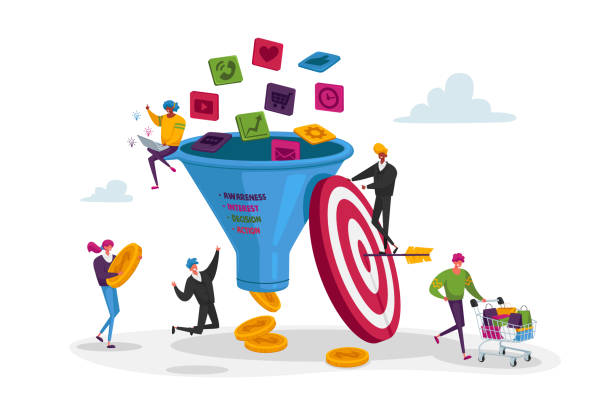
Okay, you’ve produced great content, and you have a precise plan, but if you don’t put this content where people will see it, what’s the use? It’s like cooking an amazing meal, but no one knows about it. Content distribution is the second half of any content marketing strategy, and arguably just as important as content creation itself. You need to know where your audience spends their time and bring your content to them there. Here, it’s not just about Instagram and Telegram; we have a world of channels, each with its own story.
The first and perhaps most important channel is your own website and blog. Any content you produce, from articles and infographics to videos and podcasts, should have a place on your website. This way, you help your site’s SEO and build a credible resource for your audience. This platform is the main home for your content, and everything should lead back here. With Rasaweb Afarin’s website development, SEO, and site optimization services, you can be sure this home is well-built and visible.
Then we get to social media. Each network has its own nuances. Instagram is excellent for visual content, stories, and lives. Telegram is good for informational channels, Q&A groups, and sending educational files. LinkedIn is great for specialized content and connecting with professionals, and Twitter for quick news updates and quotes. Social media management is a professional task that needs to be done carefully.
Email marketing is also an incredibly powerful channel that many underestimate. Sending newsletters, event updates, exclusive content for registrants, and even pre-event reminders can significantly boost conversion rates. Advertorials on news and specialized websites can also help increase visibility and credibility. Even channels like push notifications, Google Ads, or banner ads on high-traffic websites can get your content in front of more eyes.
Don’t forget, content distribution isn’t just about spreading it; it’s about strategically spreading it. You need to know which content works best on which channel. For example, a long, specialized video might be great on YouTube, but on Instagram, you should share a few-second summary of it. This table also shows some important channels and their suitable content types:
| Channel | Suitable Content | Goal |
|---|---|---|
| Website / Blog | Articles, Reports, Full Videos, Podcasts | Reference, SEO, In-depth |
| Photos, Short Videos, Stories, Live | Engagement, Excitement, Visual | |
| Telegram | News, Files, Q&A, Links | Information, Group, Support |
| Email Marketing | Newsletter, Exclusive, Reminders | Conversion, Direct Communication, Loyalty |
| Specialized Articles, Industry Reports, Networking | Credibility, B2B, Professional |
🔍 Content SEO for Events: Being Seen in the Internet Sea
Just think for a moment: your event is fantastic, your content is excellent, but no one can find it. Well, this is exactly where SEO steps in. Content SEO for events means making sure that when someone is looking for a specific conference or workshop, your event is the first thing they see in Google results. This is no longer just an option; it’s a vital necessity, especially in today’s crowded market where everyone is hosting events.
The first step in SEO for events is keyword selection. For example, if your event is about “Digital Marketing in Tehran,” you need to ensure that you use this phrase in various natural ways in your title, descriptions, body content, and even blog page URLs. Of course, be careful not to overdo it, as Google doesn’t like that. Google keyword research, at which Rasaweb Afarin is also proficient, will be very helpful here to find the words and phrases that people actually search for.
The content you produce for your event (blog articles, event pages, news, etc.) must be SEO-optimized. What does that mean? It means having attractive, keyword-rich titles, well-written meta descriptions that encourage users to click, and a logical content structure (using H1, H2, H3 headings) that is understandable to search engines. Content quality goes without saying; it must be in-depth, informative, and responsive to user needs.
Another important point is local SEO or GEO SEO. If your event is held in a specific city (e.g., Isfahan or Mashhad), be sure to use the name of that city in your keywords and content. For example, “SEO workshop in Isfahan” or “Mashhad Artificial Intelligence Conference.” This way, when someone in that city searches for an event, your chances of being seen increase significantly. Optimizing for Google Maps and Google My Business can also help with local visibility of the event.
Internal and external linking is also very important. This means linking your event-related pages to each other from within your website, and if you can get links from other reputable sites, your event’s credibility for Google will increase. Finally, site loading speed and responsiveness (correct display on mobile) are also important SEO factors. All of these work together to ensure your content marketing strategy is not only engaging but also visible and finds its target audience.
📊 Measuring and Analyzing Performance: Did We Hit the Target?

Well, we’ve come this far, produced a lot of content, and spread it across various channels, but how do we know if all this effort has really paid off? This is where measuring and analyzing performance comes into play. This stage is like a driver checking their odometer; you want to know how far you’ve gone, how much fuel you’ve used, and if you’re reaching your destination. Without analysis, all your effort is like shooting an arrow in the dark. You need to know what worked and what didn’t so you can improve your content marketing strategy for future events.
The first step is to define your KPIs (Key Performance Indicators). These indicators must align with the goals you set at the beginning. For example, if your goal was to increase registrations, your KPI could be the number of registrations. If your goal was to increase brand awareness, you could track the number of event page views, the reach of social media posts, or the number of brand mentions.
There are many metrics you can examine:
- Number of visitors and conversion rate: How many people visited the event page, and how many of them registered?
- Social media engagement: How many likes, comments, shares, and saves did you get? How viral did your event hashtag become?
- Email open rate and click-through rate: How many of the emails you sent were seen, and how many people clicked on their links?
- Feedback and reviews: What do surveys and attendee comments show? Were they satisfied?
- Return on Investment (ROI): How much did you spend, and how much revenue did you generate (if your event had a registration fee)?
Click here to preview your posts with PRO themes ››
Tools like Google Analytics for website traffic analysis, social media’s own analytics tools for post performance review, and email marketing systems for open and click rates, will be extremely useful. Collecting this data is just the beginning. The real art is being able to interpret this data and derive valuable insights from it. For example, seeing which type of content worked best, which distribution channel was most effective, and what your audience showed the most interest in. These analyses will guide your path for product marketing campaigns and future events, helping you always stay on a path of progress. Rasaweb Afarin, with its growth engine consulting and optimization services, performs exactly these analyses for you to ensure every step you take is calculated and purposeful.
Are you looking to expand your product sales in online marketplaces? Rasaweb Afarin offers consulting and setup for selling on marketplaces, providing a reliable way to increase revenue and reach more customers.
✅ Choosing the best online selling platforms
✅ Optimizing your product listings
✅ Strategies for increasing sales and competitiveness
For success in marketplaces, contact us at 09124438174!
🔮 Trends and the Future of Event Content Marketing: A Step Beyond
Well, we’ve reached a point where we need to look at the horizon of the future. The world of digital marketing, and consequently event content marketing, never stays still. It’s constantly changing, and new trends come and go. If we want to always be a step ahead and for our content marketing strategy for events to truly shine, we need to keep an eye on these trends and know which way the world is heading. Otherwise, we’ll suddenly find ourselves stuck in the past while everyone else has surged ahead.
One of the biggest trends everyone is talking about right now is Artificial Intelligence. AI is permeating all aspects of content marketing. From generating content ideas to personalizing content for each audience member, and even data analysis and performance prediction. For example, you can use AI tools to generate engaging headlines, write initial drafts, or even suggest new topics for your event blog. Rasaweb Afarin also specializes in AI and building AI agents, and can accompany you on this path. This means smarter and more effective content marketing.
Personalized content is no longer just a trend; it’s a standard. People no longer want to see generic, general content. They want to feel that the content was created specifically for them. By collecting data and using AI, you can personalize your event content based on the interests and needs of each segment of your audience. For example, send more specialized content to someone who previously showed interest in technical webinars, and special invitations to someone who was looking for networking events.
Video and interactive content are still king. Short videos, Reels, TikToks, and live streams are now an integral part of any content marketing strategy. Interactive content like quizzes, live polls, games, and augmented reality (AR) filters can also make the event experience much more engaging and memorable. Even metaverse events or hybrid events that are both in-person and online are gradually finding their place and demanding their own unique content.
Finally, authenticity and transparency are two main pillars of the future of content. People trust brands that are honest and offer real value. So, always try to produce content that is not only engaging but also real, credible, and consistent with your brand identity. This way, you will not only succeed in the short term, but you will also build a loyal audience that will stay with you for a long time.
| Question | Answer |
|---|---|
| Why is content marketing important for events? | To create awareness, attract target audience, build excitement, and maintain communication before, during, and after the event, which contributes to increased registrations and overall event success. |
| What are the main stages of content planning for events? | This planning includes three key stages: before the event (creating awareness and excitement), during the event (increasing engagement and live experience), and after the event (continuing connection and value-add). |
| What types of content should be produced before an event? | Content such as blog articles, infographics, introductory videos, interviews with speakers, contests, and countdowns to build excitement and attract registrations. |
| How can attendee engagement be increased during an event? | By using live streams, social media stories, encouraging the use of a dedicated event hashtag, and producing user-generated content (UGC). |
| What content should be shared after an event ends? | Summaries of speeches, slides, full event videos, photo galleries, analytical reports, and survey results to maintain connection and add value. |
| What are the best content distribution channels for events? | Website and blog, social media (Instagram, Telegram, LinkedIn), email marketing, advertorials, and paid advertising like Google Ads. |
| What role does content SEO play in event marketing? | By optimizing content for search engines (using keywords, optimizing meta tags, local SEO), it helps the event appear in search results and attracts the target audience. |
| How can the success of an event content marketing strategy be measured? | By defining Key Performance Indicators (KPIs) such as number of registrations, website visits, social media engagement, email open rate, and Return on Investment (ROI), and analyzing the data. |
| What is the role of AI in the future of event content marketing? | AI plays a key role in content personalization, content idea generation, data analysis, and predicting audience behavior, contributing to smarter marketing. |
| How effective is teamwork in the success of an event content strategy? | Clear collaboration and coordination among marketing, content production, technical, design, and sales teams are crucial for the integrated and successful execution of an event content strategy. |
And other advertising services of Rasaweb Afarin Advertising Agency
• Consulting on digital Experiential Marketing
• Producing textual content to answer frequently asked SEO questions
• Optimizing for Google image search
• Consulting on marketing software development strategies
• Developing Predictive Analytics systems
and over hundreds of other services in the field of internet advertising, advertising consulting, and organizational solutions
Internet Advertising | Advertising Strategy | Advertorials
How can costs be optimized? With our information, identify waste points. ✅ Cost Optimization