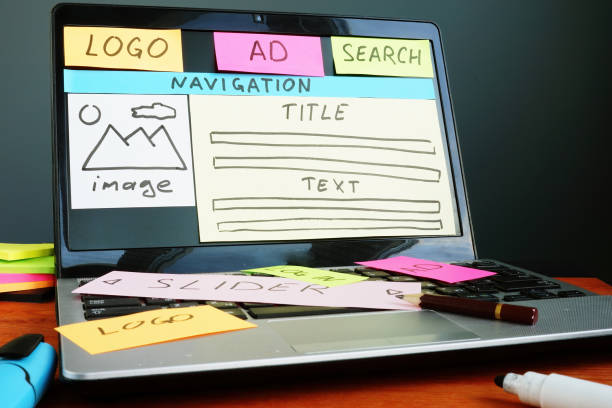
Introduction to WordPress Website Design and Why Choose WordPress?
In today’s digital world, having a website is not just an advantage, but a necessity.
WordPress website design, as one of the most popular and powerful Content Management Systems (CMS), enables individuals and businesses to easily establish their online presence without the need for complex programming knowledge.
#WordPress, with its extensive market share, is considered a smart choice for starting a digital journey.
One of the main reasons for the popularity of #WordPress website design is its unparalleled flexibility; from personal blogs to large online stores and corporate portals, WordPress can support various types of websites.
Its ease of use and user-friendly interface are understandable even for beginners, allowing them to manage their content with minimal training.
In addition, the large user community and extensive support available for WordPress always provide abundant resources for problem-solving and guidance.
This educational and support aspect makes WordPress an ideal option for anyone looking to undertake WordPress website design.
WordPress offers infinite customization possibilities for your website with thousands of free and premium themes and plugins.
This feature helps you create a unique website tailored to your specific needs.
With this introduction, we intend to professionally and step-by-step examine the stages of WordPress website design and familiarize you with all its aspects.
This guide will help you make the best decisions for your website and achieve a powerful online presence.
More information about WordPress on Wikipedia.
Are your e-commerce site visitors leaving before making a purchase? Don’t worry anymore! With Rasaweb’s professional e-commerce website design services, solve the problem of not converting visitors into customers forever!
✅ Significant increase in conversion rates and sales
✅ Unique and engaging user experience
⚡ Contact us now for a free consultation!
Initial Steps for Setting Up a WordPress Website
After deciding on WordPress website design, the first steps to launching a website include choosing a domain and hosting.
Selecting a suitable and memorable domain name shapes your online identity.
This name should be relevant to your business or activity, and at the same time, short and easy to remember.
In this section, we provide detailed guidance on how to choose the best domain and register it.
The next crucial step is choosing a reputable and suitable hosting.
Hosting is essentially the space where your website files are stored on servers connected to the internet.
The quality of hosting directly impacts your website’s speed, security, and stability.
Various hosting companies offer diverse services, from shared hosting to virtual and dedicated servers.
For starting WordPress website design, shared hosting with moderate resources is usually sufficient.
At this stage, you should pay attention to important aspects such as technical support, disk space, bandwidth, and server speed.
Many hosting companies also offer automatic WordPress installation in their administrative panels, which greatly simplifies the setup process.
This is a complete explanation of the importance of each section and how to perform it.
After obtaining a domain and hosting, it’s time to install WordPress.
This process is usually done through the hosting control panel (such as cPanel or DirectAdmin) or manually.
Most hosting providers offer tools like Softaculous or Fantastico for easy and quick WordPress installation.
These tools make WordPress installation possible in a few minutes, preparing you to start your WordPress website design journey.
Choosing Themes and Plugins in WordPress Website Design
After successfully installing WordPress, one of the most exciting stages in WordPress website design is choosing the right theme.
Themes determine the look and visual section of your website and play a significant role in user experience (UX) and site attractiveness.
Thousands of free and premium themes are available, each with unique features and designs.
Theme selection should be based on your website type (e.g., blog, online store, portfolio) and its functional needs.
A good theme should be responsive, meaning it displays well on different devices such as mobile, tablet, and desktop.
Also, the theme’s loading speed and its compatibility with important plugins are key points that we will address in an educational manner.
Alongside themes, plugins play a vital role in adding new functionalities to your WordPress website.
Plugins allow you to add features like contact forms, image galleries, SEO optimization, security, and many other elements to your site without needing to code.
This section includes a deep professional discussion on how to select and install essential plugins.
It is recommended to install only necessary plugins from reputable sources to prevent security issues or site speed reduction.
Proper management of themes and plugins is one of the main pillars of a successful WordPress website design.
Smart choices at this stage can greatly impact your website’s performance and success.
The table below highlights some important features of WordPress themes and plugins that you should consider when choosing:
| Feature | Description | Importance |
|---|---|---|
| Responsiveness | Correct display on all devices (mobile, tablet, desktop) | Very High |
| Loading Speed | Less time for website pages to load | Very High |
| SEO Compatibility | Clean code structure compatible with search engines | High |
| Customization Options | Easy ability to change colors, fonts, and layout | Medium to High |
| Support and Updates | Active support team and regular updates | Very High |
Creating Effective Content for Your WordPress Website
Content is king; this statement holds true in the digital world more than ever.
After WordPress website design, creating high-quality and engaging content is key to attracting an audience and improving SEO rankings.
Your content should not only provide useful information but also engage the audience and encourage interaction.
For example, you can use thought-provoking content that makes users think and encourages them to share their opinions.
This approach is particularly effective in your website’s blog section.
Content can be in the form of text, images, videos, infographics, and podcasts.
Diversity in content format can enrich the user experience and attract more audiences.
When creating content, always think about keywords relevant to your business or website topic and naturally incorporate them into your text.

Click here to preview your posts with PRO themes ››
In addition to keywords, content structure is also highly important.
Using appropriate headings (H1, H2, H3), short paragraphs, organized lists, and relevant images increases text readability.
These elements help optimize your content for both users and search engines.
An analytical and in-depth piece of content can boost your credibility in a specific field and establish you as an authority in that area.
Furthermore, regularly updating old content and adding new content indicates your continuous activity and prompts search engines to pay more attention to your site.
WordPress website design makes this process very easy for you with its internal content management tools and numerous plugins available for improving SEO and content creation.
By observing these tips, you can produce content that is both engaging for users and helps improve your site’s ranking in search results, ultimately leading to the success of your WordPress website design.
Tired of your company website not being seen as it should be, losing potential customers? Solve this problem forever with professional and effective website design by Rasaweb!
✅ Increase brand credibility and gain customer trust
✅ Attract targeted sales leads
⚡ Contact us now for a free consultation!
SEO Optimization in WordPress Website Design
Search Engine Optimization (SEO) is a crucial step after WordPress website design that helps you achieve higher rankings in search results and attract more organic traffic to your website.
WordPress is inherently SEO-friendly, but to achieve the best results, you need professional and continuous efforts.
The first step is to install a powerful SEO plugin like Yoast SEO or Rank Math, which provide you with the necessary tools to optimize titles, meta descriptions, keywords, and URL structure.
These plugins offer you step-by-step guidance to optimize every page and post.
SEO is divided into two main parts: On-Page SEO and Off-Page SEO.
On-Page SEO includes optimizing content, proper use of heading tags (H1-H6), image optimization (using Alt tags), creating appropriate internal links, and ensuring a friendly URL structure.
Additionally, site loading speed and its mobile responsiveness are also important factors in On-Page SEO.
In WordPress website design, choosing optimized themes and using caching plugins significantly helps improve these factors.
Off-Page SEO mainly involves building backlinks from other reputable websites.
These backlinks show search engines that your website is credible and trustworthy.
For this purpose, you can consider creating valuable content, connecting with influencers, and participating in specialized forums.
Continuously monitoring SEO performance with tools like Google Analytics and Google Search Console is also very important.
These tools provide you with valuable analytical insights into traffic, keywords, and potential SEO issues.
By continuously performing these steps, you can improve your website’s ranking and ensure the success of your WordPress website design.
SEO Starter Guide from Google.
Security and Backup in WordPress Websites
Security is one of the most important aspects that must be paid special attention to after WordPress website design.
Given WordPress’s high popularity, this platform also becomes a primary target for hackers.
Therefore, adopting strong security measures to protect the website and user data is essential.
The first step is to use strong and unique passwords for your WordPress user account, as well as for hosting and the database.
This is a fundamental educational point for every user.
Furthermore, regularly updating WordPress, themes, and plugins to the latest available versions is of high importance.
Developers constantly discover and fix security vulnerabilities, and by updating, you also benefit from these improvements.
To enhance the security of your WordPress website design, you can use reputable security plugins like Wordfence or Sucuri.
These plugins offer features such as firewalls, malware scanning, protection against Brute Force attacks, and file change monitoring.
Additionally, enabling Two-Factor Authentication for logging into the WordPress admin panel creates an extra layer of security and prevents unauthorized access.
Another point to consider is using an SSL certificate (HTTPS), which encrypts the communication between the user’s browser and the website server.
This is not only essential for security but also positively impacts SEO rankings.
Regular website backup is as important as security.
In case of any security issues, system errors, or accidental data deletion, having an up-to-date backup can save your website.
You can use plugins like UpdraftPlus or Duplicator to schedule automatic backups of your database and website files.
Storing backup copies in secure locations outside of hosting, such as cloud storage or a local drive, is recommended.
These explanatory and guidance measures provide comprehensive protection for the security and stability of your WordPress website design.
Optimizing WordPress Site Speed and Performance
Website loading speed is a critical factor in user experience and SEO.
A slow website can lead to losing visitors and a drop in search engine rankings.
After WordPress website design, speed optimization should be one of your top priorities.
There are several professional methods you can employ to improve your WordPress website’s performance.
The first and most important step is to use a high-quality and optimized hosting for WordPress.
High-quality hosts have lower server response times and help your website load faster.

Click here to preview your posts with PRO themes ››
Using caching plugins like WP Super Cache, W3 Total Cache, or LiteSpeed Cache has a significant impact on site speed.
These plugins store static versions of your website pages so that on subsequent visits, there is no need for reprocessing by the server, and pages are displayed faster to the user.
A precise analysis of your current site’s status with tools like Google PageSpeed Insights or GTmetrix can identify weaknesses.
Image optimization is another important step.
Large image files can severely reduce site loading speed.
You can use plugins like Smush or ShortPixel to compress and optimize images without significant loss of quality.
Additionally, using a Content Delivery Network (CDN) like Cloudflare stores your website’s static content on servers closer to users, causing the content to reach them faster.
Minimizing CSS and JavaScript code, GZIP compression, and removing unnecessary plugins can also help improve the overall performance of your WordPress website design.
By following these tips, you can provide an excellent user experience while also helping improve your site’s SEO ranking.
The table below shows some important tools and tasks that can be done for speed optimization in WordPress website design:
| Optimization Method | Description | Suggested Tool/Plugin |
|---|---|---|
| Caching | Storing static versions of pages for faster loading | WP Super Cache, W3 Total Cache, LiteSpeed Cache |
| Image Optimization | Compressing and resizing images without loss of quality | Smush, ShortPixel, TinyPNG |
| Using a CDN | Delivering static content from the nearest server to the user | Cloudflare, KeyCDN |
| Removing Unnecessary Code | Minifying and removing unused CSS and JavaScript codes | Autoptimize, WP-Optimize |
| Choosing Suitable Hosting | Hosting with powerful servers optimized for WordPress | Reputable hosting companies with LSCache servers |
E-commerce with WordPress and WooCommerce
One of the most powerful capabilities of WordPress website design is its ability to transform into a complete e-commerce platform.
By using the WooCommerce plugin, you can easily set up a professional online store and sell your physical or virtual products.
WooCommerce is a free and open-source plugin that fully integrates with WordPress and provides extensive features for managing products, orders, payments, and shipping.
This section offers a comprehensive explanation of how to get started with WooCommerce.
Setting up an online store with WooCommerce involves several steps.
First, you need to install and activate the WooCommerce plugin.
Then, using the setup wizard, you configure initial settings such as store location, currency, units of measurement, and payment methods.
WooCommerce supports various payment gateways, including domestic and international online payments, which helps you meet your customers’ needs.
Adding products to the store is also very simple; you can easily enter product details, price, inventory, images, and categories.
This process is designed so that even users with minimal technical knowledge can perform it.
Another major advantage of WooCommerce in WordPress website design is the availability of thousands of dedicated plugins and themes for it.
These plugins can add extra functionalities to your store, such as customer rating systems, advanced product filters, coupon and discount management, and email marketing features.
Additionally, many themes are specifically designed for WooCommerce, providing a professional look and optimized user experience for your store.
In this section, we provide practical guidance on selecting and using these plugins and themes.
By using these tools, you can create an efficient and attractive online store that will significantly help you grow your business and increase sales.
WordPress website design with e-commerce capabilities opens up a new world of opportunities for you.
Tired of your e-commerce website not generating as much revenue as it could? Rasaweb, specializing in professional e-commerce website design, solves this problem forever!
✅ Increased sales rate and revenue
✅ High loading speed and unparalleled user experience
⚡ Get a free e-commerce website design consultation
Maintenance and Continuous Development of a WordPress Website
WordPress website design is not a one-time process; rather, it requires continuous maintenance and development to ensure optimal performance, security, and up-to-dateness.
Neglecting this stage can lead to security vulnerabilities, reduced site speed, and loss of search engine rankings.
The first and most important aspect of maintenance is regularly updating the WordPress core, themes, and plugins.
Developers regularly release new versions that include bug fixes, security enhancements, and new features.
This section is an important educational guide to ensure the health of your website.
In addition to updates, regular monitoring of website performance is also essential.
This includes checking for broken links, monitoring loading speed, reviewing 404 errors, and ensuring all forms and functionalities work correctly.
You can use tools like Google Search Console to identify crawling issues and site errors.
Periodic database cleaning can also help improve site speed and performance.
Plugins like WP-Optimize allow you to optimize the database and remove unnecessary data.
In terms of development, you should always be thinking about adding new content, improving user experience, and incorporating new functionalities.
This could include launching a new marketing campaign, adding a FAQ section, or improving the design of existing pages.
Following the latest news and trends in the web and WordPress industry will help you keep your website current and competitive.
This includes paying attention to new technologies like AMP (Accelerated Mobile Pages) for mobile pages or PWA (Progressive Web Apps) for app-like user experiences.
An engaging and dynamic website encourages users to return to your site.
Continuous maintenance and development will ensure your investment in WordPress website design is accompanied by sustainable success.
Click here to preview your posts with PRO themes ››
Conclusion and the Future of WordPress Website Design
In this comprehensive guide, we journeyed from the first steps of WordPress website design to more advanced stages such as SEO, security, and e-commerce.
As we have seen, WordPress is a powerful and flexible tool that allows you to have an effective and professional online presence without needing deep programming knowledge.
From choosing a domain and hosting to optimizing speed and security, each stage has its specific importance in the overall success of your website.
The key point in WordPress website design is attention to detail, continuous learning, and adapting to changes in the digital world.
The future of WordPress website design seems bright and full of innovation.
With a continuous focus on ease of use, performance, and security, WordPress will remain a leader in the CMS field.
Advancements like the Gutenberg block editor demonstrate WordPress’s commitment to improving user experience and providing more powerful tools for content creation and design.
Additionally, the increasing use of artificial intelligence and machine learning in SEO tools, content generation, and optimization is driving WordPress towards becoming smarter.
WordPress, with its large community of developers and users, is constantly evolving, with new capabilities being added.
This platform, by offering extensive tools for customization and development, helps businesses and individuals turn their ideas into reality.
Investing in WordPress website design means investing in a stable and forward-thinking platform.
By following the principles and guidelines provided in this article, you can create a successful and sustainable website that achieves your goals in the digital world.
This is an analysis of the path ahead and the countless opportunities that WordPress provides.
Frequently Asked Questions
| Question | Answer |
|---|---|
| 1. What is WordPress? | WordPress is a free and open-source Content Management System (CMS) that allows you to design and manage websites, blogs, and online stores without the need for coding knowledge. |
| 2. What are the advantages of using WordPress for website design? | Its advantages include ease of use, high flexibility, thousands of free and premium themes and plugins, a large user community and strong support, and good optimization capabilities for search engines (SEO). |
| 3. What is needed to start designing a website with WordPress? | To start, you need a domain name (website address), a hosting space (host), and to install WordPress software on your host. |
| 4. What is a WordPress theme and what is its use? | A WordPress theme determines the visual appearance and layout of your website. By changing the theme, you can change the overall look of your site without affecting its content. |
| 5. What is a WordPress plugin and what is its use? | Plugins are pieces of code that add new functionalities to your WordPress website, such as contact forms, image galleries, or e-commerce features. |
| 6. Is coding knowledge required to design a website with WordPress? | No, for many basic and even advanced tasks in WordPress, coding knowledge is not required. Complex websites can be built without code using themes and plugins. |
| 7. How can we secure our WordPress website? | To ensure security, you should keep WordPress, themes, and plugins updated, use strong passwords, install reputable security plugins, and regularly back up your site. |
| 8. What role does SEO play in WordPress website design? | WordPress has a very suitable structure for SEO, and by using SEO plugins (like Yoast SEO or Rank Math), you can optimize your content for search engines so that your site achieves a better ranking in search results. |
| 9. What is the difference between WordPress.com and WordPress.org? | WordPress.org is the free software version that you install on your own host and have full control over. WordPress.com is a hosting service that uses WordPress software but with more limited features and control. |
| 10. What is the solution for launching an online store with WordPress? | The best solution is to use the powerful and free WooCommerce plugin, which allows you to turn your WordPress site into a complete online store with product management, order, and payment capabilities. |
And other services of Rasaweb Advertising Agency in the field of advertising
- Smart Conversion Rate Optimization: A professional solution for user interaction focusing on custom programming.
- Smart Google Ads: An effective tool for customer acquisition through Google Ads management.
- Smart Google Ads: Revolutionize click-through rates with an SEO-driven content strategy.
- Smart UI/UX: A specialized service for SEO ranking improvement based on marketing automation.
- Smart Brand Identity: A combination of creativity and technology to increase sales through attractive user interface design.
And over a hundred other services in the field of internet advertising, advertising consultation, and organizational solutions
Internet Advertising | Advertising Strategy | Advertorial
Resources
Comprehensive WordPress Website Design Training from ScratchProfessional WordPress Guide for BeginnersOptimizing Your WordPress Website PerformanceIntroducing the Best WordPress Plugins
? Transform your business in the online world with “Rasaweb Afarin”, a leading digital marketing agency. From custom website design to comprehensive SEO and content marketing strategies, we offer smart solutions for your sustainable growth.
📍 Tehran, Mirdamad Street, next to Bank Markazi, Kazeroun South Alley, Ramin Alley, No. 6