
What is On-Page SEO and Why Does It Matter?
On-Page SEO refers to the set of actions taken within a website to improve the site’s ranking in search engine results.
These actions include optimizing content, HTML tags, site structure, loading speed, and other related factors.
The importance of On-Page SEO stems from the fact that search engines like Google use these factors to better understand the content of the site and its relevance to users’ searches.
A website with strong On-Page SEO has a better chance of being seen by its target audience and can attract more organic traffic.
On-Page SEO means optimizing a website for search engines to achieve a better ranking in search engine results pages (SERPs).
This includes optimizing the content, code, and structure of the website so that search engines can easily identify and index it.
On-Page SEO plays a vital role in the success of any website.
Without proper On-Page SEO, your website may be placed lower in the search results pages and not be seen.
As a result, you will miss many opportunities to attract traffic, increase sales, and build brand awareness.
By performing On-Page SEO correctly, you can ensure that your website is fully optimized for search engines and can achieve a higher ranking in search results.
This will lead to increased traffic, improved conversion rates, and ultimately, the growth of your business.
Content optimization is one of the most important aspects of On-Page SEO and helps search engines understand the topic of the website.
Don’t have a company website yet and are missing out on online opportunities? With professional company website design by Rasaweb,
✅ Double the credibility of your business
✅ Attract new customers
⚡ Free consultation for your company website!
Target Keyword Research: The Cornerstone of On-Page SEO

Keyword research is the process of identifying the words and phrases that users enter into search engines.
These keywords should be relevant to the content of the website and have the potential to attract organic traffic.
To perform keyword research, you can use various tools such as Ahrefs Keywords Explorer, Google Keyword Planner and Moz Keyword Explorer.
Choosing the right keywords has a significant impact on the success of On-Page SEO, as website content must be optimized based on these keywords to rank well in search results.
After identifying the keywords, they should be used in page titles, meta descriptions, body content, and HTML tags.

Click here to preview your posts with PRO themes ››
Choosing the right keywords has a great impact on visibility and attracting organic website traffic.
Using relevant and frequently searched keywords makes the website rank higher in search results and attracts more users.
On-Page SEO requires proper keyword research to optimize the site’s content for search engines by using them.
Keyword optimization is one of the essential pillars of On-Page SEO.
Using the available tools, you can find the right keywords and use them in the site’s content.
Optimizing Page Title (Title Tag) and Meta Description
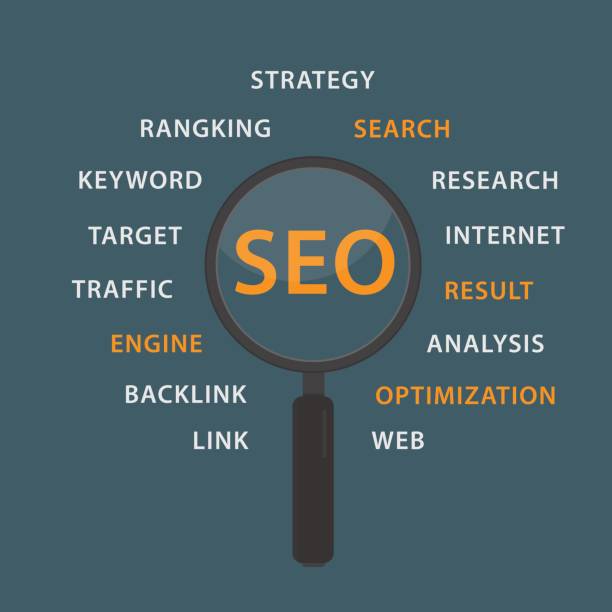
The Title Tag and Meta Description are two important HTML elements that are displayed in search results.
The Title Tag is the main title of the page that is displayed at the top of the browser and in search results.
The Meta Description is a summary of the page’s content that is displayed below the page title in search results.
Optimizing these two elements is very important for On-Page SEO, as they are the first thing users see in search results and can decide whether to click on your site’s link or not.
The page title should contain the main keyword of the page and be attractive and relevant to the content.
The meta description should also be concise and attractive and encourage users to click.
An optimized page title is attractive to both search engines and users who are searching.
The meta description is also an opportunity to attract users and provide a brief description of the page’s content.
Both of these elements play an important role in increasing the click-through rate (CTR).
It is recommended that the page title be less than 60 characters and the meta description be less than 160 characters to be fully displayed in the search results.
On-Page SEO includes optimizing these key elements to improve the site’s ranking in search results.
The page title and meta description should accurately and attractively describe the content of the page.
| Feature | Description |
|---|---|
| Page Title (Title Tag) | The title that appears at the top of the browser and in search results. |
| Meta Description | A summary of the page’s content that appears below the title in search results. |
Optimizing URL Structure for On-Page SEO
URL structure is another important factor in On-Page SEO.
The URL should be short, readable, and contain the main keyword of the page.
It is best to avoid using special characters and incomprehensible numbers in your URL.
An optimized URL is understandable for users and helps search engines to better understand the topic of the page.
In addition, the URL structure should be logical and hierarchical so that users can easily navigate the site.
Using categories and subcategories in the URL can help to better organize content.
Finally, make sure that all of your site’s URLs are working correctly and that there are no broken links.
On-Page SEO pays special attention to the URL structure of the site.
A proper URL structure helps search engines better understand the content of the site.
Also, users can get an idea of the content of the page by viewing the URL.
Optimizing the URL structure makes your site better visible in search results.
Try to choose URLs that are short, relevant, and contain the main keywords for your site.
Avoid using unnecessary characters and incomprehensible numbers.
By following these tips, you can optimize your site’s URL structure and improve your site’s ranking in search results.
On-Page SEO requires careful selection of URLs.
Are you worried that your company’s old website is driving away new customers? Rasaweb solves this problem with modern and efficient company website design.
✅ Increases your brand credibility.
✅ Helps to attract targeted customers.
⚡ Contact Rasaweb for a free consultation!
Optimizing Images and Videos

Images and videos play an important role in attracting users’ attention and increasing their engagement with the website.
However, if these elements are not properly optimized, they can have a negative impact on On-Page SEO.
To optimize images, you should use appropriate formats such as JPEG and PNG and reduce file sizes as much as possible to increase page loading speed.
You should also use the Alt tag to describe images.
The Alt tag helps search engines understand the content of the image and rank better in image search results.
On-Page SEO also pays attention to images and videos.
For videos, you should use reputable platforms such as YouTube and Vimeo to host videos and embed the videos on your site.
You should also write appropriate titles and descriptions for the videos and use relevant keywords in the title and descriptions.
Optimizing images and videos not only improves On-Page SEO, but also improves the user experience.
Try to use high-quality images and videos that are relevant to the content on your site.
On-Page SEO improves site ranking by improving user experience.
Using Heading Tags Correctly
Heading Tags such as H1, H2, H3, etc. are used to organize page content and show its structure.
The H1 tag should be used for the main title of the page and the H2, H3, etc. tags should be used for subheadings and subheadings.
Using heading tags helps search engines better understand the structure of the page’s content and recognize the relationship between different parts of the content.
Heading tags also help users to easily browse the page’s content and find the information they need.
Using keywords in heading tags can help improve On-Page SEO, but overuse of keywords should be avoided.
On-Page SEO values the correct use of heading tags.
Heading tags should be used logically and hierarchically.
For example, the H2 tag should be a subset of the H1 tag and the H3 tag should be a subset of the H2 tag.
By following this structure, you can help search engines better understand the content of your page.
The H1 tag is the most important heading tag and should include the main keyword of the page.
Use H2 to H6 tags to segment content and provide more detailed information.
Using heading tags correctly makes your content more attractive and understandable for users and search engines.
On-Page SEO improves site ranking by relying on these simple principles.
Internal Linking: A Way to Improve Site Structure

Internal linking is the process of creating links from one page of a website to other pages of the same website.
Internal linking can help to improve site structure, increase user accessibility, and increase the ranking of pages in search results.
By linking related pages to each other, you can help search engines to better understand the relationship between pages and increase the value of more important pages.
Also, internal linking helps users to easily navigate the site and find the information they need.
On-Page SEO views internal linking as a key strategy.
When linking to other pages, you should use the appropriate Anchor Text.
The link text should be relevant to the content of the destination page and help users and search engines understand the topic of the destination page.
Avoid using general and incomprehensible texts such as “click here” and instead use descriptive and relevant texts.
Internal linking should be done naturally and logically, and overuse of linking should be avoided.
On-Page SEO improves site structure with proper linking.
| Feature | Description |
|---|---|
| Internal Linking | Creating links from one page of a website to other pages of the same website |
| Anchor Text | The text used to link to other pages |
Optimizing Site Loading Speed

Site loading speed is an important ranking factor in search engines.
Users expect web pages to load quickly, and if a page takes more than a few seconds to load, the user is more likely to leave the site.
To optimize site loading speed, you can use various methods such as compressing images, using cache systems, optimizing code, and using CDN (Content Delivery Network).
You should also use high-quality and high-speed hosting.
On-Page SEO attaches great importance to site loading speed.
There are various tools for measuring site loading speed that you can use to identify problems and improve your site’s speed.
These tools include Google PageSpeed Insights and GTmetrix.
Improving site loading speed not only improves On-Page SEO, but also improves the user experience and increases the likelihood of users returning to the site.
On-Page SEO improves site ranking by improving user experience.
Do you dream of a thriving online store but don’t know where to start?
Rasaweb is your comprehensive online store design solution.
✅ Attractive and user-friendly design
✅ Increase sales and revenue⚡ Get a free consultation
High-Quality and Relevant Content is the King of On-Page SEO

High-quality and relevant content is the most important factor in On-Page SEO.
Content should be valuable, useful, and engaging for users and answer their questions and needs.
The content must be unique and original, and copying content from others should be avoided.
Also, the content should be updated regularly and new information should be added to it.
Using relevant keywords in the content can help improve On-Page SEO, but overusing keywords should be avoided and the content should be written naturally and fluently.
On-Page SEO improves site ranking by relying on high-quality content.
Search engines like Google give higher rankings to websites that provide high-quality and relevant content.
Therefore, focusing on producing high-quality and valuable content is the best way to improve On-Page SEO and attract organic traffic.
High-quality content should be published regularly so that search engines continuously check and index your site.
Producing high-quality and relevant content requires research, planning, and continuous effort, but the result is worth it.
On-Page SEO requires the production of valuable content.
Site Responsiveness: A Necessity for On-Page SEO
Site responsiveness means that the site is compatible with different devices such as mobile phones, tablets, and computers.
Considering that most users access the Internet through mobile phones, site responsiveness is very important for On-Page SEO.
Google gives higher rankings to responsive websites because these websites provide a better user experience for users.
On-Page SEO views site responsiveness as a ranking factor.
For your site to be responsive, you need to use responsive design.
Responsive design means that your site automatically adjusts to the screen size of the user’s device.
You should also use images and videos that are optimized for different devices to reduce the site loading speed on mobile devices.
Site responsiveness not only improves On-Page SEO, but also improves the user experience and increases the likelihood of users returning to the site.
On-Page SEO improves site ranking by improving mobile user experience.
Make sure that your site is displayed correctly on all devices and that users can easily use it.
Mobile On-Page SEO is very important today.
Frequently Asked Questions
| Question | Answer |
|---|---|
| What is a Meta Title and why is it important in On-Page SEO? | The meta title is the most important element of On-Page SEO, which is displayed at the top of the browser tab and search results. This title helps search engines and users understand the main topic of the page and should include the main keyword. |
| What role does the Meta Description play in On-Page SEO? | The meta description is a short summary of the page’s content that is displayed below the title in search results. Although it does not directly affect the ranking, its attractiveness can increase the click-through rate (CTR). |
| How should keywords be used in page content? | Keywords should be used naturally and relevantly in strategic locations such as the title, headings, first paragraph, and body text. Avoid excessive keyword stuffing. |
| What is the importance of high-quality and comprehensive content in On-Page SEO? | High-quality, unique, informative, and comprehensive content that meets the user’s needs is of great importance. Search engines give higher rankings to content that creates real value. |
| What is the application of heading tags (H1-H6) in the On-Page SEO structure? | Heading tags (H1, H2, H3, etc.) are used to structure content and specify the importance of different sections. H1 is the main title of the page, and each page should have only one H1. Other tags are used for subheadings. |
| How can we optimize images to improve On-Page SEO? | To optimize images, use descriptive alt text that includes relevant keywords, reduce the image file size without losing quality, and use meaningful and relevant file names. |
| What are the features of a friendly URL for On-Page SEO? | A friendly URL should be short, readable, descriptive, include the main keywords, and be without extra characters. The URL structure should be hierarchical and logical so that it is understandable for both users and search engines. |
| How does internal linking help On-Page SEO? | By connecting related pages to each other, internal linking helps users and search engine crawlers to better understand the site structure, transfer page authority, and increase the user’s time on the site. |
| What is the impact of page loading speed on On-Page SEO? | High loading speed is critical for both user experience and SEO ranking. Slower pages may be ignored by search engines and lead to an increased bounce rate. |
| Why is mobile-friendliness so important in On-Page SEO? | Given the increasing number of searches via mobile devices, having a responsive and mobile-friendly site is essential for user experience and ranking in search results (Google’s mobile-first indexing). |
And other services of Rasa Web advertising agency in the field of advertising
Intelligent sales automation: a combination of creativity and technology for campaign management through custom programming.
Intelligent website development: an effective tool for user interaction by customizing the user experience.
Intelligent Marketplace: An effective tool to improve SEO ranking by managing Google Ads.
Intelligent Digital Advertising: A creative platform to improve click-through rates with smart data analysis.
Intelligent Digital Advertising: An effective tool to increase sales by optimizing key pages.
And more than hundreds of other services in the field of internet advertising, advertising consulting and organizational solutions
Internet Advertising | Advertising Strategy | Advertisement Report
Resources
On-Page SEO Tutorial from SEO Review Tools Website
,On-Page SEO Guide from HubSpot Website
,What is On-Page SEO? Comprehensive Guide from Ahrefs
,Best On-Page SEO Practices from Search Engine Journal
“`html
? In today’s fast-paced digital world, your powerful online presence is the key to success. Rasaweb, with its expertise in digital marketing, from professional company website design to search engine optimization, will be the bridge between your business and your audience.
“`
📍 Tehran, Mirdamad Street, next to the Central Bank, South Kazerun Alley, Ramin Alley, No. 6