
### What is Internal SEO and Why is it Essential for Your Website?
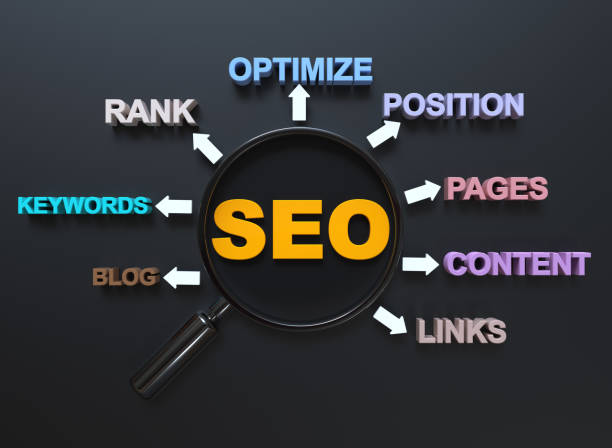
**Internal SEO**, or On-Page SEO, is a collection of techniques and actions that we take within our website to improve the site’s ranking in Google search results and other search engines.
In fact, internal SEO helps search engines to better understand the content of our website and display it to relevant users.
The importance of **internal SEO** lies in the fact that it forms the foundation of site ranking.
Without strong internal SEO, efforts for external SEO and link building alone will not be effective.
In other words, internal SEO helps you have more control over how your website appears in search results.
By optimizing various elements such as titles, meta descriptions, content, and site structure, you can ensure that your website is properly ranked for relevant keywords and attracts more organic traffic.
#Keywords play a very important role in internal SEO.
Choosing the right keywords and using them correctly in content, titles, and meta descriptions helps search engines better understand the topic of your website.
>Does your current company website not reflect your brand’s credibility and power as it should? Rasaweb solves this challenge for you with professional corporate website design.
>✅ Increase credibility and trust among visitors
>✅ Attract more targeted customers
>⚡ Click for free consultation!
Keyword Research: The Basic Strategy in Internal SEO

Keyword research is one of the most important steps in **internal SEO**.
You need to find the words that users use to search for products, services, or information related to your business.
There are various tools for keyword research, including Ahrefs Keywords Explorer, Moz Keyword Explorer, and Google Keyword Planner.
Using these tools, you can find search volume, competition level, and related keywords.
After finding the appropriate keywords, you should use them naturally and relevantly in your website content.
Avoid using too many keywords, as this can lead to your site being penalized by Google.
Finally, remember that keyword research is an ongoing process.
You should regularly review and update your keywords to make sure they are still relevant and effective.
By conducting proper keyword research, you can improve your website’s **internal SEO** and attract more organic traffic.

Click here to preview your posts with PRO themes ››
Optimizing Titles and Meta Descriptions to Increase Click-Through Rate

Title Tags and Meta Descriptions are two important elements in **internal SEO** that are displayed in Google search results.
Titles should be concise, engaging, and relevant to the page content.
Also, they should include the main keyword of the page.
The length of titles should not exceed 60 characters, as Google shortens longer titles.
Meta descriptions should be a summary of the page content and encourage users to click on your link.
Also, they should include the main keyword of the page.
The length of meta descriptions should not exceed 160 characters.
Optimizing titles and meta descriptions can help increase your website’s click-through rate (CTR).
CTR refers to the percentage of users who click on your link after seeing it in search results.
A higher CTR can lead to increased organic traffic and improved website ranking in search results.
In **internal SEO**, in addition to content, attention to these details is also important.
| Element | Description |
|——————————|————————————————————————–|
| Title Tag | Concise, engaging, includes keyword, maximum 60 characters |
| Meta Description | Summary of content, encourages clicks, includes keyword, maximum 160 characters |
Content Optimization for Search Engines and Users
Content is king! This famous saying in the world of **internal SEO** still holds true.
High-quality, valuable, and relevant content to users’ needs can help improve your website’s ranking in search results.
To optimize content for search engines and users, you should pay attention to a few points: 1. Keyword Research: Before writing content, research keywords related to your topic and use them naturally in your text.
2. Proper Structure: Divide your content into different sections and use titles, subtitles, lists, and images to organize it.
3. Readability: Use short and simple sentences and avoid complex and technical words.
4. Value: Your content should be valuable and useful to users and answer their questions.
5. Update: Regularly update your content to add new information and keep it relevant.
By following these tips, you can produce content that is both attractive to search engines and valuable to users.
This greatly helps to improve your site’s **internal SEO**.
More information about content marketing.
>Are you frustrated with the low conversion rate of your online store?
>Rasaweb is your definitive solution with professional e-commerce website design!
>✅ Increase your sales and revenue
>✅ Exceptional user experience for your customers
>⚡ Get a free consultation now!
Image and Video Optimization for SEO

Images and videos can make your website content more engaging and attractive.
However, in order for images and videos to help your site’s SEO, you need to optimize them correctly.
1. File Name: The file name of images and videos should be related to their content and include the main keyword.
2. Alt Text: The alt text of images should be a brief and accurate description of the image content and include the main keyword.
3. File Size: The file size of images and videos should be optimized so as not to slow down the page loading speed.
4. Title and Description: The title and description of videos should be engaging and relevant to their content and include the main keyword.
5. Video Sitemap: If you use videos on your website, you should create a video sitemap and submit it to Google.
By optimizing images and videos, you can help search engines better understand their content and improve your website’s ranking in search results.
**Internal SEO** is not only limited to text, but also includes optimizing all visual elements.
Proper URL Structure and its Impact on Internal SEO
The URL structure of your website plays an important role in SEO.
Optimized URLs not only help search engines better understand the content of your pages, but also improve user experience.
1. Short and Descriptive: URLs should be short and descriptive and briefly describe the content of the page.
2. Keywords: URLs should include keywords related to the page content.
3. Hyphen: Use a hyphen (-) to separate words in URLs.
4. Lowercase: Use lowercase letters in URLs.
5. Hierarchical Structure: URLs should have a hierarchical structure to clarify the relationship between different pages of your website.
By creating optimized URLs, you can help search engines better understand your website and improve its ranking in search results.
A proper URL structure is one of the important aspects of **internal SEO**.
Internal Linking and Site Navigation

Internal linking refers to the process of creating links between different pages of your website.
Internal linking can help improve your site’s **internal SEO** because it helps search engines better understand the structure of your website and identify more important pages.
In addition, internal linking can improve user experience and direct users to relevant pages.
To create effective internal links, you should pay attention to a few points: 1. Relevance: Links should be created between related pages.
2. Anchor Text: Use descriptive anchor text that is relevant to the content of the destination page.
3. Variety: Use variety in anchor text and avoid overusing keywords.
4. Number: Use an appropriate number of links on each page.
Site navigation also plays an important role in **internal SEO**.
Proper site navigation helps users easily navigate your website and find the information they need.
To create proper site navigation, you should pay attention to a few points: 1. Hierarchical Structure: Site navigation should have a hierarchical structure.
2. Main Menu: The site’s main menu should be accessible on all pages.
3. Breadcrumbs: Use breadcrumbs to show the user’s path through the site.
More information about Breadcrumbs.
| Element | Description |
|—————-|——————————————————————————|
| Internal Link | Create links between relevant pages, use descriptive anchor text |
| Site Navigation | Hierarchical structure, accessible main menu, use of Breadcrumbs |
Optimizing Page Load Speed
Page load speed is one of the important factors in **internal SEO** and user experience.
Users expect web pages to load quickly, and if a page takes too long to load, the user may leave it.
Google also considers page load speed as one of the ranking factors.
To optimize page load speed, you can take the following steps: 1. Optimize Images: Optimize images using image compression tools.
2. Enable Compression: Enable Gzip compression to reduce the size of your website files.
3. Use Caching: Use caching to store your website files in the user’s browser.
4. Reduce HTTP Requests: Reduce the number of HTTP requests.
5. Use CDN: Use a Content Delivery Network (CDN) to serve your website files from servers closer to users.
By optimizing page load speed, you can improve user experience and increase your website’s ranking in search results.
>Are you upset about losing customers who have visited your site to make a purchase?
>Rasaweb is your specialized solution for having a successful online store.
>✅ Significantly increase your online sales
>✅ Create professional trust and branding with customers
>⚡ Get a free consultation from Rasaweb experts!
Responsive Design and Mobile Compatibility
Given the increasing use of mobile devices to browse the web, responsive design and mobile compatibility are critical to **internal SEO** and user experience.
Responsive design means that your website automatically adapts to the screen size of different devices.
Google also prioritizes websites that are optimized for mobile in search results.
To make sure your website is optimized for mobile, you can use Google’s Mobile-Friendly Test tool.
This tool shows you how your website appears on mobile devices and what problems it has.
By having a responsive and mobile-compatible website, you can improve user experience and increase your website’s ranking in search results.
In **internal SEO**, this is of high importance.
Monitoring and Measuring Internal SEO Results

After taking **internal SEO** measures, it is important to monitor and measure your results to see if your efforts have been successful.
To monitor and measure SEO results, you can use various tools such as Google Analytics and Google Search Console.
These tools provide you with information about website traffic, keyword rankings, click-through rate (CTR), and other important metrics.
Using this information, you can identify the strengths and weaknesses of your **internal SEO** strategy and make the necessary changes to improve results.
Remember that SEO is an ongoing process and requires continuous effort and follow-up.
By monitoring and measuring your results, you can make sure you are on the right track and achieve your goals.
#### Frequently Asked Questions
| Question | Answer |
|—————————————————————————|————————————————————————————————————————————————————————————————————————————————————————————————–|
| What is Internal SEO (On-Page SEO)? | Internal SEO involves optimizing elements that are directly within your control and inside your website. Its goal is to help search engines better understand the content of the page and improve its ranking. |
| Why is internal SEO important? | Internal SEO provides search engines with clear signals about the content of the page, improves user experience, and increases the chances of attracting organic traffic. |
| What are the most important factors of internal SEO? | Keywords, Title Tag, Meta Description, URL structure, high-quality content, image optimization, and internal links are among the most important factors. |
| What is the role of the Title Tag in internal SEO? | The Title Tag is one of the most important signals for search engines and users that specifies the main topic of the page. It should include the main keyword and be engaging. |
| How important is the Meta Description? | The Meta Description does not directly affect ranking, but it can improve click-through rate (CTR) by encouraging users to click. |
| How to optimize images for internal SEO? | By using a descriptive file name, appropriate Alt Text containing keywords, compression to reduce size, and correct dimensions. |
| What is the impact of internal links on SEO? | Internal links help search engines discover and index site pages, distribute authority (PageRank) throughout the site, and improve user navigation. |
| Is page load speed part of the internal SEO factors? | Yes, page load speed is a critical factor in internal SEO and user experience. Slower pages can lead to higher bounce rates and lower rankings. |
| What are the characteristics of high-quality content for internal SEO? | High-quality content should be comprehensive, unique, relevant, reliable, readable, and fully answer users’ needs and questions. |
| How can keywords be used in content? | Keywords should be used naturally in the title, subtitles, first paragraph, body text, and image alt text. Avoid keyword stuffing. |
**And other services of Rasa Web advertising agency in the field of advertising
Intelligent digital advertising: An effective tool for analyzing customer behavior by using real data.
Intelligent content strategy: A professional solution to increase click-through rates by focusing on SEO-driven content strategy.
Intelligent social media: A new service to increase digital branding through the use of real data.
Intelligent social media: A professional solution for attracting customers by focusing on customizing the user experience.
Intelligent custom software: An effective tool to attract customers with the help of SEO-driven content strategy.
And more than hundreds of other services in the field of internet advertising, advertising consulting and organizational solutions
Internet advertising | Advertising strategy | Advertorial
**
#### Sources
What is internal SEO and what is its importance?
,Internal SEO: A comprehensive guide to website optimization for search engines
,What is internal site SEO? Complete On-Page SEO tutorial
,What is internal SEO? A comprehensive On-Page SEO guide for beginners
? In today’s competitive world, a strong online presence is vital for any business. Rasaweb Afrin Digital Marketing Agency, by providing comprehensive services including fast website design, professional SEO, social media management and targeted advertising campaigns, paves the way for you to reach the peaks of success. With us, your business will be seen at its peak.
📍 Tehran, Mirdamad Street, next to the Central Bank, South Kazerun Alley, Ramin Alley No. 6