
What is On-Page SEO and Why Does It Matter?
On-Page SEO is a set of techniques and actions you take within your website to improve your site’s ranking in Google search results and other search engines.
These actions include optimizing content, site structure, HTML tags, and other SEO-related factors.
SEO is essential for being visible in the online world.
The importance of On-Page SEO can be examined from several perspectives:
- Improve site ranking in search results: By optimizing website pages, the likelihood of your site appearing on the first pages of search results increases.
- Increase organic traffic: Higher ranking in search results leads to an increase in visitors through search, which is called organic traffic.
- Improve user experience: Optimizing site structure and content makes it easier for users to navigate your site and find the information they need.
- Increase conversion rate: By providing high-quality and relevant content, the likelihood of converting visitors into customers increases.
In fact, On-Page SEO helps search engines better understand the content of your site and display it to users who are looking for it.
Without proper On-Page SEO, even the best content may get lost in the sea of internet information.
Therefore, investing in On-Page SEO is a necessity for any business that wants to succeed in the online world.
By implementing SEO techniques correctly, you can strengthen your online presence and achieve your business goals.
You can learn more about SEO here.
#SEO, #Optimization, #SiteRanking, #OrganicTraffic, #UserExperience, #SearchEngines are important factors in SEO.
Are you worried that your company’s old website will scare away new customers? Rasawb solves this problem by designing a modern and efficient corporate website.
✅ Increases your brand credibility.
✅ Helps attract targeted customers.
⚡ Contact Rasawb for a free consultation!
Keyword Research and Choosing the Best Ones for SEO

Keyword research is the cornerstone of any successful On-Page SEO strategy.
Keywords are the phrases users enter into search engines to find information.
Choosing the right keywords helps you optimize your content to appear in search results for your target audience.
The keyword research process includes the following steps:
- Identifying key topics related to the business: First, you need to identify the general topics that your business is related to.
- Creating a list of potential keywords: Using keyword research tools such as Ahrefs Keywords Explorer, SEMrush, and Ubersuggest, create a list of keywords related to your main topics.
- Analyzing keywords: Evaluate the keywords in your list based on search volume (the number of times a keyword is searched per month), competition (the difficulty of ranking for a keyword), and relevance to your business.
- Choosing target keywords: Choose words that have a good search volume, manageable competition, and are directly related to your products or services.

Click here to preview your posts with PRO themes ››
After selecting your target keywords, you need to integrate them into your content strategy.
This means using keywords naturally in page titles, meta descriptions, body content, and other SEO-related elements.
Find the best keyword for your site.
On-Page SEO is not possible without keyword research.
By understanding the needs of your audience and choosing the right keywords, you can create content that is both valuable to users and improves your site’s ranking in search results.
Optimizing Page Title (Title Tag) and Meta Description
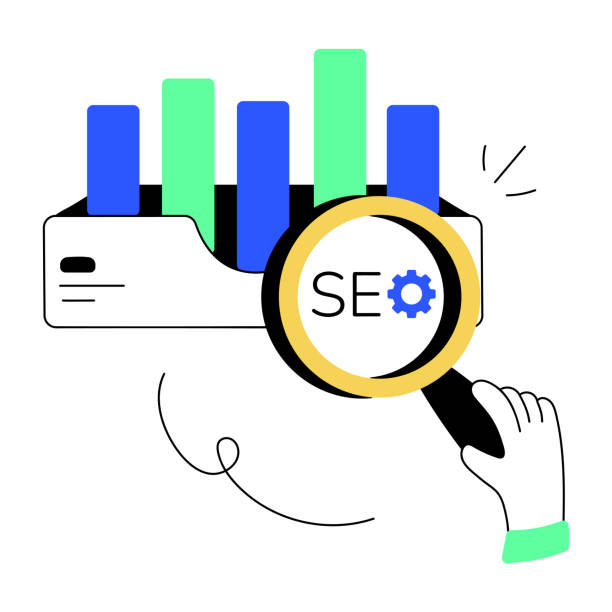
The Page Title (Title Tag) and Meta Description are two important elements in On-Page SEO that are displayed in search results.
The page title is the main title of your page, which is displayed in the browser tab and in search results as a blue link.
The meta description is a summary of the page content that is displayed below the page title in search results.
Optimizing these two elements is very important for attracting users and increasing the click-through rate (CTR) from search results.
Here are a few tips for optimizing the page title and meta description:
- The page title should contain the main keyword of the page.
- The page title should be attractive and concise (up to 60 characters).
- The meta description should be an accurate and engaging summary of the page content.
- The meta description should contain the main keyword of the page.
- The meta description should have a call to action (e.g., “Read more”, “Buy now”).
Remember that the page title and meta description are the first things users see in search results.
Therefore, optimizing these two elements can have a significant impact on your site’s organic traffic.
How to write a great meta description?.
Proper optimization of these two important On-Page SEO factors can have a significant impact on your site’s traffic.
| Element | Description | Best Practice |
|---|---|---|
| Page Title (Title Tag) | The main title of the page that appears in search results and the browser tab. | Concise (up to 60 characters), contains the main keyword, engaging |
| Meta Description | A summary of the page content that appears below the title in search results. | Accurate, engaging, contains the main keyword, call to action |
Optimizing Content for SEO and Readability
Content is king! This phrase is widely used in the world of On-Page SEO.
High-quality, valuable, and relevant content is not only attractive to users, but also helps search engines better understand the topic of your page.
Optimizing content for SEO and readability includes the following:
- Using keywords naturally: Use keywords naturally in the title, subtitles, body text, and other SEO-related elements.
Avoid keyword stuffing, as this can lead to your site being penalized by search engines. - Proper content structuring: Use subtitles (H1, H2, H3, etc.), lists, and short paragraphs to structure content.
This makes your content more understandable and engaging for readers. - Creating unique and valuable content: Create content that is valuable to users and provides new information.
Avoid copying content from other sites. - Optimizing images: Optimize images with descriptive file names and Alt Text.
Alt Text helps search engines understand the content of images. - Using internal and external links: Internal links to other pages of your own site and external links to other reputable sites increase the credibility of your site.
High-quality and optimized content plays a key role in the success of On-Page SEO.
By providing valuable and relevant content, you can both attract users and improve your site’s ranking in search results.
Learn how to optimize content.
Unique and fresh content will have a dramatic impact on On-Page SEO.
Tired of losing business opportunities due to not having a professional corporate website? Don’t worry anymore! With Rasawb’s corporate website design services:
✅ Your brand credibility and professionalism will increase.
✅ You will attract more customers and sales leads.
⚡ Get a free consultation to get started now!
Optimizing Page URLs

Page URLs are another important element in On-Page SEO that should be properly optimized.
Page URLs are the internet addresses of your pages that are displayed in the browser address bar.
An optimized URL can help search engines and users better understand the topic of your page.
Here are a few tips for optimizing page URLs:
- Use short and descriptive URLs: Long and complex URLs are more difficult for users and search engines.
Try to keep your URLs as short and descriptive as possible. - Use keywords in the URL: The URL should contain the main keyword of the page.
This helps search engines better understand the topic of your page. - Use hyphens (-) instead of underscores (_) to separate words in the URL: Search engines understand hyphens as word separators, while underscores may not be interpreted correctly.
- Use lowercase letters in the URL: Using uppercase letters in the URL can cause problems in some systems.
It is best to always use lowercase letters in your URLs.
Optimizing page URLs is a small but important step in On-Page SEO that can have a positive impact on your site’s ranking.
URL SEO guide.
On-Page SEO is also possible by optimizing URLs.
Optimizing Images for SEO
Images play an important role in attracting users and improving the user experience.
However, if images are not properly optimized, they can have a negative impact on site loading speed and SEO.
Optimizing images for SEO includes the following:
- Choosing the right image format: Use JPEG, PNG, and WebP formats for your images.
JPEG is suitable for images with many colors such as photos, PNG is suitable for images with graphics and text, and WebP is a new format that has both good quality and smaller size than JPEG and PNG. - Reducing image size: Reduce the size of images as much as possible without significantly reducing their quality.
Use image compression tools such as TinyPNG and ImageOptim. - Using descriptive file names: Choose file names for images with keywords related to the topic of the image.
For example, if you have an image of a cat, name the file cat.jpg or persian-cat.jpg. - Using Alt Text: Enter Alt Text for your images.
Alt Text helps search engines understand the content of images and is also displayed to users if the image does not load. - Optimizing image dimensions: Adjust image dimensions to the size they are displayed on your site.
Using images larger than the required size increases page size and slows down its loading speed.
By optimizing images, you can both improve your site’s loading speed and help search engines better understand the content of your site.
Image SEO Tips
Image optimization is one of the most important parts of On-Page SEO.
Improving Site Loading Speed

Site loading speed is one of the important factors in site ranking in search engines as well as user experience.
Users who visit your site expect your site’s pages to load quickly.
If your site is slow, users may leave your site and visit other sites.
Here are a few ways to improve site loading speed:
- Optimizing images: Use images with the appropriate format and small size.
- Enabling Gzip compression: Gzip compression reduces the size of your site’s files and makes your site’s pages load faster.
- Using a cache system: The cache system stores a copy of your site’s pages in memory and displays this version to users when they request it.
This makes your site’s pages load faster. - Reducing the number of HTTP requests: Each time a web page loads, the browser has to send a lot of HTTP requests to the server.
Reducing the number of HTTP requests can help improve your site’s loading speed. - Using a CDN (Content Delivery Network): CDN stores your site’s content on different servers around the world and delivers the content from the server closest to them when users request it.
This makes your site’s pages load faster.
Improving site loading speed is an ongoing process that requires effort and follow-up.
By implementing the above solutions, you can improve your site’s loading speed and increase user experience.
Test site speed with Google PageSpeed Insights.
Improving site speed is one of the most important On-Page SEO techniques.
| Method | Description | Benefits |
|---|---|---|
| Optimizing Images | Reducing image size while maintaining quality | Reduce page size, increase loading speed |
| Enabling Gzip Compression | Compressing site files | Reduce file size, increase loading speed |
| Using CDN | Storing content on servers close to the user | Increase user access speed to content |
The Importance of Internal Linking in SEO
Internal linking is the process of linking different pages of your website to each other.
This not only helps users easily navigate your site and find the information they need, but also helps search engines better understand your site’s structure and content.
Internal linking plays an important role in On-Page SEO:
- Improving site ranking in search results: Internal links help search engines identify the important pages of your site and rank them higher in search results.
- Increasing organic traffic: Internal links help users visit more pages of your site, resulting in increased organic traffic to your site.
- Improving user experience: Internal links help users easily navigate your site and find the information they need.
For effective internal linking, you should place links naturally and relevantly in your content.
Use relevant keywords in the Anchor Text and avoid linking to irrelevant pages.
Internal Linking Strategy
Internal linking is very important in On-Page SEO.
Do you know that customers’ first impression of your company is your website? Multiply the credibility of your business with a powerful corporate website from Rasawb!
✅ Exclusive and eye-catching design tailored to your brand
✅ Improved user experience and increased customer acquisition
⚡ Get a free consultation!
Optimizing Site for Mobile (Mobile-Friendly)
Given the increasing use of mobile devices to search the internet, optimizing your site for mobile is essential.
A Mobile-Friendly site is a site that is displayed correctly on mobile devices and users can easily navigate it.
Google and other search engines rank Mobile-Friendly sites higher in search results.
Here are a few tips for optimizing your site for mobile:
- Using Responsive Design: Responsive Design is a site that automatically adapts to the screen size of different devices.
- Using Readable Fonts: Use readable fonts of a suitable size for the text on your site.
- Using Large Buttons: Design your site’s buttons large enough for users to easily touch them.
- Avoiding the use of Flash: Flash is not supported on mobile devices.
- Optimizing Site Loading Speed: Site loading speed is very important on mobile devices.
Optimizing your site for mobile is a valuable investment that can help increase your site’s traffic and ranking in search results.
Mobile-First Indexing.
Being mobile-friendly is one of the important requirements in On-Page SEO.
Continuous Review and Analysis of On-Page SEO
On-Page SEO is an ongoing process and requires review and analysis.
You should regularly review your site’s performance in search results and identify its strengths and weaknesses.
You can use various tools such as Google Analytics and Google Search Console to do this.
Using these tools, you can obtain the following information:
- Number of site visitors
- Keywords that users use to enter your site
- Your site’s ranking for different keywords
- Bounce Rate
- Site loading speed
- SEO problems of the site
By analyzing this information, you can identify the weaknesses of your site and take action to fix them.
You can also copy the successful strategies by reviewing the performance of competitors.
On-Page SEO requires constant effort.
Use Google Analytics.
Regular site review greatly helps improve On-Page SEO.
Frequently Asked Questions
| Question | Answer |
|---|---|
| What is Meta Title and why is it important in On-Page SEO? | Meta Title is the most important element of On-Page SEO that is displayed at the top of the browser tab and search results. This title helps search engines and users understand the main topic of the page and should include the main keyword. |
| What role does Meta Description play in On-Page SEO? | Meta Description is a short summary of the page content that is displayed below the title in search results. Although it does not directly affect ranking, its attractiveness can increase click-through rate (CTR). |
| How should keywords be used in page content? | Keywords should be used naturally and relevantly in strategic locations such as the title, headers, first paragraph, and body text. Avoid excessive keyword stuffing. |
| What is the importance of high-quality and comprehensive content in On-Page SEO? | High-quality, unique, informative, and comprehensive content that meets the needs of the user is of great importance. Search engines give higher rankings to content that creates real value. |
| What is the use of heading tags (H1-H6) in the structure of On-Page SEO? | Heading tags (H1, H2, H3, etc.) are used to structure content and specify the importance of different sections. H1 is the main title of the page and each page should have only one H1. Other tags are used for subtitles. |
| How to optimize images to improve On-Page SEO? | To optimize images, use descriptive Alt Text that includes relevant keywords, reduce the image file size without sacrificing quality, and use meaningful and relevant file names. |
| What are the characteristics of a SEO-friendly URL for On-Page SEO? | A SEO-friendly URL should be short, readable, descriptive, include the main keywords, and have no extra characters. The URL structure should be hierarchical and logical to be understandable for both users and search engines. |
| How does Internal Linking help On-Page SEO? | Internal Linking helps users and search engine crawlers better understand the site structure by connecting related pages to each other, transfer page credibility, and increase the user’s time on the site. |
| What is the impact of page loading speed on On-Page SEO? | High loading speed is critical for both user experience and SEO ranking. Slower pages may be ignored by search engines and lead to increased Bounce Rate. |
| Why is Mobile-Friendliness so important in On-Page SEO? | Given the increasing number of searches via mobile devices, having a responsive and mobile-friendly site is essential for user experience and ranking in search results (Google’s Mobile-First Indexing). |
And other services of Rasa Web Advertising Agency in the field of advertising
Intelligent SEO: Transform sales growth with the help of real data.
Intelligent Data Analysis: A new service to increase website visits through the use of real data.
Intelligent Link Building: A new service to increase campaign management through marketing automation.
Intelligent Content Strategy: A creative platform to improve customer behavior analysis with marketing automation.
Intelligent Data Analysis: An effective tool for digital branding with the help of marketing automation.
And more than a hundred other services in the field of internet advertising, advertising consulting and organizational solutions
Internet Advertising | Advertising Strategy | Advertorials
Resources
What is Internal SEO? Internal SEO Training and its Importance
,What is Internal SEO (On-Page SEO)? Everything about On-Page SEO
,What is Internal SEO and how does it help improve site ranking?
,What is Internal SEO (On-Page SEO) + 25 Practical Techniques
? To reach the peak of success in the digital world, Rasa Web Afrin guides your business by providing comprehensive digital marketing services including modern user interface website design.
📍 Tehran, Mirdamad Street, next to the Central Bank, Kazerun Jonoubi Alley, Ramin Alley No. 6