What is On-Page SEO and Why Does It Matter?
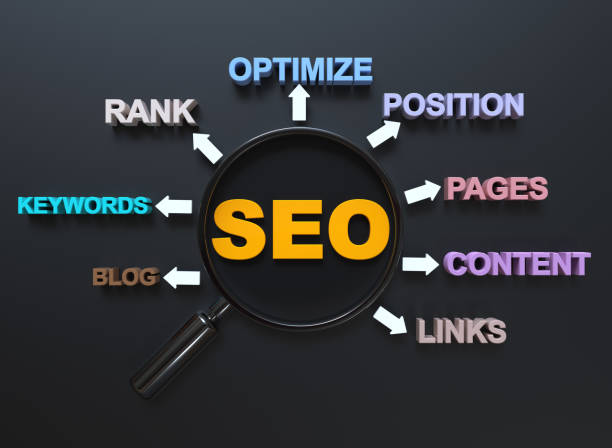
#On_Page_SEO or On-Page SEO is a set of actions taken to optimize your website pages in order to improve the site’s ranking in search engines like Google Google.
Unlike Off-Page SEO, which focuses on optimization outside the site, On-Page SEO focuses on improving the content and structure of the site.
The importance of On-Page SEO On-Page SEO is that it helps search engines better understand the content of your site and show it to relevant users.
A strong On-Page SEO strategy increases organic traffic, improves user experience, and ultimately increases conversion rates.
Simply put, On-Page SEO On-Page SEO includes optimizing page titles, meta descriptions, using appropriate keywords, improving site loading speed, and creating high-quality, valuable content.
By following these principles, you can optimize your site for search engines and improve your ranking in search results.
Without proper On-Page SEO On-Page SEO, your off-page SEO efforts alone will not be sufficient.
The ultimate goal of On-Page SEO On-Page SEO is to create a positive user experience and provide relevant and useful content to users.
When users can easily find the information they need on your site, the likelihood of their return and greater interaction with your site increases.
This not only helps improve your site’s ranking in search engines but also leads to the creation of a strong and reputable brand.
Tired of losing business opportunities due to not having a professional corporate website? Worry no more! With Rasaweb’s corporate website design services:
✅ The credibility and professionalism of your brand increase.
✅ You attract more customers and sales leads.
⚡ Get a free consultation to get started now!
Keyword Research and Selecting the Best Ones

Keyword research is one of the most basic and important steps in On-Page SEO On-Page SEO.
Choosing the right keywords helps you optimize your content based on users’ needs and searches.
To get started, make a list of keywords related to your site’s topic.
Use keyword research tools like Ahrefs, Moz Keyword Explorer, and Ubersuggest to check search volume, competition, and suggested keywords.
Categorize keywords based on relevance, search volume, and competition.
Keywords with high search volume and low competition can be good opportunities to attract organic traffic.
Also, pay attention to Long-Tail Keywords.
These keywords usually have lower search volume but can attract more targeted traffic to your site.
For example, instead of using the keyword “sports shoes,” use the phrase “best sports shoes for running in Tehran.”
After selecting keywords, use them naturally and purposefully in your content.
Avoid overusing keywords, as this can harm your site’s SEO.
Use keywords in the page title, meta description, subheadings, and main text.
Make sure your content is valuable and useful to users and not just written for search engines.
Optimizing Titles and Meta Descriptions to Increase Click-Through Rate

Titles and meta descriptions are two key elements that are displayed to users in search results.
An attractive title and a convincing meta description can significantly increase your site’s click-through rate (CTR).
The page title should be concise, accurate, and attractive, and it should contain the main keyword.
The title length should not exceed 60 characters to be fully displayed in search results.
The meta description should also provide a summary of the page content and encourage users to click on your site’s link.
In the meta description, highlight the benefits of the page content and use a call to action.
The length of the meta description should not exceed 160 characters.
Consistently optimizing titles and meta descriptions can have a positive impact on your site’s ranking.
In addition, use related keywords in titles and meta descriptions to help search engines better understand your page’s content.
But avoid overusing keywords and try to deliver a natural and attractive message.
Continuous testing and optimization of titles and meta descriptions can help you find the best combination to increase click-through rate.
| Element | Description | Best Practices |
|---|---|---|
| Page Title | Concise, accurate, and attractive | Include the main keyword, maximum 60 characters |
| Meta Description | Summary of content, convincing | Content benefits, call to action, maximum 160 characters |

Using attractive and purposeful titles and meta descriptions can have a significant impact on attracting audiences and increasing organic traffic.
Optimizing Content Using Keywords and LSI
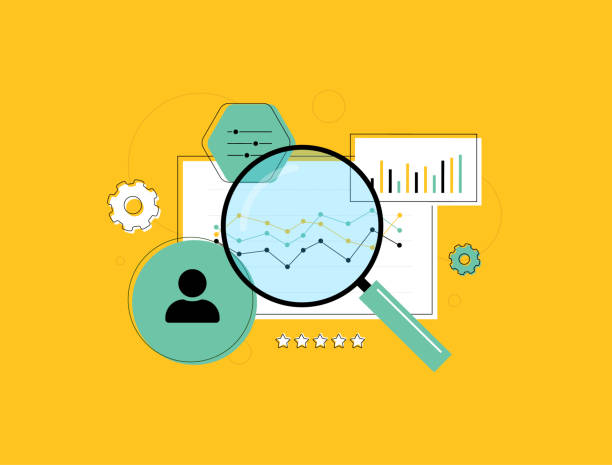
Content is the heart of On-Page SEO On-Page SEO.
Producing high-quality, valuable content that is relevant to users’ needs is one of the most important factors in improving your site’s ranking.
Use main keywords and related keywords (LSI) naturally and purposefully in your content.
LSI keywords are words that are semantically related to your main keyword and help search engines better understand the topic of your content.
For example, if your main keyword is “SEO training,” LSI keywords might include “search engine optimization,” “Google ranking,” and “organic traffic.”
Using LSI keywords helps you create more comprehensive and relevant content and avoid overusing your main keyword.
On-Page SEO By producing rich and relevant content, improve user experience.
In addition, update your content regularly and use images, videos, and infographics to make it more attractive.
Visual content not only captures users’ attention but can also help improve the understanding of complex concepts.
Also, divide your content into smaller, digestible sections and use appropriate subheadings to organize it.
Doesn’t your current corporate website reflect the credibility and power of your brand as it should? Rasaweb solves this challenge for you with professional corporate website design.
✅ Increase the credibility and trust of visitors
✅ Attract more targeted customers
⚡ Click to get a free consultation!
Proper URL Structure and its Impact on On-Page SEO
URL structure is another important factor in On-Page SEO On-Page SEO.
A proper URL should be short, descriptive, and include the main keyword.
Avoid using long and complex URLs that contain incomprehensible numbers and letters.
Short and descriptive URLs not only help search engines better understand your page content but also help users easily find the page they are looking for.
For example, instead of using the URL “example.com/page?id=1234”, use the URL “example.com/seo-internal-optimization”.
In URLs, use hyphens (-) instead of spaces to separate words.
Also, try to keep your URLs consistent and avoid changing them, as this can harm your site’s SEO.
If you need to change the URL, use a 301 redirect to transfer traffic from the old URL to the new URL.
On-Page SEO and optimizing URL structure can help improve user experience and increase your site’s ranking in search results.
An organized and logical URL structure not only helps search engines better index your site but also helps users easily navigate your site.
Optimizing Images and Videos for Search Engines

Images and videos play an important role in the attractiveness and engagement of users with your site.
But to benefit from SEO, you need to optimize them correctly.
First, reduce the file size of images and videos to increase page loading speed.
Use appropriate formats such as JPEG for images and MP4 for videos.
You can use online tools or image and video editing software to compress images and videos.
Then, choose a descriptive and keyword-rich file name for each image and video.
For example, instead of using the file name “IMG_1234.jpg”, use the file name “seo-internal-optimization-guide.jpg”.
Also, write a suitable Alt Text for each image and video.
Alt Text should be descriptive of the image or video and include the main keyword.
Alt Text helps search engines understand the content of the image or video and display it in search results.
In addition, use title and description tags for videos and upload them to video sharing platforms like YouTube.
Videos can attract significant traffic to your site and help improve your site’s ranking in search results.
Click here to preview your posts with PRO themes ››
The Importance of Internal Linking in Improving On-Page SEO
Internal linking is one of the most important strategies in On-Page SEO On-Page SEO.
Internal linking means creating links between different pages of your site.
This helps search engines better understand your site’s structure and identify related pages.
Internal linking also helps users easily navigate your site and find the information they need.
When internal linking, pay attention to the keywords used in the link text (Anchor Text).
Use keywords related to the destination page for the link text.
But avoid overusing the same keywords and use variety in the link texts.
Also, try to place links naturally and purposefully in your content and avoid creating artificial links.
| Factor | Importance | Key Points |
|---|---|---|
| Anchor Text | High | Using related keywords, variety in text |
| Link Position | Medium | Placing links in important parts of the text |
| Number of Links | Medium | Creating balance, preventing excessive linking |
Internal linking not only helps improve the SEO On-Page SEO of your site but also leads to improved user experience.
A proper internal linking structure allows users to easily navigate your site and find the information they need.
Improving Site Loading Speed and its Impact on Ranking
Site loading speed is an important factor in On-Page SEO On-Page SEO and user experience.
Users who encounter a slow site are more likely to leave it and go to other sites.
Google also values site loading speed as a ranking factor.
Therefore, improving site loading speed can have a positive impact on your site’s ranking in search results.
To improve site loading speed, first check your site’s speed using tools like Google PageSpeed Insights and GTmetrix.
These tools will show you which parts of your site need optimization.
Then, take steps such as optimizing images, enabling Gzip compression, using CDN (Content Delivery Network), and reducing the number of HTTP requests.
Optimizing site code and using strong hosting can also help improve site loading speed.
In general, the faster your site loading speed, the better user experience you will have and the better your site’s ranking in search results will be.
Did you know that 94% of users’ first impressions of a business are related to its website design? Turn this first impression into an opportunity for growth with professional corporate website design by **Rasaweb**.
✅ Attract more customers and increase sales
✅ Create credibility and trust in the eyes of the audience⚡ Get a free website design consultation!
The Importance of Responsive Design and Mobile Compatibility
With the increasing use of mobile for searching the internet, responsive design and mobile compatibility are essential for On-Page SEO On-Page SEO.
A responsive site automatically adapts to the screen size of different devices (mobile, tablet, desktop) and provides a consistent user experience.
Google gives more points to sites that have responsive design and displays them higher in mobile search results.
To ensure your site is responsive, you can use Google’s Mobile-Friendly Test tool.
This tool shows you whether your site is optimized for mobile or not.
If the site is not compatible with mobile, you need to change your site template or use a responsive template.
On-Page SEO and responsive design help you attract more traffic through mobile and provide a better user experience for your users.
In addition to responsive design, you should also pay attention to factors such as site loading speed on mobile, font and button size, and ease of navigation.
A mobile-friendly site should be fast, easy to use, and tailored to the needs of mobile users.
Continuous Review and Update of On-Page SEO

On-Page SEO On-Page SEO is an ongoing process and requires review and updates.
With changes to Google’s algorithms and user needs, you need to update your On-Page SEO On-Page SEO strategy.
Regularly check the performance of your site using tools such as Google Search Console and Google Analytics and identify your strengths and weaknesses.
Click here to preview your posts with PRO themes ››
Pay attention to the keywords that attract the most traffic to your site and optimize your content based on them.
Also, pay attention to pages with high bounce rates and try to improve their content.
Updating old content and adding new information can help improve your site’s ranking in search results.
On-Page SEO On-Page SEO requires continuous analysis and optimization.
By following these tips and continuously updating On-Page SEO On-Page SEO, you can improve your site’s ranking in search engines and attract more organic traffic.
Remember that On-Page SEO On-Page SEO is a long-term investment and its results will be visible over time.
On-Page SEO On-Page SEO With careful and principled optimization, over time it will lead to improved ranking and increased traffic.
Frequently Asked Questions
| Question | Answer |
|---|---|
| What is On-Page SEO? | It refers to a set of actions that are performed within the website to improve ranking in search engines. |
| Why is On-Page SEO important? | Because it helps search engines better understand your site’s content and structure and improves the user experience. |
| What are the most important elements of On-Page SEO? | Title and meta descriptions, keywords, URL structure, quality content, image optimization, internal linking, and site speed. |
| How do we optimize the Title Tag and Meta Description? | The title should include the main keyword and be attractive, and the meta description should be an engaging summary of the content with relevant keywords. |
| What is the role of keywords in On-Page SEO? | Keywords tell search engines what the page content is about and should be used naturally and intelligently in the text. |
| How is image optimization done for On-Page SEO? | By compressing the size, using a descriptive file name, and filling the Alt tag with relevant descriptions and keywords. |
| What is Internal Linking and what is its application? | It is the connection of different pages of the site to each other. This helps to distribute the authority of pages (Page Authority) and improve the crawl of search engines. |
| What is the importance of site loading speed in On-Page SEO? | High speed improves user experience and is an important ranking factor for search engines like Google. |
| What effect does the site being Responsive (Mobile-Friendliness) have on On-Page SEO? | Due to the increase in mobile users, being responsive is essential to provide a suitable user experience on all devices and prioritize Google’s mobile indexing. |
| What are the important factors related to content in On-Page SEO? | Originality, quality, comprehensiveness, readability, appropriate use of headings (H1, H2,…) and regular content updates. |
And other services of Rasa Web advertising agency in the field of advertising
Intelligent Conversion Rate Optimization: A dedicated service for customer acquisition growth based on user experience customization.
Smart Google Ads: A professional solution for user interaction with a focus on optimizing key pages.
Smart Content Strategy: A creative platform for improving customer behavior analysis with marketing automation.
Smart Digital Branding: An innovative service for increasing customer acquisition through dedicated programming.
Intelligent Conversion Rate Optimization: An innovative service for increasing customer behavior analysis through SEO-driven content strategy.
And more than hundreds of other services in the field of internet advertising, advertising consulting and organizational solutions
Internet Advertising | Advertising Strategy | Advertorial Reports
Resources
On-Page SEO Optimization on Moz
,Comprehensive On-Page SEO Guide on Ahrefs
,On-Page SEO: Search Engine Land Comprehensive Guide
,SEO Copywriting Training at Yoast
? With Rasaweb Afarin, a specialist in secure website design and innovative digital marketing strategies, precisely achieve your business goals.
📍 Tehran, Mirdamad Street, next to Central Bank, Kazerun Jonubi Alley, Ramin Alley No. 6