
What is On-Page SEO and Why is it Important?
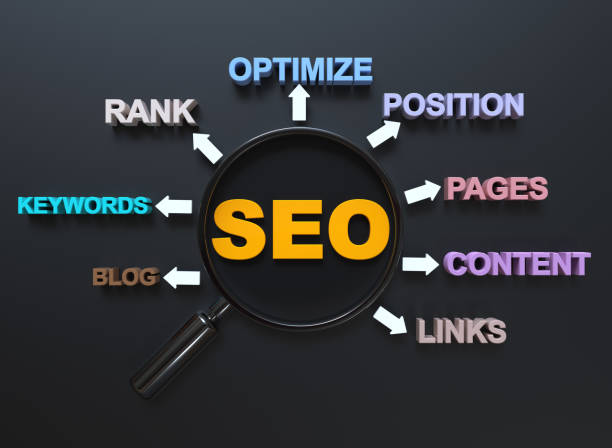
#On-Page SEO is a collection of techniques and actions performed within your website to improve your site’s ranking in search engine results like Google.
The main goal of on-page SEO is to optimize the content and structure of the website for search engines and users.
Unlike off-page SEO, which includes activities outside your website (such as link building), on-page SEO focuses entirely on the elements within the site. The importance of on-page SEO lies in the fact that you have complete control over it.
You can optimize content, improve site structure, and enhance user experience.
By doing on-page SEO correctly, you help search engines better understand your content and show it to relevant users.
This increases organic traffic, improves conversion rates, and ultimately increases your revenue. To succeed in on-page SEO, you need to pay attention to various aspects, including selecting appropriate keywords, optimizing titles and meta descriptions, creating high-quality and relevant content, improving site speed, and optimizing images.
Each of these factors plays an important role in improving your site’s ranking in search results.
In the following guide, we will examine each of these techniques in more detail.
Are you tired of your online store getting visitors but not sales? Rasaweb solves your core problem with professional online store design!
✅ Significant increase in sales with targeted design
✅ Flawless user experience for your customers
⚡ Get a free consultation!
Keyword Research – The Cornerstone of On-Page SEO
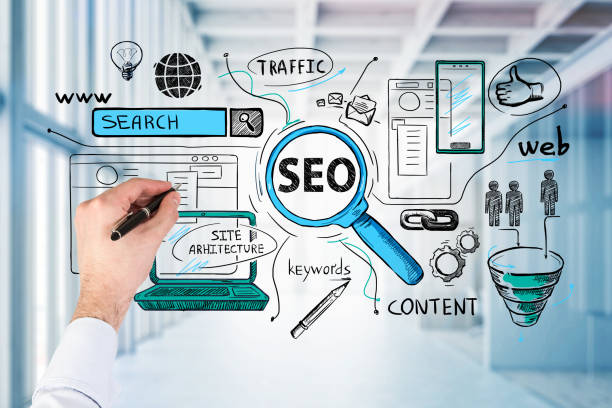
Keyword research is the process of finding the words and phrases that users use to search for information in search engines.
This process is crucial for on-page SEO because it helps you tailor your content to the needs and interests of your target audience. To start keyword research, you should first list the words and phrases that are relevant to your business.
Then, you can use various keyword research tools such as Ahrefs, Moz Keyword Explorer, and Ubersuggest to find more relevant and popular keywords.
These tools provide information such as search volume, competition level, and suggested keywords.
When choosing keywords, look for words that have a decent search volume and the competition for them is not too high.
Also, make sure that the chosen keywords are relevant to your content and meet the needs of users.
Divide the keywords into two general categories: main keywords and secondary keywords.
Main keywords are the words that are most relevant to your business and attract the most search volume.
Secondary keywords are words that are related to the main keywords and help you make your content more diverse and engaging.
Optimizing Title and Meta Descriptions – The First Encounter with Users
The Title Tag and Meta Description are two HTML elements that are displayed in search results and play an important role in attracting users to your website.
The page title is the main title that is displayed at the top of the search result and should include your main keyword. The meta description is a summary of the page content that is displayed below the title and should encourage users to click on your link.
To optimize the title and meta description, you need to pay attention to a few things.
First, the title should be attractive and relevant to the page content.
Second, the title should include your main keyword.
Third, the title length should be between 50 and 60 characters to be fully displayed in the search results.
Regarding the meta description, you should provide an accurate summary of the page content and encourage users to click on your link.
The meta description length should be between 150 and 160 characters.
Both elements should be unique for each page.
Avoid using duplicate titles and meta descriptions on different pages of your website. Title and Meta Description tags are very effective in on-page SEO.
| Element | Description | Best Practice |
|---|---|---|
| Title Tag | The page title that is displayed in the search results. | Attractive, relevant, includes the keyword, length between 50-60 characters |
| Meta Description | A summary of the page content that is displayed below the title. | Accurate, persuasive, length between 150-160 characters, unique |

Click here to preview your posts with PRO themes ››
Producing High-Quality and Relevant Content – The Heart of On-Page SEO
Content is king! This phrase is often heard in the world of SEO, and the reason is that high-quality and relevant content is the most important factor in attracting and retaining users on your website.
Your content should be valuable, informative, and engaging, and should meet the needs of users.
To produce high-quality content, you need to pay attention to a few things.
First, your content should be unique and original.
Avoid copying content from others.
Second, your content should be optimized for keywords.
Use your main and secondary keywords in the title, text, and images.
Third, your content should be readable and understandable.
Use short paragraphs, subheadings, and images to break up the text.
Finally, your content should be up-to-date and fresh.
Regularly review your content and update old information.
The use of CMS has an effective role.
Your site’s on-page SEO is highly dependent on your site’s content, so try to produce original and high-quality content. An important point in content production is to pay attention to the user’s search intent.
What is the user’s purpose in searching? Are they looking for information? Are they looking to buy a product? Are they looking to solve a problem? By understanding the user’s intent, you can produce content that directly meets their needs.
Producing high-quality and relevant content is a long-term investment that helps you improve your site’s ranking in search results, attract more organic traffic, and ultimately attract more customers.
Did you know that 94% of first impressions of a company are related to its website design?
Rasaweb helps you create the best first impression by providing professional corporate website design services.
✅ Creating a professional and reliable image of your brand
✅ Easier attraction of potential customers and improved online position
⚡ Get a free corporate website design consultation
Optimizing URL Structure – Easy Navigation for Search Engines

Your website’s URL structure plays an important role in on-page SEO.
URLs should be readable, concise, and relevant to the page content.
A good URL helps search engines better understand the content of the page and show it to users. To optimize the URL structure, you need to pay attention to a few things.
First, URLs should be short and concise.
Avoid using long and complex URLs.
Second, URLs should include your main keyword.
Use your main keyword in the URL.
Third, URLs should be readable and understandable.
Avoid using uppercase letters, numbers, and special characters in your URL.
The best way to create optimized URLs is to use relevant keywords and separate words with hyphens (-).
For example, if your page is about “On-Page SEO Tutorial,” the optimized URL could be “example.com/on-page-seo-tutorial.”
In addition, you should avoid creating duplicate URLs.
Each page on your website should have its own unique URL.
Improve your on-page SEO with a suitable URL.
By optimizing the URL structure, you help search engines better index your website and improve your site’s ranking in search results.
Optimizing Images – Visual SEO

Images play an important role in the attractiveness and engagement of users with your website.
However, unoptimized images can slow down your site and negatively impact your SEO.
To optimize images, you need to pay attention to a few things.
First, images should be compressed to reduce their file size.
Use image compression tools like TinyPNG or ImageOptim.
Second, images should be saved in the appropriate format.
JPEG format is suitable for photos and PNG format is suitable for images with high graphics.
Third, images should have alternative text (Alt Text).
Alternative text helps search engines understand the content of the image and helps users understand its content if the image does not load.
The alternative text should be short, accurate, and relevant to the content of the image.
In addition, you should use a suitable file name for the images.
The file name should include your main keyword.
For example, if your image is about “On-Page SEO Tutorial,” the file name could be “on-page-seo-tutorial.jpg.”
Take on-page SEO of images seriously.
By optimizing images, you can increase your site’s speed, improve your site’s ranking in search results, and provide a better user experience for your users.
Click here to preview your posts with PRO themes ››
Improving Site Speed – Better User Experience and Higher Ranking

Site speed is one of the most important factors in SEO and user experience.
Users expect your website to load quickly.
If your site is slow, users may leave your site and visit a competitor’s site.
In addition, Google also considers site speed as a ranking factor.
You can take various actions to improve site speed.
First, use a high-quality web hosting service.
Second, compress your images.
Third, use cache.
Fourth, use a content delivery network (CDN).
Fifth, optimize your HTML, CSS, and JavaScript code.
Sixth, use a lightweight and optimized template.
In addition, you can use site speed testing tools like Google PageSpeed Insights or GTmetrix to identify your site speed problems and get improvement solutions.
Transform your on-page SEO by improving site speed.
By improving site speed, you can provide a better user experience for your users, reduce bounce rate, and improve your site’s ranking in search results.
| Factor | Impact on Site Speed | Improvement Solutions |
|---|---|---|
| Web Hosting | Direct Impact | Choose a high-quality and high-speed hosting service |
| Image Compression | Direct Impact | Use image compression tools |
| Cache | Direct Impact | Activate Cache |
| Content Delivery Network (CDN) | Direct Impact | Use CDN to distribute content |
| Code Optimization | Direct Impact | Optimize HTML, CSS, and JavaScript code |
Responsive Optimization – Mobile Compatibility
Responsive Design means that your website should automatically adapt to the screen size of different devices such as computers, tablets, and mobile phones.
Given that most internet users access websites via mobile phones, responsive optimization is very important for SEO and user experience.
Google also considers responsive design as a ranking factor.
To ensure that your website is responsive, you can use Google’s Mobile-Friendly Test tool.
This tool shows you how your website is displayed on mobile phones and what problems it has.
To implement responsive design, you can use CSS frameworks such as Bootstrap or Materialize.
These frameworks provide a set of CSS and JavaScript classes that help you easily make your website responsive.
Don’t forget mobile on-page SEO.
By optimizing responsively, you can provide a better user experience for your mobile users, reduce bounce rate, and improve your site’s ranking in search results.
Are you tired of losing business opportunities because you don’t have a professional corporate website?
Rasaweb helps you with professional corporate website design:
✅ Build a powerful and reliable image of your brand
✅ Convert site visitors into loyal customers
⚡ Get a free consultation now!
Using Internal Links – Creating a Coherent Structure

Internal links are links that connect different pages of your website to each other.
Using internal links helps search engines better understand the structure of your website and helps users easily navigate your website.
Internal links can help improve your site’s ranking in search results.
To use internal links, you need to pay attention to a few things.
First, internal links should be relevant to the page content.
Avoid linking to irrelevant pages.
Second, use appropriate anchor text.
The link text should be descriptive of the destination page.
Third, don’t forget to link to important pages of your website.
Pages that you want to rank higher in search results should receive more internal links.
Improve your site’s on-page SEO with link building.
By using internal links, you can make the structure of your website more coherent, provide a better user experience for your users, and improve your site’s ranking in search results.
On-page SEO is strengthened with internal links.
Optimizing for Voice Search – The Future of SEO
Voice search is growing rapidly and is expected to play a more important role in how information is searched for in the future.
To optimize for voice search, you need to pay attention to a few things.
First, focus on Long-Tail Keywords.
Users in voice search usually use longer and more conversational phrases.
Second, answer users’ questions.
Your content should answer questions that users ask in voice search.
Third, use Schema Markup.
Structured data helps search engines better understand your content.
Fourth, improve your site speed.
Users in voice search expect answers to be provided quickly.
Fifth, optimize your website for mobile devices.
Many voice searches are done through mobile devices.
On-page SEO for voice search requires attention to detail.
By optimizing for voice search, you can benefit from this growing trend and attract more traffic to your website.
Click here to preview your posts with PRO themes ››
Frequently Asked Questions
| Number | Question | Answer |
|---|---|---|
| 1 | What is On-Page SEO? | On-page SEO refers to a set of actions that are performed within a website and to optimize its pages in order to achieve a better ranking in search results. |
| 2 | What is the most important factor in on-page SEO? | High-quality, relevant, and comprehensive content that meets the user’s needs is the most important factor in on-page SEO. |
| 3 | What role does the Title Tag play in on-page SEO? | The title tag is one of the most important factors that tells search engines and users what the page content is about. It should include the main keyword and be attractive. |
| 4 | How important is the Meta Description tag? | Although it does not directly affect ranking, it is very effective on the click-through rate (CTR) in search results and encourages users to visit the page. |
| 5 | How is image optimization done in on-page SEO? | By using a suitable alt tag, compressing the image size to increase loading speed, and naming the image file meaningfully. |
| 6 | What is the importance of using headings (H1, H2, H3) in on-page SEO? | Headings help structure content, increase readability, and help search engines understand the hierarchy and subtopics of content. |
| 7 | What does Internal Linking mean and what are its benefits? | Internal linking means creating links between different pages of a website. This helps to distribute credibility, improve user navigation, and help search engine crawling. |
| 8 | Where should the main keyword (Focus Keyword) be placed on the page? | The main keyword should be placed in the title tag, meta description, H1, first paragraph, and naturally throughout the text, and if possible, in the URL address. |
| 9 | What effect does copied or duplicate content have on on-page SEO? | Duplicate content can harm site ranking and confuse search engines as to which is the original version and may be detected as spam. |
| 10 | How important is page loading speed in on-page SEO? | Page loading speed is an important ranking factor and directly affects the user experience. Slow pages increase the bounce rate of users. |
And other services of Rasa Web advertising agency in the field of advertising
Intelligent Marketplace: A combination of creativity and technology to increase click-through rates through intelligent data analysis.
Intelligent Marketplace: A combination of creativity and technology for user interaction by optimizing key pages.
Intelligent Digital Branding: An effective tool for analyzing customer behavior with the help of Google Ads management.
Intelligent Google Ads: A professional solution to improve SEO ranking with a focus on marketing automation.
Intelligent Google Ads: Transform campaign management with the help of intelligent data analysis.
And more than hundreds of other services in the field of internet advertising, advertising consulting, and organizational solutions
Internet Advertising | Advertising Strategy | Advertorial Report
Resources
What is On-Page SEO?
,What is On-Page SEO and what is the difference between it and off-page SEO?
,On-Page SEO Tutorial (On Page SEO) 1402 | 0 to 100
,What is On-Page SEO? Complete tutorial with 20 techniques
? Are you ready to transform your business in the digital space? Rasaweb Afarin Digital Marketing Agency paves your way to success by providing innovative and comprehensive solutions including professional SEO, strategic social media management, and responsive website design.
📍 Tehran, Mirdamad Street, next to the Central Bank, South Kazerun Alley, Ramin Alley No. 6