
What is On-Page SEO and Why Does It Matter?
What is On-Page SEO?
#On-Page SEO refers to a set of actions taken to optimize website pages in order to improve ranking in search engine results.
These actions include content optimization, using appropriate keywords, improving site structure, and optimizing HTML tags.
The main goal of On-Page SEO is to create a user-friendly and understandable website for search engines like Google.
Why is On-Page SEO Important?
Improve Search Engine Rankings: By performing appropriate On-Page SEO, your website will rank better in search results, which will lead to increased visitors and more traffic.
Increase Organic Traffic: On-Page SEO helps you increase organic traffic (traffic that comes from search engines).
This type of traffic is usually more stable and of higher quality.
Improve User Experience: On-Page SEO also includes improving site structure and content, which leads to an improved user experience (UX).
A website with a good user experience keeps visitors on the site for longer and reduces the bounce rate.
Increase Conversion Rate: By improving content quality and user experience, the likelihood of visitors converting into customers increases.
In other words, On-Page SEO can help improve the conversion rate.
More information about conversion rate.
Increase Brand Credibility: A website that ranks higher in search results naturally has more credibility with users and customers.
This credibility can help strengthen the brand and increase customer trust.
For a better understanding, read the Moz On-Page SEO article.
Does your current website convert visitors into customers or scare them away? Solve this problem forever with professional corporate website design by Rasaweb!
✅ Create a strong brand and credibility
✅ Attract target customers and increase sales
⚡ Get a free consultation now!
Keyword Research: Finding the Best Opportunities
What is Keyword Research?
Keyword research is the process of identifying the words and phrases that users use in search engines.
This helps us optimize our website content based on these keywords and rank better in search results.
Ahrefs’ Guide to Keyword Research.
Keyword Research Tools
There are various tools for keyword research, each with its own features and capabilities.
Some of the most popular tools include:
Google Keyword Planner: A free tool from Google that helps you find keywords related to your business and check their search volume.
Ahrefs Keywords Explorer: A powerful tool with advanced capabilities that allows you to identify high-potential keywords and analyze their competition.
SEMrush Keyword Research: A comprehensive tool for keyword research, competitor analysis, and keyword rank tracking.
Moz Keyword Explorer: A tool that helps you identify valuable keywords and assess the difficulty of ranking for them.
Long Tail Pro: A tool specifically designed to find long-tail keywords.
Long-tail keywords typically have lower search volumes, but competition for them is also lower, and they can attract higher-quality traffic to your website.
Using these tools, you can find suitable keywords for your website’s On-Page SEO and optimize your content based on them.
On-Page SEO requires a strong keyword strategy.
For more information, read Neil Patel’s article on keyword research.
Optimizing Page Title, Heading Tags, and Meta Descriptions

Optimizing Page Title
The Title Tag is one of the most important factors in On-Page SEO.
The page title should accurately describe the content of the page and include the main keyword.
The page title is displayed in search results, so it should be attractive and compelling to encourage users to click on your link.
Optimizing the page title has a significant impact on On-Page SEO.
Heading Tags
Heading tags (H1, H2, H3, etc.) are used to organize and structure page content.
The H1 tag should be the main title of the page and include the main keyword.
H2 and H3 tags are used for subheadings and different sections of the content.
Proper use of heading tags helps search engines better understand the content of the page.
Proper use of heading tags is very effective in On-Page SEO.
Meta Description
The meta description is a short summary of the content of the page that is displayed in search results below the page title.
The meta description should be attractive and compelling to encourage users to click on your link.
Also, the meta description should include the main keyword.
A well-written meta description helps you with On-Page SEO.
Yoast’s Guide to Meta Descriptions.
| Element | Description | Best Practices |
|---|---|---|
| Page Title (Title Tag) | The main title of the page that is displayed in search results. | Maximum 60 characters, include the main keyword, attractive and compelling |
| Heading Tags | Tags for structuring page content (H1, H2, H3, etc.) | Use H1 for the main title, use H2 and H3 for subheadings, include relevant keywords |
| Meta Description | A short summary of the content of the page that is displayed in search results. | Maximum 160 characters, attractive and compelling, include the main keyword |
By optimizing the page title, heading tags, and meta descriptions, you can improve your website’s ranking in search results and attract more traffic.
In fact, by doing these things, you have helped your On-Page SEO.
Content Optimization: Producing High-Quality and Relevant Content
What is Content Optimization?
Content optimization is the process of adjusting your website’s content in such a way that it is attractive and understandable to search engines and also meets the needs of users.
Content optimization is one of the most important factors in On-Page SEO.
Backlinko’s Guide to Content Optimization.

Click here to preview your posts with PRO themes ››
Producing High-Quality and Relevant Content
High-quality and relevant content is one of the most important factors in SEO.
Your content should be valuable, useful, engaging, and relevant to the target keywords.
Also, your content should answer users’ questions and needs.
Producing high-quality and relevant content helps search engines identify your website as a credible and valuable resource.
Producing high-quality and relevant content is an important aspect of On-Page SEO.
Using Appropriate Keywords
Keywords should be used naturally in your content.
Avoid overusing keywords (Keyword Stuffing), as this can lead to your website being penalized by search engines.
Use keywords in the page title, heading tags, meta descriptions, and the main text of the content.
Proper use of keywords has a significant impact on On-Page SEO.
Improving Content Readability
Your content should be readable and understandable.
Use short and simple sentences and avoid long paragraphs.
Use images and videos to make the content more engaging.
Using lists and bullets can help improve content readability.
Improving content readability helps the user stay on your site longer.
This factor is positive in On-Page SEO.
Does your current corporate website reflect the credibility and power of your brand as it should? Rasaweb solves this challenge for you with professional corporate website design.
✅ Increase the credibility and trust of visitors
✅ Attract more targeted customers
⚡ Click to get a free consultation!
Image Optimization: Improving Speed and SEO of Images
What is Image Optimization?
Image optimization is the process of adjusting your website’s images to reduce their size and increase page loading speed.
Also, image optimization includes adding alternative text (Alt Text) to images.
Image optimization is an important factor in On-Page SEO.
Google’s Guide to Image Optimization.
Reducing Image Size
High-resolution images can slow down page loading speed.
To reduce image size, you can use image compression tools.
You can also use appropriate image formats such as JPEG, PNG, and WebP.
The WebP format is specifically designed for the web and has a smaller size than other formats.
Reducing image size directly affects site speed, and site speed also affects On-Page SEO.
Adding Alternative Text (Alt Text)
Alternative text is a short description of the image that is displayed if the image does not load.
Alternative text helps search engines understand the content of the image.
Also, alternative text is useful for users who use assistive tools such as screen readers.
Adding appropriate alternative text to images helps search engines better understand the thematic connection between images and page content, which is effective in improving On-Page SEO.
Using an Appropriate File Name
The image file name can also affect SEO.
Use descriptive file names that are relevant to the content of the image.
For example, instead of using the file name “IMG_1234.jpg”, use the file name “SEO-internal-optimization.jpg”.
Using an appropriate file name for images can help search engines better understand the topic of the images and, as a result, help improve your website’s On-Page SEO.
URL Structure: Creating Optimized and User-Friendly URLs
What is URL Structure?
URL structure refers to how your website’s pages are organized and addressed.
A good URL structure should be user-friendly, understandable, and optimized for search engines.
Optimizing the URL structure is an important factor in On-Page SEO.
Moz’s Guide to URL Structure.
Creating Optimized and User-Friendly URLs
Your URLs should be short, descriptive, and include the main keywords.
Avoid using special characters and too many numbers in your URL.
URLs should be easy to read and remember.
Optimized URLs have a positive impact on On-Page SEO.
Using a Hierarchical Structure
Your website should have a clear hierarchical structure.
This structure helps search engines understand the relationship between different pages of your website.
Use logical and relevant categories to organize your content.
A proper hierarchical structure helps search engine bots easily crawl and index your site, which is very important for On-Page SEO.
Using Hyphens (-) Instead of Underscores (_)
Search engines consider hyphens as word separators in the URL, while they consider underscores as part of the word.
Therefore, use hyphens to separate words in your URL.
For example, instead of using the URL “example.com/seo_internal_optimization”, use the URL “example.com/seo-internal-optimization”.
This small point can have a significant impact on On-Page SEO.
Internal Linking: Unlock the Power of Internal Links

What is Internal Linking?
Internal linking is the process of linking different pages of your website to each other.
Internal linking helps search engines better understand the structure and content of your website.
Also, internal linking helps users easily navigate your website and find relevant content.
Internal linking is an important factor in On-Page SEO.
Ahrefs’ Guide to Internal Linking.
Benefits of Internal Linking
Improve search engine rankings: Internal linking helps search engines identify important pages of your website and improve their ranking in search results.
Increase traffic: Internal linking helps users find relevant content and spend more time on your website.
This leads to increased traffic to your website.
Internal linking is a key strategy for improving On-Page SEO.
Improve user experience: Internal linking helps users easily navigate your website and find the information they need.
This leads to improved user experience.

Click here to preview your posts with PRO themes ››
Best Practices for Internal Linking
Create relevant links: Links should point to pages that are relevant to the content of the current page.
Use appropriate anchor text: The anchor text should be descriptive and relevant to the content of the destination page.
Do not use nofollow links for internal links: Nofollow links tell search engines not to follow the link and not to transfer value to the destination page.
By using appropriate internal linking, you can improve your website’s ranking in search results, attract more traffic, and improve user experience.
As a result, you will have a strong On-Page SEO.
| Feature | Description | Example |
|---|---|---|
| Anchor Text | The clickable text that directs the user to another page. | Click here for more information about On-Page SEO. |
| Source Page | The page where the link originates. | Blog homepage |
| Destination Page | The page that the link leads to. | Page explaining On-Page SEO |
Mobile Optimization: Ensuring Compatibility with Mobile Devices

What is Mobile Optimization?
Mobile optimization is the process of designing your website to display well on mobile devices.
Given that most users access the Internet through mobile devices, mobile optimization is a critical factor in SEO.
Mobile optimization directly affects On-Page SEO.
Google’s Guide to Mobile-First Indexing.
The Importance of Mobile Optimization
User Experience: A website optimized for mobile provides a better user experience for users.
Users can easily navigate your website, read content, and interact with interactive elements.
A good user experience indicates good On-Page SEO.
Search Engine Ranking: Google has been using Mobile-First Indexing since 2015.
This means that Google considers the mobile version of your website for indexing and ranking in search results.
Therefore, if your website is not optimized for mobile, your ranking in search results will decrease.
Conversion Rate: A website optimized for mobile has a higher conversion rate.
Mobile users can more easily purchase your products and services and subscribe to your newsletter.
Mobile optimization is an important aspect of On-Page SEO that should not be ignored.
Methods of Mobile Optimization
Responsive Design: Use a responsive design that automatically adapts to the screen size of different devices.
Page Loading Speed: Optimize page loading speed on mobile devices.
Use low-resolution images and compress files.
Use Readable Fonts: Use readable fonts with an appropriate size so that users can easily read your content.
Optimize Buttons and Links: Design buttons and links large enough so that users can easily click on them.
By optimizing your website for mobile, you can improve user experience, increase your ranking in search results, and increase the conversion rate.
These actions will help you have a strong On-Page SEO.
Are you worried that your company’s old website will drive away new customers? Rasaweb solves this problem with modern and efficient corporate website design.
✅ Increases your brand’s credibility.
✅ Helps attract targeted customers.
⚡ Contact Rasaweb for a free consultation!
Site Speed: Improving Loading Time for a Better User Experience
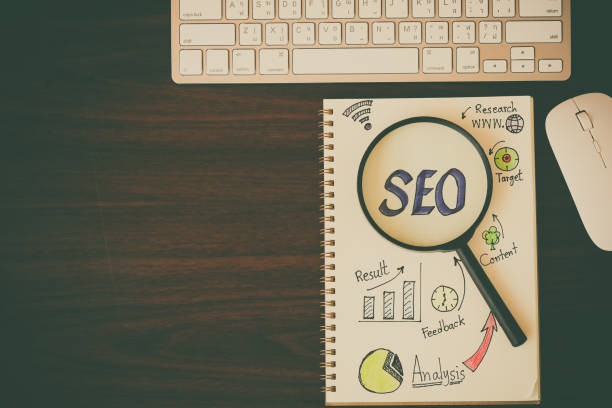
What is Site Speed?
Site speed refers to the amount of time it takes for a website page to load completely.
Site speed is an important factor in user experience and SEO.
A website with high speed provides a better user experience for users and earns a better ranking in search results.
Improving site speed is one of the most important aspects of On-Page SEO.
Google’s Guide to PageSpeed Insights.
The Importance of Site Speed
User Experience: Users expect website pages to load quickly.
If a page takes more than 3 seconds to load, many users will leave the website.
A website with high speed provides a better user experience for users and reduces the bounce rate.
High site speed is very effective in improving On-Page SEO.
Search Engine Ranking: Google uses site speed as one of the ranking factors in search results.
Websites with higher speeds earn better rankings in search results.
By improving site speed, you have helped your On-Page SEO.
Conversion Rate: A website with high speed has a higher conversion rate.
Users can more easily purchase your products and services and subscribe to your newsletter.
Site speed plays an important role in On-Page SEO and increasing the conversion rate.
Methods to Improve Site Speed
Image Optimization: High-resolution images can slow down page loading speed.
To reduce image size, you can use image compression tools.
File Compression: By compressing CSS, JavaScript, and HTML files, you can reduce their size and increase page loading speed.
Using Caching: By using caching, you can store the static content of your website in the user’s browser so that the page loads faster on subsequent visits.
Using a Content Delivery Network (CDN): By using a CDN, you can store the content of your website on different servers around the world so that users can receive content from the server closest to them.
By improving site speed, you can improve your website’s On-Page SEO.
Schema Markup: Enhancing Search Engine Understanding of Content
What is Schema Markup?
Schema Markup is a type of code that allows you to provide more information about your website’s content to search engines.
By using schema markup, you can help search engines better understand your website’s content and display it correctly in search results.
Schema markup plays an important role in On-Page SEO.
Official Schema.org Website.
Click here to preview your posts with PRO themes ››
Benefits of Schema Markup
Better Display in Search Results: Schema markup allows you to display more information about your website in search results.
This information can include ratings, reviews, prices, business hours, and more.
Better display in search results can increase the click-through rate (CTR).
Improved Search Engine Understanding: Schema markup helps search engines better understand your website’s content.
This can lead to better ranking in search results.
Using schema markup is an important technique in On-Page SEO.
Types of Schema Markup
There are different types of schema markup that you can use for different types of content.
Some of the most popular types of schema markup include:
Product: For providing information about products
Review: For providing information about reviews
Event: For providing information about events
Organization: For providing information about organizations
Article: For providing information about articles
How to Use Schema Markup
To use schema markup, you need to add the schema code to your website’s HTML.
You can use various tools to generate schema code.
After adding the schema code, you can use the Google Rich Results Test tool to check the code’s validity.
By properly using schema markup, you can have a positive impact on your website’s On-Page SEO.
Frequently Asked Questions
| Question | Answer |
|---|---|
| What is On-page SEO? | On-page SEO refers to the set of actions taken within your website to improve its ranking in search engine results. This includes optimizing content, site structure, and HTML code. |
| Why is On-page SEO important? | On-page SEO helps search engines understand the content of your page and determine whether your content is relevant to searchers. It is the foundation of any successful SEO strategy. |
| What are the key elements of on-page SEO? | Page title (Title Tag), Meta Description, use of keywords, image optimization, heading structure (H1, H2, …), internal linking, and content quality are key elements. |
| How do we optimize the page title (Title Tag)? | The page title should include the main keyword, be attractive and compelling to click, and its length should be between 50 and 60 characters (or suitable pixels) to be fully displayed in search results. |
| What role does Meta Description play in on-page SEO? | The meta description is a summary of the page content that is displayed below the title in search results. Although it does not directly affect ranking, it helps SEO by increasing the click-through rate (CTR). |
| What is the importance of using heading structure (H1, H2, H3) in on-page SEO? | Headings structure the content of the page and make it easier to read. H1 is usually the main title of the page and should include the keyword. H2 and H3 are used to organize subsections and help search engines understand the hierarchy of content. |
| How to use keywords effectively in content? | Keywords should be used naturally and logically throughout the content, including the introduction, body, and conclusion. Avoid over-stuffing keywords (Keyword Stuffing). |
| What are the steps involved in optimizing images for on-page SEO? | It includes compressing images to reduce size, using descriptive file names, adding appropriate alternative text (Alt Text), and optimizing the title and description of the image. Alt Text is vital for accessibility and helping search engines understand the content of the image. |
| What is Internal Linking and what are its benefits? | Internal linking means creating links from one page on your website to another page on the same website. This helps users easily navigate your site, distributes page authority throughout the site, and helps search engines better understand your site structure. |
| What is the importance of content quality in on-page SEO? | High-quality content that is accurate, comprehensive, and valuable to users is the cornerstone of on-page SEO. Search engines prefer content that meets the needs of users. Quality content leads to longer user dwell time (Dwell Time) and reduced bounce rate (Bounce Rate), which are positive SEO signals. |
And other services of Rasa Web Advertising Agency in the field of advertising
Intelligent Digital Advertising: A creative platform to improve click-through rates with precise audience targeting.
Intelligent Customer Journey Map: A novel service to increase SEO ranking by customizing the user experience.
Intelligent Digital Branding: A dedicated service to grow customer attraction based on the use of real data.
Intelligent Reportage: A creative platform to improve customer acquisition by managing Google Ads.
Intelligent Digital Advertising: A combination of creativity and technology for analyzing customer behavior through dedicated programming.
And more than hundreds of other services in the field of internet advertising, advertising consulting and organizational solutions
Internet Advertising | Advertising Strategy | Reportage Advertisement
Resources
On-Page SEO Optimization: A Step-by-Step Guide from Ahrefs
,On-Page Optimization from Moz
,What is On-Page SEO? A Comprehensive Guide from Search Engine Land
,The Complete Guide to On-Page SEO from Semrush
? To boost your business in the digital space, Rasaweb Digital Marketing Agency smooths your path to success with services such as custom website design, search engine optimization (SEO), and professional social media management.
📍 Tehran, Mirdamad Street, next to Central Bank, South Kazerun Alley, Ramin Alley No. 6