
What is On-Page SEO and Why is it Crucial for Your Website?

On-Page SEO refers to a set of techniques and actions that are performed within your website to improve your site’s ranking in search engines like Google.
These actions include optimizing content, site structure, HTML tags, and other factors related to your web pages.
The importance of On-Page SEO stems from the fact that search engines use these factors to better understand the content of the site and its relevance to user search queries.
Without a strong On-Page SEO strategy, even the best content may be overlooked in search results.
#Keywords play an important role in On-Page SEO.
Choosing the right keywords and using them correctly in titles, meta descriptions, and the main text of the content helps search engines understand the topic of the page.
However, it is important to avoid overusing keywords (Keyword Stuffing), as this can harm your site’s ranking.
Instead, try to use keywords naturally and meaningfully in your content.
In fact, On-Page SEO is one of the most vital and important steps for a website.
Did you know that 94% of users’ first impressions of a business are related to its website design? With professional corporate website design by **Rasaweb**, turn this first impression into an opportunity for growth.
✅ Attract more customers and increase sales
✅ Create credibility and trust in the eyes of the audience⚡ Get free website design consultation!
Principled Keyword Research, a Fundamental Step in SEO
Keyword research is a vital process in On-Page SEO.
This process involves identifying the phrases and words that users use to find information related to your business in search engines.
There are various tools for keyword research, such as Ahrefs, Moz Keyword Explorer, and Ubersuggest.
These tools help you find search volume, competition, and related keywords.

Click here to preview your posts with PRO themes ››
After identifying the appropriate keywords, you should prioritize them based on relevance to the business, search volume, and competition level.
Keywords with high search volume and low competition are good opportunities to improve your site’s ranking.
Also, paying attention to Search Intent when choosing keywords is very important.
Is the user looking for information, buying a product, or comparing services? Adjust your content based on the user’s intent.
So, optimizing the website and On-Page SEO with relevant and targeted keywords can help increase your website traffic.
Optimizing Page Title and Meta Descriptions
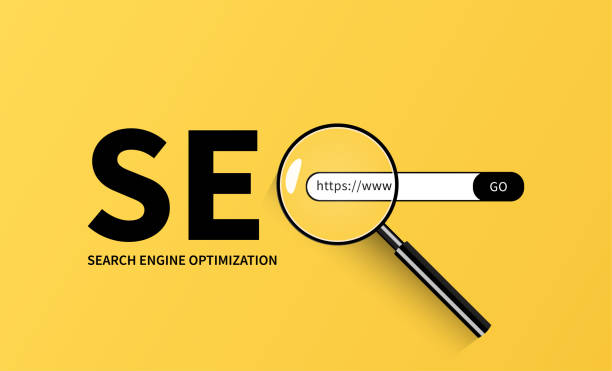
The Title Tag and Meta Description are two important elements in On-Page SEO that are displayed in search results.
The page title should be attractive, concise, and include the main keyword.
The length of the page title should not exceed 60 characters, as Google usually shortens longer titles.
The meta description should also provide an attractive summary of the page’s content and encourage the user to click.
The length of the meta description should not exceed 160 characters.
Optimizing the page title and meta description can increase click-through rate (CTR) and attract more traffic to your site.
In addition, these elements help search engines better understand the subject of the page.
For each page of your site, create a unique page title and meta description that is relevant to the content of the page.
| Element | Description | Best Practice |
|---|---|---|
| Title Tag | The title that appears in search results and browser tab. | Attractive, concise, includes the keyword, maximum 60 characters |
| Meta Description | A summary of the page’s content that is displayed in search results. | Attractive, persuasive, maximum 160 characters, unique |
Optimizing URL Structure

The URL (internet address) structure plays an important role in On-Page SEO and user experience.
Short, descriptive URLs that include keywords are more attractive to search engines and users.
Avoid using long and complex URLs that contain incomprehensible numbers and letters.
URLs should have a hierarchical structure and reflect the structure of your site.
For example, a good URL for a product page might look like this: `example.com/category/product-name`.
Using hyphens (-) instead of underscores (_) in URLs is recommended because search engines recognize hyphens as word separators.
Also, using lowercase letters in URLs is better because some servers are case-sensitive.
An optimized URL structure helps search engines better index your site’s pages and improve their ranking.
Also, users can have a better understanding of the page’s content by seeing the URL.
In the discussion of On-Page SEO, choosing the right structure for URLs is essential.
Is your company website as professional and reliable as it should be? With specialized corporate website design by Rasaweb, create an online presence that reflects your credibility and attracts more customers.
✅ Build a powerful and professional image of your brand
✅ Turn visitors into real customers
⚡ Get free consultation right now!
Optimizing Images
Optimizing images is an important aspect of On-Page SEO that is often overlooked.
High-volume images can reduce page loading speed and affect user experience.
To optimize images, first compress them using tools like TinyPNG or ImageOptim.
Then, use appropriate image formats such as JPEG for photos and PNG for high-graphic images.
In addition, fill the ALT tag of images with accurate descriptions and including keywords.
The ALT tag helps search engines understand the content of the image and display it in search results.
Also, choose image file names with relevant keywords.
For example, instead of a name like `IMG_1234.jpg`, use a name like `red-shoes.jpg`.
Optimizing images not only helps improve page loading speed, but also provides new opportunities to attract traffic through image search.
By observing the mentioned On-Page SEO tips, the images on your website will help improve the overall performance of the website.
The Importance of High-Quality and Unique Content
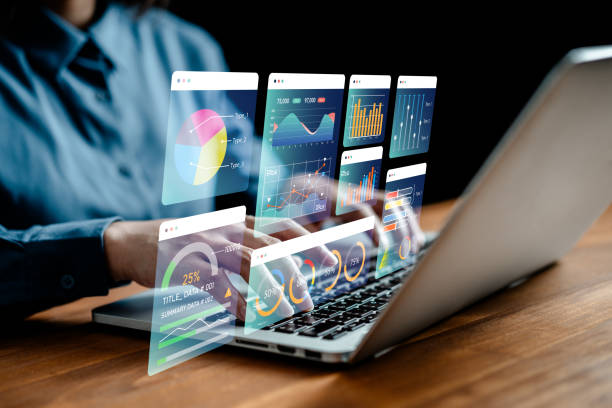
High-quality and unique content is the heart of On-Page SEO.
Search engines are looking for content that is useful, informative, and engaging for users.
Creating duplicate or copied content can harm your site’s ranking.
Your content should answer users’ questions, solve their problems, and provide valuable information.
To create high-quality content, first research what questions users have about your topic of interest.
Then, create content that comprehensively and accurately answers these questions.
Use images, videos, and other multimedia elements to make your content more attractive.
Update your content regularly to keep it fresh and relevant.
Producing high-quality content not only improves your site’s ranking, but also helps increase the credibility and trust of users.
On-Page SEO and content production are a two-way and vital interaction.
Proper Content Structuring Using HTML Tags
Using the appropriate HTML tags helps search engines better understand the structure and content of your page.
Heading tags (H1-H6) are used to structure content and highlight headings and subheadings.
The H1 tag should be the main title of the page and be placed at the top of the page.
H2-H6 tags are used for subheadings and content divisions.
Using heading tags correctly helps with the readability and organization of your content and shows search engines which parts of the page are more important.
Paragraph tags (P) are used for the main text of the content.
List tags (UL and OL) are used to create unordered and ordered lists.
Link tags (A) are used to create internal and external links.
Internal links point to other pages of your site and external links point to other sites.
Using HTML tags correctly helps your site’s On-Page SEO and improves the user experience.
| HTML Tag | Description | Importance in SEO |
|---|---|---|
| <h1> – <h6> | Heading tags for structuring content | High importance, helps search engines understand the page structure |
| <p> | Paragraph tag for the main text | Medium importance, text readability |
| <a> | Link tag for creating internal and external links | High importance, creates connections between pages |
Optimizing Page Loading Speed

Page loading speed is an important ranking factor in Google.
Users expect web pages to load quickly and have a great user experience.
Slow loading pages can increase Bounce Rate and decrease your site’s ranking.
To optimize page loading speed, first test your site’s speed using tools like Google PageSpeed Insights or GTmetrix.
These tools will show you what factors are slowing down your site.
Then, take steps to fix these issues.
Compressing images, enabling browser caching, using a CDN (Content Delivery Network), and optimizing code are some of the actions that can improve page loading speed.
Quality hosting and choosing a lightweight and optimized template can also have a positive impact on your site’s speed.
On-Page SEO greatly helps in optimizing site speed.
Are you concerned about the low conversion rate of your online store and not getting the sales you want?
Rasaweb is your specialized solution for having a successful online store.
✅ Significant increase in conversion rate and sales
✅ Professional and user-friendly design to satisfy customers
⚡ Are you ready for a transformation in online sales? Get a free consultation!
The Importance of Internal Linking

Internal Linking refers to creating links between different pages of your site.
Internal links help search engines better understand the structure of your site and identify more important pages.
Also, internal linking helps users easily navigate your site and find relevant content.
When creating internal links, use descriptive and relevant Anchor Text.
The link text should briefly describe the topic of the page you are linking to.
Avoid linking to irrelevant pages.
Strategic internal linking helps improve your site’s ranking and improve the user experience.
And generally improves On-Page SEO.
Mobile Optimization

Given the increasing use of mobile devices, optimizing your site for mobile (Mobile-Friendly) is essential.
Google has adopted a Mobile-First Indexing approach since 2019, meaning that the mobile version of your site is used for ranking in search results.
To optimize your site for mobile, use a Responsive Design that automatically adapts to the screen size of different devices.
Page loading speed on mobile is very important because mobile users typically use the internet with slower speeds.
Use readable fonts and large buttons to make it easy to use the site on mobile.
Using Google’s Mobile-Friendly Test tool, you can check if your site is optimized for mobile.
Optimizing for mobile not only helps improve your site’s ranking, but also significantly improves the user experience.
By correctly following the tips related to On-Page SEO, you will have a user-friendly and optimized website for search engines.
FAQ
| Question | Answer |
|---|---|
| What is a Meta Title and why is it important in On-Page SEO? | The Meta Title is the most important element of On-Page SEO that is displayed at the top of the browser tab and in search results. This title helps search engines and users understand the main topic of the page and should include the main keyword. |
| What role does Meta Description play in On-Page SEO? | The Meta Description is a short summary of the page’s content that is displayed below the title in search results. Although it does not directly affect ranking, its attractiveness can increase click-through rate (CTR). |
| How should keywords be used in page content? | Keywords should be used naturally and relevantly in strategic locations such as the title, headings, first paragraph, and body of the text. Avoid excessive keyword stuffing. |
| What is the importance of high-quality and comprehensive content in On-Page SEO? | High-quality, unique, informative, and comprehensive content that meets user needs is of great importance. Search engines give higher rankings to content that creates real value. |
| What is the use of Heading Tags (H1-H6) in On-Page SEO structure? | Heading tags (H1, H2, H3, etc.) are used to structure content and specify the importance of different sections. H1 is the main title of the page and each page should have only one H1. Other tags are used for subheadings. |
| How do we optimize images to improve On-Page SEO? | To optimize images, use descriptive Alt Text that includes relevant keywords, reduce the image file size without losing quality, and use meaningful and relevant file names. |
| What features does a friendly URL have for On-Page SEO? | A friendly URL should be short, readable, descriptive, include the main keywords, and be free of extra characters. The URL structure should be hierarchical and logical to be understandable for both users and search engines. |
| How does internal linking help On-Page SEO? | Internal linking helps users and search engine crawlers to better understand the site structure by connecting related pages to each other, transfer the credibility of the pages, and increase the time the user spends on the site. |
| What is the effect of page loading speed on On-Page SEO? | High loading speed is critical for both user experience and SEO ranking. Slower pages may be ignored by search engines and lead to an increase in bounce rate. |
| Why is Mobile-Friendliness so important in On-Page SEO? | Given the increasing number of searches through mobile devices, having a responsive and mobile-friendly site is very essential for user experience and ranking in search results (Google’s Mobile-First Indexing). |
And other services of Rasa Web advertising agency in the field of advertising
Intelligent data analysis: A fast and efficient solution for managing campaigns with a focus on marketing automation.
Intelligent Google Ads: A new service to increase campaign management through precise audience targeting.
Intelligent Sales Automation: Transform customer acquisition with the help of Google advertising management.
Intelligent Social Media: A creative platform to improve click-through rates with precise audience targeting.
Intelligent Website Development: A combination of creativity and technology for digital branding by precise audience targeting.
And more than a hundred other services in the field of internet advertising, advertising consulting and organizational solutions
Internet Advertising | Advertising Strategy | Advertorial
Resources
Comprehensive On-Page SEO Guide from Semrush
,On-Page SEO: A Practical Guide from Ahrefs
,On-Page SEO Optimization from Moz
,What is On-Page SEO? Comprehensive Guide from Search Engine Land
? To thrive your business in the digital world, Rasaweb is by your side with its unique expertise. From personal website design to targeted marketing campaigns, we build your digital future.
📍 Tehran, Mirdamad Street, next to Central Bank, South Kazerun Alley, Ramin Alley No. 6