
What is On-Page SEO and Why Does It Matter?

On-Page SEO (On-Page SEO) refers to a set of actions taken within a website and on its content to increase the site’s ranking in search engines like Google.
These actions include optimizing title tags, meta descriptions, content, URL structure, internal links, images, and page loading speed.
The importance of On-Page SEO lies in the fact that search engines use these factors to determine the topic and quality of a page’s content.
The better the On-Page SEO of a site, the more likely it is that search engines will show it in higher results.
Also, strong On-Page SEO improves the user experience because the site is also optimized for users.
For example, a site with high loading speed and a logical linking structure will be more attractive to users.
As a result, On-Page SEO is important not only for search engines but also for users and can help improve the overall performance of the site.
Optimizing On-Page SEO helps search engines understand your site’s content correctly and display it to users who are looking for relevant information.
Are visitors leaving your online store before making a purchase? Worry no more! With Rasaweb’s professional online store design services, solve the problem of not converting visitors into customers forever!
✅ Significant increase in conversion rates and sales
✅ Unique and attractive user experience
⚡ Contact us now for a free consultation!
Keyword Research and Selecting the Best Ones

Keyword research is one of the most important steps in On-Page SEO.
Choosing the right keywords helps you optimize your content so that users looking for relevant information can easily find your site.
To start, make a list of keywords related to your site’s topic.
You can use tools like Google Keyword Planner, Ahrefs, or Semrush to find popular and low-competition keywords.
Look for keywords that have a decent search volume while not being too competitive.
After preparing the list, prioritize the keywords based on their relevance to the site’s topic and the traffic potential they can attract.
Consider the main keywords for the main pages of the site and the secondary keywords for content pages and articles.
Using long-tail keywords can also help attract more targeted traffic.
These words usually have less search volume, but they have a higher conversion rate because they are more specific.
Optimizing Titles and Meta Descriptions

Titles and meta descriptions are among the most important elements that search engines use to understand the content of a page.
The page title (Title Tag) should be short, attractive, and contain the main keyword.
The length of the title should not exceed 60 characters so that it is fully displayed in the search results.
The meta description should also be a short summary of the page’s content and encourage users to click on your site’s link.
The length of the meta description should not exceed 160 characters.
When writing the title and meta description, use relevant keywords, but avoid excessive keyword repetition.
The main goal is for the title and meta description to be attractive and informative for both search engines and users.
An optimized title and meta description can increase your site’s click-through rate (CTR) in search results.
Remember that the title and meta description are the first things users encounter when searching for your site, so they are very important.
| Element | Description | Best Practices |
|---|---|---|
| Page Title (Title Tag) | The title of the page that appears in search results. | Short, attractive, contains the main keyword, maximum 60 characters. |
| Meta Description | A short summary of the page’s content. | Attractive, contains relevant keywords, maximum 160 characters. |

Content Optimization for On-Page SEO
Content is the heart of On-Page SEO.
High-quality content that is valuable and relevant to users’ needs is one of the most important ranking factors in search engines.
To optimize content, first make sure that your content is unique and new.
Avoid copying content from others, as this can harm your site’s ranking.
Structure your content in a way that is easy for users to read and understand.
Use subheadings (H2, H3, H4), short paragraphs, lists, and images to make your content more attractive.
Use main and secondary keywords naturally in your text.
Avoid excessive keyword repetition, as this can be recognized as Keyword Stuffing and harm your site’s ranking.
Instead of repeating keywords, use synonyms and related phrases.
Also, make sure that your content answers users’ questions and needs and provides useful information.
Good content should be attractive and valuable not only for search engines but also for users.
On-Page SEO makes content more valuable and preferred by search engines.
Are you worried about losing customers who don’t have a professional online store?
Forget these worries with Rasaweb’s online store design!
✅ Significant increase in sales and the rate of converting visitors into customers
✅ Professional and user-friendly design that earns customer trust
⚡ Get free advice from Rasaweb
Image and Video Optimization

Images and videos can make your content more attractive and user-friendly, but if they are not properly optimized, they can damage the page loading speed.
To optimize images, first save them in the appropriate format (such as JPEG or PNG) and reduce their size.
You can use tools like TinyPNG or ImageOptim to reduce image size.
Name image files with relevant keywords.
For example, instead of a name like IMG_1234.jpg, use a name like seo-dakheli-website.jpg.
For each image, write an alternative text (Alt Text) that describes the content of the image.
Alternative text helps search engines understand the image and is also displayed to users if the image does not load correctly.
For videos as well, make sure they are compressed in the appropriate format and use a reputable video hosting service (such as YouTube or Vimeo).
Optimize the video’s title, description, and tags with relevant keywords.
On-Page SEO of images and videos can help improve your site’s ranking in search results.
Internal and External Link Optimization

Internal and external links play an important role in On-Page SEO.
Internal links help search engines understand your site’s structure and find related pages.
Internal links also help users easily navigate your site and find more information.
To optimize internal links, make sure that important pages of your site are consistently linked from other pages.
Use appropriate anchor text that contains relevant keywords.
External links to reputable and relevant sites can help improve your site’s credibility.
But linking to low-quality and irrelevant sites can harm your site’s ranking.
External links should be placed naturally in the text and be relevant to the information provided on your site.
Try to avoid linking to spam sites and sites that have copied content.
On-Page SEO requires proper internal and external linking.
Smart use of links makes your site more attractive to search engines.
Click here to preview your posts with PRO themes ››
URL Structure Optimization

Your site’s URL structure should be simple, logical, and understandable to users and search engines.
URLs should be short and contain relevant keywords.
Avoid using unnecessary characters and long numbers in URLs.
URLs should be separated by hyphens (-), not underscores (_).
URLs should clearly indicate what the page’s content is about.
For example, a good URL might look like this: example.com/seo-dakheli-rahnama.
Avoid creating long and complex URLs, as these URLs are more difficult for users and search engines.
Also, make sure that your site’s URLs are consistent with the site’s internal linking structure.
Changing URLs after publishing a page can harm your site’s ranking, so try to choose appropriate URLs from the beginning.
An optimized URL structure not only helps with On-Page SEO but also improves the user experience.
| Feature | Description | Example |
|---|---|---|
| Simplicity | The URL should be simple and understandable. | example.com/seo-on-page |
| Keywords | The URL should contain relevant keywords. | example.com/seo-amoozeshi |
| Shortness | The URL should be short. | example.com/seo-tips |
Optimizing Page Loading Speed

Page loading speed is an important factor in On-Page SEO and user experience.
Users who encounter slow pages are likely to leave the site and go to other sites.
Search engines also rank sites with high loading speeds higher.
To optimize page loading speed, first optimize images and videos and reduce their size.
Use a fast and reliable web hosting service.
Use a CDN (Content Delivery Network) to distribute your site’s content across different servers.
Compress your site’s HTML, CSS, and JavaScript code.
Use caching to store your site’s content in users’ browsers.
Use tools like Google PageSpeed Insights or GTmetrix to check the page loading speed and identify potential problems.
Optimizing page loading speed not only helps with On-Page SEO but also improves the user experience and increases conversion rates.
A faster site makes the user more satisfied.
Tired of losing customers due to poor online store design? Solve this problem forever with Rasaweb!
✅ Increased sales and the rate of converting visitors into customers
✅ Smooth and attractive user experience for your customers⚡ Get free advice
Site Responsiveness and Mobile Compatibility
Given that most users access the Internet through mobile devices, site responsiveness and mobile compatibility are among the most important factors in On-Page SEO.
A responsive site automatically adapts to the screen size of different devices (such as mobile, tablet, and computer).
Search engines also rank responsive sites higher.
To ensure that your site is responsive, use a responsive template or design your site using responsive design techniques.
Test your site on different devices to make sure it displays correctly.
Optimize site loading speed on mobile devices.
Use appropriate fonts and images for mobile devices.
Make site navigation simple and easy for mobile devices.
Site responsiveness not only helps with On-Page SEO but also improves the user experience and increases traffic and conversion rates.
Continuous Monitoring and Improvement of On-Page SEO
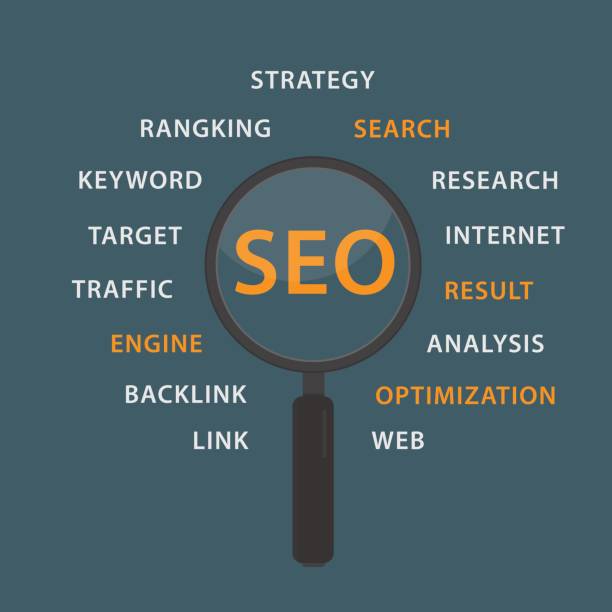
On-Page SEO is a continuous process and requires continuous monitoring and improvement.
After taking initial steps, you should regularly check your site’s performance and make necessary changes if needed.
Use tools like Google Analytics and Google Search Console to monitor site traffic, keyword rankings, and identify technical problems.
Regularly update your site’s content and add new and relevant information to it.
Find broken links and 404 errors and fix them.
Check your site’s performance on different devices and make sure the site displays correctly.
Follow the changes in search engine algorithms and update your On-Page SEO strategy based on them.
Continuous monitoring and improvement of On-Page SEO helps you maintain your site’s ranking in search engines and attract more traffic.
On-Page SEO is always changing and requires constant updating.

Click here to preview your posts with PRO themes ››
Frequently Asked Questions
| Question | Answer |
|---|---|
| What is On-Page SEO? | Refers to a set of actions that are performed within a website to improve its ranking in search engines. |
| Why is On-Page SEO important? | Because it helps search engines better understand your site’s content and structure and improves the user experience. |
| What are the most important elements of On-Page SEO? | Title and meta descriptions, keywords, URL structure, high-quality content, image optimization, internal linking, and site speed. |
| How to optimize the Title Tag and Meta Description? | The title should include the main keyword and be attractive, and the meta description should be a persuasive summary of the content with related keywords. |
| What is the role of keywords in On-Page SEO? | Keywords help search engines understand what the page content is about and should be used naturally and intelligently in the text. |
| How is image optimization done for On-Page SEO? | By compressing the size, using a descriptive file name, and filling the Alt tag with relevant descriptions and keywords. |
| What is internal linking and what is its purpose? | Connecting different pages of the site to each other. This helps distribute page authority and improve search engine crawling. |
| What is the importance of site loading speed in On-Page SEO? | High speed improves the user experience and is an important ranking factor for search engines like Google. |
| What effect does site responsiveness (Mobile-Friendliness) have on On-Page SEO? | Given the increase in mobile users, responsiveness is essential for providing a suitable user experience on all devices and for Google’s mobile-first indexing. |
| What are the important content-related factors in On-Page SEO? | Originality, quality, comprehensiveness, readability, appropriate use of headings (H1, H2,…) and regular content updates. |
And other advertising agency services Rasa Web in the field of advertising
Smart Digital Advertising: An effective tool for online growth with the help of optimizing key pages.
Smart Digital Advertising: A professional solution to increase site visits with a focus on optimizing key pages.
Smart Direct Marketing: Transform online growth with the help of marketing automation.
Smart Marketplace: A professional solution to improve SEO ranking with a focus on custom programming.
Smart Customer Journey Map: A fast and efficient solution to increase site visits with a focus on SEO-centric content strategy.
And more than hundreds of other services in the field of Internet advertising, advertising consulting and organizational solutions
Internet Advertising | Advertising Strategy | Advertorials
Resources
On-Page Optimization: Moz’s Beginner’s Guide
,On-Page SEO: The Complete Guide for 2024
,On-Page SEO: The Complete Guide (2024)
,On-Page SEO: A Step-by-Step Guide
? With Rasaweb Afarin, your business comes to life in the digital world. With expertise in secure website design, search engine optimization (SEO), and online advertising campaign management, we are with you on the path to success.
📍 Tehran, Mirdamad Street, next to the Central Bank, South Kazerun Alley, Ramin Alley, No. 6