
What is On-Page SEO and Why is it Important?
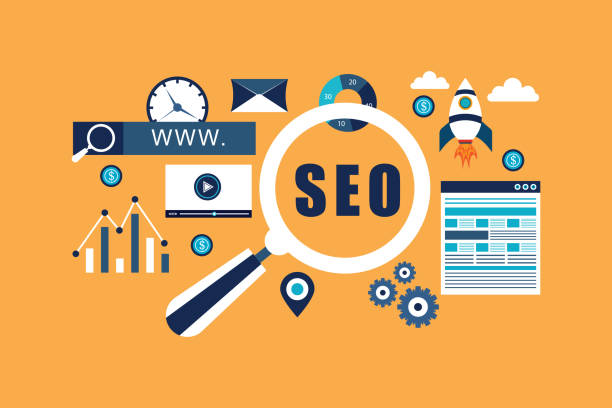
#On-Page SEO, also known as #On-Site SEO, refers to a set of actions taken within a website to improve its ranking in search engine results of #search engines like Google.
These actions include optimizing content, site structure, code, and other internal elements of the site.
The importance of On-Page SEO is that it helps search engines better understand the content of the site and recognize its relevance to user search queries.
By performing On-Page SEO correctly, the likelihood of the site appearing in higher positions in search results increases, resulting in increased traffic to the site.
On-Page SEO, as an essential part of a digital marketing strategy, helps businesses improve their online visibility and attract their target audience.
In other words, On-Page SEO is like a building with a strong framework, without which, no matter how beautiful the building looks, it will still be vulnerable.
Performing On-Page SEO helps businesses to be seen in search results, which in turn increases their conversion rates and sales.
Are you tired of your online store not generating as much revenue as it potentially could? Rasaweb, a specialist in designing professional online stores, solves this problem for good!
✅ Increased sales and revenue rates
✅ High loading speed and unparalleled user experience
⚡ Get a free consultation on online store design
Keyword Research, the Cornerstone of On-Page SEO

Keyword research is one of the most important steps in On-Page SEO.
Choosing the right keywords helps you create content around topics that users are searching for.
To start keyword research, you should first create a list of topics related to your business.
Then, use various tools such as Google Keyword Planner, SEMrush, and Ahrefs to find keywords related to these topics.
When choosing keywords, consider the search volume of the word, the level of competition, and the word’s relevance to your business.
Long Tail keywords (longer and more specific phrases) usually have less competition and can attract more targeted traffic to your site.
After choosing keywords, use them naturally and intelligently in your content.
Remember that the goal is to write for users, not just for search engines.
Overuse of keywords (Keyword Stuffing) can harm your site’s ranking.

Click here to preview your posts with PRO themes ››
Content Optimization, the King of On-Page SEO

Content is king! This phrase is very common in the world of SEO, and for good reason.
High-quality and valuable content not only keeps users on your site but also helps search engines better understand your site’s topic.
To optimize content, you must first make sure that your content is unique, readable, and relevant to the chosen keywords.
Use headings and subheadings (H1, H2, H3) to structure the content and use keywords naturally in these headings.
Use relevant images and videos to make the content more attractive and make sure that these images have appropriate Alt Text.
Content length also matters.
Longer content (over 1000 words) usually ranks better in search results, but more important than the length of the content is its quality and value.
Your content should answer users’ questions and provide them with useful information.
Finally, update your content regularly to keep it fresh and relevant.
By doing so, you send positive signals to search engines and improve your site’s ranking.
On-Page SEO plays a vital role in this optimization.
| Element | Best Practice | Description |
|---|---|---|
| Page Title (Title Tag) | Use the main keyword at the beginning of the title | The title should be attractive and relevant to the page content |
| Meta Description | Attractive summary of the page content | Includes keywords and a Call to Action |
| Headings | Use H1 for the main title and H2-H6 for subheadings | Logical and readable structure for content |
URL Optimization, Proper Addressing

The URL addresses of your site’s pages are another important factor in On-Page SEO.
Optimized URLs should be short, readable, and relevant to the page content.
Avoid using special characters and long numbers in your URL.
The best practice is to use the main keyword of the page in the URL.
For example, if your page is about “On-Page SEO Guide,” a suitable URL could be “/on-page-seo-guide”.
Using a hyphen (-) instead of a space ( ) in the URL increases its readability.
Also, try to design the structure of your site’s URLs logically and hierarchically.
This helps search engines better understand your site’s structure and easily find more important pages.
Remember that your site’s URLs are like the postal address of a house.
The more accurate and readable this address, the easier it will be to find the house.
Proper On-Page SEO optimizes your site’s addressing.
Are you unhappy with the low rate of converting visitors into customers on your online store?
Solve this problem forever with professional online store design by Rasaweb!
✅ Increase visitor-to-customer conversion rate
✅ Create an excellent user experience and build customer trust
⚡ Get a free consultation
Internal Linking, Navigation on the Site
Internal linking means creating links between different pages of your site.
This not only helps users to easily navigate your site, but also helps search engines to better understand your site’s structure and recognize the value of different pages.
When internal linking, pay attention to the connection between pages.
Links should be relevant to the topic of the source and destination page.
Use appropriate Anchor text for linking.
Anchor text should be descriptive and include the keyword related to the destination page.
Avoid over-linking to one page.
Internal linking should be natural and logical.
With proper internal linking, you can increase the value (Link Juice) of the more important pages of your site and improve their ranking in search results.
On-Page SEO with internal linking helps users and search engines to easily navigate your site.
Site Speed, Unparalleled User Experience
Site speed is an important factor in User Experience and On-Page SEO.
Today’s users expect site pages to load quickly.
If your site is slow, users will quickly leave it and go to competitor sites.
You can use various methods to improve site speed.
Optimizing images, enabling Gzip compression, using a Caching system, and using a CDN (Content Delivery Network) are some of these methods.
Also, choosing a suitable Hosting with sufficient resources affects your site’s speed.
Various tools such as Google PageSpeed Insights help you check your site’s speed and identify potential problems.
Remember that site speed is an important ranking factor in Google.
By improving your site’s speed, you not only improve the user experience, but also increase your site’s ranking in search results.
Responsive Design, Mobile Compatibility
Given the increasing use of mobile for searching the internet, Responsive Design is one of the requirements of On-Page SEO.
Responsive design means that your site should automatically adapt to the screen size of different devices (mobile, tablet, laptop).
Google gives more points to sites that have responsive design and displays them in higher positions in search results.
To ensure that your site is responsive, you can use the Google Mobile-Friendly Test tool.
If your site is not responsive, you should update it as soon as possible.
Responsive design not only improves the user experience, but also helps you attract more traffic through mobile.
Modern On-Page SEO has no meaning without responsive design.
| Device | Screen Size (pixels) | Optimization Tips |
|---|---|---|
| Mobile | 320-480 | Optimize images, reduce file size |
| Tablet | 768-1024 | Use flexible design, display properly in landscape and portrait mode |
| Laptop/Computer | 1024+ | Design with high resolution, use appropriate space |
Using Schema Markup, Better Understanding for Search Engines

Schema Markup is a script code that helps you provide more information about your content to search engines.
Using Schema Markup, you can tell search engines what your page’s content is about, what type of content it is (article, product, event, etc.), and what its features are.
This helps search engines better understand your content and show it to the right users.
Schema Markup can have a positive impact on your site’s ranking in search results and increase the Click-Through Rate.
To use Schema Markup, you can use various tools such as Schema Markup Generator.
On-Page SEO with the help of Schema Markup, tells search engines exactly what is on your page.
Is your company website as professional and trustworthy as it should be? Create an online presence that reflects your credibility and attracts more customers with specialized corporate website design by Rasaweb.
✅ Build a powerful and professional image of your brand
✅ Convert visitors into real customers
⚡ Get a free consultation right now!
Optimizing the robots.txt File and Sitemap
The robots.txt file is a text file that tells search engines which pages of your site should not be indexed.
Using the robots.txt file, you can prevent the indexing of pages that have duplicate content or pages that should not be displayed in search results.
A Sitemap is an XML file that provides a list of all the pages of your site to search engines.
By providing a sitemap, you help search engines easily find and index all the pages of your site.
Optimizing the robots.txt file and sitemap is an important step in On-Page SEO that helps search engines better understand and index your site.
On-Page SEO without these two files is like a building without a map.
Monitoring and Analysis, the Key to Success in On-Page SEO
On-Page SEO is an ongoing process and requires monitoring and analysis.
You should regularly check your site’s performance in search results and make the necessary changes.
Various tools such as Google Analytics and Google Search Console help you check your site’s traffic, identify the keywords that users use to reach your site, and find potential problems with your site.
By analyzing the collected data, you can improve your On-Page SEO strategy and increase your site’s ranking in search results.
Remember that On-Page SEO is a marathon race, not a sprint.
To be successful, you have to be patient, persistent, and constantly strive.
Also, remember that On-Page SEO alone is not enough and must be complemented with Off-Page SEO in order to achieve the desired results.
On-Page SEO along with Off-Page SEO is a complete strategy for improving your site’s ranking.
On-Page SEO optimizes your site for search engines and users.
Frequently Asked Questions
| Number | Question | Answer |
|---|---|---|
| 1 | What is On-Page SEO? | On-Page SEO refers to a set of actions that are performed within a website and to optimize its pages in order to obtain a better ranking in search results. |
| 2 | What is the most important factor in On-Page SEO? | High-quality, relevant, and comprehensive content that meets the user’s needs is the most important factor in On-Page SEO. |
| 3 | What role does the Title Tag play in On-Page SEO? | The title tag is one of the most important factors that tells search engines and users what the content of the page is about. It should include the main keyword and be attractive. |
| 4 | How important is the Meta Description tag? | Although it does not directly affect ranking, it is very effective on the click-through rate (CTR) in search results and encourages users to visit the page. |
| 5 | How is image optimization done in On-Page SEO? | By using a suitable alt tag, compressing the image size to increase loading speed, and meaningful naming of the image file. |
| 6 | What is the importance of using headings (H1, H2, H3) in On-Page SEO? | Headings help structure content, increase readability, and help search engines understand the hierarchy and subtopics of the content. |
| 7 | What does Internal Linking mean and what are its benefits? | Internal linking means creating links between different pages of a website. This helps to distribute credit, improve user navigation, and help search engine crawling. |
| 8 | Where should the Focus Keyword be placed on the page? | The main keyword should be in the title tag, meta description, H1, first paragraph, and naturally throughout the text and, if possible, in the URL address. |
| 9 | What effect does copy or duplicate content have on On-Page SEO? | Duplicate content can harm the site’s ranking and confuse search engines as to which is the original version and may detect it as spam. |
| 10 | How important is page loading speed in On-Page SEO? | Page loading speed is an important ranking factor and directly affects user experience. Slow pages increase the bounce rate of users. |
And other services of Rasa Web advertising agency in the field of advertising
Smart social media: Transform website visits with the help of dedicated programming.
Smart brand identity: A new service to increase campaign management through user experience customization.
Smart website development: Transform customer attraction with the help of marketing automation.
Smart conversion rate optimization: A fast and efficient solution for digital branding with a focus on SEO-driven content strategy.
Smart content strategy: A creative platform for improving digital branding using real data.
And more than hundreds of other services in the field of internet advertising, advertising consulting and organizational solutions
Internet Advertising | Advertising Strategy | Advertorial
Resources
Ahrefs On-Page SEO Guide
,Moz On-Page Optimization
,Search Engine Journal On-Page SEO Guide
,Semrush On-Page SEO
? To be seen and lead in the digital world, Rasaweb Digital Marketing Agency is with you. We elevate your business by providing comprehensive services including personal website design, SEO, and social media management.
📍 Tehran, Mirdamad Street, next to the Central Bank, South Kazerun Alley, Ramin Alley No. 6