
What is On-Page SEO and Why is it Important?
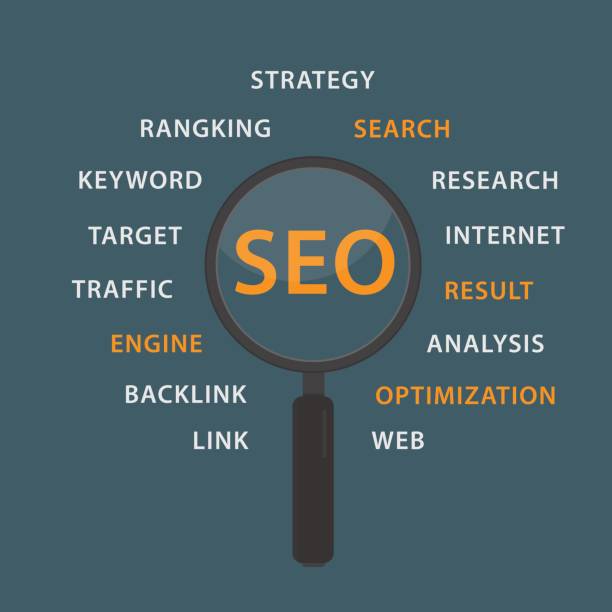
On-Page SEO refers to the set of actions you take within your website to improve your site’s ranking in Google search results.
These actions include optimizing content, site structure, title tags, meta descriptions, internal links, and many other things.
The importance of On-Page SEO lies in the fact that it helps Google better understand your site’s content and recognize its relevance to users’ search queries.
In other words, On-Page SEO tells Google what area your site operates in and what kind of information it provides.
Strong On-Page SEO not only helps improve site ranking but also enhances user experience.
When users can easily navigate your site and find the information they need, they are more likely to return to your site.
More information about SEO
In addition, On-Page SEO can help you attract targeted traffic to your site.
When your site is optimized for relevant keywords, users searching for those keywords are more likely to find your site in search results and visit it.
Therefore, On-Page SEO is a valuable investment for any business that wants to strengthen its online presence.
SEO is very important for increasing sales and credibility SEO
#Content_Optimization #Title_Tag #Meta_Description #Internal_Link
Is your current online store design causing you to lose customers and sales?
RasWeb is your solution with modern and user-friendly online store designs!
✅ Significant increase in conversion and sales rates
✅ Creating strong branding and gaining customer trust
⚡ Get free online store design consultation from RasWeb!
Keyword Research – The Foundation of On-Page SEO
Keyword research is the process of identifying words that users use in Google to search for information related to your business.
These keywords must be relevant, have an appropriate search volume, and reasonable competition.

Click here to preview your posts with PRO themes ››
To conduct keyword research, you can use various tools such as Google Keyword Planner, Ahrefs, Semrush, and Moz Keyword Explorer.
These tools help you find relevant keywords, check their search volume, and estimate the level of competition.
After identifying keywords, you need to incorporate them into your On-Page SEO strategy.
This means you should use these keywords in page titles, meta descriptions, headings, body text, and image names.
However, you should be careful to use keywords naturally and logically and avoid filling the text with keywords.
In other words, your content should be engaging and useful for users and naturally incorporate keywords.
Appropriate keywords are the best words.
Optimizing Page Title (Title Tag) and Meta Description
The title tag and meta description are two important elements in On-Page SEO that are displayed in Google search results.
The title tag is the title of your page that appears at the top of the browser window and in search results.
The meta description is a brief summary of the page’s content that appears below the title in search results.
The title tag and meta description should be engaging, relevant, and contain keywords.
The title tag should be a maximum of 60 characters, and the meta description should be a maximum of 160 characters.
The goal of optimizing the title tag and meta description is to encourage users to click on your site’s link in search results.
Title Tag and Meta Description.
In addition, the title tag and meta description should accurately reflect the content of the page.
In other words, you should not attract users to your site with false or misleading information.
This can lead to an increase in bounce rate and damage your site’s ranking.
Strong On-Page SEO increases clicks
| Element | Description | Best Practices |
|---|---|---|
| Title Tag | Page title in search results | Maximum 60 characters, contains keyword |
| Meta Description | Summary of page content in search results | Maximum 160 characters, engaging and persuasive |
Content Optimization – Creating High-Quality and Engaging Content

Content is king! This famous phrase in the world of SEO indicates the great importance of content in attracting and retaining users.
High-quality and engaging content not only helps improve your site’s ranking in search results but also causes users to spend more time on your site and increases the likelihood of their return.
Your content should be valuable, informative, entertaining, and relevant to users’ needs.
In addition, the content should be well-structured and easy to read.
Use headings, subheadings, lists, images, and videos to break up the text and make it more attractive.
Also, update your content regularly and add new content to your site.
This shows Google that your site is active and dynamic and deserves a higher ranking.
Producing quality content requires content optimization.
On-Page SEO has a direct relationship with producing high-quality and engaging content.
The better your content is, the more likely your site is to be in the top ranks of search results.
Are you tired of your company’s website not being seen as it should be and losing potential customers? Solve this problem forever with professional and effective website design by RasWeb!
✅ Increase brand credibility and gain customer trust
✅ Attract more targeted sales leads
⚡ Contact us now for a free consultation!
URL Optimization – Creating SEO-Friendly URLs
The URL is the address of your page on the internet.
SEO-friendly URLs should be short, descriptive, and contain keywords.
Avoid using long and complex URLs that contain meaningless numbers and letters.
For example, the following URL is an SEO-friendly URL:
www.example.com/seo-internal-guide
While the following URL is a non-SEO-friendly URL:
www.example.com/page?id=123&category=456
SEO-friendly URLs help Google better understand the content of your page and help users easily remember and link to your page.
URL optimization URL is a big step in On-Page SEO.
Also, avoid using uppercase letters and spaces in your URL.
Use a hyphen (-) instead of a space.
On-Page SEO with optimized URLs increases the speed of indexing in Google.
Internal Linking – Creating a Network of Links on the Site
Internal linking is the process of linking different pages of your site to each other.
Internal linking helps Google better understand the structure of your site and recognize the importance of different pages.
Also, internal linking helps users easily navigate your site and find the information they need.
When internal linking, use appropriate anchor text.
Anchor text is the clickable text that links to another page.
The anchor text should be relevant to the content of the destination page and contain keywords.
For example, if you want to link to a page about On-Page SEO training, you can use the anchor text “On-Page SEO training.”
Avoid using general anchor texts such as “Click here” or “Read more.”
On-Page SEO increases site ranking by using internal links.
Internal linking Internal linking is a big help in On-Page SEO.
Image Optimization – Increasing Loading Speed and Improving SEO
Images can help improve user experience and make your content more attractive.
However, large and unoptimized images can slow down your site’s loading speed and damage your SEO ranking.
To optimize images, you should compress them to reduce their file size.
Also, you should use the appropriate format for images.
JPEG format is suitable for photos, and PNG format is suitable for graphic images.
In addition, you should use the Alt tag to describe images.
The Alt tag helps Google understand the content of images and display them in image search results.
The Alt tag should be short, descriptive, and contain keywords.
For example, if you have an image of a cat, you can use the Alt tag “domestic cat.”
On-Page SEO has a direct impact on improving image loading speed.
On-Page SEO gets a good ranking with optimized images.
Increase your site speed with image optimization.
| Feature | Description |
|---|---|
| Image Compression | Reduce file size without losing quality |
| Appropriate Format | Use JPEG for photos and PNG for graphics |
| Alt Tag | Describe the content of the image for search engines |
Site Structure Optimization – Creating an Organized and User-Friendly Structure
Your site structure should be organized, logical, and user-friendly.
Users should be able to easily navigate your site and find the information they need.
To create an organized site structure, use categories and subcategories.
Each page should be assigned to a related category or subcategory.
Also, use a clear and user-friendly navigation menu so users can easily access different pages of your site.
In addition, use internal linking to connect related pages to each other.
Site structure Site structure is one of the important factors of On-Page SEO.
On-Page SEO with proper structure increases user engagement on the site.
Are you losing potential customers due to an unprofessional website? RasWeb is your answer! With our specialized corporate website design services:
✅ Enhance your business’s credibility and position
✅ Experience attracting more targeted customers
⚡ Take action now to receive a free consultation!
Site Speed Optimization – Providing an Excellent User Experience
Site speed is an important factor in SEO ranking.
Users expect sites to load quickly.
If your site is slow, users get tired and leave your site.
This can lead to an increase in bounce rate and a decrease in SEO ranking.
To optimize site speed, you can use various methods such as compressing images, enabling browser caching, using a CDN, and choosing suitable hosting.
You can also use tools like Google PageSpeed Insights and GTmetrix to check your site speed and identify problems.
Site speed Site speed has a great impact on SEO ranking.
On-Page SEO with high site speed increases user satisfaction.
Optimizing your site’s On-Page SEO helps you increase loading speed
Review and Analysis – Tracking Results and Continuous Improvement
On-Page SEO is an ongoing process and requires review and analysis.
You should regularly track the results of your efforts and improve your strategy if necessary.
To review the results, you can use tools such as Google Analytics and Google Search Console.
These tools help you track your site traffic, keyword ranking, bounce rate, and other important metrics.
By analyzing this data, you can identify the strengths and weaknesses of your SEO strategy and take the necessary actions to improve it.
On-Page SEO requires continuous effort.
Tracking and analyzing On-Page SEO helps you always stay ahead of your competitors.
SEO analysis is necessary to improve site ranking.
Remember that On-Page SEO is a long-term process, and the results appear gradually.
With patience and perseverance, you can improve your site’s ranking in search results and attract targeted traffic to your site. On-Page SEO is a time-consuming but effective process.
Frequently Asked Questions
| Number | Question | Answer |
|---|---|---|
| 1 | What is On-Page SEO? | On-Page SEO refers to the set of actions that are performed within the website and to optimize its pages in order to gain a better ranking in search results. |
| 2 | What is the most important factor in On-Page SEO? | High-quality, relevant, and comprehensive content that meets the user’s needs is the most important factor in On-Page SEO. |
| 3 | What role does the Title Tag play in On-Page SEO? | The Title Tag is one of the most important factors that tells search engines and users what the page’s content is about. It should include the main keyword and be attractive. |
| 4 | How important is the Meta Description tag? | Although it does not directly affect the ranking, it is very effective on the click-through rate (CTR) in search results and encourages users to visit the page. |
| 5 | How is image optimization done in On-Page SEO? | By using an appropriate alt tag, compressing the image size to increase the loading speed, and naming the image file meaningfully. |
| 6 | What is the importance of using headings (H1, H2, H3) in On-Page SEO? | Headings help structure the content, increase readability, and help search engines understand the hierarchy and subtopics of the content. |
| 7 | What does Internal Linking mean and what are its benefits? | Internal Linking means creating links between different pages of a website. This helps to distribute authority, improve user navigation, and help the search engine crawl. |
| 8 | Where should the main keyword (Focus Keyword) be placed on the page? | The main keyword should be placed in the Title Tag, Meta Description, H1, first paragraph, and naturally throughout the text and, if possible, in the URL address. |
| 9 | What effect does copied or duplicate content have on On-Page SEO? | Duplicate content can damage the site’s ranking and confuse search engines as to which version is the original and may detect it as spam. |
| 10 | How important is page loading speed in On-Page SEO? | Page loading speed is an important ranking factor and directly affects user experience. Slow pages increase the user’s bounce rate. |
And other services of Rasa Web Advertising Agency in the field of advertising
Smart link building: An exclusive service to grow SEO ranking improvement based on Google Ads management.
Smart marketing automation: A creative platform to improve sales growth by accurately targeting the audience.
Smart digital branding: A combination of creativity and technology to increase site visits by using real data.
Smart direct marketing: A combination of creativity and technology to manage campaigns through dedicated programming.
Smart data analysis: An exclusive service to grow site visit increase based on smart data analysis.
And more than hundreds of other services in the field of internet advertising, advertising consulting and organizational solutions
Internet advertising | Advertising strategy | Advertorials
Resources
SEO Principles and How They Work
,Comprehensive On-Page SEO Guide
,Page Optimization: On-Page SEO
,On-Page SEO: Comprehensive Guide of the Year
? Is your business ready to leap into the digital future? Rasa Web Digital Marketing Agency, by providing comprehensive services including website design with a modern user interface, SEO, and social media management, smooths your path to success. Contact us today and transform the future of your brand.
📍 Tehran, Mirdamad Street, next to the Central Bank, South Kazerun Alley, Ramin Alley, No. 6
“`