
What is On-Page SEO and Why is it Important?

On-Page SEO refers to the set of actions taken within a website to improve its ranking in search engines.
These actions include optimizing content, site structure, code, and various page elements to make the site more understandable and appealing to search engines like Google. The importance of On-Page SEO lies in the fact that it helps search engines better understand the topic and content of the website’s pages.
The better search engines can understand the content of the site, the more likely they are to show the site in search results for related terms.
This leads to an increase in organic (free) site traffic and ultimately increases sales and revenue.
In fact, On-Page SEO is the foundation of any successful SEO strategy.
Without strong On-Page SEO, efforts related to Off-Page SEO, such as link building, will be less effective.
For example, if the content of a website page is irrelevant, repetitive, or of poor quality, no matter how many links are given to that page, it will still not achieve a good ranking in search results.
In contrast, a website page with high-quality content, proper structure, and optimized coding can achieve good rankings in search results even without extensive link building.
Therefore, investing in On-Page SEO is a long-term investment that can bring significant results for businesses.
Don’t forget that On-Page SEO is an ongoing process and requires continuous review and improvement. By reviewing reputable sites in the field of SEO, we can gain a better understanding of #Google_Algorithms.
Is your current online store design not generating the expected sales?
Rasaweb is a specialist in professional online store design!
✅ An attractive and user-friendly site aimed at increasing sales
✅ High speed and security for an ideal shopping experience⚡ Get a free online store design consultation with Rasaweb!
Keyword Research: The Backbone of On-Page SEO
Keyword research is the process of identifying and examining the words and phrases that users use to search for information in search engines.
This process plays a very important role in On-Page SEO, as it helps you build your content around words that your target audience is actually looking for.
Without keyword research, you may produce content that does not match the needs of users and, as a result, attracts little organic traffic to your website. The first step in keyword research is brainstorming and gathering a list of words and phrases related to your business and products/services.
Then, you can use keyword research tools such as Google Keyword Planner, Ahrefs, SEMrush, and Moz Keyword Explorer to find more relevant keywords, check their search volume, and competition.
When choosing keywords, look for words that have a good search volume and, at the same time, are not too competitive.
Also, pay attention to user intent (Search Intent).
That is, understand what kind of information users are looking for when searching for that keyword. Are they looking to buy something? Are they looking to get information? Do they want to visit a specific website? By understanding user intent, you can create content that exactly meets their needs.
After choosing keywords, use them naturally in the page title (Title Tag), meta description (Meta Description), headings (Headings), body text (Body Text), and images (Image Alt Text).
Be careful to avoid keyword stuffing, as this can result in your site being penalized by Google.
Also, remember that keyword research is an ongoing process and you should regularly identify and review new keywords.

Click here to preview your posts with PRO themes ››
Optimizing Title and Meta Descriptions
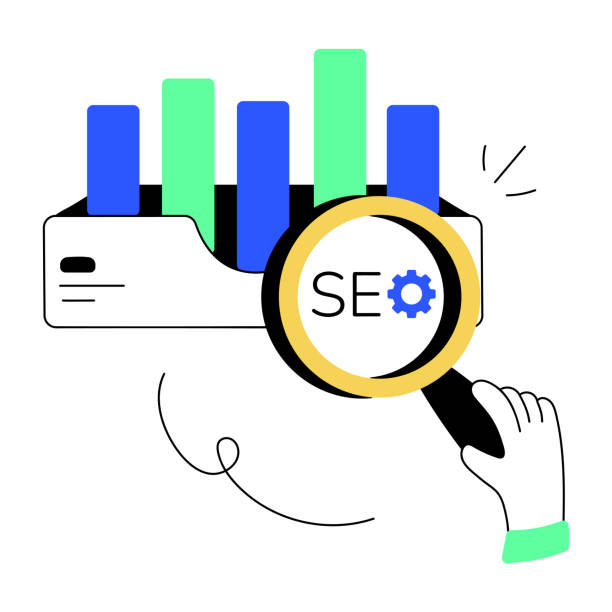
The page title (Title Tag) and meta description (Meta Description) are two important HTML elements that are displayed in search results and play an important role in attracting users to your website.
The page title is the main title of your page that is displayed in the browser’s title bar and also in search results as the main link to your page.
The meta description is a short description of the content of your page that is displayed below the page title in search results.
Optimizing the page title and meta description can help improve your website’s click-through rate (CTR).
That is, the number of users who click on its link after seeing your page in search results.
To optimize the page title, consider the following: Use the main keywords in the title. The title should be attractive and relevant to the content of the page.
The length of the title should be between 50 and 60 characters to be fully displayed in search results.
To optimize the meta description, consider the following: Use the main keywords in the description. The description should be attractive and persuasive to encourage users to click on your page’s link.
The length of the description should be between 150 and 160 characters. The description should be concise and useful and tell users what they will find on your page.
The title and meta description should be unique for each website page.
Using the same title and description for multiple pages can lead to a decrease in your site’s ranking in search results.
| Element | Description |
|---|---|
| Page Title (Title Tag) | The main title of the page that is displayed in search results. |
| Meta Description | A short description of the page content that is displayed below the title in search results. |
| Optimization Tips | Description |
|---|---|
| Using Keywords | Use the main keywords in the title and description. |
| Being Attractive and Relevant | The title and description should be attractive and relevant to the content of the page. |
| Appropriate Length | Keep the title and description length within the recommended range. |
| Being Unique | The title and description should be unique for each page. |
Content Optimization for On-Page SEO

Content is king! This phrase is very famous in the world of SEO and means that high-quality and valuable content is the most important factor for success in SEO.
To optimize content for On-Page SEO, consider the following: Write your content for users, not for search engines.
Your content should be useful, informative, engaging, and understandable.
Use keywords naturally in your content.
Avoid keyword stuffing.
Update your content regularly.
Old and outdated content can harm your site’s ranking.
Use images, videos, and other multimedia elements to make your content more engaging.
Images and videos should be relevant to the content of the page and have appropriate alternative text (Alt Text).
Structure your content well.
Use headings, subheadings, paragraphs, and lists to organize your content.
Use internal links to link different pages of your website to each other.
Internal links help search engines better understand your site structure and also help users easily navigate your site.
Optimize your content for mobile devices.
Today, most users access the internet through mobile phones, so it’s important to make sure your content displays well on mobile devices.
On-Page SEO is very important for improving site ranking.
By following these tips, you can optimize your content for On-Page SEO and improve your site’s ranking in search results.
Is your company’s website as professional and reliable as it should be? Create an online presence that represents your credibility and attracts more customers with professional corporate website design by Rasaweb.
✅ Build a powerful and professional image of your brand
✅ Turn visitors into real customers
⚡ Get a free consultation now!
Proper URL Structure and SEO
A proper URL structure plays an important role in On-Page SEO.
A good URL should be short, descriptive, and include keywords.
URLs should be understandable for users and search engines.
Long and complex URLs can be confusing for users and do not help search engines understand the topic of the page.
URLs should include keywords related to the content of the page.
Using keywords in the URL can help improve the page’s ranking in search results.
URLs should use lowercase letters and hyphens (-) to separate words.
Using uppercase letters and underscores (_) in the URL can cause problems for search engines.
URLs should be constant.
Changing URLs after the page has been indexed can cause 404 errors and harm the site’s ranking.
If you have to change the URL of a page, be sure to use a 301 redirect to direct users and search engines to the new URL.
Examples of suitable URLs include: example.com/blog/seo-internal-guide, example.com/products/red-shoes, example.com/services/web-design.
Examples of unsuitable URLs include: example.com/page?id=123, example.com/blog/post_1.html, example.com/category/article.aspx.
By following these tips, you can optimize your website’s URL structure for On-Page SEO and improve your site’s ranking in search results.
On-Page SEO will have a significant impact by following minor yet essential points.
Optimizing Images for SEO

Images play an important role in the attractiveness and user engagement with your website.
But images can also be very useful for On-Page SEO.
To optimize images for SEO, consider the following: Use relevant and high-quality images.
Images that are not relevant to the content of the page or are of low quality can harm your site’s ranking.
Choose descriptive file names for images.
Instead of using default names like IMG_1234.jpg, use names that describe the subject of the image.
For example, red-shoes.jpg or web-design-services.png.
Use alternative text (Alt Text) for images.
Alternative text is the text that is displayed instead if the image is not displayed.
Alternative text should be descriptive and include keywords related to the image.
Reduce the file size of images.
High-volume images can slow down page loading speed and harm the user experience.
Use image compression tools to reduce the file size of images without compromising quality.
Use appropriate formats for images.
JPEG format is suitable for color images and PNG format is suitable for images with transparent backgrounds.
Use an image sitemap.
The image sitemap helps search engines find and index your website’s images.
By following these tips, you can optimize your website’s images for On-Page SEO and improve your site’s ranking in search results.
With On-Page SEO you can have a better position in search engines.
Optimizing Website Loading Speed
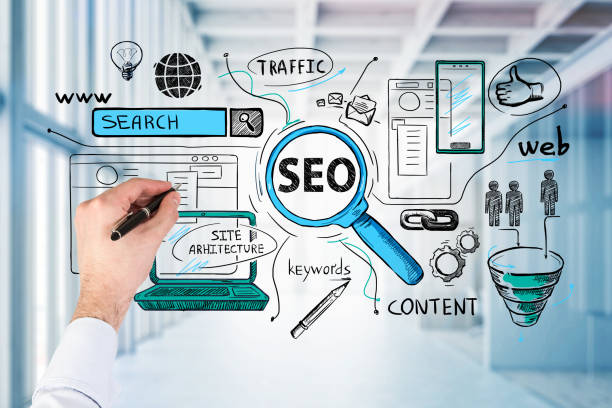
Website loading speed is an important ranking factor in Google.
Users who wait for a website page to load are more likely to leave the website and visit another website.
Optimizing website loading speed can help improve user experience, increase conversion rates, and improve site ranking in search results.
To optimize website loading speed, consider the following: Use a quality hosting service.
Low-quality hosting can slow down your website loading speed.
Use an optimized content management system (CMS).
Some CMSs are more optimized than others.
Use a lightweight and optimized template.
Heavy and complex templates can slow down your website loading speed.
Optimize your images.
High-volume images can slow down your website loading speed.
Use a content delivery network (CDN).
A CDN can store your website content on different servers around the world and allow users to access your content faster.
Use cache.
Cache can store static content of your website and prevent it from being reloaded each time a user visits.
Compress your HTML, CSS, and JavaScript codes.
Compressing the codes can reduce the file size and increase your website loading speed.
By following these tips, you can optimize your website loading speed and provide a better user experience for your visitors.
Take enough time for On-Page SEO for your website.
| Factor | Impact on Loading Speed |
|---|---|
| Hosting Quality | Low-quality hosting reduces speed. |
| Content Management System | Optimized CMS improves speed. |
| Website Template | Lightweight and optimized template increases speed. |
| Optimization Technique | Description |
|---|---|
| Image Optimization | Reducing image size for faster loading. |
| Using CDN | Distributing content on different servers for faster access. |
| Enabling Cache | Storing static content to prevent reloading. |
The Importance of Internal Linking in On-Page SEO
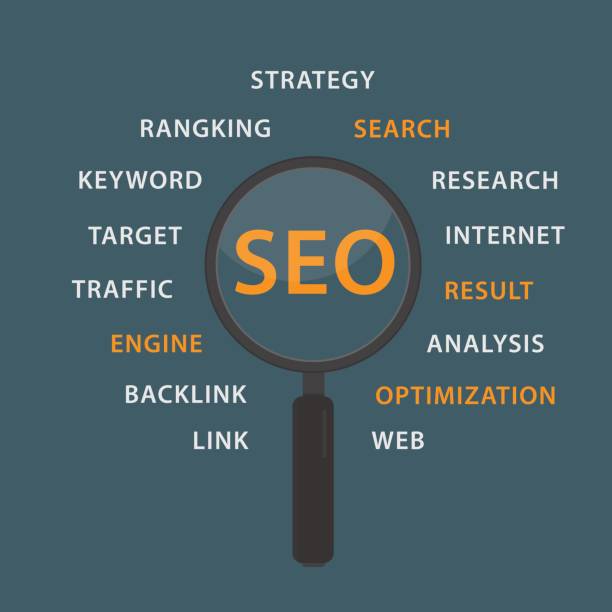
Internal linking refers to the process of creating links between different pages of your website.
Internal links can help search engines better understand your website structure and help users easily navigate your website.
Internal linking can help improve the ranking of your website pages in search results.
When a page links to another page, it transfers some of its SEO value to the destination page.
To optimize internal linking, consider the following: Use descriptive anchor text.
Anchor text is the text that users click on to be transferred to another page.
Anchor text should be descriptive and include keywords related to the destination page.
Use relevant internal links.
Internal links should be created between pages that are related to each other.
Use an appropriate number of internal links on each page.
Using too many internal links can reduce the SEO value of the links.
Check and update internal links regularly.
Broken links can harm your site’s ranking.
By following these tips, you can optimize your website’s internal linking and improve your site’s ranking in search results.
On-Page SEO has a significant impact by following small points.
Are you disappointed with the low conversion rate of your online store?
Rasaweb is your definitive solution with professional online store design!
✅ Increase your sales and revenue
✅ Exceptional user experience for your customers
⚡ Get a free consultation now!
Mobile Optimization and On-Page SEO

Considering that most users access the internet through mobile devices, optimizing the website for mobile (Mobile-Friendly) is of great importance.
Google also gives a better ranking in search results to websites that are optimized for mobile.
To optimize the website for mobile, consider the following: Use a responsive design.
Responsive design means that your website automatically adapts to the screen size of different devices (mobile, tablet, desktop).
Optimize your website loading speed on mobile devices.
Mobile users expect websites to load quickly.
Use readable fonts and appropriate sizes.
Mobile users should be able to easily read the text of your website.
Use large and touchable buttons and links.
Mobile users should be able to easily click on the buttons and links of your website.
Avoid annoying pop-ups.
Pop-ups can disrupt the user experience on mobile devices.
By following these tips, you can optimize your website for mobile and provide a better user experience for your visitors.
Optimize On-Page SEO for all devices.
Useful Tools for On-Page SEO and Performance Review
To perform On-Page SEO and review website performance, you can use various tools.
Some of these tools are free and some are paid.
Here are some useful tools for On-Page SEO: Google Search Console is a free tool from Google that allows you to review your website’s performance in search results, identify site errors, and submit your sitemap to Google.
Google Analytics is a free tool from Google that allows you to analyze your website traffic, track user behavior on your website, and set and track your goals.
Ahrefs is a paid tool that allows you to research keywords, analyze competitors, review your website’s inbound and outbound links, and track your website’s ranking in search results.
SEMrush is a paid tool that offers similar features to Ahrefs.
Moz is a paid tool that offers various features for On-Page and off-page SEO.
PageSpeed Insights is a free tool from Google that allows you to check your website loading speed and get solutions to improve it.
By using these tools, you can improve your website performance and improve your site’s ranking in search results.
Remember that On-Page SEO is an ongoing process and requires continuous review and improvement.
On-Page SEO and tools are to improve your site’s performance.
Frequently Asked Questions
| Question | Answer |
|---|---|
| What is On-page SEO? | On-page SEO refers to the set of actions that are performed within your website to improve its ranking in search engine results. This includes optimizing content, site structure, and HTML code. |
| Why is on-page SEO important? | On-page SEO helps search engines understand your page’s content and determine whether your content is relevant to searchers. It is the foundation of any successful SEO strategy. |
| What are the key elements of on-page SEO? | Page title (Title Tag), meta description (Meta Description), keyword usage, image optimization, heading structure (H1, H2, …), internal linking, and content quality are key elements. |
| How do we optimize the page title (Title Tag)? | The page title should include the main keyword, be attractive and compelling to click on, and its length should be between 50 and 60 characters (or suitable pixels) so that it is fully displayed in search results. |
| What role does the meta description (Meta Description) play in on-page SEO? | The meta description is a summary of the page’s content that is displayed below the title in search results. Although it does not directly affect ranking, it helps SEO by increasing the click-through rate (CTR). |
| What is the importance of using a heading structure (H1, H2, H3) in on-page SEO? | Headings structure the page content and make it easier to read. H1 is usually the main title of the page and should include the keyword. H2 and H3 are used to organize subsections and help search engines understand the content hierarchy. |
| How to use keywords effectively in content? | Keywords should be used naturally and logically throughout the content, including the introduction, body, and conclusion. Avoid keyword stuffing. |
| What are the steps involved in optimizing images for on-page SEO? | Includes compressing images to reduce size, using descriptive file names, adding appropriate alternative text (Alt Text), and optimizing the image title and description. Alt Text is vital for accessibility and helping search engines understand the content of the image. |
| What is internal linking and what are its benefits? | Internal linking means creating a link from one page on your website to another page on the same website. This helps users easily navigate your site, distributes page authority throughout the site, and helps search engines better understand your site structure. |
| What is the importance of content quality in on-page SEO? | High-quality, accurate, comprehensive, and valuable content for users is the cornerstone of on-page SEO. Search engines prefer content that meets users’ needs. Quality content leads to longer user dwell time and reduced bounce rate, which are positive SEO signals. |
And other services of Rasa Web advertising agency in the field of advertising
Smart conversion rate optimization: a professional solution for user interaction with a focus on custom programming.
Smart UI/UX: A new service to increase online growth through an SEO-driven content strategy.
Smart digital advertising: Professional optimization to improve SEO ranking using smart data analysis.
Smart direct marketing: A dedicated service for sales growth based on customizing the user experience.
Smart data analysis: Professional optimization for digital branding using an SEO-driven content strategy.
And more than hundreds of other services in the field of internet advertising, advertising consulting and organizational solutions
Internet advertising | Advertising strategy | Advertorial
Resources
Inbound Marketing
,On-Page SEO
,On-Page Optimization
,On-Page SEO Guide
? Are you ready to boost your business in the digital world? Rasaweb Afarin Digital Marketing Agency, by providing innovative solutions in user-friendly website design, search engine optimization (SEO) and targeted advertising campaigns, is your strategic partner on the path to reaching the peak. Let’s build the digital future of your business together.
📍 Tehran, Mirdamad Street, next to the Central Bank, South Kazerun Alley, Ramin Alley No. 6