What is On-Page SEO and Why Does it Matter?

On-Page SEO refers to the set of actions you take within your website to improve its ranking in search engines like Google.
These actions include optimizing content, site structure, HTML tags, and other related factors that are directly under your control.
Why is #OnPageSEO important? Firstly, it helps search engines better understand your site’s content.
Secondly, it improves user experience (UX), which is itself an important ranking factor.
By optimizing On-Page SEO, you can attract more organic traffic and, as a result, gain more customers.
To better understand this, imagine you have a physical store; keeping the store clean and tidy and arranging the products appropriately helps customers shop more easily.
On-Page SEO does exactly the same for your website.
Is your online sales not as you expect? With Rasaweb, solve the problem of low sales and poor user experience forever!
✅ Increase the conversion rate of visitor to customer
✅ Create a pleasant user experience and increase customer trust
⚡ Take action now to receive free advice!
Keyword Research: The Cornerstone of On-Page SEO
Keyword research is the first and most important step in an On-Page SEO strategy.
Keywords are the phrases that users use to search for information on Google.
Your goal is to find words that are both relevant to your business and have a high search volume.
You can use various tools for this, such as Ahrefs, Moz Keyword Explorer, or Google Keyword Planner.
After finding the right keywords, you should use them naturally and purposefully in your content.
Excessive use of keywords (Keyword Stuffing) not only does not help improve your ranking but may also result in your site being penalized by Google.
Remember, the main goal is to provide valuable and relevant content to users, not just to deceive search engines.
On-Page SEO begins with researching appropriate keywords and allows you to optimize your content and connect with your audience more effectively.

Click here to preview your posts with PRO themes ››
Optimizing Title Tags and Meta Descriptions
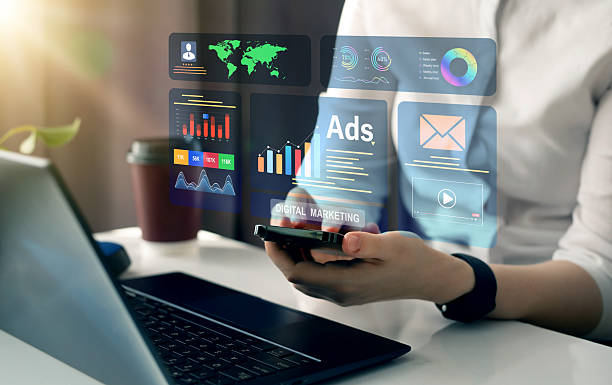
Title Tags and Meta Descriptions are two important HTML elements that are displayed in Google search results.
The title is the title of your page, which is displayed as a blue link in the search results.
The meta description is a short description of the page’s content that appears below the title.
Optimizing these two elements is very important for On-Page SEO because they can have a big impact on click-through rate (CTR).
The title should include the page’s main keyword and be a maximum of 60 characters.
The meta description should also provide an attractive and concise description of the page’s content and be a maximum of 160 characters.
A good title and meta description can encourage users to click on your link and enter your site.
As a result, this can help improve your ranking on Google.
Keep in mind that each page of your website should have its own unique title and meta description.On-Page SEO, by focusing on important details such as titles and meta descriptions, helps you gain a better ranking in search results and attract more organic traffic.
| Element | Description | Best Practice |
|---|---|---|
| Title Tag | Page title in search results | Include keyword, maximum 60 characters |
| Meta Description | Short description of page content | Attractive description, maximum 160 characters |
Optimizing Page Content: The King of On-Page SEO

Content is King! This phrase is widely used in the world of On-Page SEO, and the reason for it is clear: high-quality and valuable content attracts users, keeps them on your site, and makes them return to your site again.
To optimize page content, you need to pay attention to a few points: Firstly, your content must be unique and original.
Copying other people’s content not only does not help improve your ranking but may also result in your site being penalized by Google.
Secondly, your content should be related to the keywords you have chosen for that page.
Thirdly, your content should be readable and understandable.
Use short paragraphs, subheadings, and images to break up the text.
Fourthly, your content should answer users’ questions and meet their needs.
The more valuable and useful your content, the more likely users are to share and link to it.
On-Page SEO, with the help of quality content, can improve your site’s ranking in search results and drive more organic traffic to your site.
Are you worried about losing customers because you don’t have a professional online store?
Forget these worries by designing an online store with Rasaweb!
✅ Dramatic increase in sales and conversion rate of visitor to customer
✅ Professional and user-friendly design that earns customer trust
⚡ Get free advice from Rasaweb
Optimizing Images: An Opportunity for On-Page SEO
Images play an important role in the visual appeal of your website.
But images can also help your On-Page SEO.
To optimize images, you need to pay attention to a few points: Firstly, use a suitable file name for the images.
The file name should include a keyword related to the image.
Secondly, use alternative text (Alt Text) for images.
Alternative text is displayed to users if the image fails to load.
Also, search engines use alternative text to understand the content of the image.
Thirdly, reduce the size of the images.
High-volume images can slow down your site’s loading speed, which is negative for On-Page SEO and user experience.
Use image compression tools to reduce the size of images without losing quality.
By optimizing images, you can provide a better user experience and improve your site’s SEO ranking at the same time.
URL Structure: Its Role in On-Page SEO
URL structure is another important factor in On-Page SEO.
Your URLs should be short, readable, and include keywords.
Avoid using long and complex URLs that contain incomprehensible numbers and letters.
A good URL can help users and search engines better understand the content of the page.
For example, if you have a page about On-Page SEO training, a suitable URL might be: `example.com/on-page-seo-training`.
Also, try to use a hierarchical URL structure.
This means that your URLs should reflect the structure of your site.
For example, if you have a page about SEO training that is a subset of the marketing training category, a suitable URL might be: `example.com/marketing-training/seo-training`.
By optimizing URL structure, you will help improve your site’s SEO and provide a better experience for users.
A suitable URL structure helps search engines better understand your site and assign it an appropriate ranking.
Internal Linking: Creating Connections Between Pages

Internal linking refers to the process of linking from one page to another within your website.
Internal linking can help improve your On-Page SEO because it helps search engines better understand your site structure and identify more important pages.
Also, internal linking can help improve the user experience because it helps users easily navigate your site and find the information they need.
For internal linking, you need to pay attention to a few points: Firstly, the links must be relevant to the content of the page.
Secondly, use suitable link text (Anchor Text).
The link text should include keywords related to the destination page.
Thirdly, link more to the more important pages of your site.
Internal linking is an important strategy in On-Page SEO that helps improve your site’s ranking in search results and provides a better user experience.
| Feature | Description |
|---|---|
| Anchor Text | Clickable link text, must be relevant |
| Relevance | Links should be to relevant pages |
| Importance | Link more to important pages |
Site Loading Speed: An Important Factor in On-Page SEO and User Experience

Site loading speed is one of the important factors in On-Page SEO and user experience.
Users expect websites to load quickly.
If your site is slow, users may not wait and leave your site.
This can lead to decreased traffic, decreased conversion rates, and decreased ranking on Google.
To improve site loading speed, you can take actions such as optimizing images, using a caching system, reducing code size, and using a CDN.
Google provides a tool called PageSpeed Insights that you can use to check your site’s speed and get suggestions for improving it.
On-Page SEO emphasizes improving site loading speed because it has a direct impact on user satisfaction and search engine rankings.
Are you disappointed with the low conversion rate of your online store? Rasaweb transforms your online store into a powerful tool for attracting and converting customers!
✅ Dramatic increase in the conversion rate of visitor to buyer
✅ Unique user experience to increase customer satisfaction and loyalty⚡ Get free advice from Rasaweb!
Responsive Design: Mobile Compatibility

With the increasing use of mobile devices, responsive design has become essential for websites.
Responsive design means that your site should automatically adapt to the screen size of different devices (such as mobile, tablet, and computer).
Google prioritizes websites that have responsive design.
Therefore, if you want to succeed in On-Page SEO, you need to make sure that your site has a responsive design.
In addition to On-Page SEO, responsive design also helps to improve the user experience because users can easily use your site on any device.
As a result, this can lead to increased traffic, increased conversion rates, and increased customer satisfaction.
Site Security (HTTPS): A Ranking Factor

Website security is an important factor in On-Page SEO.
Google prioritizes websites that use the HTTPS protocol.
HTTPS is a secure protocol for transferring data between the user’s browser and the website.
Using HTTPS ensures that users’ information (such as passwords and credit card information) is encrypted during transmission and prevents it from being stolen by hackers.
To enable HTTPS, you need to install an SSL certificate on your server.
Many hosting companies offer free SSL certificates.
By enabling HTTPS, you not only increase the security of your site but also improve your ranking on Google.
This directly affects your On-Page SEO and helps increase users’ trust in your site.
Frequently Asked Questions
| Question | Answer |
|---|---|
| What is On-page SEO? | On-page SEO refers to the set of actions taken within your website to improve its ranking in search engine results. This includes optimizing content, site structure, and HTML code. |
| Why is On-page SEO important? | On-page SEO helps search engines understand the content of your page and determine whether your content is relevant to searchers. It is the foundation of any successful SEO strategy. |
| What are the key elements of on-page SEO? | Page title (Title Tag), Meta Description, keyword usage, image optimization, heading structure (H1, H2, …), internal linking, and content quality are key elements. |
| How to optimize the page title (Title Tag)? | The page title should include the main keyword, be attractive and encouraging to click, and be between 50 and 60 characters (or appropriate pixels) so that it is fully displayed in search results. |
| What role does Meta Description play in on-page SEO? | The Meta Description is a summary of the page content that is displayed below the title in the search results. Although it does not directly affect ranking, it helps SEO by increasing click-through rate (CTR). |
| What is the importance of using a heading structure (H1, H2, H3) in on-page SEO? | Headings structure the content of the page and make it easier to read. H1 is usually the main title of the page and should include the keyword. H2 and H3 are used to organize subsections and help search engines understand the content hierarchy. |
| How to use keywords effectively in content? | Keywords should be used naturally and logically throughout the content, including the introduction, body, and conclusion. Avoid keyword stuffing. |
| What steps are involved in optimizing images for on-page SEO? | It includes compressing images to reduce size, using descriptive file names, adding appropriate Alt Text, and optimizing the image title and description. Alt Text is critical for accessibility and helping search engines understand the content of the image. |
| What is Internal Linking and what are its benefits? | Internal linking means creating a link from one page on your website to another page on the same website. This helps users easily navigate your site, distributes page authority across the site, and helps search engines better understand your site structure. |
| What is the importance of content quality in on-page SEO? | High-quality, accurate, comprehensive, and valuable content for users is the cornerstone of on-page SEO. Search engines prefer content that meets the needs of users. Quality content leads to more user time on the site (Dwell Time) and a lower bounce rate, which are positive SEO signals. |
And other services of Rasa Web advertising agency in the field of advertising
Smart conversion rate optimization: An effective tool for digital branding with the help of dedicated programming.
Smart SEO: A new service to increase digital branding through user experience customization.
Smart advertising campaign: A fast and efficient solution for analyzing customer behavior with a focus on marketing automation.
Smart Marketplace: An effective tool to increase sales by using real data.
Smart UI/UX: A fast and efficient solution for online growth with a focus on SEO-driven content strategy.
And more than a hundred other services in the field of internet advertising, advertising consulting and organizational solutions
Internet Advertising | Advertising Strategy | Advertorial Report
Resources
Keyword Density Analysis
,Canonical Tag Guide
,Internal Linking Guide
,What is Structured Data
? Rasaweb is your strategic partner in the digital world. From search engine optimization to Multilingual Website Design and content marketing, we guarantee the growth and visibility of your business.
📍 Tehran, Mirdamad Street, next to the Central Bank, South Kazeroun Alley, Ramin Alley No. 6