
What is On-Page SEO and Why is it Important for Your Website?
What is On-Page SEO and Why is it Important for Your Website?
#On-Page SEO refers to the set of actions taken to optimize website content and structure to improve the site’s ranking in Google search results and other search engines.
The main goal of On-Page SEO is to help search engines better understand the content of the page and its relevance to users’ queries.
The importance of On-Page SEO lies in the fact that search engines, by examining the internal factors of the site, determine whether the site’s content is relevant and of high quality.
Without proper On-Page SEO, even the best content may not be seen in search results.
In other words, On-Page SEO helps you present your content in a way that is both attractive to users and understandable and rankable for search engines.
By performing strong On-Page SEO optimizations, you can create a solid foundation for your overall SEO strategy and increase your chances of higher rankings and more traffic.
Are you bothered by losing customers due to the outdated look or slow speed of your online store? The expert team at Rasaweb solves these problems with professional online store design!
✅ Increased customer trust and brand credibility
✅ Blazing-fast speed and excellent user experience
Get a free consultation with Rasaweb now ⚡
Keyword Research, the First Step in On-Page SEO
Keyword Research, the First Step in On-Page SEO
Keyword research is one of the most fundamental steps in On-Page SEO.
In this stage, you need to identify the words and phrases that users use to search for information related to your business.
Using the right keywords helps you optimize your content in a way that it is visible in search results.
To start keyword research, you can use tools like Ahrefs Keywords Explorer, Ubersuggest, and Keyword Tool.
These tools provide you with information such as search volume, competition level, and related keywords.
After identifying the keywords, use them strategically in titles, meta descriptions, body text, and image tags.
Also, remember that excessive use of keywords (Keyword Stuffing) can negatively impact your site’s ranking.
Therefore, try to use keywords naturally and in the appropriate context.
Effective On-Page SEO starts with smart keyword selection.

Click here to preview your posts with PRO themes ››
Optimizing the Page Title (Title Tag) and Meta Description

Optimizing the Page Title (Title Tag) and Meta Description
The page title (Title Tag) and meta description are two important elements in On-Page SEO that have a significant impact on the click-through rate (CTR) in search results.
The page title should be attractive and relevant to the content of the page and include the main keyword.
The length of the page title should be between 50 and 60 characters so that it is fully displayed in search results.
The meta description should also be a short and attractive summary of the page content and encourage users to click.
The length of the meta description should be between 150 and 160 characters.
Using relevant keywords and persuasive phrases in the meta description can increase the click-through rate.
Remember that the page title and meta description should be unique for each page of your website.
Using duplicate titles and descriptions can reduce your site’s ranking in search results.
| Element | Description | Suggested Length |
|---|---|---|
| Page Title (Title Tag) | The page title that appears in search results | 50-60 characters |
| Meta Description | A short summary of the page content | 150-160 characters |
One of the key aspects of On-Page SEO is ensuring that your website pages are well-optimized for search engines.
Content Optimization: Creating High-Quality and Engaging Content
Content Optimization: Creating High-Quality and Engaging Content
Content is king! This phrase is often heard in the world of SEO, and it is true.
High-quality and engaging content not only keeps users on your site but also causes search engines to give your site a better ranking.
To create high-quality content, you need to pay attention to a few points.
First, your content should be valuable and relevant to the needs of users.
Second, your content should be well-structured, and the use of titles, subtitles, and paragraphs helps with its readability.
Third, your content should be optimized for keywords, but avoid overusing keywords.
Fourth, your content should be updated regularly, and old content should also be updated.
On-Page SEO is an ongoing process and requires content updates.
Use content optimization tools to ensure that your content is structured and readable.
Does your current website convert visitors into customers or scare them away? Solve this problem forever with professional corporate website design by Rasaweb!
✅ Creating a powerful brand and credibility
✅ Attracting target customers and increasing sales
⚡ Get a free consultation now!
Image Optimization: Reducing Size and Using Alt Tags

Image Optimization: Reducing Size and Using Alt Tags
Images play an important role in the attractiveness and user experience of your website.
However, large images can slow down page loading speed, which negatively impacts your site’s ranking.
To optimize images, you need to reduce their size without losing their quality.
You can use tools like TinyPNG and ImageOptim to reduce image size.
You should also use Alt tags to describe images.
The Alt tag helps search engines understand the content of images and display them in search results.
In the Alt tag, use keywords related to the image and provide a detailed description of the image.
Optimized images help your site’s On-Page SEO and improve the user experience.
URL Optimization: SEO-Friendly URL Structure
URL Optimization: SEO-Friendly URL Structure
The URL structure of your website pages plays an important role in On-Page SEO.
The URL should be short, readable, and relevant to the content of the page.
Avoid using long and complex URLs that contain meaningless numbers and letters.
In the URL, use the main keywords and separate the words with a hyphen (-).
For example, an optimized URL might look like this: https://www.example.com/seo-dakhli-rahnamaye-jame.
Also, avoid using uppercase letters and special characters in the URL.
A good URL structure helps search engines better understand the content of the page and also helps users understand what page they will be taken to by clicking on the link.
Internal Linking: Creating a Network of Links on the Site
Internal Linking: Creating a Network of Links on the Site
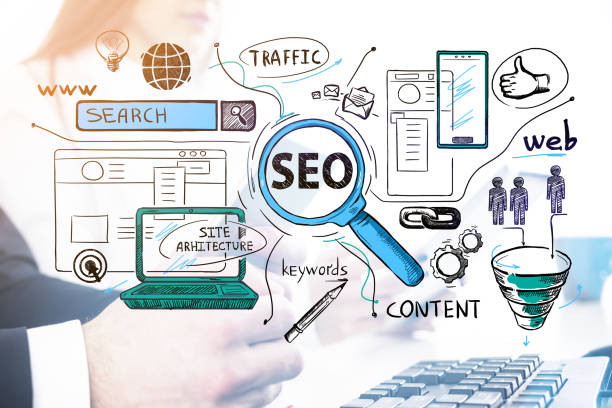
Internal linking means creating links between different pages of your website.
Internal links help search engines better understand your site’s structure and identify more important pages.
Also, internal links help users easily navigate your site and find the information they need.
When creating internal links, pay attention to a few points.
First, the links should be relevant to the content of the page.
Second, use descriptive anchor text that is relevant to the destination page.
Third, place the links naturally in the text and avoid overusing links.
Internal linking is a vital aspect of On-Page SEO because it helps search engines crawl and index your website.
| Link Type | Description | Example |
|---|---|---|
| Link to the Home Page | Link to the site’s home page | <a href="https://www.example.com">Home Page</a> |
| Link to a Category | Link to a specific category | <a href="https://www.example.com/blog">Blog Articles</a> |
| Link to a Product | Link to a specific product | <a href="https://www.example.com/product/1">Product Number 1</a> |
Site Speed Optimization: Increasing Page Load Speed
Site Speed Optimization: Increasing Page Load Speed
The loading speed of your website pages is one of the important factors in user experience and SEO.
Users expect your website pages to load in a few seconds, and if your page loading speed is slow, users may leave your site and visit other sites.
To optimize site speed, you can use tools like Google PageSpeed Insights and GTmetrix.
These tools show you what factors are slowing down your site and provide solutions to improve speed.
Some site speed optimization solutions include: reducing image size, using a CDN, enabling Gzip compression, and optimizing code.
On-Page SEO and site speed are closely related.
Are you tired of your online store not being able to generate as much revenue as its potential? Rasaweb, a specialist in designing professional online stores, solves this problem forever!
✅ Increased sales and revenue
✅ High loading speed and unparalleled user experience
⚡ Get a free online store design consultation
Responsive Design: Site Compatibility with Different Devices

Responsive Design: Site Compatibility with Different Devices
Today, many users access the Internet through mobile devices.
Therefore, your website should be designed in such a way that it is well displayed on different devices (mobile, tablet, and desktop).
Responsive design means that your website automatically adapts to the screen size of the user’s device.
To check whether your website is responsive, you can use the Mobile-Friendly Test tool from Google.
If your website is not responsive, you need to optimize it to display well on different devices.
Responsive design is an important aspect of On-Page SEO and helps improve your site’s ranking in search results.
Optimizing for mobile is an essential part of modern On-Page SEO.
Monitoring and Measuring: Tracking On-Page SEO Results
Monitoring and Measuring: Tracking On-Page SEO Results
After taking On-Page SEO measures, you should regularly monitor and measure your results.
This helps you understand whether your On-Page SEO strategy has been effective and make changes to it if necessary.
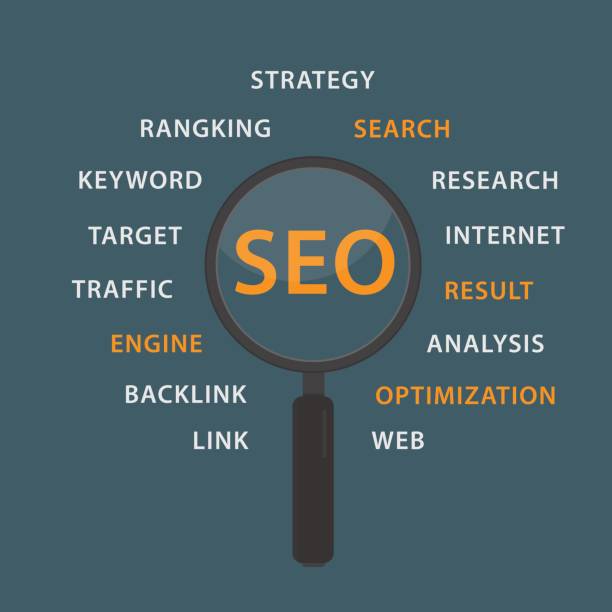
To monitor and measure On-Page SEO results, you can use tools like Google Analytics and Google Search Console.
These tools provide you with information such as site traffic, keyword rankings, click-through rate, and conversion rate.
By reviewing this information, you can identify the strengths and weaknesses of your On-Page SEO strategy and make the necessary improvements.
Don’t forget that On-Page SEO is an ongoing process and requires continuous monitoring and improvement.
By continuously reviewing the results, you can ensure that your site is growing and improving and gaining a better ranking in search results.
On-Page SEO is a continuous investment and requires continuous monitoring and optimization.
This On-Page SEO process helps you increase your site’s ranking and attract more audiences.
Optimal and efficient On-Page SEO requires constant attention and effort.
Performing On-Page SEO correctly can lead to increased site visits and improved ranking in search engines.
By implementing On-Page SEO techniques, you can turn your site into a valuable resource for users and search engines.
Remember that the ultimate goal of On-Page SEO is to provide the best user experience and high-quality content.
Finally, by performing On-Page SEO optimizations, you can create a solid foundation for your overall SEO strategy and increase your chances of higher rankings and more traffic.
Frequently Asked Questions
| Question | Answer |
|---|---|
| What is On-Page SEO? | It refers to the set of actions performed within a website to improve ranking in search engines. |
| Why is On-Page SEO important? | Because it helps search engines better understand your site’s content and structure and improves the user experience. |
| What are the most important elements of On-Page SEO? | Title and meta descriptions, keywords, URL structure, high-quality content, image optimization, internal linking, and site speed. |
| How do we optimize the Title Tag and Meta Description? | The title should include the main keyword and be attractive, and the meta description should be a persuasive summary of the content with related keywords. |
| What is the role of keywords in On-Page SEO? | Keywords tell search engines what the page content is about and should be used naturally and intelligently in the text. |
| How is image optimization performed for On-Page SEO? | By compressing the size, using a descriptive file name, and filling the Alt tag with relevant descriptions and keywords. |
| What is Internal Linking and what is its purpose? | Connecting different pages of the site to each other. This helps distribute the authority of pages (Page Authority) and improve search engine crawling. |
| What is the importance of site loading speed in On-Page SEO? | High speed improves the user experience and is an important ranking factor for search engines like Google. |
| What effect does the site being responsive (Mobile-Friendliness) have on On-Page SEO? | Given the increase in mobile users, being responsive is essential to provide a good user experience on all devices and to prioritize Google’s mobile index. |
| What are the important content-related factors in On-Page SEO? | Originality, quality, comprehensiveness, readability, proper use of headings (H1, H2,…), and regular content updates. |
And other advertising services of Rasa Web Advertising Agency
Intelligent Content Strategy: A new service to increase campaign management by optimizing key pages.
Smart Google Ads: An effective tool for user engagement through Google Ads management.
Smart Social Media: Professional optimization to increase sales using Google Ads management.
Intelligent Marketing Automation: A dedicated service for sales growth based on the use of real data.
Intelligent Customer Journey Map: Professional optimization for digital branding using dedicated programming.
And more than hundreds of other services in the field of internet advertising, advertising consulting and organizational solutions
Internet Advertising | Advertising Strategy | Advertorial
Resources
On-Page SEO Guide: Website Page Optimization Strategy
,What is On-Page SEO? A Comprehensive Guide to Website Page Optimization
,On-Page Optimization – Moz
,The Complete On-Page SEO Guide for 2023
? Are you looking to promote your business online? Rasaweb Afarin, a leading digital marketing agency, with specialized services including custom website design, professional SEO, and targeted advertising campaigns, is your trusted partner on the path to digital success.
📍 Tehran, Mirdamad Street, next to the Central Bank, Kazerun South Alley, Ramin Alley No. 6