
What is Internal SEO and Why is it Important?
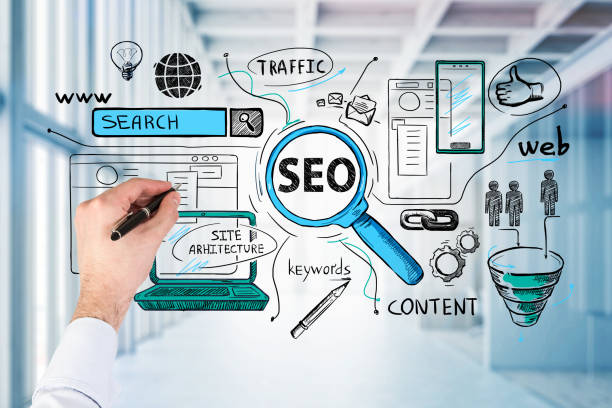
Internal SEO or #On-Page SEO refers to a set of actions performed within a website to improve the site’s ranking in search engines like Google Google.
These actions include optimizing content, site structure, code, and HTML tags.
The importance of Internal SEO stems from the fact that it helps search engines better understand the site’s content and display it to users looking for related information.
A site with strong Internal SEO has a better chance of earning a high ranking in search results.
In fact, Internal SEO is the main foundation of any successful SEO strategy.
In contrast to Internal SEO, External SEO (Off-Page SEO) exists, which includes actions such as link building and social networks that are performed outside the website.
Both types of SEO are essential for the success of a website, but Internal SEO is recognized as the most basic and important part.
Optimizing Internal SEO tells search engines that your site is relevant and authoritative.
In short, Internal SEO is a vital process for increasing your website’s visibility in search engines and attracting targeted traffic.
By improving various Internal SEO factors, you can improve your site’s ranking in search results and attract more audiences to your website.
Are you losing potential customers due to an unprofessional website? Rasaweb is your answer! With our specialized corporate website design services:
✅ Enhance the credibility and standing of your business
✅ Experience attracting more targeted customers
⚡ Take action now to receive a free consultation!
Keyword Research, the Key to Success in Internal SEO
Keyword Research is the process of identifying and analyzing the words and phrases that users use to search in search engines.
These keywords should be relevant to your website’s content.
Choosing the right keywords and strategically using them in your site’s content is one of the most important factors in Internal SEO.
Various tools exist for keyword research, including Google Keyword Planner Google Keyword Planner, Ahrefs Ahrefs, and SEMrush SEMrush.

Click here to preview your posts with PRO themes ››
When choosing keywords, you should pay attention to two main factors: Search Volume and Competition.
Search volume shows how many users search for this keyword per month, while competition shows how many other websites are competing for this keyword.
It’s best to choose keywords that have a good search volume and not too much competition.
After choosing keywords, you should use them naturally in your content.
Avoid overusing keywords, as this may cause your site to be penalized by search engines.
Instead, try to use keywords naturally and relevant to your content in titles, subtitles, body text, and image alt tags.
Finally, your keywords should accurately reflect the content of the page.
This helps search engines understand what your page is about and show it to users looking for related information.
Optimizing Page Title (Title Tag) and Meta Description
The Title Tag and Meta Description are two important elements in HTML that are displayed in search results.
The title tag is the main title of your page that is displayed at the top of the browser and in search results.
The meta description is a summary of your page’s content that is displayed below the page title in search results.
Optimizing these two elements can have a significant impact on your Click-Through Rate and your site’s ranking.
The title tag should be short, attractive, and relevant to the content of the page.
The length of the title tag should not exceed 60 characters, as it may be truncated in search results.
Also, the title tag should include the page’s main keyword.
The meta description should also be attractive, concise, and relevant to the content of the page.
The length of the meta description should not exceed 160 characters.
Using relevant keywords in the meta description can help increase click-through rates.
Click here to preview your posts with PRO themes ››
In general, the title tag and meta description should be written in such a way that encourages users to click on your site’s link in search results.
These two elements are the first things that users see in search results, so they should be attractive and informative.
Optimizing the title tag and meta description is one of the most important aspects of Internal SEO.
Title and meta optimization helps you increase your site’s CTR and attract more organic traffic.
| Feature | Title Tag | Meta Description |
|---|---|---|
| Length | Maximum 60 characters | Maximum 160 characters |
| Content | Short, attractive, relevant to content | Attractive, concise, relevant to content |
| Keyword | Includes the main keyword | Includes relevant keywords |
| Purpose | Attract users’ attention in search results | Encourage users to click on the link |
The Importance of Proper URL Structure in Internal SEO
The URL structure, or web address (Uniform Resource Locator), is another important factor in Internal SEO.
URLs should be short, descriptive, and include relevant keywords.
A proper URL helps search engines better understand the content of the page and show it to users looking for related information.
It is best to avoid using special characters and numbers in your URL.
For example, instead of using a URL like `example.com/page?id=123`, use a more descriptive URL like `example.com/blog/seo-internal`.
This URL shows search engines and users that the page is about Internal SEO and is located in the site’s blog section.
Also, using a hyphen (-) instead of an underscore (_) in the URL is recommended.
In addition, the URL structure should be logical and hierarchical.
This means that URLs should be organized in such a way that they show where the page is located on the site.
This helps users easily navigate your site and find the information they need.
A proper URL structure helps improve User Experience and ultimately increases your site’s ranking in search engines.
Are you falling behind in competition with large online stores?
Rasaweb, with professional online store website design, brings your business online and increases your market share!
✅ Increased brand credibility and customer trust
✅ Easy shopping experience leading to more sales
⚡ Take action now to receive a free website design consultation!
Page Content Optimization

Content Optimization involves creating quality, relevant, and valuable content for users.
Content should fully answer users’ questions and needs and encourage them to spend more time on your site.
Using relevant keywords in content, titles, and subtitles is also important, but it should be done naturally and without exaggeration.
The length of the content is also important.
In general, longer and more comprehensive content has a better chance of earning a high ranking in search engines, but you should ensure that the content is readable and engaging.
In addition, the content should be updated regularly.
Search engines give more value to sites that have new and updated content.
If you have old content, try to update it and add new information to it.
Also, using images, videos, and other multimedia elements can help make the content more attractive.
In short, page content optimization requires creating high-quality, relevant, valuable, and up-to-date content.
By providing excellent content, you can attract users, improve your site’s ranking in search engines, and attract more targeted traffic to your site.
This is a fundamental aspect of Internal SEO.
Image Optimization for SEO
Image Optimization is another important aspect of Internal SEO that is often overlooked.
Images can help make content more attractive and improve user experience, but if they are not properly optimized, they can slow down page loading speed and reduce the site’s ranking in search engines.
To optimize images, you should pay attention to a few points.
First, the image file size should be optimized.
Large images can slow down page loading speed.
Use image compression tools to reduce image file size without sacrificing quality.
Second, use alt tags to describe images.
Alt tags help search engines understand what the image is about.
Alt tags should be short, descriptive, and include relevant keywords.
Third, use descriptive file names for images.
Instead of using generic file names like `image1.jpg`, use descriptive file names like `seo-internal-image.jpg`.
Finally, using the appropriate format for images is also important.
The JPEG format is suitable for images with many colors, and the PNG format is suitable for images with graphics and text.
By optimizing images, you can improve page loading speed, increase your site’s ranking in search engines, and provide a better user experience for your visitors.
Internal SEO will not be complete without considering these points.
The Importance of Internal Linking
Internal Linking is the process of creating links between different pages of a website.
Internal linking helps search engines better understand the structure of the site and identify more important pages.
Also, internal linking helps users easily navigate your site and find the information they need.
This is a crucial aspect of Internal SEO.
When creating internal links, you should pay attention to a few points.
First, the links should be relevant to the content of the page.
Second, use descriptive Anchor Text.
The link text should clearly indicate what page the user will be directed to by clicking on the link.
Third, place the links naturally in your content.
Avoid over-linking, as this may cause your site to be penalized by search engines.
In addition, internal linking can help distribute Link Juice throughout your site.
Link value is transferred from pages with high rankings to pages with low rankings.
With proper internal linking, you can improve the ranking of important pages on your site and attract more targeted traffic to your site.
This process helps strengthen your website’s Internal SEO.
| Benefit | Description |
|---|---|
| Improved Navigation | Helps users easily navigate the site. |
| Increased Understanding by Search Engines | Helps search engines better understand the structure of the site. |
| Distribution of Link Value | Transfers link value from high-ranking pages to low-ranking pages. |
| Improved Ranking | Helps improve the ranking of important pages on the site. |
Improving Page Speed

Page Speed is one of the important factors in ranking sites in search engines.
Users expect web pages to load in a few seconds.
If your page loads slowly, users may leave your site and visit another site.
This can lead to a decrease in Conversion Rate and a decrease in your site’s ranking in search engines.
Improving page loading speed is a fundamental part of Internal SEO.
You can take various actions to improve page loading speed.
For example, you can optimize your images, use Cache, minify your CSS and JavaScript files, and use a Content Delivery Network (CDN).
Tools like Google PageSpeed Insights Google PageSpeed Insights and GTmetrix GTmetrix can help you identify page speed issues and find solutions to fix them.
By improving page loading speed, you can improve user experience, increase conversion rates, and improve your site’s ranking in search engines.
This is an important step towards achieving successful SEO.
Are you tired of your company website not meeting your expectations? With Rasaweb, design a professional website that showcases the true face of your business.
✅ Increase the attraction of new customers and sales leads
✅ Increase the credibility and trust of your brand among your audience
⚡ Get a free website design consultation!
The Importance of Having a Mobile-Friendly Site
Having a Mobile-Friendly site means that your site automatically adapts to the screen size of different devices, such as mobile phones and tablets.
Given that most internet users access websites through mobile phones, having a mobile-friendly site is a vital factor in Internal SEO.
Search engines, like Google, give more value to sites that are mobile-friendly.
If your site is not mobile-friendly, your site’s ranking in search results may decrease.
To ensure your site is mobile-friendly, you can use Google’s Mobile-Friendly Test tool Mobile-Friendly Test.
This tool will show you how your site is displayed on mobile phones and what problems exist.
In addition, having a mobile-friendly site helps improve user experience.
Mobile phone users expect sites to be displayed correctly and comfortably on their devices.
If your site is not mobile-friendly, users may leave your site and visit another site.
By creating a responsive site, you can improve user experience and attract more targeted traffic to your site.
Having a mobile-friendly site is an important component of modern Internal SEO.
Using Structured Data

Structured Data are codes that help search engines better understand your page’s content.
By using structured data, you can provide search engines with information such as content type, author, publication date, and rating.
This information can help search engines create Rich Snippets that include more information about your page.
Using structured data is an advanced technique in Internal SEO.
Rich snippets can help increase click-through rates and attract more targeted traffic.
For example, if you mark up a recipe using structured data, search engines can display information such as cooking time, rating, and images of the food in search results.
This information can help users decide whether the recipe is right for them. Schema.org Schema.org is a great resource for learning about different types of structured data.
Finally, using structured data can help improve your site’s visibility in search engines and attract more targeted traffic.
This is a great way to improve Internal SEO and increase your site’s ranking.Advanced internal SEO is almost impossible without structured data.
Frequently Asked Questions
| Row | Question | Answer |
|---|---|---|
| 1 | What is On-Page SEO? | On-Page SEO refers to a set of actions performed within a website (on its pages) to improve the site’s ranking in search engine results. This includes optimizing content, site structure, and HTML code. |
| 2 | Why is On-Page SEO important? | On-Page SEO helps search engines better understand page content and determine whether that page is relevant and valuable to user searches. This better understanding leads to higher rankings. |
| 3 | What is the first and most important step in On-Page SEO? | Keyword Research is the most important initial step. By finding the right keywords, you can create targeted content that is relevant to user needs. |
| 4 | What is the role of the Title Tag in On-Page SEO? | The title tag is one of the most important ranking factors and should include the main keyword. This tag is displayed in search results as the page title and affects the click-through rate (CTR). |
| 5 | What is the importance of the Meta Description? | The meta description does not directly affect ranking, but by providing an attractive summary of the page content in search results, it can encourage users to click and thus increase the click-through rate (CTR). |
| 6 | Why is using headings (H1, H2, etc.) important in content? | Headings help structure content and improve readability for users and search engine crawlers. Using keywords in headings also helps the search engine better understand the topic. |
| 7 | What does Image Optimization in On-Page SEO include? | It includes compressing images to reduce file size, using descriptive and relevant file names, and filling in the Alt tag (alternative text) with relevant keywords to help search engines understand the image content. |
| 8 | What is meant by Internal Linking in On-Page SEO? | Internal linking refers to creating links between different pages of a website. This helps spread page equity (Link Equity), improve user experience, and help search engine crawlers discover new pages. |
| 9 | Why is Page Speed important for On-Page SEO? | Page speed is a direct ranking factor and strongly affects user experience. Slow pages can increase the Bounce Rate and decrease user engagement. |
| 10 | What role does quality content play in On-Page SEO? | High-quality, comprehensive, unique, and valuable content for the user is the core of On-Page SEO. This content not only attracts and retains users, but also sends positive signals to search engines and helps with better ranking. |
and other advertising services of Rasa Web Advertising Agency
Smart Marketplace: An effective tool for user interaction with the help of attractive user interface design.
Smart Customer Journey Map: A fast and efficient solution for increasing sales by focusing on custom programming.
Smart Conversion Rate Optimization: An effective tool for improving SEO ranking by optimizing key pages.
Smart Website Development: A dedicated service for growing digital branding based on the use of real data.
Smart SEO: A professional solution to increase sales by focusing on precise audience targeting.
and over a hundred other services in the field of internet advertising, advertising consulting and organizational solutions
Internet Advertising | Advertising Strategy | Advertorial Report
Resources
What is SEO?
,On-Page Optimization
,The Ultimate Guide to On-Page SEO: Checklist, Best Practices & More
,On-Page SEO: A Step-by-Step Guide
? To shine in the digital world and reach the peak of success, Rasaweb Digital Marketing Agency is with you with its comprehensive services including Responsive Website Design.
📍 Tehran, Mirdamad Street, next to the Central Bank, South Kazerun Alley, Ramin Alley No. 6