
What is On-Page SEO and Why Does It Matter?
On-Page SEO is a set of techniques and actions performed within your website to improve your site’s ranking in search engines like Google.
These actions include optimizing content, site structure, HTML tags, and other internal factors that help search engines better understand your site.
On-page SEO is important because search engines pay close attention to internal factors when ranking websites.
A website with strong on-page SEO shows search engines that its content is relevant, valuable, and trustworthy.
This increases the site’s ranking in search results, increases organic traffic, and ultimately increases visitors and customers.
For a better understanding of website optimization, you can visit [Moz](https://moz.com/learn/seo/on-page-optimization).
For a better understanding of content optimization, you can visit [HubSpot](https://blog.hubspot.com/marketing/on-page-seo).
For example, using relevant keywords in titles and text, optimizing images using alt tags, and improving site loading speed are all actions performed in on-page SEO.
In fact, on-page SEO is the beating heart of a website, helping it to be seen well in the competitive online world.
Also, a strong on-page SEO strategy helps you provide a better user experience for visitors.
A website that is well-organized, has high-quality content, and has a fast loading speed keeps users satisfied and increases the likelihood of their return.
This not only helps improve the site’s ranking in search engines but also increases conversion rates and sales.
On-page SEO is a long-term investment that, with continuous improvement and optimization of internal site factors, can lead to significant results over time.
With smart on-page SEO, your site becomes a credible and reliable resource in its field, and users and search engines trust it more.
Is your online store ready to attract maximum customers and increase sales? Rasawab transforms your online business with modern and efficient online store designs.
✅ Increased speed and improved SEO
✅ Excellent user experience on mobile and desktop⚡ Get a free consultation on online store design from Rasawab!
Keyword Research# and Finding the Best Ones for On-Page SEO

Keyword research is the cornerstone of any successful on-page SEO strategy.
Keywords# are the phrases users enter into search engines to find the information, products, or services they need.
Choosing the right keywords helps you optimize your content to rank higher in search results for those phrases.
To start keyword research, you should first make a list of topics related to your business.
Then, using keyword research tools like Google Keyword Planner, Ahrefs, Semrush, and Ubersuggest, you can find keywords related to these topics.
These tools provide information such as search volume, competition, and suggested keywords.
For example, if you own an online clothing store, you can check keywords such as “buy women’s clothing,” “evening dresses,” and “new coats.”
When choosing keywords, look for phrases that have both high search volume and manageable competition.
Also, pay attention to the user’s intent when searching for a keyword.
Is the user looking to buy a product or looking for more information on a specific topic? By understanding the user’s intent, you can create content that accurately meets their needs and turns them into a permanent visitor to your site.
To find suitable and relevant keywords, you can use online tools such as [Google Trends](https://trends.google.com/trends/).
After finding the right keywords, you should use them strategically in your content.
This includes using keywords in titles, subtitles, the main text, image alt tags, and meta descriptions.
But keep in mind that overuse of keywords (Keyword Stuffing) can damage your site’s SEO.
Try to use keywords naturally and within the context of the text so that your content is readable and engaging for users.
With careful research and smart use of keywords, you can dramatically increase your site’s organic traffic and get closer to your business goals.
As a result, on-page SEO will become a winning strategy for you.
Optimizing Titles and Meta Descriptions

Titles and meta descriptions are among the most important elements displayed in search results and play a significant role in attracting users to your site.
Title Tags are actually the title of your page, displayed at the top of the browser and in search results.
Meta Descriptions are summaries of the page content that are displayed under the title in search results.
These two elements are the first things users see when searching and should be designed to grab their attention and encourage them to click.
To optimize titles, you should use relevant keywords and write the title in a way that is attractive and relevant to the content of the page.
The title length should not exceed 60 characters to be fully displayed in search results.
Also, each page should have a unique title to avoid duplicate content.
For example, if you have a page about “On-Page SEO Training,” the title could be something like “Complete On-Page SEO Training – Comprehensive Guide.”
Meta descriptions should also be an accurate and engaging summary of the page’s content.
In this section, you can use relevant keywords and tell users what they will find on the page by clicking on the link.
The length of the meta description should not exceed 160 characters to be fully displayed in search results.
Meta descriptions should be written in a way that encourages users to click and increases your site’s click-through rate (CTR).
For example, if you have a page about “The Best Restaurants in Tehran,” the meta description could be something like “Introducing the best restaurants in Tehran with diverse menus and reasonable prices – Online Reservation.”

Click here to preview your posts with PRO themes ››
In general, optimizing titles and meta descriptions requires attention to detail.
By using appropriate keywords and writing engaging and relevant texts, you can increase your site’s organic traffic and turn more users into customers.
In today’s competitive world, on-page SEO is a powerful tool that helps you get seen in search results and achieve your business goals.
| Element | Description |
|---|---|
| Title Tag | The title of the page that appears in search results and at the top of the browser. |
| Meta Description | A summary of the content of the page that appears under the title in search results. |
Content Optimization
Content is king! This famous phrase in the world of SEO means that producing high-quality, valuable, and relevant content to users’ needs is the most important factor in the success of a website.
Optimized content not only helps attract users but also shows search engines that your site is a credible and reliable source.
To optimize content, you must first pay attention to the needs of users.
Identify the questions and problems that users have in your field and create content that answers these questions and solves their problems.
Your content should be comprehensive, accurate, and up-to-date, and provide valuable information to users.
Also, the content should be written in a way that is readable and engaging for users and encourages them to stay on the site and read more.
When writing content, use relevant keywords, but avoid overuse of keywords.
Try to use keywords naturally and within the context of the text so that your content is readable and engaging for users.
Also, use images, videos, and other multimedia elements to make the content more attractive.
Images and videos not only make the content more attractive but also help improve your site’s SEO.
In general, content optimization requires a deep understanding of users’ needs and producing high-quality and valuable content.
By producing optimized content, you can increase your site’s organic traffic and turn more users into customers.
In today’s competitive world, on-page SEO is a powerful tool that helps you get seen in search results and achieve your business goals.
Are you tired of having visitors to your online store but no sales? Rasawab solves your core problem with professional online store design!
✅ Significant sales increase with targeted design
✅ Flawless user experience for your customers
⚡ Get a free consultation!
Optimizing Images and Videos for Improved On-Page SEO
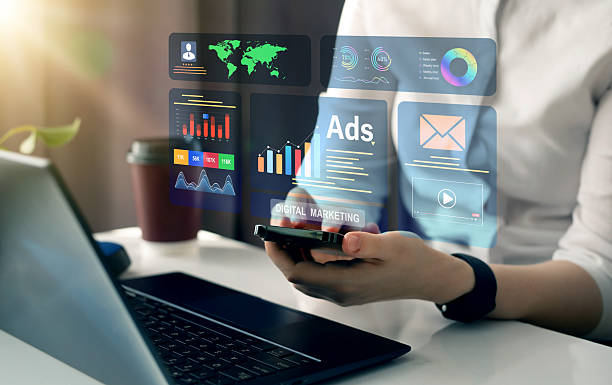
Images and videos play a very important role in the attractiveness and effectiveness of your website content.
But for these multimedia elements to also help improve your site’s SEO, they must be optimized correctly.
Optimizing images and videos includes actions such as choosing the appropriate format, reducing file size, using appropriate alt tags and titles, and creating a video sitemap.
Choosing the right format for images and videos is the first step in optimizing them.
For images, JPEG, PNG, and WebP formats are among the common formats.
JPEG format is suitable for images with many colors, and PNG format is suitable for high-quality images with transparent backgrounds.
The WebP format is also a new format developed by Google that has a smaller file size than JPEG and PNG formats.
For videos, MP4 format is the most common format supported by most browsers and devices.
Reducing the file size of images and videos is another important step in optimizing them.
Large files increase page loading time and affect the user experience.
To reduce the file size of images, you can use image compression tools such as TinyPNG and ImageOptim.
To reduce the file size of videos, you can also use video editing tools such as HandBrake and Adobe Premiere Pro.
Using appropriate alt tags and titles helps search engines better understand your images and videos.
Alt tags should be an accurate and relevant description of the image’s content.
Video titles should also be engaging and relevant to the video’s topic.
In general, optimizing images and videos is an important process in on-page SEO that helps improve the user experience and increase your site’s organic traffic.
By following the tips mentioned, you can optimize your images and videos in a way that is both attractive to users and understandable to search engines.
As a result, on-page SEO will be a winning strategy for you.
Optimizing URL Structure

URL structure plays an important role in on-page SEO and user experience.
URLs should be short, readable, and relevant to the content of the page.
Optimized URLs help search engines better understand the content of the page and also help users understand what page they are being directed to when they click on the link.
To optimize URL structure, use relevant keywords.
URLs should contain keywords relevant to the content of the page.
This helps search engines better understand the content of the page and also helps users understand what page they are being directed to when they click on the link.
Use lowercase letters.
URLs should be written in lowercase letters to avoid potential problems.
Use hyphens (-) instead of spaces ( ).
In URLs, use hyphens (-) instead of spaces.
This makes URLs more readable and understandable.

Click here to preview your posts with PRO themes ››
Avoid unnecessary parameters.
Parameters are parts of the URL that come after the question mark (?).
Using unnecessary parameters in URLs makes the URLs longer and more complex.
Therefore, try to avoid unnecessary parameters in URLs.
For example, instead of using a URL like “example.com/product?id=123&color=red,” use a simpler URL like “example.com/product/123-red.”
Avoid nested directories.
Nested directories make URLs longer and more complex.
Therefore, try to avoid nested directories in URLs.
In general, optimizing URL structure is an important process in on-page SEO that helps improve user experience and increase your site’s organic traffic.
By following the tips mentioned, you can optimize your URLs in a way that is both attractive to users and understandable to search engines.
As a result, stabilize your position in search results with fundamental on-page SEO.
The Importance of Internal Linking in SEO
Internal linking is one of the most important aspects of on-page SEO that is often overlooked.
Internal linking means creating links between different pages of a website.
This helps search engines better understand your site’s structure and also helps users easily navigate your site and find the information they need.
Internal linking has many benefits.
First, it helps search engines find the important pages of your site.
By linking to important pages from other pages of the site, you show search engines that these pages are of high importance.
Second, it helps users easily navigate your site.
By creating relevant internal links, users can quickly access other pages of your site and find the information they need.
Third, it increases the amount of time users spend on your site.
By linking to relevant pages, users are encouraged to view more pages of your site and spend more time on your site.
For internal linking, use relevant keywords.
The link text (Anchor Text) should contain keywords relevant to the content of the page you are linking to.
Avoid linking to irrelevant pages.
Internal links should be relevant to the content of the page they are on.
Avoid linking to irrelevant pages, as this can harm your site’s SEO.
Use the appropriate number of links on each page.
Using too many links on a page can confuse users.
Try to use the appropriate number of links on each page.
In general, internal linking is an important process in on-page SEO that helps improve user experience and increase your site’s organic traffic.
By following the tips mentioned, you can optimize the internal linking of your site in a way that is both attractive to users and understandable to search engines.
As a result, on-page SEO and internal linking help you achieve a better position in search results.
| Benefit | Description |
|---|---|
| Improved Ranking | Helps search engines better understand the website’s structure and content. |
| Increased Traffic | Directs users to different pages of the site and increases their time on the site. |
| Better User Experience | Helps users easily navigate the website and find the information they are looking for. |
Improving Site Loading Speed

Site loading speed is an important factor in user experience and on-page SEO.
Users who enter your site expect the site pages to load quickly.
If your site pages load slowly, users may leave your site and go to other sites.
In addition, Google also considers site loading speed as a ranking factor.
Sites that load faster rank better in search results.
To improve site loading speed, optimize your images.
High-volume images are one of the main reasons for slow site loading.
To reduce the volume of images, you can use image compression tools.
Use browser cache.
Browser Cache helps the user’s browser store your site’s files on their computer.
This makes your site pages load faster on subsequent visits.
Optimize your HTML, CSS, and JavaScript code.
Extra and disorganized code can slow down site loading.
To optimize code, you can use code optimization tools.
Use a Content Delivery Network (CDN).
A CDN is a network of servers located in different parts of the world.
By using a CDN, your site’s files are loaded from the server closest to the user.
This makes your site pages load faster.
Use suitable web hosting.
Inappropriate web hosting can slow down site loading.
When choosing suitable web hosting, pay attention to server speed, uptime, and technical support.
By improving site loading speed, you can improve user experience and increase your site’s ranking in search results.
Optimizing site speed is one of the most important factors of on-page SEO.
Did you know that a weak company website loses many opportunities for you every day? Solve this problem forever with professional company website design by Rasawab!
✅ Create a powerful and reliable image of your brand
✅ Attract targeted new customers and increase sales
⚡ [Get a free website design consultation]
Optimizing for Responsive and Mobile-Friendly Design

With the increasing use of mobile devices to browse the Internet, optimizing for responsive and mobile-friendly design has become particularly important for websites.
Being responsive means that your website automatically adapts to the screen size of the user’s device.
Being mobile-friendly also means that your website is optimized for use on mobile devices.
Click here to preview your posts with PRO themes ››
Google gives responsive and mobile-friendly websites a better ranking in search results.
Therefore, if you want to increase your site’s ranking in Google, you must optimize your site for mobile devices.
In addition, users also prefer to use websites that are displayed well on mobile devices.
If your site is not responsive and mobile-friendly, users may leave your site and go to other sites.
To make your site responsive, you can use a responsive template.
Responsive templates automatically adapt to the screen size of the user’s device.
You can also use responsive design techniques such as using Grid Layout and Flexible Images.
To make your site mobile-friendly, you should use readable fonts, make buttons and links large enough, and avoid pop-ups and annoying ads.
You can also use Google’s Mobile-Friendly Test tool to check if your site is mobile-friendly.
This tool shows you how your site is displayed on mobile devices and what problems it has.
By optimizing your site for responsive and mobile-friendly design, you can improve user experience and increase your site’s ranking in search results.
Your site’s on-page SEO should be aligned with these points to achieve the desired results.
Using Schema Markup to Improve On-Page SEO
Schema Markup is a code that allows you to provide more information to search engines about the content of your page.
By using Schema Markup, you can help search engines better understand the content of your page and display it correctly in search results.
Schema Markup has many benefits.
First, it helps search engines better understand the content of your page.
By providing accurate information about the content of the page, you can help search engines understand what topic your page is about.
Second, it makes your page look more attractive in search results.
By using Schema Markup, you can display additional information such as ratings, prices, and event schedules in search results.
This makes your page look more attractive compared to other pages and attracts more users.
To use Schema Markup, you need to add the relevant code to your page’s HTML.
Schema Markup code is usually written in JSON-LD format.
You can use Google’s Schema Markup Generator tool to generate Schema Markup code.
There are different types of Schema Markup that you can use for different types of content.
Some common types of Schema Markup include Article, Product, Event, Recipe, and Review.
By using Schema Markup, you can help search engines better understand the content of your page and display it correctly in search results.
This will increase your site’s organic traffic and attract more users.
Your site’s on-page SEO will be more optimized by using Schema Markup.
On-page SEO requires a deep understanding of concepts.
Frequently Asked Questions
| Number | Question | Answer |
|---|---|---|
| 1 | What is On-Page SEO? | On-Page SEO refers to a set of actions that are performed within a website and for optimizing its pages to achieve a better ranking in search results. |
| 2 | What is the most important factor in On-Page SEO? | High-quality, relevant, and comprehensive content that meets the user’s needs is the most important factor in On-Page SEO. |
| 3 | What role does the Title Tag play in On-Page SEO? | The Title Tag is one of the most important factors that tells search engines and users what the content of the page is about. It should include the main keyword and be engaging. |
| 4 | How important is the Meta Description Tag? | Although it does not directly affect ranking, it is very effective on the click-through rate (CTR) in search results and encourages users to visit the page. |
| 5 | How is image optimization done in On-Page SEO? | By using a proper alt tag, compressing the image size to increase loading speed, and giving the image file a meaningful name. |
| 6 | What is the importance of using headings (H1, H2, H3) in On-Page SEO? | Headings help structure content, increase readability, and help search engines understand the hierarchy and subtopics of the content. |
| 7 | What does internal linking mean and what are its benefits? | Internal linking means creating links between different pages of a website. This helps distribute authority, improve user navigation, and help search engines crawl the site. |
| 8 | Where should the main keyword (Focus Keyword) be placed on the page? | The main keyword should be placed in the Title Tag, Meta Description, H1, the first paragraph, and naturally throughout the text, and if possible, in the URL address. |
| 9 | What is the impact of duplicate or copied content on On-Page SEO? | Duplicate content can harm the site’s ranking and confuse search engines about which version is the original and may identify it as spam. |
| 10 | How important is page loading speed in On-Page SEO? | Page loading speed is an important ranking factor and directly affects user experience. Slow pages increase user bounce rates. |
And other services of Rasa Web advertising agency in the field of advertising
Smart Google Ads: An effective tool to increase site visits with the help of dedicated programming.
Smart Advertising Campaign: Professional optimization to increase site visits using user experience customization.
Smart Link Building: A creative platform to improve customer behavior analysis using real data.
Smart Link Building: Designed for businesses looking to increase sales through precise audience targeting.
Smart Social Media: An exclusive service to grow sales based on SEO-focused content strategy.
And more than hundreds of other services in the field of internet advertising, advertising consulting and organizational solutions
Internet Advertising | Advertising Strategy | Advertorial
Resources
Complete Guide to On-Page SEO + Checklist
,What is On-Page SEO? — In Simple Terms
,What is Website On-Page SEO? 0 to 100 Principles of On-Page SEO Optimization
,What is On-Page SEO? Comprehensive On-Page SEO Training (On-Page SEO)
? To make your business soar in the digital world and have a powerful and impactful presence, Rasa Web Digital Marketing Agency, with expertise in key areas such as user-friendly website design, search engine optimization (SEO), and targeted advertising campaigns, paves the way for your growth.
📍 Tehran, Mirdamad Street, next to the Central Bank, South Kazerun Alley, Ramin Alley No. 6