🛒 Choosing an Online E-commerce Platform: The First Step Towards Digital Success
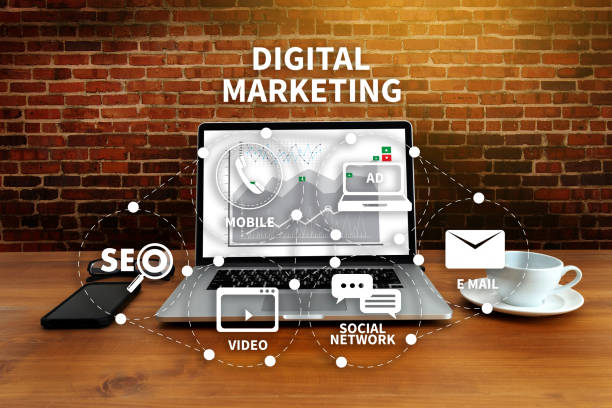
Well, look, it can no longer be denied; today’s world is an online world. If you have a business and haven’t yet stepped into the digital space, or if you plan to launch a new business, choosing a suitable platform for online sales is like choosing the foundation of a house. A small mistake here can cause a lot of trouble later. Many people think choosing a platform is purely a technical task, but it’s not; it’s a strategic decision directly related to your marketing, customer experience, and even profitability. You know, it’s like wanting to open a restaurant and first thinking only about the wall colors instead of the food and customers! The issue of choosing an online e-commerce platform is exactly that. You need to look with an open and comprehensive view to choose a platform that not only meets your current needs but also provides room for growth in the future. If you choose the wrong platform, you might later have to pay heavy costs for migration or even complete rebuilding, which, you know, is both time-consuming and very expensive. I’ve written this comprehensive guide to help you make the best decision on this winding path and get on the track to success from the very beginning.
The most important thing is to have a clear picture of what you want to do before anything else. What products do you sell? Who will buy from you? How much can you afford to spend on setting up and maintaining the site? These questions are the starting point for a smart choice. Because every platform has its strengths and weaknesses, and no platform is suitable for all businesses. A platform might be excellent for a large clothing store, but completely unsuitable for a small business selling handmade products. Therefore, a precise understanding of your needs is more important than anything else. Below, we will go step-by-step together to examine all aspects and guide you toward an informed choice. This choice is the beginning of your online story.
🔍 Before Any Choice, Know Your Business

Before you even look at different platforms, you need to have a deep self-understanding of your business. Believe me, many people rush this stage and regret it later. This is where I say, if you don’t know what you want, how can you find it? The first step is to precisely define what you sell. Physical products? Services? Digital files? How many products do you have? Are you going to have thousands of products or just a few specific items? How do you sell? Retail? Wholesale? Or even subscription-based? Each of these has its specific requirements.
After that, you need to think about your audience. Who is your ideal customer? How do they shop? What expectations do they have from an online experience? Do your customers mostly shop on mobile or desktop? Do they need specific features like product personalization? This information helps you choose a platform that provides the best experience for your customers. Remember, ultimately it’s the customer who decides whether to buy from you or not, so it should be easy and pleasant for them.
Budget is also a very important factor. How much can you set aside for initial setup, monthly or annual costs, plugins, and future developments? Some platforms have lower initial costs but their costs increase in the long run as the business grows. Others, conversely, require a larger initial investment but are more cost-effective in the long run. Also consider your and your team’s technical skills. Can you manage the site yourself or do you need a specialized team like RasaWeb Afarin? These are all details that play a vital role in the final choice and should be looked at realistically to avoid later confusion.
Do you want your products and services to be advertised broadly and effectively? RasaWeb Afarin, by designing and implementing creative and targeted advertising campaigns, delivers your message to millions of audiences.
✅ Designing campaigns tailored to budget and goals
✅ Using diverse and high-yield platforms
✅ Accurate and transparent reporting of campaign performance
For launching a successful advertising campaign, call 09124438174!
🛠️ Key Features to Look for in an Online E-commerce Platform

Okay, now that we know what we want, it’s time to see what a good platform should actually have. This section is like a checklist that can be useful in the review process. Be careful, some of these features are fundamental, and some might become more important depending on your business type. But overall, without them, your work will be incomplete.
The first and most important thing is product and inventory management system. You should be able to easily add, edit, and categorize your products. The ability to manage SKUs, product attributes (like color and size), and inventory status is more essential than daily bread. Imagine you have a large store and can’t manage your inventory; it would be a disaster! After that, various payment gateways become important. Make sure your chosen platform is compatible with common payment gateways in Iran (such as Shaparak, ZarinPal, NextPay, etc.) and provides diverse options for your customers. The more variety, the greater the customer convenience.
Shipping is also very important. The platform should allow defining different shipping methods, calculating shipping costs based on weight, volume, or destination, and also integrating with postal and courier systems. These are details that improve the user experience. Finally, reporting and data analysis are also very essential. You should be able to monitor sales performance, best-selling products, site traffic, and customer behavior to make better decisions. Strong analytical tools act like a compass in the digital sea. This part of the work enables continuous optimization.
| Key Feature | Importance | Description |
|---|---|---|
| Product and Inventory Management | Vital | Ability to add, edit, categorize products, and track inventory precisely |
| Diverse Payment Gateways | Very Important | Support for Iranian banking and intermediary gateways for customer convenience |
| Shipping Management | Essential | Defining shipping methods, cost calculation, and integration with postal services |
| Reporting and Analysis | Very Important | Access to sales data, traffic, and user behavior for decision-making |
| Website Security | Critical | SSL protocols, customer data protection, and secure payment gateway |
| SEO Features | High | Ability to optimize for search engines (meta tags, friendly URLs) |
| Customer Support | Important | Access to technical support from the platform and user community |

Click here to preview your posts with PRO themes ››
⚖️ A Look at Types of Online E-commerce Platforms: From SaaS to Self-Hosted

Okay, now that we know what features we’re looking for, let’s take a deeper look at the types of platforms available in the market. In the world of online commerce, there are two main categories of platforms: SaaS (Software as a Service) and Self-Hosted (Open-Source or Enterprise) platforms. Each has its advantages and disadvantages and is suitable for different types of businesses.
SaaS platforms, like Shopify or SquareSpace, are ready-made solutions that you use by simply paying a monthly or annual fee. In this model, everything from servers and security to updates is managed by the platform provider. This means you no longer have to worry about technical issues and can focus all your attention on sales and marketing. For small and medium-sized businesses, or those who are in a hurry and don’t want to get involved in technical matters, these options are excellent. Their setup is faster, they are easier to use, and they usually have good support. But, they also have limitations; they have less flexibility in customization, and you might have to pay extra costs for certain specific features. It’s kind of like renting a furnished house; it’s comfortable, but you can’t move its walls.
On the other hand, self-hosted platforms like WooCommerce (on WordPress) or Magento (which is now Adobe Commerce) give you complete control. Here, you are responsible for hosting, security, updates, and all technical matters yourself. This means infinite freedom in design and development. You can implement any feature you want and build your site exactly according to your business’s specific needs. These options are usually suitable for large businesses, development companies, or those who need very specific customizations. Their initial cost and maintenance might be higher, and they require more technical expertise, but in the long run, they can be very powerful. It’s like buying a piece of land and building your own house from scratch; it takes a lot of effort, but you can have whatever you want.
📱 User Experience (UX) and User Interface (UI): Why Are They So Important?

You might ask, “Okay, we’ve talked so much about platforms and features, but what are UX and UI?” These are not just the site’s appearance; they are the beating heart of your customer experience in the online world. If a site doesn’t have good design, even if you have the best products in the world, customers will flee from it. Believe me! It’s like entering a crowded and messy store where none of the prices or categories are clear; it’s obvious you’ll quickly leave, even if it has good merchandise.
User Experience (UX) actually describes how the user feels when interacting with your site. Can the user easily find the product they are looking for? How smooth is the purchasing process? Do pages load quickly? Is there enough clear information about the products? Good UX means the user browses your site easily and pleasantly and ultimately completes their purchase. This issue plays a fundamental role in the customer return rate and converting visitors into buyers.
User Interface (UI) relates to the visual appearance and layout of the site. Colors, fonts, buttons, images, and all visual elements. An attractive and harmonious UI makes your site look professional and instills a sense of trust in the customer. And, we shouldn’t forget that more than half of users now access websites via mobile. So responsive design and the platform’s mobile-friendliness are no longer a choice; they are an absolute necessity. If your site doesn’t display well on mobile, you effectively lose a large portion of your customers. When RasaWeb Afarin talks about UX/UI design, it is precisely referring to these vital aspects that a successful online business cannot survive without.
Do you want to increase brand awareness with visual advertising? RasaWeb Afarin displays your brand on high-traffic websites with banner ads.
✅ Design attractive banners
✅ Precise audience targeting
✅ Increase website traffic
Act today for a consultation!
📈 SEO and Marketing: The Lifeline of Your Online E-commerce Platform

Okay, you have a good platform, excellent products, and your site design is top-notch… Now, how do you find customers? Here, SEO and digital marketing come into play, the vital lifelines of any online business. Imagine you built the best store in the world, but it’s in a dead-end alley that no one knows about; well, it’s obvious you won’t have any sales! An online e-commerce platform must, from the ground up, have strong capabilities for visibility in search engines and running marketing campaigns.
In terms of SEO, the platform should provide features such as the ability to edit meta tags (title and description) for each page, creating friendly URLs (understandable for both users and Google), optimizing site loading speed, internal link structure, and generating XML sitemaps. If the platform lacks these basic features, your SEO specialist’s (or your own!) job to be seen on Google will be a hundred times harder. Companies like RasaWeb Afarin, who specialize in SEO and website optimization, can use these capabilities to bring your site to high rankings on Google.
In the marketing section, the platform should have the ability to integrate with various marketing tools. For example, you should be able to easily install Google Analytics to monitor user behavior. Or, you should be able to add Facebook Pixel (Meta) for retargeting (bringing customers back). Also, features for email marketing, discounts and coupon codes, and managing advertising campaigns (like Google Ads campaigns or Instagram advertising campaigns) must be available. A platform that is strong in these areas helps you not only attract customers but also retain them and increase their loyalty. Without these capabilities, your marketing will falter, and you will effectively lose some of the potential of your online business. So, do not underestimate this aspect, not at all!.
Click here to preview your posts with PRO themes ››
🚀 Scalability and Future Growth: A Platform for Today and Tomorrow

Always look to the future. When you choose an online e-commerce platform, it’s not just about planning for today. Businesses grow, needs change, and you must ensure that the chosen platform can keep pace with these changes. If your platform isn’t scalable, it might hit its ceiling when your business grows, forcing you to rebuild everything from scratch, which is, well, a real nightmare!
Suppose you started your store with a few products, and after a year, your product count increases tenfold. Can your platform effectively manage this volume of products and information? Or, if your visitor count suddenly spikes (e.g., after a successful advertising campaign), can the platform handle this traffic without crashing? This is where scalability becomes important. Scalable platforms are designed to handle increased workloads (number of products, number of users, order volume) well and avoid issues.
Another point is development and customization capabilities. You might not need certain specific features today, but tomorrow you might want to launch a customer loyalty system or integrate with a specific accounting software. Does your platform allow you to implement these developments? Or does it limit you? Open-Source platforms usually offer more flexibility in this regard, but SaaS platforms, in their more advanced versions, also try to meet this need by providing APIs and various plugins. If you’re going to have a business with high growth potential, be sure to pay close attention to this issue. The RasaWeb Afarin team, specializing in growth engine consulting and website development, can help you choose a platform that is suitable for your future. This is an investment in your future.
| Scalability Aspect | Description | Importance |
|---|---|---|
| High Volume Product Management | Platform’s ability to manage thousands of products without performance degradation | Very Important for catalog growth |
| High Traffic Tolerance | Platform’s ability to respond to sudden increases in visitors | Critical during campaigns or popularity surges |
| Integration with External Systems | Possibility to connect to accounting software, CRM, ERP, etc. | Important for business automation and efficiency |
| Multi-language/Multi-currency Support | If you intend to enter international markets | For global expansion |
| Development Flexibility | Ease of adding new features and customization | For adapting to changing needs |
🛡️ Security and Support: The Hidden Pillars of Every Successful Online Store

Perhaps few people think about these two points when choosing a platform, but believe me, security and support are like the hidden pillars of a building; if they’re not there, the whole structure collapses. In the online world, customer information, payment details, and your business data are attractive targets for hackers and cybercriminals. Therefore, an online e-commerce platform must have a high level of security.
The issue of security isn’t just about your site not being hacked. It also includes other things: SSL protocol (that green lock icon next to the site address that encrypts information), protection of payment gateways, regular data backups, protection against DDoS attacks, and compliance with PCI DSS security standards (for credit card processing). If your platform doesn’t comply with these, not only might your customers’ data be at risk, but you’ll also lose their trust, and you know, trust in online business is everything. Some platforms provide this security themselves (like SaaS) while on others (like self-hosted), you have to do it yourself or with the help of security specialists.
The next point is support. Believe me, in the digital world, problems arise; the site might go down, a plugin might not work, or you might have a question that needs guidance. Does your chosen platform have good support? Is it 24/7? Via chat, email, or phone? How quickly do they respond to questions? If a platform is strong but has weak support, it’s effectively like buying a luxury car but having no one to service and maintain it. Therefore, before choosing, always check user reviews about platform support. Good support not only solves problems but also gives you peace of mind and allows you to work on your business with more focus.
💰 Budgeting and Cost Analysis: Smart Investment

Okay, we’ve reached the money part! No one wants to waste their money, right? Choosing an online e-commerce platform, like any other investment, requires careful budgeting and cost analysis. A platform might seem cheap at first glance, but when you dig deeper, you find it has many hidden costs. The opposite is also true; a platform might be expensive initially, but prove its worth in the long run. So, your perspective should be comprehensive, and don’t just think about the initial cost.
Generally, platform costs can be divided into several categories: initial setup cost (like design, development, or theme purchase costs), monthly or annual platform fees (for SaaS), hosting and domain costs (for self-hosted), plugin and app costs (for adding specific functionalities), transaction fees (which some platforms charge you for each sale), and maintenance and support costs. For example, Shopify has different plans that each have their own price and features. WooCommerce itself is free, but you have to pay for hosting and a developer.
The most important thing is to perform a cost-benefit analysis. That is, see what costs each platform has and, in return, what values and functionalities it offers you. Is it worth paying more for a specific feature? Or can you achieve your goals with a simpler solution? Also, don’t forget hidden costs. For example, the cost of your or your team’s time for learning and managing the platform. If a platform is complex and you don’t have technical experience, you might have to hire someone to manage it or use consulting services like RasaWeb Afarin, which is, well, a cost itself. So, look at your budget with open eyes and realistically, and make a choice that is both economical for you today and won’t cause you trouble in the long run.
Do you want to display your ads within the applications that your target audience uses? RasaWeb Afarin, by running in-app advertising campaigns, shows your brand in high-traffic and relevant environments to your audience.
✅ Access to audiences in targeted environments
✅ Increase click-through rates and app installs
✅ Leveraging user behavioral data
Shine at the heart of apps with 09124438174!
💡 Final Choice and Next Steps: Starting a Digital Adventure

Okay, so far we’ve reviewed many things together. From understanding your business to examining platform features, comparing their different types, the importance of UX/UI, the vital role of SEO and marketing, the discussion of scalability and security, and finally, budgeting. Now it’s time to put all this information together and make a final decision. Remember I said it’s like choosing the foundation of a house? Well, this moment is the moment to lay that foundation.
Click here to preview your posts with PRO themes ››
For the final choice, I suggest you create a list of your vital and desired requirements. Then, compare the different platforms you’ve reviewed against this list and give each one a score. This will help you have a more objective view and not blindly follow emotions or mere advertisements. Be sure to try platform demos, test trial versions, and if possible, talk to similar businesses that use those platforms. Real user opinions can help you a lot.
After choosing, your adventure has just begun! The next steps include site design and development (which the RasaWeb Afarin team can perform professionally), product entry, setting up payment gateways, and training on how to work with the platform. After that, the discussion of marketing and continuous optimization comes up. Launching an online store is not a one-time project, but a continuous and dynamic process. You must always be monitoring the market, analyzing data, and optimizing to have the best performance.
And one last important point: If you feel confused on this path or need expert guidance, do not hesitate to seek help from specialized consultants. Companies like RasaWeb Afarin with years of experience in internet marketing, website development, and SEO, can be reliable guides for you. Sometimes, a proper consultation can save you from unnecessary expenses and major mistakes. Choosing a suitable platform is the first and most important step towards a successful online business. So take this step with full care and awareness, and move powerfully towards the digital future!
| Question | Answer |
|---|---|
| What is the best online e-commerce platform? | There is no definitive answer; the best platform depends on your specific business needs, budget, and goals. Each platform has its strengths and weaknesses. |
| What is the difference between SaaS and Self-hosted platforms? | SaaS platforms (like Shopify) are ready-made, managed services that are used with a subscription fee. Self-hosted platforms (like WooCommerce) offer more flexibility but technical responsibility lies with the user. |
| How much should I spend to launch an online store? | Costs vary from free (for some Open-Source platforms requiring hosting and development) to tens of millions of Tomans for advanced or custom development platforms. Your budget includes initial, monthly, and maintenance costs. |
| Do I need technical knowledge to choose a platform? | For SaaS platforms, usually not much technical knowledge is required. But for self-hosted platforms, you need technical knowledge (or specialist help) for installation, setup, and maintenance. |
| Why is SEO important for an online e-commerce platform? | SEO helps your online store be visible in search engine results and attract organic (free) traffic. The platform should provide basic SEO features. |
| How can I ensure the security of my online store? | The chosen platform should have an SSL certificate, secure payment protocols, regular backups, and protection against cyberattacks. These build customer trust. |
| Should my platform be scalable? | Yes, scalability is very important. Your platform should be able to grow with an increasing number of products, visitors, and orders, and cover your business’s future needs. |
| How can I improve the User Experience (UX) of my online store? | By choosing a platform with user-friendly design, fast-loading pages, easy navigation, and a smooth purchasing process. Responsive design for mobile is also crucial. |
| Do online e-commerce platforms support AI and automation? | Modern and advanced platforms are integrating AI capabilities (like chatbots and recommenders) and automation tools (for task automation) which help increase efficiency. |
| What are the next steps after choosing a platform? | After selection, the next steps include site design, product entry, payment gateway setup, team training, and then starting marketing activities and continuous optimization. |
And other services of RasaWeb Advertising Agency in the field of advertising
• URL structure optimization
• Content distribution strategy
• Twitter Ads (X Ads) management
• Design of websites with customer portals
• Building AI agents for data analysis
And over hundreds of other services in the field of internet advertising, advertising consultation, and organizational solutions
Internet Advertising | Advertising Strategy | Advertorial
How can you get the most out of your operations with the least cost? Our optimization information is your guide to saving. ✅ Operations and cost optimization data
✉️ info@idiads.com
📱 09124438174
📞 02126406207
📍 Tehran, Mirdamad Street, next to Bank Markazi, Kazerun Jonubi Alley, Ramin Alley, No. 6