
What is On-Page SEO and Why is it Important?

On-Page SEO is a set of actions you take within your website to improve its ranking in search engines.
These actions include optimizing content, code, site structure, and various page elements.
The importance of #OnPageSEO lies in the fact that it helps search engines better understand your site’s content and recognize its relevance to user searches.
A site with strong On-Page SEO has a better chance of achieving high rankings in search results.
Learn more about SEO
In fact, On-Page SEO is the most fundamental part of optimizing your site for search engines.
Without a strong strategy for On-Page SEO, your efforts in the area of #OffPageSEO and content marketing will not achieve the desired result.
This is especially important for small businesses and startups, as they can increase their competitiveness by focusing on On-Page SEO and stand up to larger competitors.
In addition, On-Page SEO also helps improve user experience (UX).
When your site has a well-organized structure and valuable content, users can more easily find the information they need and spend more time on your site.
This, in turn, leads to increased conversion rates and improved overall business performance.
Finally, you should note that search engine algorithms are constantly changing.
Therefore, to maintain your rankings in search results, you must continually update your On-Page SEO strategy and keep up with the latest changes and trends in the field.
Are you frustrated with the low conversion rate of your online store?
Rasaweb offers a professional e-commerce website design that is the definitive solution for you!
✅ Increase your sales and revenue
✅ Exceptional user experience for your customers
⚡ Get a free consultation now!
Keyword Research and its Role in On-Page SEO

Keyword research is one of the most important steps in On-Page SEO.
This process helps you understand what terms users are searching for in search engines for information related to your business.
By identifying these keywords, you can optimize your site’s content to rank for those terms.

Click here to preview your posts with PRO themes ››
To start keyword research, you can use various tools such as Google Keyword Planner, Ahrefs, and Semrush.
These tools provide information such as keyword search volume, competition level, and related keywords.
You can also use Ahrefs to examine competitors’ keywords.
When choosing keywords, you should pay attention to two important points: first, search volume.
The higher the search volume of a keyword, the more traffic you can attract to your site.
Second, the level of competition.
If the competition for a keyword is very high, it will be difficult to rank for it.
Therefore, you need to strike a balance between search volume and competition.
In addition, you should also pay attention to user intent (Search Intent).
User intent means what type of information the user is looking for when searching for a keyword.
For example, if a user searches for the term “buy laptop,” they probably intend to buy a laptop.
Therefore, you should optimize a page that allows them to buy a laptop.
After identifying the appropriate keywords, you should use them naturally in your site’s content.
Avoid overusing keywords (Keyword Stuffing), as this can result in your site being penalized by search engines.
Optimizing the Title Tag and Meta Description
The Title Tag and Meta Description are two important elements in On-Page SEO that are displayed in search results.
The title tag is the main title of the page, which is displayed at the top of the browser and in search results.
The meta description is a summary of the page’s content that is displayed below the page title in search results.
Optimizing the title tag and meta description helps search engines understand what your page is about and helps users decide whether they want to click on your link or not.
A good title tag and meta description can increase click-through rate (CTR) and attract more traffic to your site.

Click here to preview your posts with PRO themes ››
When writing a title tag, you should pay attention to the following points: the title should be concise and accurate and clearly state the topic of the page.
The title should include the main keyword of the page.
The title should not be longer than 60 characters, otherwise it will be truncated in search results.
When writing a meta description, you should pay attention to the following points: the description should be attractive and persuasive and encourage users to click on your link.
The description should be a summary of the page’s content and accurately state the topic of the page.
The description should include the main keyword of the page.
The description should not be longer than 160 characters, otherwise it will be truncated in search results.
Using secondary and related keywords in the title and meta description can also help improve the site’s ranking in search results.
However, you should avoid overusing keywords and try to write the title and meta description naturally.
| Feature | Description |
|---|---|
| Title Tag | The main title of the page that is displayed at the top of the browser and in search results. |
| Meta Description | A summary of the page’s content that is displayed below the page title in search results. |
Content Optimization for On-Page SEO

Content is king! This phrase is very common in the world of #SEO and indicates the importance of content in ranking sites in search engines.
Quality content is the main factor in attracting traffic and keeping users on your site.
Content optimized for On-Page SEO should be both attractive and informative for users and help search engines properly understand the topic of the page.
To optimize content for On-Page SEO, you should pay attention to the following points: the content must be unique and original.
Avoid copying content from other sites, as this can result in your site being penalized by search engines.
The content should be relevant to the main keywords of the page.
Use keywords naturally throughout the content, but avoid overusing keywords.
The content should have a suitable structure.
Use headings and subheadings to organize the content and use short, readable paragraphs.
The content should be attractive and informative and answer users’ questions.
Use images, videos, and other multimedia elements to make the content more attractive.
In addition, you should also pay attention to the length of the content.
In general, longer content has a better chance of ranking in search engines.
However, you should not sacrifice quality for quantity.
Your content should be valuable and relevant, even if it is short.
Regularly updating content is also important.
Search engines like sites that regularly update their content more.
Therefore, try to regularly review and update your site’s content to keep it fresh and relevant.
Are you tired of your e-commerce website not being able to generate as much revenue as it has the potential to? Rasaweb, a specialist in designing professional e-commerce websites, solves this problem for good!
✅ Increase sales rate and revenue
✅ High loading speed and exceptional user experience
⚡ Get a free e-commerce website design consultation
The Importance of Internal Linking in On-Page SEO

Internal linking means creating links between different pages of your own site.
This helps search engines better understand the structure of your site and link related pages together.
Internal linking also helps users easily navigate your site and find the information they need.
A good internal linking strategy can help improve your site’s ranking in search results.
When internal linking, you should pay attention to the following points: the links should be relevant to the content of the destination page.
Use appropriate anchor text for the links.
Anchor text is the text you click on to go to another page.
The anchor text should be relevant to the topic of the destination page and include the main keyword of the page.
The links should point to important and relevant pages of your site.
The links should not be too numerous and confuse users.
You can use various tools to find internal linking opportunities.
For example, you can use the Site Explorer tool in Ahrefs to identify the pages with the most internal links and add more links to them.
You can also use the Content Audit tool in Semrush to identify pages that need internal linking.
In addition, you should also pay attention to the structure of your internal links.
Try to create a hierarchical structure for your site and organize the links in such a way that users can easily access the pages they want.
On-Page SEO is a complex process, but by focusing on internal linking, you can help improve your site’s ranking in search results.
Image Optimization for On-Page SEO
Images play an important role in the attractiveness and user experience of your site.
But images can also affect your site’s On-Page SEO.
By optimizing images, you can help search engines better understand your images and rank them in image search results.
This can attract more traffic to your site.
To optimize images for On-Page SEO, you should pay attention to the following points: the image file name should be relevant to the content of the image.
Avoid generic names like “image1.jpg” and use descriptive names like “buy_asus_laptop.jpg.”
The image’s Alt Text should be descriptive and relevant to the content of the image.
Alt text helps search engines understand what your image is about.
Alt text is also displayed to users who use text browsers or have disabled images.
The image file size should be optimized.
Large images can slow down page loading speed and affect user experience.
Use image compression tools to reduce the file size of images.
Use the appropriate format for images.
The JPEG format is suitable for photos and the PNG format is suitable for graphic images.
In addition, you should also pay attention to the placement of images on the page.
Try to place images near relevant text and use images to explain and complement the content of the page.
On-Page SEO for images can have a significant impact on your site’s ranking in search results.
By following these tips, you can optimize your images and attract more traffic to your site.
Improving Site Loading Speed and its Impact on On-Page SEO
Site loading speed is one of the most important factors in user experience and On-Page SEO.
Users expect web pages to load quickly, and if a site is slow, users are more likely to leave it.
Search engines also consider site loading speed as a ranking factor and rank faster sites higher in search results.
To improve site loading speed, you can take various actions: Image optimization.
Large images can slow down page loading speed.
Use image compression tools to reduce the file size of images.
Using caching.
Caching helps the user’s browser save your site’s files and load the page faster on subsequent visits.
Reducing the number of HTTP requests.
Each time the browser requests a file from the server, an HTTP request is created.
By reducing the number of HTTP requests, you can improve page loading speed.
Using a Content Delivery Network (CDN).
CDN helps distribute your site’s content to different servers around the world.
This allows users to receive content from the server closest to them, and the page loading speed increases.
In addition, you should also pay attention to your site’s coding.
Clean and optimized coding can improve page loading speed.
Avoid using unnecessary and heavy code and use code optimization tools to reduce the size of HTML, CSS, and JavaScript files.
| Factor Affecting Speed | Optimization Solution |
|---|---|
| Images | Compression and file size optimization |
| Caching | Activation and correct configuration |
| HTTP Requests | Reduce the number of requests by combining files |
| Content Delivery Network (CDN) | Using CDN for content distribution |
Optimizing URL Structure for On-Page SEO
Your site’s URL structure can have a big impact on On-Page SEO.
Clean, descriptive, and content-related URLs help search engines better understand the topic of the page and help users understand what page they are being directed to before clicking on the link.
A good URL structure can help improve your site’s ranking in search results.
When creating URLs, you should pay attention to the following points: Use keywords related to the content of the page.
Use hyphens (-) to separate words.
Use lowercase letters.
Avoid using special and unnecessary characters.
URLs should be short and concise.
Use a hierarchical structure for URLs.
For example, the URL of a product page should also include the name of the product category.
In addition, you should also pay attention to the overall structure of your site.
Try to create a logical and organized structure for your site and organize URLs in such a way that users can easily access the pages they want.
A good site structure can help search engines better index your site and improve your site’s ranking in search results.
By optimizing your site’s URL structure, you can help search engines better understand your site and help users easily navigate your site.
This can help improve your site’s ranking in search results and increase your site’s traffic.
On-Page SEO has a direct impact on increasing site visitors.
Did you know that your company’s website is the first point of contact for 75% of potential customers?
Your website is the face of your brand. With Rasaweb’s corporate website design services, create an online presence that builds customer trust.
✅ Create a professional and lasting image of your brand
✅ Attract target customers and increase online credibility
⚡ Get a free consultation from Rasaweb experts!
Mobile Optimization and its Impact on On-Page SEO

Given the increasing use of mobile phones to access the Internet, optimizing a site for mobile has become very important.
Search engines also consider mobile optimization as a ranking factor and rank sites that are optimized for mobile higher in search results.
Mobile optimization means that your site is displayed correctly on mobile devices and users can easily use it.
#OnPageSEO helps you get seen on Google.
To optimize a site for mobile, you can take various actions: Using Responsive Design.
Responsive design means that your site automatically adapts to the screen size of the user’s device.
Using readable and large fonts.
Using large buttons and links that are easily touchable with a finger.
Optimizing images for mobile.
Large images can slow down page loading speed on mobile devices.
Avoid intrusive ads and pop-ups, as these ads can affect the user experience on mobile devices.
In addition, you should also pay attention to the site’s loading speed on mobile devices.
Mobile users expect web pages to load quickly, and if a site is slow, users are more likely to leave it.
By improving site loading speed on mobile devices, you can improve the user experience and increase your site’s ranking in search results.
On-Page SEO optimized for mobile increases traffic and improves site ranking.
Measuring and Analyzing On-Page SEO Results
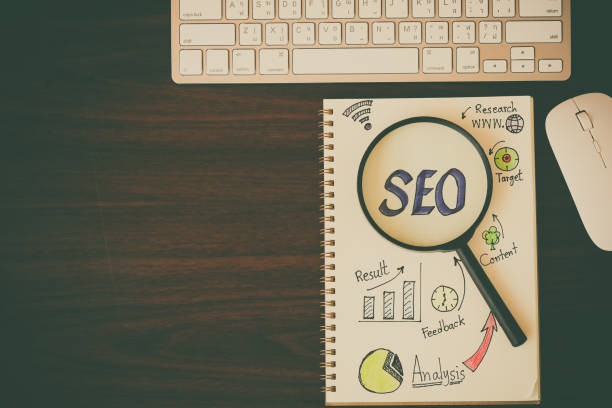
After taking On-Page SEO actions, you should measure and analyze your results to understand whether your strategy has been effective or not.
By measuring and analyzing the results, you can identify the strengths and weaknesses of your strategy and take the necessary actions to improve it.
SEO analysis tools will help you in this way.
To measure and analyze On-Page SEO results, you can use various tools such as Google Analytics and Google Search Console.
Google Analytics gives you information about your site’s traffic, user behavior, and conversion rate.
Google Search Console gives you information about your site’s performance in search results, the keywords users use to find your site, and errors on your site.
Using these tools, you can measure key performance indicators (KPIs) such as organic traffic, keyword ranking, click-through rate (CTR), bounce rate, and conversion rate.
By comparing these indicators over time, you can understand whether your On-Page SEO strategy has been effective or not.
In addition, you should also pay attention to changes in search engine algorithms.
Search engines are constantly changing their algorithms, and these changes can have a big impact on your site’s ranking.
By tracking the latest changes to search engine algorithms, you can update your On-Page SEO strategy and avoid your site being penalized by search engines.On-Page SEO is a continuous action to be seen better.
On-Page SEO is an ongoing process and requires measurement, analysis, and improvement.
Frequently Asked Questions
| Row | Question | Answer |
|---|---|---|
| 1 | What is On-Page SEO? | On-page SEO refers to a set of actions that are performed within the website (on its pages) to improve the site’s ranking in search engine results. This includes optimizing content, site structure, and HTML codes. |
| 2 | Why is On-Page SEO important? | On-page SEO helps search engines better understand the page’s content and determine whether that page is relevant and valuable to users’ searches. This better understanding leads to higher rankings. |
| 3 | What is the first and most important step in On-Page SEO? | Keyword Research is the most important initial step. By finding the right keywords, you can produce targeted content that is relevant to users’ needs. |
| 4 | What is the role of the Title Tag in On-Page SEO? | The title tag is one of the most important ranking factors and should include the main keyword. This tag is displayed in search results as the page title and affects the click-through rate (CTR). |
| 5 | What is the importance of Meta Description? | The meta description does not directly affect ranking, but by providing an attractive summary of the page’s content in search results, it can encourage users to click, thereby increasing the click-through rate (CTR). |
| 6 | Why is the use of headings (H1, H2, etc.) important in content? | Headings help structure content and improve readability for users and search engine crawlers. Using keywords in headings also helps the search engine better understand the topic. |
| 7 | What does Image Optimization in On-Page SEO include? | Includes compressing images to reduce size, using descriptive and relevant file names, and filling in the Alt tag (alternative text) with relevant keywords to help search engines understand the content of the image. |
| 8 | What is meant by Internal Linking in On-Page SEO? | Internal linking refers to creating links between different pages of a website. This helps spread page equity (Link Equity), improves user experience, and helps search engine crawlers discover new pages. |
| 9 | Why is Page Speed important for On-Page SEO? | Page load speed is a direct ranking factor and greatly affects the user experience. Slow pages can increase the bounce rate and decrease user engagement. |
| 10 | What role does quality content play in On-Page SEO? | High-quality content that is comprehensive, unique, and valuable to the user is the core of on-page SEO. This content not only attracts and retains users but also sends positive signals to search engines and helps to rank better. |
and other advertising services of Rasa Web Advertising Agency
Smart Social Media: A creative platform for improving customer behavior analysis with the goal of precise audience targeting.
Smart Custom Software: A professional solution for online growth with a focus on marketing automation.
Smart Linking: Designed for businesses looking to manage campaigns through the use of real data.
Smart Linking: Designed for businesses looking to engage users through user experience customization.
Smart Marketing Automation: Designed for businesses looking to manage campaigns through marketing automation.
and over a hundred other services in the field of internet advertising, advertising consulting, and organizational solutions
Internet Advertising | Advertising Strategy | Advertorials
Resources
[object Object],[object Object],[object Object],[object Object]
? Are you looking for a big leap in the digital world? The digital marketing agency “Rasaweb Afrin”, with expertise in search engine optimization (SEO), professional social network management, and user-friendly website design, leads your business to success. With us, have a powerful and lasting presence in the online space.
📍 Tehran, Mirdamad Street, next to the Central Bank, Southern Kazeroun Alley, Ramin Alley No. 6
“`


