
What is On-Page SEO and Why is it Important?
#On-Page SEO, also known as On-Page SEO, refers to the set of actions you take within your website to improve search engine rankings.
These actions include optimizing content, website structure, code, and other internal elements of the site.
The importance of On-Page SEO is that it helps search engines better understand your site’s content and associate it with user searches.
As a result, by optimizing On-Page SEO, you can increase your site’s ranking in search results, attract more traffic, and ultimately achieve your business goals.
On-Page SEO is an ongoing process that requires constant attention and updates.
Given the changes in search engine algorithms, it is necessary to regularly review and update your On-Page SEO strategy to ensure its effectiveness.
Search engine optimization (SEO) is vital for any website.
Tired of your company’s website not getting the visibility it deserves and losing potential customers? Solve this problem forever with professional and effective website design by Rasaweb!
✅ Increase brand credibility and build customer trust
✅ Attract targeted sales leads
⚡ Contact us now for a free consultation!
Keyword Research, the Cornerstone of On-Page SEO
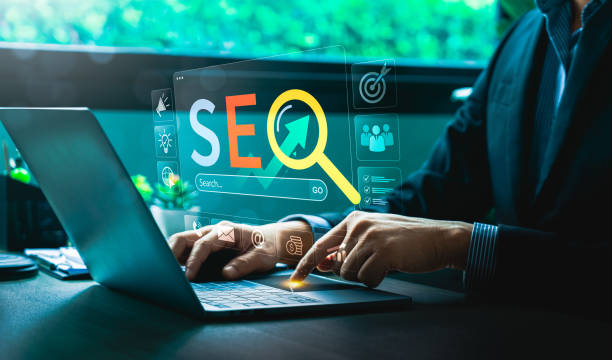
#Keyword_research is the first step and one of the most important steps in On-Page SEO.
By identifying the right keywords, you can optimize your content for user searches and attract targeted traffic to your website.
To conduct keyword research, you should first create a list of topics related to your business.
Then, using various tools such as Google Keyword Planner, Semrush, and Ahrefs, find keywords related to these topics.
When choosing keywords, pay attention to search volume, competition, and the keyword’s relevance to your content.
Try to incorporate a combination of primary and secondary keywords into your On-Page SEO strategy.
On-Page SEO only starts with keyword research and has many effects on site ranking.
Keyword research tools help you in this area.

Click here to preview your posts with PRO themes ››
Optimizing Titles and Meta Tags
Titles and meta tags are among the most important On-Page SEO elements that help search engines understand your page’s content.
The page title (Title Tag) should be concise, engaging, and relevant to the page’s content.
Also, the title should include the page’s main keyword.
The meta description tag should also provide an engaging summary of the page’s content and encourage users to click on your link in the search results.
The page title length should not exceed 60 characters and the meta description tag length should not exceed 160 characters.
On-Page SEO depends on the correct optimization of tags and titles.
Using appropriate keywords in this section gives search engines a better view of the site’s content.
| Element | Description | SEO Tips |
|---|---|---|
| Page Title (Title Tag) | Summary of the page content | Include keyword, maximum 60 characters |
| Meta Description Tag | An engaging summary to encourage users | Include keyword, maximum 160 characters |
The Importance of High-Quality and Relevant Content in On-Page SEO

High-quality and relevant content is the beating heart of On-Page SEO.
Your content should be valuable and useful to users and answer their questions.
Also, the content should be relevant to your target keywords.
To create high-quality content, research, provide accurate and up-to-date information, use simple and understandable language, and use images and videos to make the content more attractive.
Producing original content and avoiding plagiarism is also very important.
On-Page SEO earns a much better rank with good content.
Quality content is attractive not only to search engines but also to users.
Creating high-quality content can increase your site’s traffic.
Are you losing potential customers due to an unprofessional website? Rasaweb is your answer! With our specialized corporate website design services:
✅ Enhance the credibility and position of your business
✅ Experience attracting more targeted customers
⚡ Take advantage of a free consultation now!
Optimizing Images and Videos
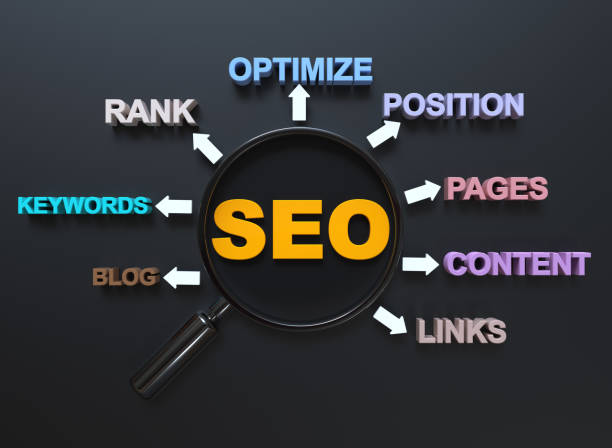
Images and videos can make your content more engaging and interactive.
But for these elements to help your site’s On-Page SEO, you need to optimize them.
Image optimization includes choosing the right file name, using the right alt tag, and compressing images to reduce file size.
To optimize videos, you should also choose appropriate titles, descriptions, and tags for them.
You can also use Video Sitemaps to inform search engines about your videos.
Optimizing images and videos is also included in On-Page SEO.
A proper file name and accurate descriptions can help search engines better understand the content.
Proper URL Structure for SEO

Your website’s URL structure plays an important role in On-Page SEO.
URLs should be short, readable, and relevant to the page content.
Avoid using special characters and long numbers in your URL.
Also, try to include the page’s main keyword in the URL.
Using hierarchical URLs can also help improve your website’s structure and help search engines understand the relationship between different pages on your site.
On-Page SEO depends on the proper URL structure.
Try to keep URLs short and relevant to the page content.
Proper URL structure helps search engines better understand the site’s content.
Internal and External Linking
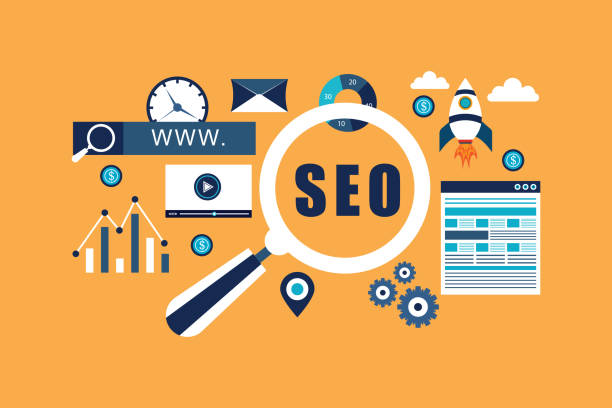
Internal linking refers to the process of linking to other pages of your own website from within the content of the pages.
External linking also refers to the process of linking to other websites from within the content of the pages.
Internal linking helps search engines better understand your website’s structure and determine the value of different pages on your site.
External linking can also help improve your website’s credibility.
On-Page SEO is greatly improved by internal and external linking to related sites.
However, you should be careful not to link to untrustworthy websites.
Internal linking helps improve site structure and user experience.
| Link Type | Description | Advantages |
|---|---|---|
| Internal Linking | Linking to other pages of the site | Improve site structure, increase ranking |
| External Linking | Linking to other sites | Increase site credibility, attract traffic |
Optimizing Site Loading Speed
Site loading speed is one of the most important factors in user experience and On-Page SEO.
Users expect websites to load quickly, and if the site is slow, the likelihood of users leaving the site increases.
Search engines also value site loading speed and rank faster sites higher.
To optimize site loading speed, you can use various tools such as Google PageSpeed Insights and GTmetrix to identify and fix problems related to your site’s speed.
On-Page SEO has a direct relationship with increasing site speed.
A faster loading site provides a better user experience.
Google PageSpeed Insights is a great tool to check site speed.
How much does losing business leads due to an unprofessional site cost you? Solve this problem forever with professional corporate website design by Rasaweb!
✅ Increase the credibility and trust of potential customers
✅ Easier to attract new business leads
⚡ Get a free consultation now!
The Importance of a Responsive Website

With the increasing use of mobile devices, having a responsive website has become a necessity.
A responsive website is a website that automatically adapts to the screen size of different devices (such as mobile, tablet, and desktop).
Search engines also value a responsive website and rank responsive sites higher.
To ensure your website is responsive, you can use Google’s Mobile-Friendly Test tool.
On-Page SEO depends on the responsiveness of the site.
A responsive site provides a better user experience on different devices.
Google’s Mobile-Friendly Test helps you check your site’s responsiveness.
Monitoring and Analyzing On-Page SEO Results

After implementing your On-Page SEO strategy, you should regularly monitor and analyze its results.
Using tools like Google Analytics and Google Search Console, you can check your website’s traffic, keyword rankings, and other important metrics.
By analyzing this data, you can identify the strengths and weaknesses of your On-Page SEO strategy and make the necessary changes.
On-Page SEO requires continuous monitoring and analysis.
Reviewing the results helps you improve your strategy.
On-Page SEO is a dynamic process that requires continuous monitoring.
Frequently Asked Questions
| Question | Answer |
|---|---|
| What is On-page SEO? | On-page SEO refers to the set of actions that are performed within the website and on the content of the pages to achieve a better ranking in the search results. |
| Why is on-page SEO important for a website? | On-page SEO helps search engines better understand the content of your page and assess its importance. It also provides a better user experience for visitors. |
| What are the most important factors of on-page SEO? | The most important factors include keyword optimization, content quality, Title Tag, Meta Description, URL structure, heading tags (H1-H6), internal linking, and image optimization. |
| What role does the Title Tag play in on-page SEO? | The title tag is one of the most important on-page SEO factors that displays the title of your page in the search results and browser tab. It should include the main keyword and be engaging. |
| What is the importance of Meta Description in on-page SEO? | The meta description provides a summary of the page content and although it does not directly affect ranking, it can increase the click-through rate (CTR) by encouraging users to click. |
| How are keywords used in on-page SEO? | Keywords are terms that users use to search for information in search engines. Proper and natural use of them in the content helps the search engine to determine the topic of the page. |
| What is internal linking and what is its benefit in on-page SEO? | Internal linking means creating links between different pages of a website. This helps to distribute the credibility of the pages, helps search engine crawlers and improves the user experience. |
| How does image optimization affect on-page SEO? | Image optimization includes compressing the size, using appropriate Alt tags and naming files properly. This improves the page loading speed and helps search engines understand the content of the image. |
| What does high-quality content mean in on-page SEO? | High-quality content means content that is comprehensive, accurate, unique, up-to-date, and user-friendly and meets the needs of users. |
| What role does the URL structure play in on-page SEO? | Readable, short URLs including the main keyword help search engines and users to have a better understanding of the content of the page and improve the user experience. |
And other services of Rasa Web advertising agency in the field of advertising
Smart UI/UX: Transform sales growth with the help of marketing automation.
Smart Advertising Campaign: A dedicated service for growing campaign management based on marketing automation.
Smart Marketplace: A creative platform to improve website visits with attractive user interface design.
Smart Social Media: A new service to increase sales through dedicated programming.
Smart UI/UX: Transform customer acquisition with the help of customizing the user experience.
And more than hundreds of other services in the field of internet advertising, advertising consulting and organizational solutions
Internet Advertising | Advertising Strategy | Advertorial
Resources
SEO site audit
,Importance of internal links
,Web page optimization
,On-page SEO in search engines
? Transform your business in the digital world with Rasaweb digital marketing agency. We pave the way for your growth and success by providing comprehensive services including SEO, content marketing and multilingual website design. For a free consultation and to learn more about our solutions, contact us today and create a bright future for your business.
📍 Tehran, Mirdamad Street, next to the Central Bank, South Kazeroun Alley, Ramin Alley No. 6