
What is On-Page SEO and Why Does It Matter?
#On-Page SEO, also known as #On_Page_Optimization, is a collection of optimization measures that are performed inside your website to improve your site’s ranking in Google search results and other search engines.
These measures include content optimization, site structure, title tags, meta descriptions, and more.
The importance of on-page SEO is that it helps search engines better understand the content of your website and determine which keywords your website is related to.
SEO is vital because it forms the foundation of your website’s ranking.
Without strong on-page SEO, your off-page SEO efforts (such as link building) will not be as effective.
In other words, on-page SEO is like the foundation of a building; if the foundation is not strong, the building will not be stable.
Read more about on-page SEO.
On-page SEO is an ongoing process and requires constant attention and updates.
By taking these measures, you can optimize your website for search engines and improve its ranking in search results.
On-page SEO makes the user have a better user experience and access your content more easily.
Does your company’s website perform as your brand deserves? In today’s competitive world, your website is your most important online tool. Rasaweb, a specialist in designing professional corporate websites, helps you to:
✅ Gain the credibility and trust of customers
✅ Convert website visitors into customers
⚡ Get free advice!
Keyword Research: The Cornerstone of On-Page SEO

Keyword research is one of the most important steps in on-page SEO.
By conducting keyword research, you can find the words that users use to search for information related to your business.
These keywords should be used in your website content so that search engines can show your website to relevant users.
To start keyword research, you can use various tools such as Google Keyword Planner, Ahrefs, SEMrush, and Moz Keyword Explorer.
These tools help you find keywords related to your business, check their search volume, and evaluate the competition for each keyword.
When choosing keywords, pay attention to two important points.
First, the keywords should be relevant to your website content.
Second, the keywords should be searched by users.
Using irrelevant keywords or words that are not searched by users will not have a positive effect on your website’s ranking.
On-page SEO will be successful when keywords are used in page titles, meta descriptions, headings, main text, and image alt tags.
Remember that excessive use of keywords (Keyword Stuffing) can negatively affect your website’s ranking.
Try to use keywords naturally and in the content of the text.

Click here to preview your posts with PRO themes ››
Optimizing Content for Search Engines and Users
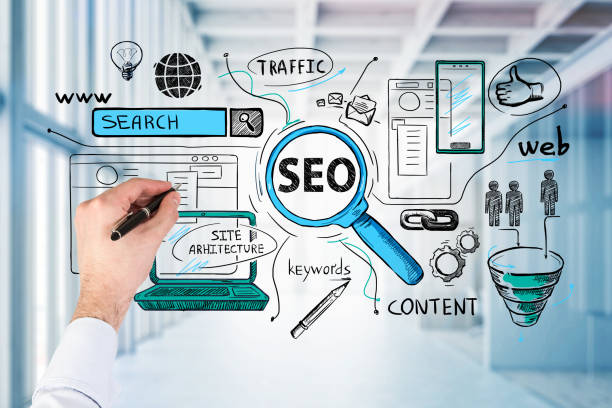
Optimizing content for search engines and users means creating content that is both understandable for search engines and attractive and useful for users.
To optimize content, you need to pay attention to a few important points.
First, your content must be unique and original.
Avoid copying content from other websites, as this can negatively affect your website’s ranking.
Second, your content should be related to the keywords you selected during the keyword research phase.
Use keywords naturally and in the content of the text.
Third, your content should be readable and understandable.
Use short and simple sentences and avoid long paragraphs.
Fourth, your content should be attractive and useful.
Use images, videos, and other multimedia elements to make the content more attractive.
Organize your content so that users can easily find the information they are looking for.
Using headings, subheadings, and lists can help organize content.
On-page SEO with optimized content can bring a website to the top ranks.
| Factor | Description |
|---|---|
| Page Title | Use the main keyword, appropriate length |
| Meta Description | Attract users to click, summarize page content |
| Headings | Use H1, H2, H3 to organize content |
| Main Text | Natural use of keywords, high readability |
| Images | Appropriate alt tag, small size |
Optimizing Title Tags and Meta Descriptions

Title Tags and Meta Descriptions are two important elements in on-page SEO that are displayed in search results.
The title tag shows the title of your page in search results, and the meta description provides a summary of your page’s content.
Title tags should be short, attractive, and relevant to the page’s content.
The length of the title tag should be less than 60 characters to be fully displayed in search results.
Use the main keyword in the title tag.
Meta descriptions should be attractive and persuasive and encourage users to click on your link.
The length of the meta description should be less than 160 characters.
Use relevant keywords in the meta description.
Optimizing title tags and meta descriptions can have a significant impact on your website’s click-through rate (CTR).
A higher CTR means more traffic and a better ranking in search results.
Optimizing the title tag and meta description is one of the most important steps in on-page SEO that should not be overlooked.
Isn’t your online sales as expected? With Rasaweb, solve the problem of low sales and poor user experience forever!
✅ Increase the conversion rate of visitors to customers
✅ Create a pleasant user experience and increase customer trust
⚡ Act now to receive free consultation!
Optimizing URLs for SEO

URLs (Uniform Resource Locators) are the internet addresses of your website’s pages.
Optimizing URLs for on-page SEO means creating URLs that are both understandable to search engines and attractive and understandable to users.
URLs should be short, descriptive, and relevant to the page’s content.
Use the main keywords in the URLs.
Avoid unnecessary and complex characters in the URLs.
Use a hyphen (-) to separate words in the URLs.
For example, instead of using the following URL:
www.example.com/page?id=123
Use the following URL:
www.example.com/seo-internal-optimization
Optimized URLs help search engines better understand the content of your page and help users understand what your page is about.
Optimizing URLs is an important aspect of on-page SEO that can positively affect your website’s ranking.
Optimizing Images and Videos

Images and videos can help make your website content more attractive and improve the user experience.
However, unoptimized images and videos can slow down your website’s loading speed and negatively affect your website’s ranking.
To optimize images, reduce the size of the images.
Use appropriate image formats such as JPEG and PNG.
Use the alt tag to describe images.
The alt tag helps search engines understand the content of the images.
To optimize videos, upload videos to video hosting platforms such as YouTube and Vimeo.
Use an attractive title and description for the videos.
Use appropriate tags for the videos.
Optimizing images and videos helps improve the performance of on-page SEO.
On-page SEO requires attention to all details.
Optimizing the Internal Structure of the Website
The internal structure of your website is how your website’s pages are organized and how they are related to each other.
An optimized internal structure helps search engines better understand your website and helps users easily navigate your website.
To optimize the internal structure of your website, use a hierarchical structure.
Divide your website’s pages into different categories and link from the main pages to the subpages.
Use internal links to link to related pages on your website.
Internal links help search engines understand the relationship between your website’s pages.
Creating a Sitemap helps search engines find all the pages on your website.
An optimized internal structure not only helps improve on-page SEO but also improves the user experience.
On-page SEO reaches better ranks with a suitable structure.
| Structural Element | Description | Importance for SEO |
|---|---|---|
| Navigation Menus | User-friendly menus for easy access to pages | High |
| Internal Links | Linking related pages to each other | High |
| XML Sitemap | XML file to introduce pages to search engines | High |
| URL addresses | Short and content-related addresses | Medium |
| Content Category | Organizing content into logical categories | Medium |
Optimizing Website Loading Speed
Website loading speed is one of the important ranking factors in Google.
Users who have to wait for a website to load for a long time are more likely to leave the website and look for an alternative.
To optimize website loading speed, optimize images.
Use a Content Delivery Network (CDN).
Compress your HTML, CSS, and JavaScript code.
Use Browser Caching.
You can use tools such as Google PageSpeed Insights and GTmetrix to analyze your website’s loading speed and identify problems.
Improving website loading speed has a direct impact on on-page SEO and improves the user experience.
On-page SEO allows us to have a better rank in Google.
Are you tired of your online store website not being able to generate as much revenue as it should? Rasaweb, a specialist in designing professional online store websites, solves this problem forever!
✅ Increase sales and revenue
✅ High loading speed and unique user experience
⚡ Get a free online store website design consultation
Optimizing for Mobile
Today, more than half of internet traffic comes from mobile devices.
For this reason, optimizing your website for mobile is very important.
A mobile-optimized website should be Responsive, meaning it should automatically adjust to the screen size of the mobile device.
The website should have readable fonts and large buttons so that users can easily interact with it.
The loading speed of the website on mobile devices should be high.
Google uses Mobile-First Indexing, meaning it considers the mobile version of your website as the primary version for ranking.
Optimizing for mobile is an integral part of on-page SEO.
On-page SEO focusing on mobile makes more users attracted.
Measuring and Analyzing On-Page SEO Results
Measuring and analyzing on-page SEO results is very important to understand the effectiveness of your efforts and identify opportunities for improvement.
You can use various tools such as Google Analytics and Google Search Console to measure and analyze SEO results.
Using Google Analytics, you can track your website traffic, user behavior, and conversion rate.
Using Google Search Console, you can track your website’s performance in Google search results, identify the keywords that users use to find your website, and find technical problems with your website.
Constantly reviewing this data helps you improve your on-page SEO strategy and get better results.
On-page SEO is a dynamic process and requires continuous review and updating.
SEO reporting helps you to be aware of your on-page SEO status.
Frequently Asked Questions
| Row | Question | Answer |
|---|---|---|
| 1 | What is On-Page SEO? | On-page SEO refers to a set of measures taken within the website (on its pages) to improve the site’s ranking in search engine results. This includes content optimization, site structure, and HTML codes. |
| 2 | Why is On-Page SEO Important? | On-page SEO helps search engines better understand page content and determine whether that page is relevant and valuable for user searches. This better understanding leads to higher rankings. |
| 3 | What is the first and most important step in On-Page SEO? | Keyword Research is the most important initial step. By finding the right keywords, you can produce targeted content that is relevant to users’ needs. |
| 4 | What is the role of the Title Tag in On-Page SEO? | The title tag is one of the most important ranking factors and should include the main keyword. This tag is displayed in search results as the page title and affects the click-through rate (CTR). |
| 5 | What is the Importance of Meta Description? | The meta description does not directly affect the ranking, but by providing an attractive summary of the page content in search results, it can encourage users to click and thus increase the click-through rate (CTR). |
| 6 | Why is it Important to use Headings (H1, H2, etc.) in Content? | Headings help to structure the content and improve readability for users and search engine crawlers. Using keywords in headings also helps the search engine to better understand the topic. |
| 7 | What are the components of Image Optimization in On-Page SEO? | Includes compressing images to reduce size, using descriptive and relevant file names, and filling in the Alt tag (alternate text) with relevant keywords to help search engines understand the image content. |
| 8 | What is meant by Internal Linking in On-Page SEO? | Internal linking refers to creating links between different pages of a website. This helps to distribute page equity (Link Equity), improve user experience, and help search engine crawlers discover new pages. |
| 9 | Why is Page Speed important for On-Page SEO? | Page loading speed is a direct ranking factor and greatly affects user experience. Slow pages can increase bounce rate and decrease user engagement. |
| 10 | What Role Does Quality Content Play in On-Page SEO? | Quality, comprehensive, unique, and valuable content for the user is the core of on-page SEO. This content not only attracts and retains users, but also sends positive signals to search engines and helps with better ranking. |
And other services of Rasa Web Advertising Agency in the field of advertising
Intelligent Conversion Rate Optimization: A new service to improve SEO ranking through marketing automation.
Intelligent Marketplace: An effective tool for user interaction with the help of attractive user interface design.
Intelligent Direct Marketing: Revolutionize click-through rates with the help of attractive user interface design.
Intelligent Conversion Rate Optimization: Designed for businesses looking to attract customers by customizing the user experience.
Intelligent Social Media: An exclusive service for growing sales based on precise audience targeting.
And more than hundreds of other services in the field of internet advertising, advertising consulting, and organizational solutions
Internet Advertising | Advertising Strategy | Reportage Advertisement
Sources
On-Page SEO Optimization: A Complete and Step-by-Step Guide
,What is On-Page SEO? (+Practical On-Page SEO Techniques)
,What is On-Page SEO? Comprehensive Training + Tips and Techniques
,What is On-Page SEO? Comprehensive Training on Internal Site Optimization Techniques
Are you ready to transform your business in the digital world? Rasa Web Digital Marketing Agency, by providing comprehensive services including corporate website design and SEO, offers innovative solutions for your growth and success. Contact us for more information and a free consultation.
📍 Tehran, Mirdamad Street, Next to Central Bank, South Kazerun Alley, Ramin Alley No. 6