What is an AI Robot and How Does it Work?
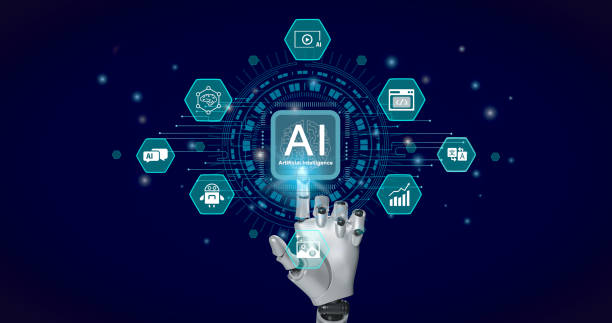
#AIRobot is a combination of two separate fields of technology: #ArtificialIntelligence and #Robotics.
In short, an AI robot is a physical machine that, using artificial intelligence algorithms, is capable of performing tasks that usually require human intelligence.
These tasks can include learning, reasoning, problem-solving, perception, and interaction with the environment.
Artificial intelligence allows the robot to analyze data, identify patterns, and make informed decisions.
Robotics provides the physical body and mechanical components that enable the robot to move and interact with the physical world.
An AI robot uses sensors to collect data from the environment.
This data can include images, sounds, temperature, pressure, and other information.
Then, artificial intelligence algorithms process this data so that the robot can understand its environment and make appropriate decisions.
For example, an AI robot designed to work in a warehouse can use cameras to identify objects, proximity sensors to avoid collisions with obstacles, and machine learning algorithms to optimize its path.
This robot can independently move around the warehouse, pick up objects, and move them to the appropriate location.
As a result, AI robots can be used in a wide range of applications, from manufacturing and logistics to healthcare and customer service.
Doesn’t your current company website reflect your brand’s credibility and power as it should? Rasaweb solves this challenge for you with professional corporate website design.
✅ Increase the credibility and trust of visitors
✅ Attract more targeted customers
⚡ Click to get free consultation!
Types of AI Robots and Their Applications
AI robots come in various types, each designed for specific applications.
Some of the most common types of AI robots are #IndustrialRobots, #ServiceRobots, #MedicalRobots, and #MilitaryRobots.
Industrial robots are commonly used in factories and other manufacturing environments to perform tasks such as assembly, packaging, and quality inspection.
These robots are often very precise and fast and can work continuously without fatigue.
Service robots are designed to provide services to humans.
These robots can be used in a wide range of environments, including hospitals, hotels, and homes.
Medical robots are used in hospitals and other healthcare facilities to assist surgeons, nurses, and other healthcare professionals.
These robots can perform tasks such as minimally invasive surgery, rehabilitation, and medication dispensing.
Military robots are used on the battlefield and other dangerous environments to perform tasks such as reconnaissance, mine clearance, and equipment transportation.
These robots are often very durable and resilient and can survive in harsh conditions.
AI robots are rapidly developing, and new applications for them are constantly emerging.
As technology advances, AI robots are expected to play a more important role in our lives.
Some common applications include:
- Manufacturing: Automating manufacturing processes, increasing productivity, and reducing costs.
- Logistics: Optimizing the supply chain, warehousing, and delivery of goods.
- Healthcare: Assisting with surgery, rehabilitation, and patient care.
- Customer Service: Providing 24/7 support, answering questions, and solving problems.
- Military: Reconnaissance, mine clearance, equipment transportation, and force protection.

Click here to preview your posts with PRO themes ››
Advantages and Disadvantages of Using AI Robots
The use of AI robots has several advantages and disadvantages.
Advantages:
- Increased productivity and reduced costs
- Improved quality and accuracy
- Reduced risks for humans
- Performing repetitive and tedious tasks
- Providing 24-hour service
Disadvantages:
- High cost of development and deployment
- Need for expertise for maintenance and repair
- Loss of human jobs
- Ethical concerns about the autonomy and control of robots
AI robots have great potential to improve our lives, but it is important to consider the risks and challenges associated with them as well.
AI robots should be developed and deployed responsibly, taking into account their social and ethical implications.
One of the most important issues is cybersecurity.
Robots that are connected to the Internet can be vulnerable to cyberattacks and be hacked.
This can lead to data theft, damage to equipment, and even harm to people.
Therefore, it is very important that AI robots are protected using strong security protocols.
Another important issue is privacy.
Robots that operate in public spaces can collect a lot of data about people.
This data can include images, sounds, and location information.
It is important to ensure that this data is collected and used responsibly and that individuals’ privacy rights are respected.
| Advantages | Disadvantages |
|---|---|
| Increased productivity | High cost |
| Improved quality | Need for expertise |
| Reduced risks | Job losses |
| 24-hour service | Ethical concerns |
The Future of AI Robots

The future of AI robots is very bright.
As technology advances, AI robots will be able to perform more complex tasks and play a more important role in our lives.
AI robots are expected to be used in a wide range of industries, including manufacturing, logistics, healthcare, customer service, and education.
AI robots are also expected to have a greater presence in our homes, helping us with tasks such as cleaning, cooking, and caring for the elderly.
AI robots will be able to interact with us and respond to our needs.
This can lead to improved quality of life, reduced stress, and increased productivity.
However, it is important to also pay attention to the ethical and social challenges associated with the development of AI robots.
We must ensure that AI robots are developed and deployed responsibly, taking into account human rights and values.
AI robots should be designed to be beneficial to humans and to help improve society.
It is predicted that by 2030, the global AI robot market will reach over $200 billion.
Still don’t have a company website and are missing out on online opportunities? With professional corporate website design by Rasaweb,
✅ Double the credibility of your business
✅ Attract new customers
⚡ Free consultation for your company website!
Ethical Challenges of AI Robots

The development and use of AI robots raise several ethical challenges.
One of the most important of these challenges is accountability.
If an AI robot makes a mistake and harms someone, who will be responsible? Will the robot’s manufacturer, programmer, or user be responsible? These questions still do not have definitive answers and require further discussion and investigation.
Another challenge is bias.
AI algorithms are built on training data, and if this data is biased, the robot will also be biased.
This can lead to discrimination in the robot’s decisions.
Therefore, it is very important to use diverse and unbiased training data and to regularly test algorithms to identify and correct bias.
The third challenge is privacy.
AI robots can collect a lot of data about people, and this data can be misused.
Therefore, it is very important to ensure that AI robots are designed and used in compliance with privacy laws and that individuals have full control over their data.
AI robots should be designed to be beneficial to humans and to help improve society.
Skills Needed to Work with AI Robots
Working with AI robots requires a combination of technical and non-technical skills.
Technical skills include:
- Programming: Familiarity with programming languages such as Python, C++, and Java
- Mathematics and Statistics: Understanding basic concepts of mathematics and statistics for developing and training AI algorithms
- Robotics: Familiarity with the principles of robotics, mechanics, electronics, and control
- Machine Learning: Understanding machine learning algorithms and how to use them to solve problems
- Natural Language Processing: Familiarity with natural language processing techniques for interacting with robots
Non-technical skills include:
- Problem Solving: Ability to identify and solve complex problems
- Critical Thinking: Ability to evaluate information and make informed decisions
- Creativity: Ability to create new and innovative solutions
- Communication: Ability to communicate effectively with others
- Teamwork: Ability to work as part of a team
To enter this field, you can participate in various training courses, read relevant books and articles, and do practical projects.
You can also use online resources such as Coursera, Udacity, and edX.
AI robots are rapidly developing, and there are many job opportunities in this field.
By acquiring the necessary skills, you can become an AI robot specialist and work in this booming industry.
The Impact of AI Robots on the Job Market
AI robots have the potential to dramatically change the job market.
Some jobs that involve performing repetitive and routine tasks are at risk of automation.
This includes jobs in manufacturing, logistics, customer service, and even some administrative jobs.
On the other hand, AI robots can also create new jobs.
This includes jobs in the development, maintenance, and repair of robots, the development of AI algorithms, and consulting in the field of automation.
In order to benefit from the advantages of AI robots and avoid their risks, we must acquire the necessary training and skills to work in the new world.
This includes training in technical skills such as programming and machine learning, as well as non-technical skills such as problem-solving, critical thinking, and creativity.
AI robots can lead to increased productivity, reduced costs, and improved quality of life, but they must be developed and deployed responsibly, taking into account their social and economic implications.
Some experts believe that automation can lead to increased income inequality, as low-skill jobs are at greater risk.
| Positive Impacts | Negative Impacts |
|---|---|
| Increased productivity | Job losses |
| Reduced costs | Increased inequality |
| Creating new jobs | Need for training |
How to Get Started with AI Robots
If you are interested in getting started with AI robots, you can start by following these steps:
- Learn the Basic Concepts: First, you need to learn the basic concepts of artificial intelligence and robotics.
You can use online resources, books, and training courses for this purpose. - Choose a Platform: There are different platforms for developing AI robots.
Some popular platforms include ROS, TensorFlow, and PyTorch. - Start a Project: The best way to learn is to do practical projects.
You can start with a simple project and gradually do more complex projects. - Join Online Communities: There are many online communities for AI robot developers.
By participating in these communities, you can use the experiences of others and ask your questions. - Update Your Knowledge: Artificial intelligence technology is rapidly developing.
You should constantly keep your knowledge up to date and be aware of the latest developments.
AI robots have great potential to improve our lives, but it is important to consider the risks and challenges associated with them as well.
AI robots should be developed and deployed responsibly, taking into account their social and ethical implications.
To get started, you can get a small robot such as Arduino or Raspberry Pi and build a simple robot using AI libraries.
Are you annoyed by losing customers due to the old appearance or slow speed of your online store? The Rasaweb expert team solves these problems with professional online store website design!
✅ Increase customer trust and your brand’s credibility
✅ Amazing speed and excellent user experience
Get a free consultation with Rasaweb now ⚡
Security in AI Robots

Security in AI robots is a very important issue that should be given special attention.
AI robots can be vulnerable to cyberattacks and be hacked.
This can lead to data theft, damage to equipment, and even harm to people.
Therefore, it is very important that AI robots are protected using strong security protocols.
Some of the security measures that can be taken to protect AI robots include:
- Using strong encryption to protect data
- Using multi-factor authentication to prevent unauthorized access
- Regularly updating software and operating systems
- Monitoring robot activity to identify suspicious activity
- Training users about security risks
AI robots should be designed to be resistant to cyberattacks and protect their data.
Also, it should be ensured that robots cannot be used for malicious purposes.
One of the important issues is adversarial attacks.
In this type of attack, the attacker tries to deceive the robot by making slight changes to the input data and causing it to make wrong decisions.
Therefore, it is very important that AI robots are resistant to this type of attack.
Will AI Robots Replace Humans?
This is a question that many people ask.
It is difficult to give a definitive answer to this question, but it can be said that AI robots will likely replace some human jobs, but not all of them.
Jobs that involve performing repetitive and routine tasks are at risk of automation.
This includes jobs in manufacturing, logistics, customer service, and even some administrative jobs.
On the other hand, jobs that require creativity, critical thinking, and human interaction are less at risk of automation.
This includes jobs in education, healthcare, art, and science.
AI robots can help us perform tasks and make our lives easier, but they cannot replace all aspects of humanity.
As technology advances, it is important that we learn new skills and prepare ourselves to work in the new world.
This includes training in technical skills such as programming and machine learning, as well as non-technical skills such as problem-solving, critical thinking, and creativity.
Some experts believe that AI robots can complement humans and that by working together, they can do more.
Frequently Asked Questions
| Question | Answer |
|---|---|
| What is an AI Robot? | It is a robot that uses the capabilities of artificial intelligence to understand the environment, reason, learn and make decisions to perform complex tasks independently. |
| What is the main difference between a regular robot and an AI robot? | AI robots can learn and adapt to their environment, while regular robots usually operate based on fixed and predetermined programming. |
| In what areas are AI robots used? | In areas such as industry (production lines), medicine (robotic surgery), services (customer support, smart vacuum cleaners), exploration (space and underwater) and entertainment. |
| How do AI robots learn? | They acquire new skills through machine learning (Machine Learning) and deep learning (Deep Learning) algorithms, by analyzing large data and identifying patterns. |
| Can AI robots have emotions? | Currently, no. They can identify or simulate emotions, but they do not have the real experience of emotions like humans. |
| What are the most important advantages of using AI robots? | Increased productivity, reduced human error, performing dangerous or repetitive tasks, and providing innovative and efficient services. |
| What are the challenges in developing AI robots? | The need for large and high-quality data, the complexity of algorithms, ethical issues, cybersecurity, and high research and development costs. |
| Are AI robots dangerous to humans? | No, with the observance of safe design principles and ethical regulations. Concerns are more related to social and economic impacts such as changes in the labor market. |
| What is an example of an AI robot in everyday life? | Smart vacuum cleaner robots (like Roomba) that automatically map and clean the house, or smart voice assistants (like Siri and Alexa). |
| How is the future of AI robots predicted? | They are expected to become smarter, more autonomous and capable of more complex interaction with humans and play a more prominent role in industry, medicine, transportation and everyday life. |
And other services of Rasa Web Advertising Agency in the field of advertising
Smart Advertising Campaign: Professional optimization for user interaction using precise audience targeting.
Smart Brand Identity: Designed for businesses looking to grow online by using real data.
Smart Content Strategy: A creative platform to improve digital branding using real data.
Smart Linking: An effective tool to manage campaigns with a SEO-driven content strategy.
Smart Custom Software: A novel service to increase SEO ranking improvement through a SEO-driven content strategy.
And more than hundreds of other services in the field of internet advertising, advertising consulting and organizational solutions
Internet Advertising | Advertising Strategy | Advertorials
Resources
AI Robots: Examining Applications and Benefits
,Where Will the Use of AI Robots in Everyday Life Reach?
,The Story of AI in the Development of Social Space Was Reviewed
,Applications of AI in Everyday Life
? Are you ready to take your business to the peak in the digital world? Rasaweb Digital Marketing Agency, with its expert and creative team, is always by your side to pave the way for your success with innovative strategies and comprehensive services. From SEO and optimization to professional online store website design, we are here to turn your digital dreams into reality.
📍 Tehran, Mirdamad Street, next to the Central Bank, South Kazerun Alley, Ramin Alley No. 6
“`