What is an Artificial Intelligence Robot? Definition and Basic Concepts

What is an Artificial Intelligence Robot? Definition and Basic Concepts
In today’s world, the term Artificial Intelligence (AI) is increasingly heard.
But when it comes to an Artificial Intelligence Robot, what exactly is meant? Simply put, an Artificial Intelligence Robot refers to a physical or virtual robot that, using artificial intelligence algorithms, is capable of performing tasks that typically require human intelligence.
These tasks can include learning, problem-solving, decision-making, pattern recognition, and natural language understanding.
#Artificial_Intelligence in robots allows them to interact with their environment, learn from their experiences, and improve their performance.
Therefore, an Artificial Intelligence Robot is not just a programmed machine, but an intelligent system that can operate independently.
To better understand this concept, we can look at the main components of an Artificial Intelligence Robot: sensors, processors, and actuators.
Sensors collect information from the environment, processors analyze this information using artificial intelligence algorithms, and actuators act based on these analyses.
For example, an Artificial Intelligence Robot working in a factory might use sensors to detect defective parts, processors to decide how to fix these parts, and actuators to perform these repairs.
The main difference between a regular robot and an Artificial Intelligence Robot is the ability to learn and adapt.
A regular robot can only perform tasks for which it has been programmed, while an Artificial Intelligence Robot can learn from its experiences and improve its performance when faced with new situations.
This capability makes Artificial Intelligence Robots useful in a wide range of applications, including industry, medicine, education, and services.
Did you know that 94% of first impressions of a company relate to its website design?
Rasaweb helps you create the best first impression by providing professional corporate website design services.
✅ Create a professional and reliable image of your brand
✅ Attract potential customers more easily and improve online presence
⚡ Get a free corporate website design consultation
Applications of Artificial Intelligence Robots in Various Industries

Applications of Artificial Intelligence Robots in Various Industries
Artificial Intelligence Robots, due to their unique capabilities, have quickly found their place in various industries.
In the manufacturing industry, they are used for automating production lines, quality inspection, and performing hazardous tasks.
This leads to increased productivity, reduced costs, and improved safety.
In the medical sector, Artificial Intelligence Robots play an important role in precise surgeries, disease diagnosis, and patient care.
They can perform surgery with greater precision, detect hidden patterns in medical images, and assist nurses in caring for patients.
In the transportation industry, Artificial Intelligence Robots are used in the development of self-driving cars and traffic management systems.
Self-driving cars can increase road safety, reduce traffic, and help the elderly and disabled to move around more easily.
Traffic management systems can also reduce travel time and air pollution by using traffic data.
In addition, Artificial Intelligence Robots have extensive applications in the service sector.
They are used in chatbots for providing customer service, in domestic robots for performing daily tasks, and in security robots for protecting premises.

Click here to preview your posts with PRO themes ››
In short, Artificial Intelligence Robots are transforming various industries and have high potential to improve our lives.
With the advancement of artificial intelligence technology, it is expected that the applications of these robots will become more extensive and diverse in the future.
Advantages and Disadvantages of Using Artificial Intelligence Robots

Advantages and Disadvantages of Using Artificial Intelligence Robots
Using Artificial Intelligence Robots has many advantages, including increased productivity, reduced costs, improved quality, increased safety, and better service delivery.
However, there are also disadvantages to using these robots that should be considered.
One of the most important disadvantages is job loss by humans.
With the automation of tasks by Artificial Intelligence Robots, many human jobs may be eliminated.
This can lead to increased unemployment and social inequality.
Another concern is the ethical issues related to the use of Artificial Intelligence Robots.
For example, who is responsible for the mistakes of a self-driving robot? How can the misuse of Artificial Intelligence Robots in war and crime be prevented?
In addition, Artificial Intelligence Robots may have algorithmic biases.
If the algorithms used in these robots are trained on incomplete or discriminatory data, the robots may also make discriminatory decisions.
Another issue is over-reliance on Artificial Intelligence Robots.
If we become too dependent on these robots, we may become vulnerable in the event of a technical failure or cyberattack.
Therefore, while the use of Artificial Intelligence Robots has many advantages, we must also pay attention to its disadvantages and take the necessary measures to mitigate these disadvantages.
.styled-table thead tr {
background-color: #009879;
color: #ffffff;
text-align: left;
}
.styled-table th,
.styled-table td {
padding: 12px 15px;
}
.styled-table tbody tr {
border-bottom: 1px solid #dddddd;
}
.styled-table tbody tr:nth-of-type(even) {
background-color: #f3f3f3;
}
.styled-table tbody tr:last-of-type {
border-bottom: 2px solid #009879;
}
.styled-table tbody tr.active-row {
font-weight: bold;
color: #009879;
}
| Advantages | Descriptions |
|---|---|
| Increased Productivity | Robots can work tirelessly and at high speed. |
| Reduced Costs | Automation can reduce labor costs. |
| Improved Quality | Robots can perform tasks with greater accuracy and consistency. |
| Increased Safety | Robots can perform dangerous tasks instead of humans. |
The Future of Artificial Intelligence Robots: Trends and Predictions

The Future of Artificial Intelligence Robots: Trends and Predictions
The future of Artificial Intelligence Robots is very bright and full of potential.
With the advancement of artificial intelligence and robotics technology, it is expected that these robots will play a more important role in our lives in the future.
One of the most important trends is the increasing learning and adaptation capabilities of Artificial Intelligence Robots.
These robots will be able to learn from their experiences and improve their performance when faced with new situations.
This will make them useful in a wider range of applications, including complex and unpredictable jobs.
Another trend is the increasing interaction between humans and Artificial Intelligence Robots.
In the future, these robots are expected to work increasingly in human environments and collaborate with humans.
This requires the development of robots that can communicate with humans naturally and effectively.

Click here to preview your posts with PRO themes ››
In addition, Artificial Intelligence Robots are expected to become cheaper and more accessible in the future.
This will make them usable in a wider range of applications, including homes, schools, and small businesses.
Finally, Artificial Intelligence Robots are expected to become smarter, more autonomous, and more reliable in the future.
This requires investment in research and development of artificial intelligence and robotics.
However, ethical and social issues related to the use of these robots should also be considered, and necessary measures should be taken to ensure that they are used for the benefit of society.
Does your current company website provide a worthy image of your brand and attract new customers?
If not, turn this challenge into an opportunity with Rasaweb’s professional corporate website design services.
✅ Dramatically improves your brand’s credibility and image.
✅ Smooths the path for attracting leads and new customers.
⚡ Contact Rasaweb now for free and expert advice!
Challenges in Developing and Implementing Artificial Intelligence Robots
Challenges in Developing and Implementing Artificial Intelligence Robots
The development and implementation of Artificial Intelligence Robots face numerous challenges.
One of the most important challenges is collecting sufficient and high-quality data to train these robots.
Artificial Intelligence Robots need a lot of data to learn and improve their performance.
If the data used is incomplete, incorrect, or discriminatory, the robots may also make incorrect or discriminatory decisions.
Another challenge is developing artificial intelligence algorithms that can perform complex and unpredictable tasks.
Current artificial intelligence algorithms are still limited in many areas and cannot fully replace human intelligence.
In addition, implementing Artificial Intelligence Robots requires a lot of investment in infrastructure and equipment.
These robots need advanced sensors, powerful processors, and complex software.
Also, implementing Artificial Intelligence Robots requires training skilled manpower.
For the design, development, maintenance, and operation of these robots, specialists with specific knowledge and skills are needed.
Finally, the ethical and social issues related to the use of Artificial Intelligence Robots are also an important challenge.
It must be ensured that these robots are used for the benefit of society and do not violate the rights and privacy of individuals.
Click here to preview your posts with PRO themes ››
Types of Artificial Intelligence Robots Based on Application
Types of Artificial Intelligence Robots Based on Application
Artificial Intelligence Robots are divided into different types based on their application.
Industrial robots are used to automate production lines, quality inspection, and perform hazardous tasks in factories.
These robots usually have robotic arms that can perform various tasks accurately and quickly.
Medical robots play an important role in precise surgeries, disease diagnosis, and patient care.
These robots can perform surgery with greater precision, detect hidden patterns in medical images, and assist nurses in caring for patients.
Domestic robots are used to perform daily tasks such as cleaning, cooking, and caring for the elderly and children.
These robots usually have smart sensors and software that allow them to interact with their environment and perform various tasks independently.
Security robots are used to protect premises and assets.
These robots usually have cameras, sensors, and communication systems that allow them to monitor their surroundings and automatically react in case of danger.
In addition, educational robots are used to teach various concepts to students.
These robots can be used as an interactive tool for learning and practicing various skills.
Key Technologies in Building Artificial Intelligence Robots
Key Technologies in Building Artificial Intelligence Robots
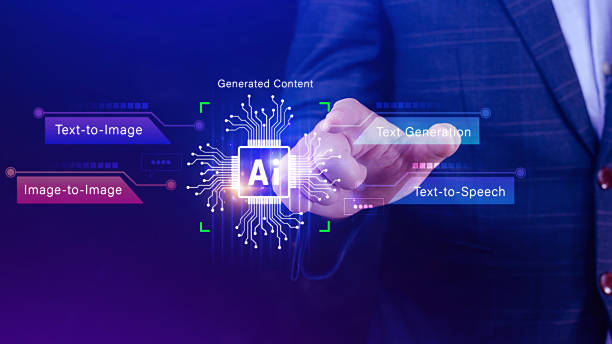
Building Artificial Intelligence Robots requires the use of various technologies.
One of the most important technologies is machine learning.
Machine learning allows Artificial Intelligence Robots to learn from data and improve their performance without explicit programming.
Another technology is natural language processing.
Natural language processing allows Artificial Intelligence Robots to understand human language and communicate with humans naturally.
Computer vision is also a key technology.
Computer vision allows Artificial Intelligence Robots to understand images and videos and use visual information to perform various tasks.
In addition, robotics is also an important technology.
Robotics allows Artificial Intelligence Robots to move in the physical world and interact with their environment.
Sensors also play an important role in building Artificial Intelligence Robots.
Sensors collect information from the environment and allow Artificial Intelligence Robots to be aware of their surroundings.
Finally, artificial intelligence software is also essential for controlling and managing Artificial Intelligence Robots.
This software implements artificial intelligence algorithms and allows Artificial Intelligence Robots to perform various tasks.
| Technology | Description |
|---|---|
| Machine Learning | Allows robots to learn from data. |
| Natural Language Processing | Allows robots to understand human language. |
| Computer Vision | Allows robots to understand images. |
| Robotics | Allows robots to move in the physical world. |
Ethical Considerations in the Design and Use of Artificial Intelligence Robots
Ethical Considerations in the Design and Use of Artificial Intelligence Robots
The design and use of Artificial Intelligence Robots requires attention to numerous ethical considerations.
One of the most important considerations is accountability.
Who is responsible for the mistakes of a self-driving robot? How can it be ensured that Artificial Intelligence Robots act safely and responsibly? Another consideration is privacy.
Artificial Intelligence Robots can collect and analyze large amounts of information.
How can the misuse of this information be prevented? How can the privacy of individuals be protected?
In addition, algorithmic biases are also an important consideration.
If the algorithms used in Artificial Intelligence Robots are trained on incomplete or discriminatory data, the robots may also make discriminatory decisions.
Transparency is also an important consideration.
How can the performance of Artificial Intelligence Robots be made understandable and explainable? How can individuals be given the opportunity to object to the decisions of Artificial Intelligence Robots? Finally, attention should also be paid to issues related to job loss by humans.
With the automation of tasks by Artificial Intelligence Robots, many human jobs may be eliminated.
How can these effects be reduced? How can individuals be helped to prepare for new jobs?
Are you unhappy with the low sales of your online store?
Rasaweb is your solution for having a professional and high-selling online store.
✅ Significantly increase sales and revenue
✅ Easy and enjoyable shopping experience for customers
⚡ Get free advice from Rasaweb right now!
How to Build an Artificial Intelligence Robot? Step by Step
How to Build an Artificial Intelligence Robot? Step by Step
Building an Artificial Intelligence Robot is a complex project that requires various knowledge and skills.
However, by following a step-by-step approach, you can successfully complete this project.
The first step is defining the goal.
Before you start building an Artificial Intelligence Robot, you need to define your goal.
What task do you want your robot to perform? What features should it have? The second step is collecting data.
Your Artificial Intelligence Robot needs data to learn.
You need to collect sufficient and high-quality data so that your robot can improve its performance.
The third step is choosing artificial intelligence algorithms.
There are different algorithms for machine learning, natural language processing, and computer vision.
You need to choose algorithms that are suitable for your goal.
The fourth step is software development.
You need to develop software that implements artificial intelligence algorithms and allows your Artificial Intelligence Robot to perform its tasks.
The fifth step is hardware construction.
You need to choose hardware that is suitable for your robot.
This hardware can include sensors, processors, actuators, and batteries.
The sixth step is integrating software and hardware.
You need to integrate your software and hardware so that your Artificial Intelligence Robot can function fully.
The seventh step is testing and evaluating.
You need to test your Artificial Intelligence Robot and evaluate its performance.
If there is a problem, you need to fix it.
The eighth step is improvement and optimization.
You need to continuously improve your Artificial Intelligence Robot and optimize its performance.
Learning Resources for those interested in Artificial Intelligence Robots

Learning Resources for those interested in Artificial Intelligence Robots
If you are interested in Artificial Intelligence Robots, many learning resources are available to you.
You can use books, articles, online courses, and various websites to learn about this topic.
Many universities and educational institutions offer online and in-person courses in the field of artificial intelligence and robotics.
These courses can help you gain the knowledge and skills necessary to build and use Artificial Intelligence Robots.
Also, many websites and blogs publish free articles and tutorials in the field of artificial intelligence and robotics.
These resources can help you become familiar with basic concepts and advanced techniques in artificial intelligence and robotics.
In addition, you can use books and scientific journals to learn about Artificial Intelligence Robots.
These resources usually provide accurate and comprehensive information on various topics in artificial intelligence and robotics.
Also, you can participate in conferences and seminars related to artificial intelligence and robotics.
These events provide a good opportunity to learn about the latest developments in these fields and connect with experts and other enthusiasts.
By using these learning resources, you can gain the knowledge and skills necessary to enter the exciting world of Artificial Intelligence Robots.
Frequently Asked Questions
| Row | Question | Answer |
|---|---|---|
| 1 | What is an artificial intelligence robot? | An artificial intelligence robot is a machine that can understand, reason, learn, and solve problems and can perform complex tasks with relative autonomy. |
| 2 | What are the most important applications of artificial intelligence robots? | The main applications include industrial production, customer service (chatbots), medicine and surgery, autonomous transport, space exploration, and military affairs. |
| 3 | What is the main difference between an artificial intelligence robot and a regular robot? | A regular robot only follows programmed instructions, while an artificial intelligence robot can learn from data, make decisions, and adapt to new environments. |
| 4 | How do artificial intelligence robots learn? | They identify patterns and improve their performance through machine learning algorithms (such as deep learning, reinforcement learning) and processing vast amounts of data. |
| 5 | Can artificial intelligence robots have emotions? | Currently, artificial intelligence robots do not have real emotions in the human sense. They can mimic or recognize emotions, but they do not understand or experience them. |
| 6 | What are the current limitations of artificial intelligence robots? | Limitations include the need for a lot of data, the inability to understand abstract concepts, the lack of real creativity, ethical issues, and challenges in generalizability in new environments. |
| 7 | What is the role of artificial intelligence in the development of humanoid robots? | Artificial intelligence helps humanoid robots to walk, maintain their balance, understand the surrounding environment, interact with humans, and perform complex tasks. |
| 8 | How is the future of artificial intelligence robots predicted? | It is predicted that artificial intelligence robots will become smarter, more autonomous, and capable of performing more complex tasks in everyday life and industry, and their interaction with humans will increase. |
| 9 | Can artificial intelligence robots replace all human jobs? | It is unlikely that all human jobs will be replaced. Robots take over many repetitive and dangerous tasks, but jobs that require creativity, empathy, and ethical judgment will remain. |
| 10 | What ethical and social challenges arise with the expansion of artificial intelligence robots? | Challenges include issues related to privacy, data security, ethical decision-making by robots, impact on employment, and accountability in the event of an error. |
And other services of Rasa Web Advertising Agency in the field of advertising
Intelligent Social Media: A new service to increase customer behavior analysis through intelligent data analysis.
Intelligent Link Building: An innovative platform to improve digital branding with Google Ads management.
Intelligent Brand Identity: Professional optimization to increase website visits using user experience customization.
Intelligent Link Building: An innovative platform to improve customer behavior analysis using real data.
Intelligent Reportage: A combination of creativity and technology to increase website visits through intelligent data analysis.
And more than hundreds of other services in the field of internet advertising, advertising consulting, and organizational solutions
Internet Advertising | Advertising Strategy | Reportage Advertising
Resources
What is an intelligent chat robot and how does it work?
,What is Artificial Intelligence?
,Basic Artificial Intelligence Training
,What is a Chatbot and Why do we need it?
? In today’s digital world, your business success is just a click away. Rasaweb Afarin paves your way to being seen by offering comprehensive digital marketing services including custom website design, SEO and social media management. With us, your brand will shine at its peak.
📍 Tehran, Mirdamad Street, next to the Central Bank, Southern Kazerun Alley, Ramin Alley No. 6