What is an Artificial Intelligence Robot? Definition, History, and Basic Concepts

#Artificial Intelligence Robot is a combination of two important fields of technology: robotics and artificial intelligence.
In simple terms, an AI robot is a physical or virtual robot that can perform tasks that usually require human intelligence by using algorithms and AI techniques.
These tasks can include learning, reasoning, problem-solving, natural language understanding, pattern recognition, and decision-making.
The history of this field dates back decades, when researchers began exploring the possibility of combining robots with intelligent systems.
Basic concepts in this field include Machine Learning, Neural Networks, Natural Language Processing, and Computer Vision.
AI robots have numerous applications in industry, medicine, education, and daily life.
The main goal of developing AI robots is to create systems that can operate independently and intelligently, and assist humans in performing various tasks.
AI robots have led to significant advances in various sciences.
Tired of losing customers due to poor e-commerce website design? Let Resaweb solve this problem for you forever!
✅ Increase sales and visitor-to-customer conversion rates
✅ Smooth and engaging user experience for your customers⚡ Get a free consultation
Types of Artificial Intelligence Robots and Their Applications in Various Industries

AI robots are divided into different types based on their application and performance.
One common classification is the distinction between industrial robots, service robots, and personal robots.
Industrial robots are used in factory production lines to perform repetitive and precise tasks, and can help increase production speed and accuracy.
Service robots are used in hospitals, hotels, and restaurants to perform tasks such as transporting goods, providing services to customers, and cleaning.
Personal robots are also used to perform household tasks such as cleaning, caring for children and the elderly, and providing entertainment.
In addition, AI robots are used in the medical field to perform precise surgeries and help diagnose diseases, in the field of education to provide personalized training, and in the field of agriculture to perform tasks such as planting, tending, and harvesting agricultural products.
In general, AI robots help improve efficiency, reduce costs, and increase quality in various industries.
A More Detailed Examination of the Main Components of an Artificial Intelligence Robot: Hardware and Software

An AI robot consists of two main parts: hardware and software.
The hardware section includes physical components such as sensors, motors, arms, and the robot’s body.
Sensors collect information about the surrounding environment and allow the robot to be aware of environmental conditions.
Motors and arms are used to perform movements and physical actions.
The robot’s body also protects internal components and parts.
The software section includes algorithms, programs, and artificial intelligence systems that allow the robot to process information, make decisions, and perform its tasks.
AI robot software is usually developed using programming languages such as Python, C++, and Java.
This software can include machine learning algorithms, neural networks, expert systems, and reasoning systems.
Communication between hardware and software is established through hardware and software interfaces, allowing the robot to operate in a coordinated and effective manner.
| Hardware | Software |
|---|---|
| Sensors | Machine Learning Algorithms |
| Motors | Neural Networks |
| Arms | Expert Systems |
| Body | Reasoning Systems |
Machine Learning and Its Role in the Development of Artificial Intelligence Robots
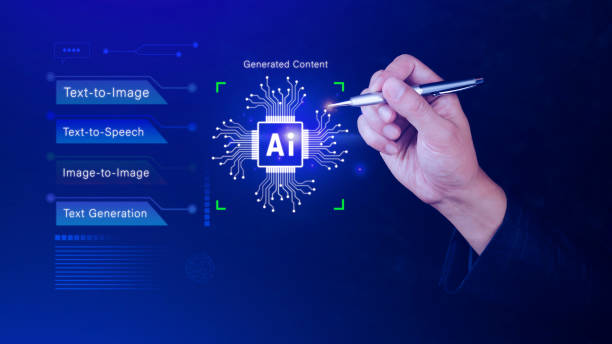
Machine learning is one of the most important artificial intelligence techniques that plays a very important role in the development of AI robots.
Machine learning allows robots to learn from data and improve their performance without explicit programming.
In other words, using machine learning algorithms, the robot can recognize patterns and relationships in the data and make decisions based on them.
There are different types of machine learning algorithms, including Supervised Learning, Unsupervised Learning, and Reinforcement Learning.
In supervised learning, the robot is trained using labeled data and learns how to map inputs to correct outputs.
In unsupervised learning, the robot is trained using unlabeled data and learns to discover patterns and structures in the data.
In reinforcement learning, the robot is trained by trial and error and receives rewards and penalties, and learns how to make the best decisions in different situations.
Using machine learning in AI robots allows them to operate independently in complex and dynamic environments and perform their tasks effectively.
Did you know that a poorly designed online store can drive away up to 70% of your potential customers? Resaweb transforms your sales with professional and user-friendly e-commerce website design.
✅ Significant increase in sales and revenue
✅ Full optimization for search engines and mobile
⚡ [Get a free consultation from Resaweb]
Current Challenges and Limitations in the Design and Construction of Artificial Intelligence Robots

Despite significant advances in the field of AI robots, there are still many challenges and limitations in the design and construction of these robots.
One of the most important challenges is the high complexity of algorithms and artificial intelligence systems, which requires high knowledge and expertise in various fields such as mathematics, statistics, computer science, and electrical engineering.
Another challenge is hardware limitations that prevent robots from fully mimicking human behavior.
For example, building a robot that can move at the same speed and accuracy as humans and perform various tasks is very difficult.
Also, the issue of security and ethics is one of the important challenges in the field of AI robots.
For example, there are concerns about the use of robots in wars or the replacement of humans in various jobs.
In addition, the issue of maintaining privacy and data security is also of great importance, as robots collect a lot of information about users and their surroundings.
To overcome these challenges, we need more research and development in various fields, and we must pay special attention to ethical and social issues.

Click here to preview your posts with PRO themes ››
The Future of Artificial Intelligence Robots: Predictions and Emerging Trends

The future of AI robots is very bright and full of potential.
With the increasing advances in the fields of artificial intelligence, robotics, and computer science, it is expected that robots will play a much more important role in our lives in the future.
It is predicted that robots will be able to perform more complex tasks in the future and will be used more widely in various industries.
For example, robots can be used in the medical field to perform precise surgeries and help diagnose diseases, in the field of education to provide personalized training, and in the field of agriculture to perform tasks such as planting, tending, and harvesting agricultural products.
It is also expected that robots will be able to interact with humans more naturally and effectively in the future and assist us as colleagues and companions in performing various tasks.
Emerging trends in this area include the development of autonomous robots, collaborative robots (Cobots), soft robots, and wearable robots.
These robots are capable of performing more complex tasks using advanced technologies such as Deep Learning, Computer Vision, and Natural Language Processing, and can operate independently in dynamic and unpredictable environments.
The Impact of Artificial Intelligence Robots on the Labor Market and Global Economy
The development and expansion of AI robots will have profound effects on the labor market and the global economy.
On the one hand, robots can increase productivity and efficiency and reduce costs by performing repetitive and dangerous tasks.
This can lead to increased profitability for companies and economic growth.
On the other hand, there are concerns about the loss of human jobs due to their replacement by robots.
Some experts believe that robots can eliminate many low-skilled and even some medium-skilled jobs.
However, others believe that robots can also create new jobs and allow humans to focus on more creative and complex tasks.
For example, the development and maintenance of robots require a skilled workforce in various fields such as robotics engineering, artificial intelligence, and computer science.
In addition, robots are expected to play a more important role in providing services to customers and improving the quality of life.
For example, robots can help patients in hospitals and medical centers, assist the elderly and disabled in homes, and provide services to customers in stores and restaurants.
| Advantages | Disadvantages |
|---|---|
| Increased Productivity | Job Losses |
| Cost Reduction | Need for Skilled Workforce |
| Creation of New Jobs | Ethical Issues |
| Improved Quality of Life | Security Concerns |
Click here to preview your posts with PRO themes ››
Ethical and Legal Issues Related to Artificial Intelligence Robots
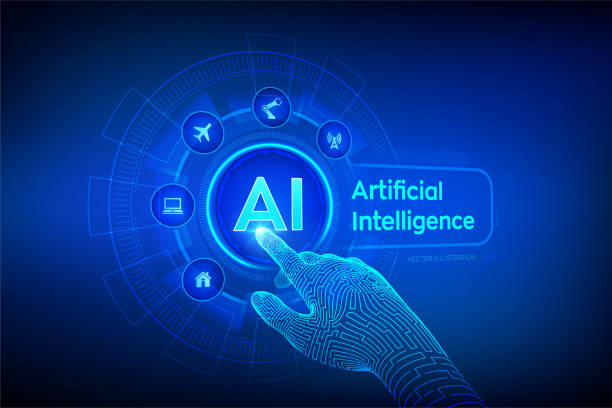
The development and use of AI robots raises numerous ethical and legal issues that require review and development of appropriate laws and regulations.
One of the most important issues is accountability for the performance of robots.
If a robot makes a mistake and causes harm to people or property, who will be responsible? The robot’s manufacturer, the robot’s user, or the robot itself? This issue has not yet been fully resolved and requires further discussion and review.
Another issue is privacy and data security.
Robots collect a lot of information about users and their surroundings, and this information can be misused.
Therefore, laws and regulations must be developed to protect the privacy and security of users’ data.
In addition, the issue of discrimination and inequality is one of the important ethical issues in the field of AI robots.
If artificial intelligence algorithms are designed in a way that discriminates against certain groups of people, this can lead to social and economic inequalities.
Therefore, it must be ensured that artificial intelligence algorithms operate fairly and impartially and prevent discrimination against any group of people.
Are you bothered by losing customers due to the outdated appearance or slow speed of your online store? Resaweb’s expert team solves these problems with professional e-commerce website design!
✅ Increased customer trust and brand credibility
✅ Blazing speed and excellent user experience
Get a free consultation with Resaweb right now ⚡
A Guide to Buying an Artificial Intelligence Robot: Important Tips and Selection Criteria
If you are planning to buy an AI robot, you should pay attention to various tips and criteria so that you can make the best choice.
The first tip is to determine your needs and expectations from the robot.
Before buying, you should specify what you want the robot for and what expectations you have of it.
Are you looking for an industrial robot to perform repetitive tasks on the production line, or are you looking for a service robot to provide services to customers in your store or restaurant, or are you looking for a personal robot to help with household tasks? After determining your needs and expectations, you should pay attention to various criteria such as price, quality, capabilities, features, support, and warranty.
The price of robots varies depending on their type, capabilities, and features.
You should consider your budget and choose a robot that is compatible with your budget.
The quality of the robot is also very important, and you should choose a robot that is made of high-quality parts and has a long lifespan.
The capabilities and features of the robot should also be compatible with your needs and expectations.
You should choose a robot that can effectively perform the tasks that you have assigned to it.
Support and warranty are also important criteria in choosing a robot.
You should choose a robot that has strong technical support and a suitable warranty so that you can use the support services in case of a problem.
Training and Learning Artificial Intelligence Robots: Online Resources and Courses

There are many online resources and courses available for training and learning in the field of AI robots that you can use.
Reputable educational websites and platforms such as Coursera, edX, Udacity, and Udemy offer various training courses in the fields of artificial intelligence, machine learning, robotics, and computer science.
These courses are usually taught by prominent university professors and industry experts and include educational videos, exercises, projects, and tests.
In addition, there are many books, articles, and blogs in the field of AI robots that you can use to learn different concepts and techniques.
For example, reputable websites such as arXiv, IEEE Xplore, and ScienceDirect publish many scientific articles in the field of artificial intelligence and robotics that you can use to update your knowledge.
Also, there are many blogs in the field of artificial intelligence and robotics that are written by experts and enthusiasts in these fields and can be a good source for learning new concepts and techniques.
To start learning in the field of AI robots, you can start by learning the basic concepts of artificial intelligence, machine learning, and robotics, and then gradually move on to more advanced concepts and techniques.
You can also strengthen your skills in this field by doing practical projects and participating in robotics competitions.
Click here to preview your posts with PRO themes ››
Frequently Asked Questions
| Question | Answer |
|---|---|
| What is an Artificial Intelligence Robot? | An Artificial Intelligence Robot (AI Robot) is a machine capable of understanding its environment, reasoning, learning, and making decisions to perform tasks independently. |
| What is the difference between ordinary robots and artificial intelligence robots? | Ordinary robots perform repetitive tasks based on prior programming, while artificial intelligence robots can learn from experience, interact dynamically with the environment, and even behave in a way that resembles human intelligence. |
| What are the main applications of artificial intelligence robots? | They are used in industries (manufacturing, assembly), medicine (surgery, diagnosis), services (customer support, domestic), exploration (space, underwater), and many other fields. |
| What technologies are used in the construction of artificial intelligence robots? | Machine Learning, Computer Vision, Natural Language Processing, Deep Learning, and Robotics are among the key technologies. |
| Can artificial intelligence robots have emotions? | Currently, robots do not have emotions in the human sense. They can identify and react to emotions, but they do not experience emotions themselves. |
| What are the main challenges in developing artificial intelligence robots? | Safety, reliability, ethics, autonomy, adaptability to complex environments, and natural interaction with humans are important challenges. |
| How are artificial intelligence robots trained? | They are usually trained using a large amount of data, machine learning algorithms, and deep learning to identify patterns and make decisions. |
| Examples of artificial intelligence robots in everyday life? | Smart robotic vacuum cleaners, customer support chat robots, self-driving cars, and surgical robots in hospitals. |
| Are artificial intelligence robots a threat to human jobs? | Some repetitive jobs may be automated, but at the same time, robots can increase productivity and create new jobs in the development, maintenance, and monitoring of these systems. |
| How is the future of artificial intelligence robots predicted? | They are expected to become smarter, more autonomous, and capable of performing more complex tasks and to interact more closely with humans in various environments. |
and other services of Rasa Web advertising agency in the field of advertising
Intelligent Direct Marketing: Transform your click-through rate with the help of Google Ads management.
Intelligent Marketplace: A fast and efficient solution for increasing sales with a focus on Google Ads management.
Intelligent Custom Software: Transform user interaction with the help of precise audience targeting.
Intelligent Digital Advertising: Transform digital branding with the help of SEO-oriented content strategy.
Intelligent Advertising Campaign: A novel service for increasing customer behavior analysis through precise audience targeting.
And more than hundreds of other services in the field of internet advertising, advertising consulting, and organizational solutions
Internet Advertising | Advertising Strategy | Advertising Report
Resources
Comprehensive Guide to Using Artificial Intelligence in Everyday Life
,How Can Artificial Intelligence Help Us in Life?
,What is Artificial Intelligence and What are its Applications?
,Comprehensive Guide to Artificial Intelligence; Everything You Need to Know About AI
? To reach the peak of success in the digital space, Rasaweb Digital Marketing Agency is with you. From user-friendly website design and SEO optimization to targeted advertising campaigns, we offer comprehensive solutions for growing your business.
📍 Tehran, Mirdamad Street, next to the Central Bank, South Kazerun Alley, Ramin Alley No. 6