
What is Artificial Intelligence and What Impact Does it Have on the Job Market?
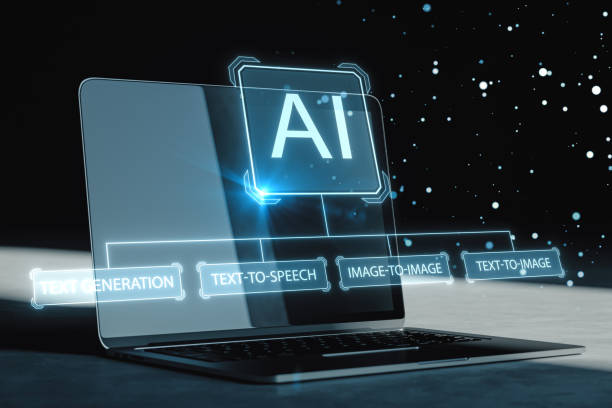
#Artificial_Intelligence (AI) is rapidly changing the landscape of the job market.
This advanced technology, with its ability to learn, reason, and solve problems, is increasingly being used in various industries.
This has led to the creation of new job opportunities while simultaneously changing the nature of many existing jobs.
A thorough understanding of what artificial intelligence is and how it works is the first step in understanding its impact on the future of AI-related jobs.
In its simplest definition, artificial intelligence refers to the ability of machines to perform tasks that typically require human intelligence.
These tasks include pattern recognition, learning from data, decision-making, and even creativity.
Artificial intelligence is divided into various branches, including Machine Learning, Deep Learning, Natural Language Processing, and Computer Vision.
Each of these branches has its specific applications in various industries.
For example, machine learning is used in detecting financial fraud, predicting market trends, and improving production processes.
Natural language processing allows machines to understand and interact with human language.
This technology is used in chatbots, machine translators, and sentiment analysis on social networks.
The impact of artificial intelligence on the job market brings both opportunities and challenges.
On the one hand, artificial intelligence can increase productivity, reduce costs, and improve the quality of products and services.
This leads to the creation of new jobs in the development, implementation, and maintenance of artificial intelligence systems.
On the other hand, artificial intelligence can replace some repetitive and routine jobs.
This can lead to unemployment and the need for workforce retraining.
Therefore, for success in the future of AI-related jobs, it is essential for individuals to acquire the necessary skills to work with this technology.
Are your online sales not what you expect? With Rasaweb, solve the problem of low sales and poor user experience forever!
✅ Increase the conversion rate of visitors to customers
✅ Create an enjoyable user experience and increase customer trust
⚡ Act now for a free consultation!
New Jobs Created by Artificial Intelligence
The future of AI-related jobs is not limited to replacing existing jobs, but also creates new and diverse job opportunities.
These jobs often require specialized skills in the field of artificial intelligence and machine learning.
One of the most important of these jobs is the Data Scientist.
Data scientists are responsible for collecting, analyzing, and interpreting data to extract valuable information.
They use machine learning algorithms to predict trends, identify patterns, and provide data-driven solutions.
Machine Learning Engineer is another job that is rapidly growing.
Machine learning engineers are responsible for developing, implementing, and maintaining machine learning models.
Using programming languages like Python and libraries like TensorFlow and PyTorch, they create models that can learn from data and perform various tasks.
In addition, AI Ethics Specialists also play an important role in the future of AI-related jobs.
They are responsible for ensuring that artificial intelligence systems are designed and used ethically and responsibly.
They examine potential biases in algorithms, protect data privacy, and prevent the misuse of artificial intelligence.
Other jobs such as Robotic Process Automation (RPA) Specialist, Business Intelligence Analyst, and Artificial Intelligence Systems Architect are also emerging, and demand for them is increasing.
To enter these jobs, you need to have strong technical skills, sufficient knowledge in the field of artificial intelligence, and the ability to solve problems.
Jobs That Will Be Affected by Artificial Intelligence

While artificial intelligence creates new job opportunities, it also affects some existing jobs.
Jobs that involve repetitive and routine tasks are more at risk of being replaced by artificial intelligence.
These jobs include telephone operators, data entry clerks, accountants, and drivers.
Automation is one of the main factors affecting the future of AI-related jobs.
Automation systems can perform many repetitive tasks with greater accuracy and speed.
This leads to a reduced need for human labor in these jobs.
However, this does not mean that these jobs will completely disappear.
In many cases, artificial intelligence will act as an auxiliary tool to increase productivity and improve the performance of these jobs.
For example, accountants can use artificial intelligence software to detect financial fraud and analyze complex data.
This allows them to focus on more complex and strategic tasks.
To adapt to the changes caused by artificial intelligence, people working in these jobs must acquire new skills.
These skills include technical skills, soft skills, and problem-solving skills.
Retraining and upskilling are key to success in the future of AI-related jobs.

Click here to preview your posts with PRO themes ››
Skills Required to Succeed in the Future of AI-Related Jobs
To succeed in the future of AI-related jobs, you need a combination of technical and soft skills.
Technical skills include knowledge of programming, machine learning, statistics, and mathematics.
Soft skills include communication skills, problem-solving, critical thinking, and creativity.
Programming knowledge is one of the most important technical skills for working in the field of artificial intelligence.
Programming languages like Python, R, and Java are the main tools for developing and implementing artificial intelligence systems.
Machine learning, as one of the main branches of artificial intelligence, requires deep knowledge in the field of algorithms, models, and learning techniques.
Soft skills are just as important.
The ability to communicate effectively with colleagues, customers, and other stakeholders is essential for success in any job.
Problem-solving skills help people analyze complex challenges and find appropriate solutions.
Critical thinking allows people to evaluate information and make informed decisions.
Creativity helps people present new and innovative ideas.
In addition, the ability to learn continuously and adapt to changes is very important in the future of AI-related jobs.
Artificial intelligence is evolving rapidly, and people need to be able to keep up with the latest advances and technologies.
Do you know that a weak company website is costing you many opportunities every day? Solve this problem forever with professional company website design by Rasaweb!
✅ Create a powerful and reliable image of your brand
✅ Attract targeted new customers and increase sales
⚡ [Get a free website design consultation]
The Role of Education in Preparing the Workforce for the Future

Education plays a vital role in preparing the workforce for the future of AI-related jobs.
Education systems must teach students the skills needed to work with artificial intelligence.
These trainings should include the basic concepts of artificial intelligence, programming, statistics, and mathematics.
In addition to technical training, education systems should also strengthen soft skills.
Communication skills, problem-solving, critical thinking, and creativity are among the skills that are essential for success in any job.
Project-based learning is one of the effective methods for strengthening these skills.
Also, education systems should update their educational programs by collaborating with the industry.
The needs of the job market are changing rapidly, and education systems must be able to respond to these changes.
Providing internships and job opportunities in companies active in the field of artificial intelligence can help students gain practical experience.
In addition to formal education, informal education also plays an important role in the future of AI-related jobs.
Online courses, workshops, and seminars are good opportunities to learn new skills and update knowledge.
Ethical and Social Challenges Arising from Artificial Intelligence in the Workplace
The future of AI-related jobs, in addition to opportunities, also brings ethical and social challenges.
One of the most important of these challenges is discrimination in artificial intelligence algorithms.
Algorithms may be trained based on historical data that contains gender, racial, or other types of discrimination.
This can lead to unfair and discriminatory decision-making in the workplace.
Maintaining data privacy is another challenge that needs to be addressed.
Artificial intelligence systems often collect and process large amounts of personal data.
It is very important to ensure that this data is kept secure and is not misused.
Transparency and explainability of algorithms are also of great importance.
Artificial intelligence decisions should be explainable, and people should be able to understand the reasons for these decisions.
This helps to increase trust in artificial intelligence systems and reduce concerns about their misuse.
Accountability for artificial intelligence decisions is also an important issue.
If an artificial intelligence system makes a wrong decision, who will be responsible? Determining accountability for artificial intelligence decisions is one of the legal and ethical challenges that must be addressed.
Industries That Will Be Most Affected by Artificial Intelligence
The future of AI-related jobs will have far-reaching effects on various industries.
Some of the industries that will be most affected by artificial intelligence include healthcare, finance, manufacturing, transportation, and retail.
In the healthcare industry, artificial intelligence can be used to diagnose diseases, develop drugs, provide personalized care, and improve hospital efficiency.
Artificial intelligence systems can analyze medical images more accurately and diagnose diseases in their early stages.
They can also help doctors choose the best treatments for each patient.

Click here to preview your posts with PRO themes ››
In the financial industry, artificial intelligence can be used to detect financial fraud, manage risk, provide personalized financial services, and improve customer experience.
Artificial intelligence systems can automatically review financial transactions and identify potential fraud.
They can also assist investors in making investment decisions.
In the manufacturing industry, artificial intelligence can be used to automate production processes, improve product quality, reduce costs, and predict equipment failures.
Artificial intelligence systems can control robots and enable them to perform complex tasks.
They can also analyze data related to production processes and identify opportunities for improvement.
The Role of Governments and Policymakers in Managing the Impact of Artificial Intelligence on Employment

Governments and policymakers play an important role in managing the impact of artificial intelligence on employment.
They must develop and implement policies that protect the workforce from the negative effects of artificial intelligence while benefiting from its advantages.
The future of AI-related jobs requires planning.
One of the most important actions that governments can take is investing in education.
They must teach students the skills needed to work with artificial intelligence.
They should also update educational programs to keep pace with the needs of the job market.
Supporting entrepreneurship and innovation is another action that governments can take.
They must create an environment in which entrepreneurs and innovators can develop their ideas and bring them to market.
This can lead to the creation of new and diverse jobs.
Creating social safety nets is another action that governments can take.
They should create programs that support people who lose their jobs due to artificial intelligence.
These programs can include unemployment insurance, retraining, and financial assistance.
Cooperation between government, industry, and academia is very important to manage the impact of artificial intelligence on employment.
This cooperation can lead to the development of effective policies and the creation of innovative solutions.
Do you have an online store but your sales are not what you expect? Rasaweb solves your problem forever by designing professional online stores!
✅ Significant increase in conversion rate and sales
✅ Unparalleled user experience for your customers
⚡ Click here for a free consultation with Rasaweb!
A Look at Future Research and Possible Scenarios for the Future of AI-Related Jobs
Future research helps us to imagine possible scenarios for the future of AI-related jobs.
These scenarios can include the following:
Optimistic scenario: In this scenario, artificial intelligence acts as an auxiliary tool to increase productivity and improve human performance.
New and diverse jobs are created, and people can succeed in these jobs by acquiring new skills.
Inequality decreases, and the quality of life improves for all people.
Pessimistic scenario: In this scenario, artificial intelligence replaces many existing jobs and leads to widespread unemployment.
Inequality increases, and many people have difficulty meeting their basic needs.
Social tensions increase, and social order is disrupted.
Realistic scenario: In this scenario, artificial intelligence brings both opportunities and challenges.
Some jobs are replaced, and others are created.
People can adapt to the changes caused by artificial intelligence by acquiring new skills.
Governments and policymakers play an important role in managing these changes.
The reality is that no one can say with certainty what the future of AI-related jobs will be like.
However, by using future research and analyzing different scenarios, we can prepare to face this future.
Recommendations for Job Seekers in the Age of Artificial Intelligence
To succeed in the future of AI-related jobs, job seekers should pay attention to the following recommendations:
Strengthen your technical and soft skills.
Knowledge of programming, machine learning, statistics, and mathematics are among the technical skills that are essential for working in the field of artificial intelligence.
Communication skills, problem-solving, critical thinking, and creativity are among the soft skills that are necessary for success in any job.
Pay attention to continuous learning and adapting to changes.
Artificial intelligence is evolving rapidly, and people need to be able to keep up with the latest advances and technologies.
Participate in training courses, read relevant books and articles, and communicate with experts in this field.
Click here to preview your posts with PRO themes ››
Network and connect with people active in the field of artificial intelligence.
Participating in conferences and seminars, joining professional associations, and using professional social networks can help you connect with expert people and gain more information.
Update your resume and profile and properly showcase your skills.
Your resume should show that you have the skills needed to work in the field of artificial intelligence.
Describe your experiences and achievements in detail in your LinkedIn profile.
Be prepared for new job opportunities in the field of artificial intelligence.
The job market is changing rapidly, and new jobs are emerging.
Be aware of these opportunities by searching on job search sites and social networks.
Frequently Asked Questions
| Question | Answer |
|---|---|
| What impact will artificial intelligence have on the future job market? | Artificial intelligence will automate repetitive jobs but at the same time create new and more complex jobs in areas such as the development, maintenance, and training of artificial intelligence systems. |
| Which jobs are most at risk of being replaced by artificial intelligence? | Jobs that involve repetitive, rule-based tasks with little need for creativity or emotional intelligence, such as some manufacturing, data entry, and simple customer service jobs, are most at risk. |
| What skills are necessary to succeed in the future job market with the presence of artificial intelligence? | Skills such as critical thinking, complex problem-solving, creativity, emotional intelligence, data literacy, the ability to work with artificial intelligence, and lifelong learning are of high importance. |
| Will artificial intelligence cause widespread unemployment? | Some jobs will be lost, but history has shown that new technologies, instead of widespread unemployment, cause the transformation of the job market and the creation of new jobs. The need for adaptation and retraining is important. |
| What new job opportunities are emerging with the emergence of artificial intelligence? | Jobs such as Machine Learning Engineer, Data Scientist, AI Ethicist, Human-AI Interaction Designer, and Digital Transformation Consultant are among the new opportunities. |
| What is the role of education in preparing for the future of work with artificial intelligence? | Education should focus on developing soft skills, computational thinking, digital literacy, and the ability to learn continuously to prepare people for future changes. |
| How can I prepare myself for job market changes caused by artificial intelligence? | You can prepare yourself by learning new skills related to artificial intelligence and data, strengthening soft skills, developing critical thinking and creativity, and making lifelong learning a habit. |
| Will AI ethics become an important job field? | Yes, given the growing concerns about biases, privacy, and automated decision-making of artificial intelligence, the role of AI ethics professionals will be crucial to ensure its responsible development. |
| What is the importance of human-AI collaboration in the future of work? | Human-AI collaboration, rather than competition, shapes the future of the job market. Artificial intelligence can be a tool to increase productivity and focus on more complex and creative tasks. |
| Which industries will be most affected by artificial intelligence? | Almost all industries will be affected, but areas such as healthcare, finance, transportation, manufacturing, education, and customer service are the pioneers of acceptance and transformation by artificial intelligence. |
And other services of Rasa Web advertising agency in the field of advertising
Intelligent Advertising Campaign: A combination of creativity and technology to manage campaigns by optimizing key pages.
Intelligent Custom Software: Revolutionize site visits with intelligent data analysis.
Intelligent Content Strategy: Professional optimization for campaign management using attractive UI design.
Intelligent UI/UX: A combination of creativity and technology to increase click-through rates by accurately targeting the audience.
Intelligent Website Development: Revolutionize sales with the help of customizing the user experience.
And more than hundreds of other services in the field of internet advertising, advertising consulting, and organizational solutions
Internet Advertising | Advertising Strategy | Advertorial
Sources
Introduction to types of jobs related to artificial intelligence
,10 popular and lucrative jobs related to artificial intelligence that we will need in the near future
,What jobs does artificial intelligence create?
,Artificial intelligence job opportunities
? To jumpstart your business in the digital world, Rasaweb Digital Marketing Agency is your smart companion. From professional WordPress website design and SEO to content marketing strategies, we offer comprehensive solutions for your visibility and growth.
📍 Tehran, Mirdamad Street, next to the Central Bank, Kazerun Jonobi Alley, Ramin Alley No. 6